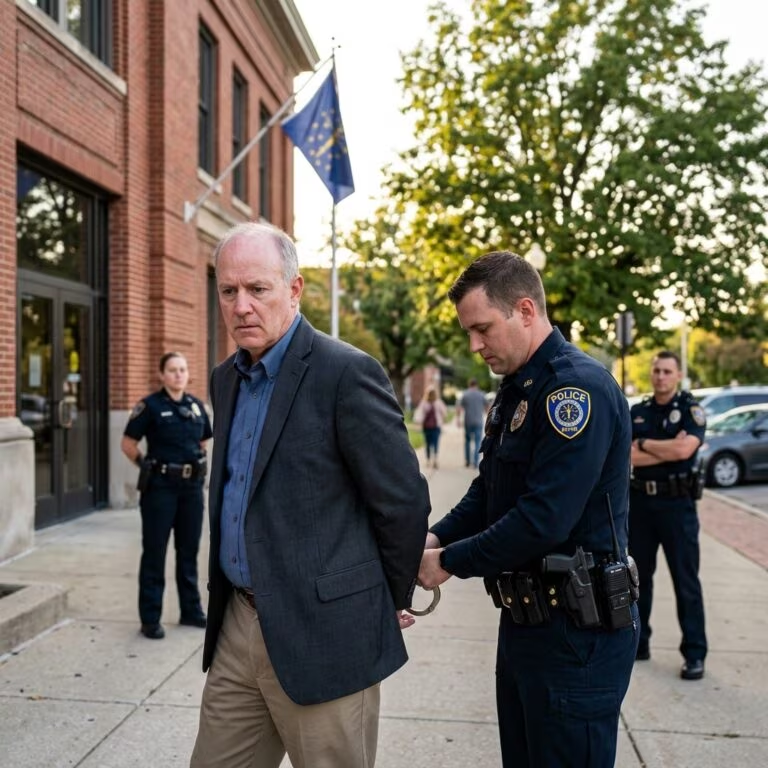
Being involved in a traffic crash is stressful, but leaving the scene can transform a manageable situation into a serious criminal case. Across the United States, drivers have a legal duty to stop, share information, and help anyone who may be injured. Failing to do so is widely treated as a crime and can lead to fines, jail or prison, license suspension, and long-term consequences for your record and insurance.
What Does “Leaving the Scene” Legally Mean?
In most jurisdictions, a driver is considered to have left the scene of an accident (often called a hit-and-run) when they are involved in a crash and do not remain at or return to the scene to carry out prescribed legal duties.
Although specific statutes differ from state to state, common elements include:
- Being the driver or operator of a vehicle involved in a collision, regardless of fault
- Failing to stop immediately or as close as safely possible to the crash site
- Driving away without identifying yourself and your vehicle to others involved
- Not providing reasonable assistance to injured people when required by law
A driver may also be charged if they initially leave and only later try to correct the mistake. In many states, simply driving away—even after a “minor” fender bender—is enough to expose the driver to criminal liability.
Core Legal Duties After a Crash
Most traffic laws impose three core obligations on drivers involved in any collision.
1. Stop and Remain at or Near the Scene
Drivers must stop immediately at the scene or as close as safely possible, without creating additional hazards. Leaving to avoid traffic or to find a safer spot is generally allowed only if the driver promptly returns or remains nearby to fulfill other duties.
2. Share Required Information
Typical information drivers must provide includes:
- Full name and current address
- Vehicle registration number
- Driver’s license details upon request
- Insurance company and policy number
Some laws also require exchanging the name and address of the vehicle’s owner if the driver is not the owner.
3. Render Reasonable Assistance to the Injured
Where people appear injured, most states require drivers to take reasonable steps to help. This can include:
- Calling 911 or other emergency services
- Providing first aid if you are able and it is safe to do so
- Helping arrange transportation to medical care if necessary
The law does not expect drivers to act as medical professionals, but it does require them to do what an ordinary, reasonable person could do in the circumstances.
When Does Leaving the Scene Become a Crime?
Virtually every state treats leaving the scene of an accident as a criminal offense, but the severity of the charge depends heavily on what the crash caused. Property damage alone is usually treated less harshly than injuries or fatalities.
| Type of Crash Outcome | Typical Classification | Common Consequences |
|---|---|---|
| Property damage only | Traffic offense or misdemeanor | Fines, short jail terms, possible license suspension |
| Non-fatal injury | Higher-level misdemeanor or felony | Larger fines, months or years in jail/prison, longer suspension |
| Fatal injury (death) | Felony, often with mandatory minimums | Significant prison time, heavy fines, permanent revocation |
Even when a crash seems minor, leaving can trigger criminal charges. In several states, driving away after causing only property damage can still lead to up to a year of imprisonment and substantial fines.
Examples of Penalties from Different States
To illustrate how serious these offenses can be, here are selected examples from state laws and legal analyses. Exact penalties vary, and many statutes are regularly updated, so these examples are for general understanding rather than precise legal advice.
Connecticut: Range of Penalties Based on Harm
Connecticut penalties escalate with the severity of the outcome:
- Property damage only: up to one year in jail and hundreds of dollars in fines
- Serious physical injury or death: penalties can reach up to 20 years in prison and fines up to $20,000, with associated license suspensions
Pennsylvania: Summary Offenses to Felonies
Pennsylvania law distinguishes between property damage and injury or death:
- Property damage only: up to one year of imprisonment and fines up to $2,500
- Serious bodily injury: minimum jail terms starting at 90 days and fines starting at $1,000
- Death: minimum three years imprisonment and fines of at least $2,500
New Jersey: Felony-Level Consequences
New Jersey treats leaving an accident scene with injuries or fatalities as serious crimes:
- Property damage only: fines up to $400, possible jail time, and license suspension up to 30 days
- Injury: felony charges, fines up to $5,000, up to five years in prison, at least one year of license suspension, and potential restitution orders
- Fatality: felony charges, fines up to $150,000, five to ten years in prison, and permanent license revocation
Ohio: Clear Duty to Stop and Exchange Information
Under Ohio law, failing to stop and exchange information after a crash is a first-degree misdemeanor. Penalties include:
- Up to six months in jail and fines up to $1,000 for failing to comply with basic duties
- Additional penalties when the crash involves injury or death, including enhanced criminal charges and civil liability
Texas and Missouri: Felony Exposure for Serious Cases
Legal commentary from Texas and Missouri highlights how quickly these charges can escalate:
- Texas: property damage above certain thresholds can result in misdemeanor charges, while accidents involving bodily injury may lead to third-degree felony charges with potential prison sentences of two to ten years.
- Missouri: leaving the scene with only property damage can be a Class A misdemeanor; if someone is injured, the charge rises to a Class E felony, and fatalities can result in Class D felony charges with multi-year prison terms.
These examples demonstrate that leaving the scene is rarely a minor issue, and penalties commonly include incarceration, significant fines, and severe impacts on driving privileges.
Beyond Criminal Charges: Civil and Administrative Fallout
Criminal prosecution is only part of the picture. Drivers who leave the scene may also face civil lawsuits and administrative penalties.
1. Civil Liability to Victims
A driver’s legal duty to compensate victims does not disappear because they left the scene. Victims can still sue for:
- Vehicle repair or replacement costs
- Medical bills and rehabilitation expenses
- Lost wages from missed work
- Pain and suffering, and in some cases punitive damages
Leaving the scene can make a driver’s conduct appear more reckless or callous, which may influence settlement negotiations or court judgments.
2. License Suspension and Points
Many states add points to a driver’s record and impose license suspensions for leaving the scene, even for property damage-only incidents. Repeat offenses or serious injuries can lead to multi-year suspensions or permanent revocation in extreme cases.
3. Insurance and Background Checks
Convictions for leaving the scene often trigger:
- Higher insurance premiums and surcharges due to increased risk
- Permanent criminal records that appear in employment and housing background checks
- Potential difficulties obtaining professional licenses and, for non-citizens, immigration consequences in felony cases
Why Drivers Leave — And Why the Law Doesn’t Excuse It
Common reasons drivers give for leaving the scene include fear, panic, not realizing there was damage, intoxication, or misunderstanding legal obligations. However, statutes generally treat leaving as a strict duty: if you were involved in a crash, you must stop and follow the law.
Even if a driver later feels remorse or tries to correct their mistake, prosecutors may still pursue charges. Cooperation afterward may help during sentencing, but it does not erase the initial violation.
Practical Guidance for Drivers After a Crash
Knowing what to do in the moment can prevent a stressful incident from becoming a criminal accusation.
Step-by-Step Actions for Drivers
- Stop safely: Pull over as close as possible to the crash scene without creating extra danger.
- Check for injuries: Quickly assess whether anyone appears hurt and call emergency services if needed.
- Exchange information: Provide your name, address, vehicle registration, driver’s license (if requested), and insurance details.
- Contact police when required: Many states require reporting crashes involving injury, death, or significant property damage.
- Document the scene: Take photographs of vehicles, damage, road conditions, and any visible injuries.
- Notify your insurer: Report the accident promptly and supply any police reports or evidence gathered.
If you are unsure what your state requires, it is safer to stay, cooperate with law enforcement, and seek legal advice later than to leave and risk a hit-and-run allegation.
If You Are the Victim of a Hit-and-Run
Victims of hit-and-run accidents face unique challenges, but there are practical steps that can help protect their rights and support any future claims.
Immediate Actions
- Stay at the scene and call police: An official report becomes crucial evidence for insurance and possible criminal cases.
- Record details of the fleeing vehicle: Note color, make, model, distinguishing features, direction of travel, and any part of the license plate you remember.
- Look for witnesses and cameras: Ask bystanders what they saw and look for nearby surveillance cameras that may have captured the crash.
- Seek medical evaluation: Some injuries are not immediately obvious; prompt treatment both protects your health and documents your condition.
- Notify your insurer: Hit-and-run victims may rely on uninsured motorist coverage or collision insurance for compensation.
Consulting a qualified attorney can help victims understand available avenues for compensation and navigate interactions with insurers and law enforcement.
Frequently Asked Questions (FAQs)
Is leaving the scene always a crime, even if no one is hurt?
In most states, yes. Leaving after a property damage-only crash is commonly treated as a misdemeanor or serious traffic offense. Penalties often include fines, possible short jail terms, and license-related consequences, even when no one suffers physical injury.
Can I move my car after a crash without it being considered leaving the scene?
Generally, moving your car to a nearby safe location is permitted and sometimes recommended, especially to avoid blocking traffic. The key is that you remain available to exchange information and assist others, rather than driving away and failing to return.
What if I didn’t realize I caused damage or hit another vehicle?
Some drivers claim they were unaware of a collision, but prosecutors may still argue that a reasonable person should have known. The specifics depend on the facts, but the safest approach whenever you suspect an impact is to stop, assess the situation, and comply with legal duties.
Does leaving the scene affect my insurance coverage?
Insurers may raise premiums after any at-fault accident, and a criminal conviction for leaving the scene can make those increases more severe. In some cases, policy terms or state law may also limit coverage if the driver intentionally flees, though this varies by jurisdiction and policy.
Should I talk to police before consulting a lawyer if I’m accused of leaving the scene?
Anyone facing potential criminal charges has the right to seek legal counsel. Talking with a qualified attorney before giving detailed statements can help you understand your rights and obligations. However, you must still comply with lawful orders at the scene, such as providing identification and insurance information as required by local law.
Key Takeaways for Drivers
- Never leave a crash site without stopping and exchanging information. Even minor collisions can carry criminal consequences if you drive away.
- Penalties escalate with injury and death. What starts as a fender bender can lead to felony charges if someone is hurt or killed and you fail to remain at the scene.
- Civil liability continues regardless of whether you stay or leave. Victims can still pursue compensation for property damage, medical expenses, and other losses.
- Administrative and life consequences are significant. License suspension, a permanent criminal record, and insurance increases can affect employment, housing, and everyday life.
- Staying put and following the law is the best protection. Remaining at the scene, rendering aid, and seeking legal advice afterward is far safer than risking a hit-and-run accusation.
References
- Penalties for Drivers Leaving the Scene of an Accident — Connecticut General Assembly Office of Legislative Research. 2015-09-08. https://cga.ct.gov/2015/rpt/2015-R-0189.htm
- Leaving the Scene of an Accident: Legal Penalties and What to Do — Edgar Snyder & Associates. 2023-06-01 (last updated, approximate). https://www.edgarsnyder.com/blog/leaving-the-scene-of-an-accident
- Consequences of Leaving the Scene of Accident in Ohio — Suhre & Associates, LLC. 2024-01-15 (approximate recent update). https://suhrelawcolumbus.com/consequences-of-leaving-the-scene-of-accident/
- Leaving the Scene of An Accident in Ohio: Here’s What to Know — Nager, Romaine & Schneiberg Co., L.P.A. 2023-11-10 (approximate). https://www.nphm.com/blog/auto-accident/leaving-the-scene-of-an-accident-in-ohio-heres-what-to-know/
- Why Leaving an Accident Scene Can Result in Criminal Charges in New Jersey — Gelman Law, LLC. 2023-05-20 (approximate). https://www.gelmanlawfirm.com/blog/why-leaving-an-accident-scene-can-result-in-criminal-charges-nj/
- The Legal Consequences of Leaving the Scene of an Accident — Perkins & Perkins, P.C. 2022-09-14 (approximate). https://perkinsperkinslaw.com/leaving-the-scene-of-an-accident-consequences/
- Is Leaving the Scene of an Accident a Crime? Missouri Legal Guide — BWO Attorneys. 2023-03-08 (approximate). https://www.bwoattorneys.com/is-leaving-the-scene-of-an-accident-a-crime/