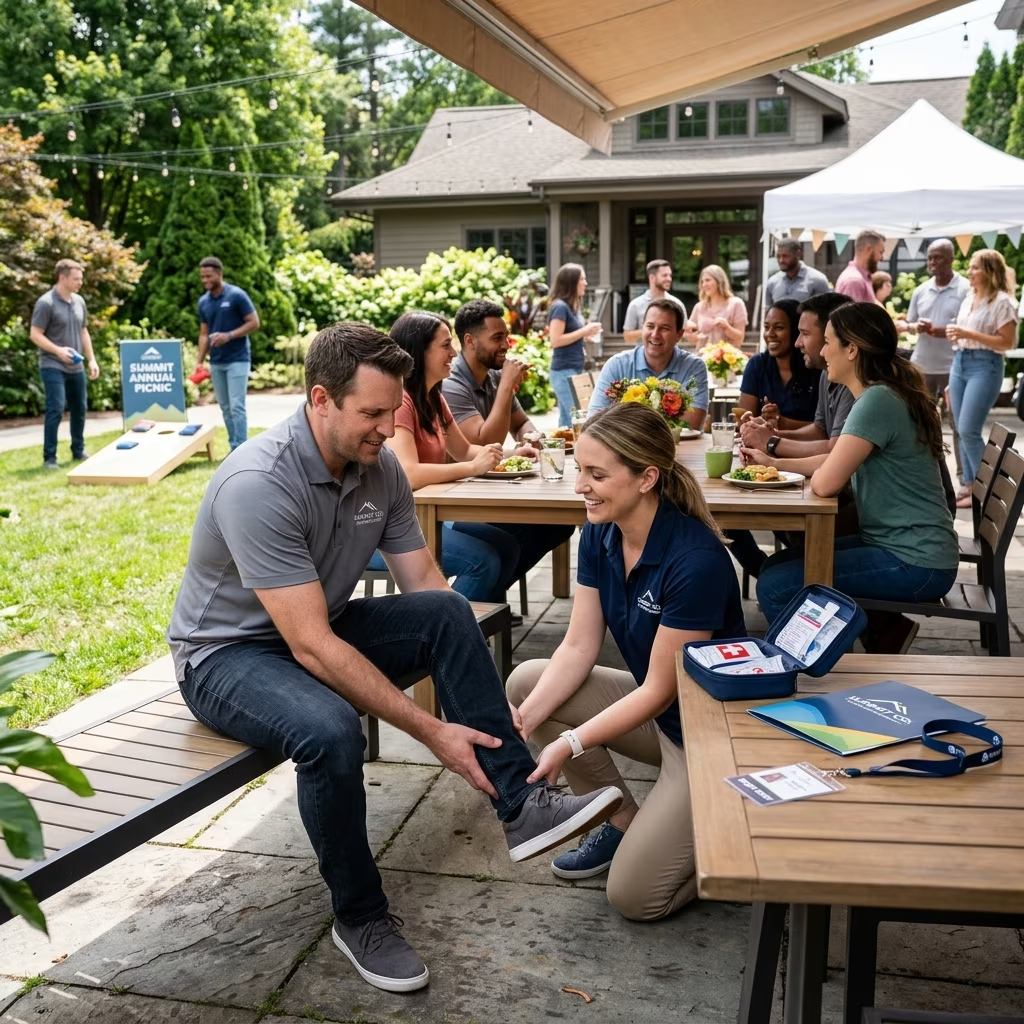
Injuries at a company picnic, retreat, holiday party, training seminar, or team-building outing can raise a difficult legal question: was the event truly part of the job? In some situations, workers’ compensation may apply because the employee was effectively acting within the scope of employment. In others, the event is treated as a personal or voluntary social activity, which can place the injury outside coverage.
The answer usually depends on the specific facts. Courts and claims administrators often look at whether attendance was required, whether the employer benefited from the event, where the event happened, and how much control the employer exercised over the activity. Because those details can vary widely, two workers injured in seemingly similar settings may receive different outcomes.
When an Off-Site Event Can Still Count as Work
Workers’ compensation is generally designed to cover injuries that arise out of and in the course of employment. That does not mean an injury must happen at a desk, on a factory floor, or during a normal shift. If an employer organizes an event that serves a work-related purpose, the event may be treated as part of employment even if it takes place after hours or away from the workplace.
Examples of events that may fall into this category include:
- mandatory staff training sessions
- sales conferences and business retreats
- client-facing promotional events
- company-run meetings held off site
- team-building activities that employees are expected to attend
The key issue is not just where the event happened, but whether the employee’s participation was connected to the job. If the event advances the employer’s business, strengthens workplace operations, or is tied to employee duties, there is a stronger argument that an injury should be treated as work-related.
Mandatory Attendance Versus Voluntary Participation
One of the most important questions in these cases is whether the employee had a real choice about attending. If the employer required attendance, directly ordered employees to participate, or made attendance an expected part of the job, coverage is more likely.
By contrast, truly optional social events are often treated differently. A holiday party, picnic, or recreational outing may not be covered if workers were free to decline without any job consequences. Even if the employer paid for the event, that alone does not automatically make it a covered work activity.
| Factor | Stronger for Coverage | Weaker for Coverage |
|---|---|---|
| Attendance | Required or strongly expected | Optional and clearly voluntary |
| Employer benefit | Training, business development, productivity | Purely social with little business purpose |
| Employer control | Employer directs activities or agenda | Employees choose freely how to participate |
| Consequences for absence | Possible discipline or negative job impact | No penalty for not attending |
These categories are not absolute rules, but they help explain how decision-makers analyze employer-sponsored event injuries.
What Courts and Claims Administrators Often Examine
There is no single universal test used in every state, so the outcome depends on local law. Still, several recurring factors appear in many workers’ compensation disputes involving company events.
Courts often ask whether the employee would have faced negative consequences for missing the event. They may also consider whether the event took place during working hours, whether the worker was paid for attending, and whether the employer gained a measurable business advantage from the activity. Another common question is whether the event was integrated into the employee’s normal work responsibilities.
For example, a retreat that includes planning sessions, performance discussions, or required training is more likely to be treated as work-related than a casual dinner party. Likewise, a company outing that employees must attend as part of team-building or client service may look more like an extension of the job than a personal social gathering.
Common Injuries at Employer Events
Injuries at company functions can happen in many ways. Some are simple accidents, while others involve sports, alcohol, transportation, or unsafe premises. Because these events often combine social activity with work expectations, the injury may not fit neatly into the usual workplace model.
- slips, trips, and falls on wet or uneven surfaces
- sprains or fractures during recreational games
- heat-related illness at outdoor gatherings
- injuries from lifting, moving, or setting up event equipment
- collisions during organized transportation or parking lot incidents
- harm connected to alcohol service or impaired decision-making
Some injuries are easier to connect to the event than others. A worker who falls while helping set up a company banquet may have a clearer claim than someone injured while engaging in an optional recreational game after the formal event has ended. That distinction can matter a great deal.
Why Employer Benefit Matters
Another major issue is whether the employer received a benefit from the event. That benefit does not have to be direct profit. In many cases, employers use events to improve morale, encourage loyalty, train staff, or build stronger working relationships. Those goals can support an argument that the event served a business purpose.
However, not every benefit is enough. A purely social gathering may help employees relax, but that alone may not turn the event into compensable employment. The more the event looks like a tool for recruiting, training, sales, public relations, or productivity, the stronger the case for workers’ compensation coverage.
This is why the same type of injury may be treated differently depending on context. A basketball injury during a mandatory corporate wellness program may be analyzed differently from the same injury at a spontaneous after-hours pickup game sponsored loosely by the employer.
Alcohol, Horseplay, and Personal Detours
Company events sometimes create complications because employees are not performing ordinary job duties. Alcohol is often served, people socialize more freely, and the setting may encourage less cautious behavior. These facts can create disputes over whether the injury truly arose from employment.
If an injury happens while an employee is engaging in obvious horseplay, fighting, or a personal side trip unrelated to the event, coverage may be harder to prove. Likewise, if the worker leaves the event for purely personal reasons and is injured elsewhere, the connection to employment may be weakened.
That said, the presence of alcohol or informal socializing does not automatically defeat a claim. The broader question remains whether the employee was still participating in an employer-sponsored activity that had enough work connection to fall within coverage.
Practical Steps After an Injury
If you are hurt at a company-sponsored event, your actions in the first few hours and days can influence the claim process. Quick documentation helps show what happened and why you believe the injury was work-related.
- report the injury to the employer as soon as possible
- seek medical care promptly, even if the injury seems minor at first
- write down the date, time, place, and activity taking place when the injury occurred
- identify witnesses and ask for their names and contact details
- keep copies of photos, messages, schedules, invitations, and event instructions
- save medical records and receipts related to treatment
These steps can be especially important when the event was off site or partly social. A clear record may help show whether attendance was expected, what the event involved, and how the injury occurred.
Does a Waiver End the Claim?
Some employers ask workers to sign waivers before joining recreational or social events. That does not always end the workers’ compensation question. A private waiver may affect certain liability issues, but it does not necessarily erase rights under the workers’ compensation system.
Whether a waiver matters depends on the wording of the document, the state’s laws, and the nature of the event. Even if a form says the activity is voluntary, the practical reality may still show that employees felt pressured to attend or that the event was closely tied to work duties. In that situation, the label on the paperwork may not control the outcome.
How State Law Can Change the Result
State law plays a major role in these disputes. Some states are more likely than others to treat recreational events as outside workers’ compensation. Others focus heavily on whether the employer benefited from the activity or whether attendance was expected.
Because of these differences, an injury at a company picnic in one state may be covered, while a nearly identical injury in another state may not be. That is why claims involving employer-sponsored events often require a close review of local statutes, administrative decisions, and case law.
If you are evaluating a claim, the most important question is not simply whether the event was fun or informal. The real question is whether the event was sufficiently connected to the employment relationship.
Questions People Often Ask
Is a company party always covered by workers’ compensation? No. Coverage usually depends on whether attendance was required or whether the party served a business purpose. Purely voluntary social events are often harder to treat as work-related.
What if my boss encouraged me to attend but did not order me? Encouragement can matter, especially if employees would reasonably believe they were expected to go. The overall circumstances, not just the wording, are important.
What if I was injured during a team-building activity? That may be covered if the activity was organized by the employer and tied to workplace goals such as training, morale, or productivity. The exact facts will control.
Does it matter if the event was after hours? Yes, but after-hours timing does not automatically defeat a claim. Some after-hours events are still considered work-related if attendance is expected or the employer benefits from the event.
Should I speak with a lawyer? If the event was required, work-related, or disputed by the employer, legal advice can help you understand whether a workers’ compensation claim is available and what evidence matters most.
References
- Injuries Suffered At Company-Sponsored Events — Tressler LLP. 2024-01-01. https://www.tresslerllp.com/thought-leadership/injuries-suffered-at-company-sponsored-events/
- What If I Was Injured at a Work-Sponsored Event? — Rimrock Law. 2024-01-01. https://rimrocklaw.com/blog/what-if-i-was-injured-at-work-sponsored-event/
- Workers’ compensation insurance guide — Texas Department of Insurance. 2024-01-01. https://www.tdi.texas.gov/pubs/consumer/cb030.html
- Are my injuries covered by workers’ comp if they happened at a company retreat — Anthem. 2024-01-01. https://www.anthemeap.com/reep/find-legal-support/resources/consumer-rights/legal-assist/are-my-injuries-covered-by-workers-comp-if-they-happened-at-a-company-retreat
- Can You File A Workers Claim if Injured during A Work Event? — Dominguez Firm. 2024-01-01. https://dominguezfirm.com/work-accident-lawyer/injured-during-company-event/
- Employee Injured, Company Event Can I File for Workers Comp? — Iowa Injured. 2024-01-01. https://www.iowainjured.com/faqs/employee-injured-at-company-event.cfm