When a Paycheck Deduction Becomes a Legal Problem
Not every deduction from wages is unlawful, but an employer cannot simply remove money from a paycheck whenever it chooses. In general, deductions are allowed only when they are required by law, clearly authorized in writing, or otherwise permitted under applicable wage rules. If a deduction is unexplained, not agreed to, or lowers pay below protected wage levels, it may be illegal and worth challenging.
The practical question is not only whether money was taken, but why it was taken and whether the employer had the legal right to do so. Common examples of lawful deductions include payroll taxes, certain garnishments ordered by a court, and employee-authorized benefits such as health insurance or retirement contributions. By contrast, deductions for shortages, breakage, tools, uniforms, or similar business losses often become problematic when the worker did not consent or when the deduction violates wage laws.
Common Types of Deduction Issues
- Deductions made without written consent
- Charges for uniforms, tools, or equipment
- Offsets for cash shortages or breakages
- Repayment of advances or alleged overpayments
- Deduction amounts that reduce pay below minimum wage
- Charges that appear to benefit the employer more than the employee
How to Tell Whether the Deduction Is Allowed
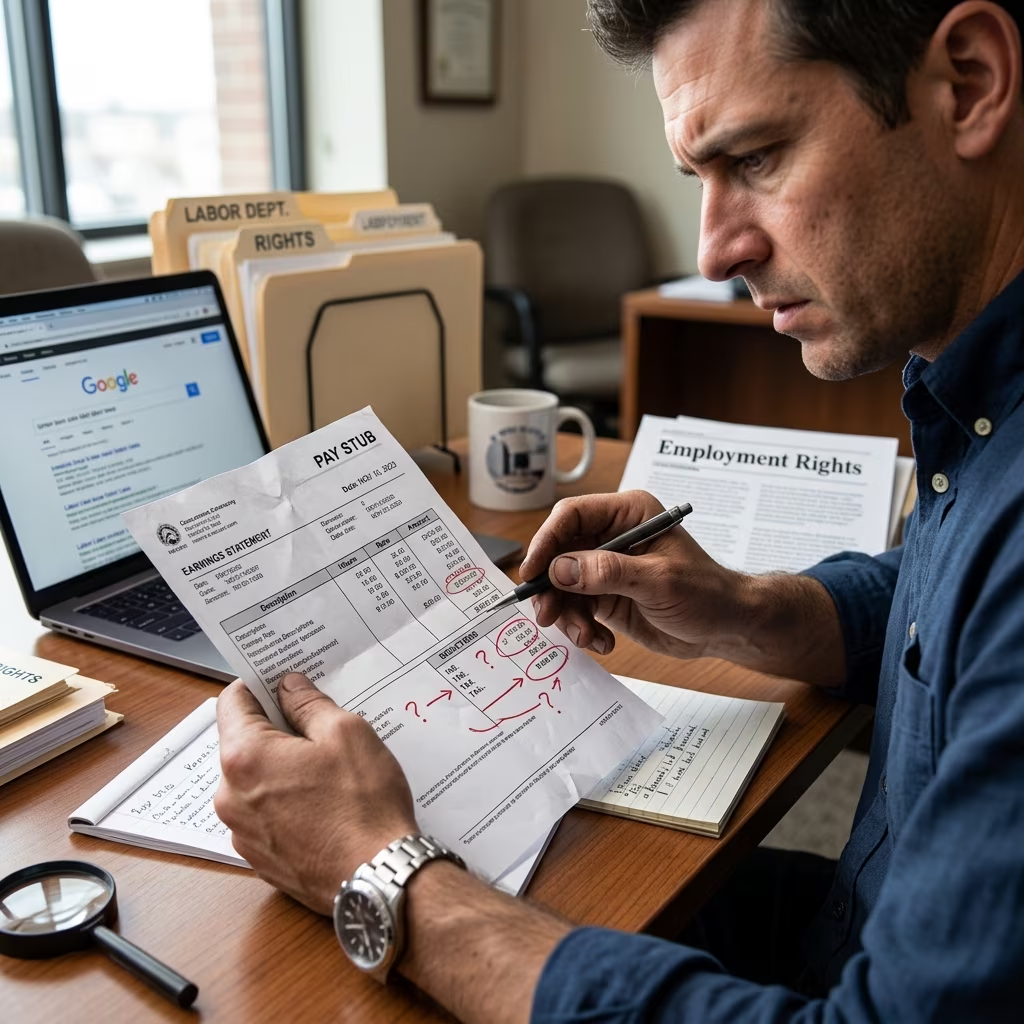
The first step is to compare your pay stub with your offer letter, employment agreement, handbook, union contract, or any separate authorization form you signed. A lawful deduction is usually traceable to one of those documents or to a statute that specifically permits it. If the deduction appears nowhere in those materials, the employer may need a stronger legal basis to justify it.
Even when an employee has signed something, the deduction still must comply with wage-and-hour rules. That means a deduction may be valid in theory but unlawful in practice if it causes pay to fall below the minimum wage threshold or conflicts with state restrictions. Some states also require itemized wage statements and detailed notice of the deduction so workers can understand what was taken and why.
| Deduction type | Usually allowed? | What to check |
|---|---|---|
| Income taxes and required payroll taxes | Yes | Required by law |
| Court-ordered garnishments | Yes | Order must be valid and properly processed |
| Health insurance or retirement contributions | Often yes | Employee consent and plan documents |
| Uniforms, tools, or equipment | Depends | Written authorization and wage impact |
| Cash shortages or breakage | Depends | State law and employer benefit rules |
| Repayment of overpayment | Depends | Proof of overpayment and repayment method |
Why Minimum Wage Rules Matter
Even a deduction that seems small can create a wage violation if it pushes an employee’s earnings below the required minimum wage for the hours worked. This is especially important for lower-paid workers, tipped employees, and workers with variable hours. In many situations, the legal system focuses less on the label attached to the deduction and more on the final effect on the worker’s pay.
That said, some deductions tied to legally required payments, such as taxes or certain court-ordered obligations, may be treated differently than voluntary deductions or employer-imposed offsets. This is one reason workers should not assume that a deduction is valid simply because it appeared on a pay stub. The surrounding facts, the state law, and the written paperwork all matter.
What Records You Should Gather Right Away
If you suspect an illegal deduction, gather evidence before asking for a correction. Employers can revise payroll records, and memory alone rarely provides enough detail to support a wage claim. A careful record makes it easier to explain what happened and strengthens your position if you later file a complaint.
- Recent and older pay stubs
- Employment contract or offer letter
- Any deduction authorization forms
- Employee handbook or policy manual
- Texts, emails, or memos about the deduction
- Your own notes listing dates, amounts, and explanations given
It also helps to calculate whether the deduction changed your effective hourly wage. If you were paid salary, commissions, or tips, the math can be more complicated, so a simple spreadsheet showing gross pay, deductions, and net pay can be useful.
How to Raise the Issue with Your Employer
Before turning to outside agencies, many workers start by asking payroll or human resources for a written explanation. A calm, direct request often resolves clerical mistakes, duplicate deductions, and overpayment disputes quickly. Ask for the legal basis for the deduction, the amount taken, and any document the employer relied on.
If the employer insists the deduction was proper, request copies of the forms or policies supporting that position. Keep your communication professional and in writing when possible. Written communication creates a useful paper trail and prevents the dispute from becoming a vague conversation with no record.
Useful questions to ask
- What policy or law authorizes this deduction?
- Did I sign a written authorization?
- How was the amount calculated?
- Will the employer reverse the deduction if it was mistaken?
- Can payroll provide a corrected statement?
When to Contact a Labor Agency
If the employer refuses to fix the problem, a wage complaint may be appropriate. Workers often turn to the U.S. Department of Labor’s Wage and Hour Division or to the state labor department that handles wage claims. These agencies may review payroll practices, investigate complaints, and require employers to comply with wage laws.
Agency procedures differ by state, but the basic approach is similar: the employee submits a complaint, provides documents, and explains the deduction. In some states, workers may also have a direct right to sue for lost wages or additional damages. That option can be especially important if the issue involves repeated deductions or a large amount of unpaid wages.
Situations That Often Lead to Disputes
Illegal deduction disputes often arise in predictable situations. Employers may try to recover the cost of a uniform, damaged property, a missing tool, a till shortage, or training expenses. In other cases, the dispute comes from a payroll mistake, such as double-counting a debt or deducting after a final paycheck without proper authorization.
Another common source of conflict is repayment of an advance or overpayment. If a worker was truly overpaid, an employer may have some path to recover the money, but the process still has to follow applicable law. The fact that money was paid out incorrectly does not automatically give the employer unlimited power to take it back from wages.
How State Law Can Change the Analysis
State rules can be stricter than federal rules, and that matters. Some states limit deductions more tightly, require specific written consent, or prohibit deductions for certain business losses entirely. Others insist on itemized wage statements and special procedures for repayment arrangements. Because of these differences, the same deduction may be lawful in one state and unlawful in another.
That is why location is not a minor detail. The employer’s state, the worker’s state, and the place where the labor was performed can all affect the result. If you are dealing with a deduction in a state with strong wage protections, the law may give you additional tools to recover money.
When It Makes Sense to Speak with an Employment Lawyer
A lawyer can be especially helpful when the deduction is large, repeated, or tied to a larger wage dispute. Legal help may also be important if the employer retaliates, refuses to provide records, or claims you signed something you do not recognize. An attorney can review the paperwork, identify the proper wage statute, and estimate whether you may recover back pay or other remedies.
Legal advice is also useful when the rules involve commissions, tips, final paychecks, reimbursements, or multiple state laws. These issues can become technical quickly, and a small error in strategy can affect the outcome. If you are unsure whether the deduction was lawful, a consultation can clarify whether to negotiate, file an agency complaint, or pursue a formal claim.
Practical Steps After You Notice a Deduction
- Save the pay stub and any related messages immediately.
- Check whether you signed any authorization for the deduction.
- Compare the deduction with minimum wage rules and payroll records.
- Ask payroll or HR for a written explanation.
- Escalate to a labor agency if the employer does not correct the issue.
- Consult an employment lawyer if the amount is significant or the facts are disputed.
Frequently Asked Questions
Can my employer deduct money from my paycheck without asking me first?
Usually no, unless the deduction is required by law or falls within another legally permitted category. Many other deductions need written authorization or a valid legal order.
Can an employer charge me for a uniform or broken equipment?
Sometimes, but not always. The answer depends on state law, whether you agreed in writing, and whether the deduction reduces your pay below protected wage levels.
What if the deduction was for an overpayment?
An employer may be able to recover an overpayment, but it still has to follow the law and any required procedure. The employer cannot automatically take back money in any manner it wants.
What should I do if I think the deduction was illegal?
Document the deduction, ask for a written explanation, and keep copies of all records. If the problem is not resolved, consider filing a wage complaint or speaking with an employment lawyer.
Can I still have a claim if I signed a form?
Yes. A signature does not always make a deduction valid if the deduction violates wage laws or exceeds what the law allows.
References
- Fact Sheet #16: Deductions From Wages for Uniforms and Other Items — U.S. Department of Labor, Wage and Hour Division. 2024-05-01. https://www.dol.gov/agencies/whd/fact-sheets/16-flsa-wage-deductions
- What Can My Employer Deduct from My Paycheck? — Michigan Legal Help. 2025-02-01. https://michiganlegalhelp.org/resources/employment/what-can-my-employer-deduct-from-my-paycheck
- Deductions From Pay FAQ — Illinois Department of Labor. 2025-01-01. https://labor.illinois.gov/faqs/deductions-from-pay-faq.html
- Illegal Deductions — New York State Department of Labor. 2025-01-01. https://dol.ny.gov/illegal-deductions
- Deduction Problems under the Texas Payday Law — Texas Workforce Commission. 2025-01-01. https://efte.twc.texas.gov/deduction_problems_under_tpl.html
- Can My Employer Deduct Money From My Paycheck Without My Permission? — Fletcher, Mathew, Smith Law Firm. 2025-01-01. https://fmlaw.org/blog/can-my-employer-deduct-money-from-my-paycheck-without-my-permission/