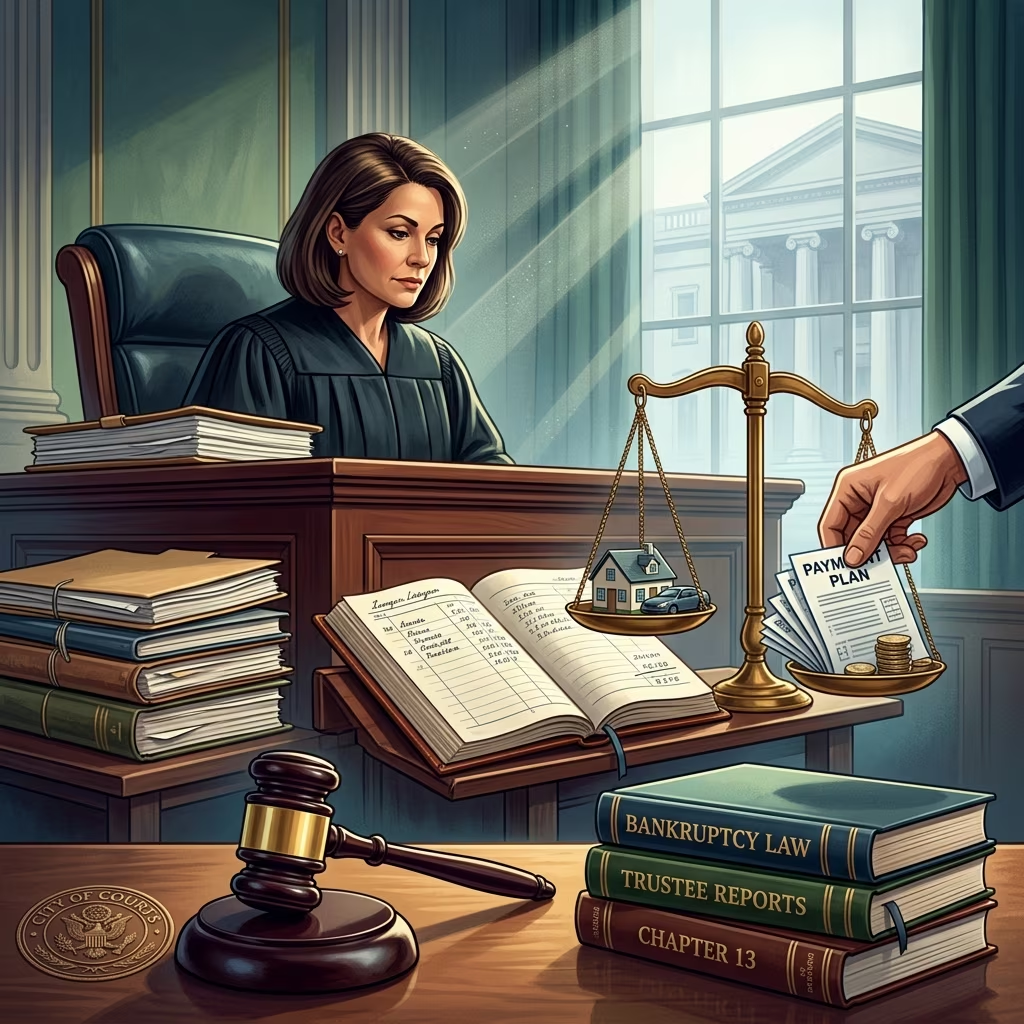
Chapter 13 bankruptcy is a court-supervised repayment process that allows individuals to reorganize their debt and pay creditors over time, usually three to five years. Unlike liquidation under Chapter 7, the bankruptcy court in Chapter 13 focuses on confirming, monitoring, and enforcing a long-term payment plan while the debtor keeps most of their property.
Core Role of the Bankruptcy Court in Chapter 13
The bankruptcy court is central to every Chapter 13 case. It does not manage daily payments, but it decides whether the case can move forward, whether the repayment plan is fair and lawful, and whether debts can be discharged at the end.
- Opens the case when the petition is filed and issues the automatic stay that stops most collection actions.
- Appoints a Chapter 13 trustee to administer the case and distribute payments to creditors.
- Reviews and confirms the repayment plan at a formal confirmation hearing.
- Resolves disputes between debtors and creditors through motions and hearings.
- Grants or denies discharge once the plan is completed or the case ends for other reasons.
Who Can Use Chapter 13: Court-Checked Eligibility
Eligibility for Chapter 13 is partially determined by statute and partially evaluated by the court. When a case is filed, the judge and trustee verify that the debtor meets key requirements before allowing the case to proceed.
- Individual only: Chapter 13 is available to individuals, including self-employed and sole proprietors, but not to corporations or partnerships.
- Regular income: The debtor must have a stable source of income sufficient to support plan payments.
- Debt limits: Unsecured and secured debt must be within statutory limits that are periodically adjusted.
- Credit counseling: Debtors must complete an approved credit counseling course within 180 days before filing and file a certificate with the court.
If these threshold requirements are not met or the paperwork is incomplete, the court can dismiss the case or require corrections before moving forward.
Starting the Case: Petition and Automatic Stay
A Chapter 13 case begins when the debtor files a petition with the bankruptcy court serving their place of residence. This filing triggers several immediate legal consequences that the court oversees.
Key documents filed at the outset
In addition to the petition, the debtor must file detailed financial disclosures, usually within a short deadline:
- Schedules of assets and liabilities (what the debtor owns and owes).
- Schedule of current income and expenses.
- List of executory contracts and unexpired leases.
- Statement of financial affairs, summarizing recent financial history.
- Tax returns and proof of income, such as pay stubs.
The court uses these filings, together with the trustee’s review, to assess whether the proposed plan is realistic and compliant with the law.
The automatic stay: Court protection from creditors
Immediately after the petition is filed, the court issues an automatic stay, a powerful legal order that usually halts lawsuits, wage garnishments, foreclosure sales, and most collection efforts. Creditors who violate the stay can face sanctions, and the court may award damages to the debtor. Some actions, such as certain family law proceedings or criminal matters, may be exempt by statute.
The Chapter 13 Trustee: The Court’s Administrator
While the court makes legal decisions, the Chapter 13 trustee handles day-to-day administration. The trustee is appointed by the court and acts as a neutral intermediary between the debtor and creditors.
- Reviews the debtor’s petition, schedules, and repayment plan for accuracy.
- Collects monthly payments from the debtor after the plan begins.
- Distributes funds to creditors according to the confirmed plan.
- Reports to the court on the debtor’s performance and any problems.
- Raises objections if the plan does not meet legal requirements.
The court relies heavily on the trustee’s analysis during the plan confirmation process and later when deciding whether to grant a discharge.
Building the Repayment Plan
The repayment plan is the centerpiece of a Chapter 13 case. Courts expect it to be detailed, feasible, and compliant with the Bankruptcy Code.
Plan structure and duration
The plan explains how much the debtor will pay monthly and how those funds will be allocated to various categories of debt:
- Priority debts first (e.g., certain taxes, domestic support obligations) must generally be paid in full.
- Secured debts (like car loans or home mortgages in arrears) are often cured over time while the debtor keeps the collateral.
- Unsecured debts (credit cards, personal loans) may be paid in part; remaining eligible balances can be discharged at the end.
The plan must generally run for three to five years, with the length tied to the debtor’s income and statutory rules.
Legal standards the court applies
When reviewing a Chapter 13 plan, courts typically examine several key factors:
- Good faith: The plan must be proposed honestly, with full disclosure and a real intent to repay.
- Feasibility: The debtor’s income must reasonably support the proposed payment level over the plan period.
- Best interest of creditors: Unsecured creditors must receive at least as much as they would in a Chapter 7 liquidation, based on non-exempt assets.
- Compliance with priority rules: Required debts must be properly classified and treated according to statutory priorities.
Early Hearings: Meeting of Creditors and Court Conferences
Meeting of creditors (also called the 341 meeting)
After filing, the court schedules a meeting of creditors, often within about a month. This meeting is run by the trustee rather than the judge. The debtor must attend and answer questions about finances, assets, debts, and the proposed plan.
- Creditors can appear to ask questions or raise concerns about repayment.
- The trustee uses the meeting to verify information and decide whether to object to the plan.
- Debtors must provide requested documents such as pay stubs, bank statements, and tax returns before the meeting.
Beginning payments before plan confirmation
In many jurisdictions, debtors must start making plan payments shortly after filing, even before the plan is formally confirmed. These payments demonstrate feasibility and reduce the risk of falling behind early in the case.
The Confirmation Hearing: Court Approval of the Plan
The confirmation hearing is the key court event in a Chapter 13 case. At this hearing, the judge decides whether to approve the repayment plan. Creditors and the trustee may support, oppose, or suggest modifications.
| Issue | Court Focus |
|---|---|
| Debtor income and expenses | Are reported numbers accurate, and does the budget support the payment amount? |
| Creditor treatment | Are priority, secured, and unsecured claims treated according to statutory rules? |
| Plan length and payments | Does the plan run the required 3–5 years, and are monthly payments sufficient? |
| Good faith | Has the debtor disclosed all assets and debts and avoided abusive filings? |
If the judge finds the plan meets legal standards, the court enters an order confirming the plan. From that point, the plan becomes binding on the debtor and participating creditors. Failure to comply can lead to dismissal or conversion to another chapter.
Life During the Plan: Court and Trustee Oversight
Once confirmed, the Chapter 13 plan usually runs for several years, with the debtor making regular payments to the trustee. The court remains available to handle problems and changes but does not intervene in routine payment processing.
Adjustments and modifications
Over a three- to five-year plan, circumstances often change. If income rises, falls, or major expenses arise, the debtor or creditors can ask the court to modify the plan.
- Debtors may seek lower payments if they lose a job or face unexpected medical costs.
- Creditors may object if they believe the debtor can pay more due to increased income.
- The court weighs new financial information to decide whether to adjust, keep, or terminate the plan.
Consequences of missed payments
Consistent payments are essential. If the debtor falls behind substantially:
- The trustee can file a motion to dismiss the case or convert it to Chapter 7.
- The court may allow a brief cure period or a plan modification if problems are temporary.
- If the case is dismissed, the automatic stay ends and creditors can resume collection efforts.
Ending the Case: Discharge or Dismissal
Discharge after successful completion
When the debtor completes all required plan payments and other obligations, the trustee issues a final report, and the court considers entry of a discharge order. A discharge releases the debtor from personal liability for most remaining unsecured debts that were covered by the plan.
- Most unsecured debts, such as credit cards and medical bills, are discharged if they were included and eligible.
- Certain obligations remain, such as long-term mortgages, child support, alimony, and some taxes.
- The discharge marks a legal end to the case and offers a structured financial fresh start.
Dismissal or conversion
Not all Chapter 13 cases end in discharge. The court may dismiss or convert the case if:
- The debtor cannot sustain plan payments and no feasible modification exists.
- The debtor fails to provide required information, attend hearings, or comply with court orders.
- Evidence shows bad faith or abuse of the bankruptcy system.
If the case converts to Chapter 7, the court shifts to a liquidation framework, with different rules on asset sale and discharge.
Impact on Credit and Long-Term Finances
The court’s orders in a Chapter 13 case affect not only current debt but also future credit history. A completed Chapter 13 generally appears on the debtor’s credit report for seven years from the filing date. This is shorter than Chapter 7, which typically remains for ten years.
While a bankruptcy notation is negative in the short term, successful completion of a Chapter 13 plan can demonstrate improved financial discipline and may help some debtors rebuild credit over time.
Practical Tips for Navigating Court Oversight
Because Chapter 13 involves complex procedures and long-term court supervision, preparation and communication are essential.
- Work with experienced counsel: Bankruptcy lawyers understand local court practices and trustee expectations.
- Stay organized: Keep records of income, expenses, and all correspondence from the court and trustee.
- Respond promptly: Never ignore court notices or trustee requests; unanswered issues can lead to dismissal.
- Budget realistically: Propose a plan payment that you can sustain over several years, with room for minor fluctuations.
- Report changes: Notify your attorney and the trustee if your income or expenses significantly change.
FAQs: Court Handling of Chapter 13 Bankruptcies
Does the judge review every monthly payment I make?
No. The judge sets the legal framework and rules but does not monitor individual payments. The trustee receives and tracks payments and reports problems to the court.
Can the court change my plan after it is confirmed?
Yes. If your financial situation changes, you or your creditors can ask the court to modify the plan. The judge will consider updated income and expenses and decide whether adjustments are warranted.
What happens if a creditor disagrees with my plan?
Creditors can file objections and present arguments at or before the confirmation hearing. The court listens to both sides—debtor and creditors—and then decides whether to confirm the plan, require changes, or deny confirmation.
Is Chapter 13 always better than Chapter 7?
No. Chapter 13 is often chosen by people who want to keep valuable property or catch up on mortgage arrears, but it requires years of payments. The best chapter depends on your assets, income, and goals, which the court and your attorney will consider.
How long does the court remain involved in my case?
The court’s involvement begins at filing and continues until dismissal, conversion, or discharge. Although you may have relatively few hearings, the case technically remains under court jurisdiction for the full duration of the plan.
References
- Chapter 13 – Bankruptcy Basics — United States Courts. 2024-01-01. https://www.uscourts.gov/court-programs/bankruptcy/bankruptcy-basics/chapter-13-bankruptcy-basics
- Chapter 13 Bankruptcy: What Is It & How Does It Work? — Debt.org. 2023-06-15. https://www.debt.org/bankruptcy/chapter-13/
- Chapter 13 bankruptcy – voluntary reorganization of debt for individuals — Internal Revenue Service. 2023-05-10. https://www.irs.gov/businesses/small-businesses-self-employed/chapter-13-bankruptcy-voluntary-reorganization-of-debt-for-individuals
- Chapter 13 Bankruptcy Timeline – How Long Does it Take? — Marshack Hays LLP. 2022-09-01. https://marshackhays.com/blog/chapter-13-bankruptcy-timeline/
- Chapter 13 Bankruptcy Fact Sheet — TexasLawHelp.org. 2022-08-01. https://texaslawhelp.org/article/chapter-13-bankruptcy-fact-sheet