
Evicting a Commercial Tenant in New York: A Practical Guide
A detailed, plain-language guide to New York commercial evictions for landlords and business tenants, from lease breach to court judgment.
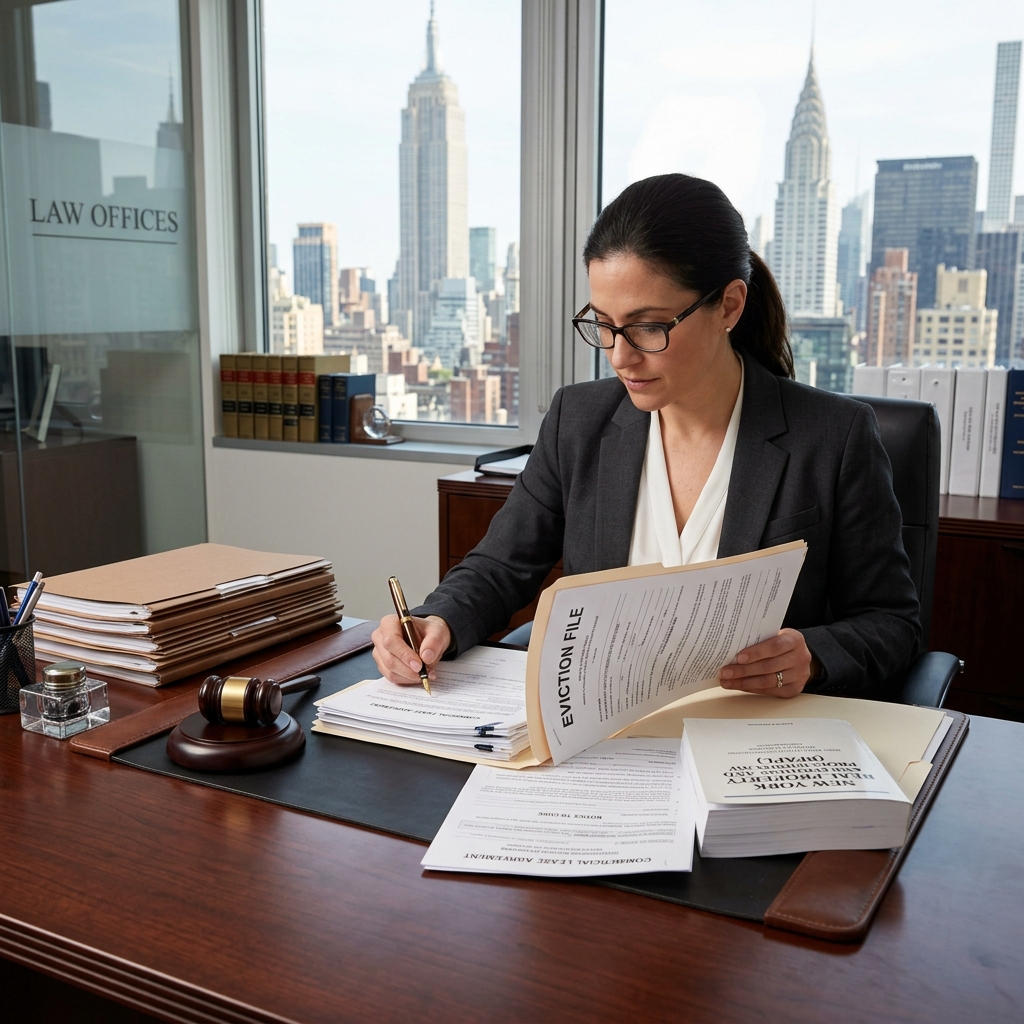
Commercial eviction in New York is a formal legal process that requires written notice, court involvement, and a lawful warrant before a business tenant can be removed from the premises. Landlords who ignore these rules risk serious financial penalties, claims for wrongful eviction, and potential loss of their case in court.
This guide explains the core rules and practical steps for evicting a commercial tenant in New York, with an emphasis on what landlords must do and what business tenants can do to protect their rights. It is an informational overview and not legal advice for any specific situation.
Understanding Commercial Tenancies in New York
A commercial tenancy is a rental arrangement for business use, such as stores, offices, warehouses, or restaurants. These tenancies are usually governed by a detailed lease agreement and New York’s Real Property Actions and Proceedings Law (RPAPL), among other statutes.
Key Differences from Residential Tenancies
- Negotiated terms: Commercial leases are usually heavily negotiated, with customized provisions about default, remedies, improvements, and personal guarantees.
- Less statutory protection: Business tenants typically have fewer automatic statutory protections than residential tenants, making the lease language and any newer good-cause rules particularly important.
- Focus on business impact: Eviction can shut down a business entirely, so courts often consider the economic impact and contractual expectations when deciding disputes.
Right to Possession and Lawful Removal
Under New York law, a commercial tenant has the right to remain in possession of the premises unless and until it is lawfully removed through a judgment of possession after a hearing or trial. This means that, in most situations, a landlord cannot simply lock out a business tenant or remove its property without going through court.
Legal Grounds for Commercial Eviction
To evict a commercial tenant, a landlord typically must show that there is a legally recognized reason—often referred to as cause or good cause—for ending the tenancy. The specific grounds will depend on the lease terms and applicable law.
Common Reasons a Landlord May Seek Eviction
- Nonpayment of rent: The business fails to pay rent or other charges (such as additional rent, common-area maintenance, or taxes) as required by the lease.
- Nonmonetary lease breach: The tenant violates a material lease term—for example, unauthorized subletting, prohibited use, failure to maintain insurance, or alteration without consent.
- Nuisance or unsafe conduct: The tenant’s conduct causes substantial damage, interferes with other occupants, or creates safety concerns in or near the building.
- Illegal or improper occupancy: The business operates in violation of law, or an agency orders the premises to be vacated due to illegal use or safety conditions.
- Expiration and non-renewal (where allowed): In some situations, the tenancy may be ended when the lease term expires, although newer good-cause rules limit this in certain contexts.
Good Cause Concepts and Emerging Protections
New York has adopted a Good Cause Eviction framework for many residential tenancies, requiring landlords to show specific grounds such as nonpayment, lease violation, or nuisance before evicting. Legislators have proposed similar protections for small commercial premises, which would bar eviction without good cause and tighten standards for removal. While the details for commercial spaces are still evolving, landlords should expect increasing scrutiny of their reasons for eviction, particularly where small businesses and vulnerable tenants are involved.
Preparing for a Commercial Eviction: Landlord Checklist
Before starting an eviction proceeding, landlords should carefully assess the situation, the lease terms, and potential alternatives. A systematic approach reduces mistakes and strengthens the case in court.
Step 1: Review the Lease Agreement
- Identify the specific provisions the tenant is allegedly violating, such as rent payment clauses, use restrictions, or maintenance obligations.
- Check any default and cure clauses: many leases require written notice and a specified number of days for the tenant to fix the breach.
- Look for clauses on remedies, attorney’s fees, late charges, interest, and rights to re-enter or terminate the lease.
Step 2: Evaluate Whether Cause Exists
Landlords should confirm that the alleged violation is substantial enough to support eviction, not merely a minor or technical issue. Recent legislative trends and good-cause concepts encourage courts to focus on meaningful breaches.
- Document missed payments, correspondence, and any prior notices.
- For behavioral or use-related issues, gather incident reports, photographs, or witness statements.
- Ensure that any rule or regulation being enforced was reasonably communicated and accepted in writing, as required in certain good-cause frameworks.
Step 3: Consider Negotiation or Lease Modification
Eviction can be lengthy and expensive. In many commercial cases, a negotiated solution—such as payment plans, temporary rent reduction, partial surrender of space, or assignment of the lease—may be preferable to litigation.
- Assess the cost of vacancy versus negotiated compromise.
- Explore mediation or structured negotiations to avoid future disputes.
- Document any agreements in writing and ensure they are consistent with the lease and applicable law.
Required Notices Before Filing an Eviction Case
New York law and most commercial leases require landlords to serve specific written notices before starting an eviction proceeding. Failure to comply with notice rules is a common reason cases are dismissed or delayed.
Rent Demands and Cure Notices
| Type of Notice | Typical Use | Key Features |
|---|---|---|
| Rent Demand | Nonpayment of rent | Demands past-due rent, states amount and time period, gives at least a specified number of days to pay (often 14 days under RPAPL 711(2)). |
| Cure Notice | Nonmonetary lease breach | Identifies the lease violation and gives a defined period to correct the issue before further action. |
| Notice to Quit / Termination | End of tenancy or holdover | States that the lease or occupancy will terminate on a specific date and that the tenant must vacate or face eviction proceedings. |
Content Requirements for Rent Demands
For nonpayment cases, courts expect rent demands to give the tenant clear, good-faith notice of the claimed arrears. The notice should:
- Identify each rental period for which payment is allegedly due.
- State the approximate sum owed for each period and the total claimed.
- Provide at least the minimum number of days to pay (often 14 days from service).
Service of Notices
Notices must be served in a way allowed by law, such as personal delivery, substitute service with mailing, or, in some cases, “nail and mail” (posting plus mailing). Improper service can lead to dismissal or require re-starting the process.
Filing a Commercial Eviction Case in Court
If the tenant does not cure the violation or pay the rent within the notice period, the landlord may file a formal court proceeding to regain possession of the property.
Types of Summary Proceedings
- Nonpayment Proceeding: Brought when the primary issue is unpaid rent or additional charges. The landlord typically seeks both possession and a money judgment.
- Holdover Proceeding: Brought when the tenant’s right to occupy has ended—such as after lease expiration, termination, or substantial lease breach—and the landlord seeks removal.
Core Court Documents
The landlord generally files a petition and notice of petition (or summons and complaint in some contexts), which must be served on the tenant according to court rules.
- Petition / Complaint: Explains the landlord’s claims, the lease terms, the alleged default, and the relief requested (possession and possibly money damages).
- Notice of Petition / Summons: Notifies the tenant of the case, the court, and the deadline to respond.
Tenant’s Answer and Defenses
After being served, the tenant generally has a short period to file an Answer, either orally at the court clerk’s office or in writing using court forms.
- In nonpayment proceedings, tenants often have about 10 days to answer after service of the notice of petition.
- For summons and complaint, the response deadline may be 20 or 30 days depending on how service was made.
- The Answer may include general denial, specific defenses, and counterclaims against the landlord.
How the Court Process Typically Unfolds
Once the case is filed and answered, the court will schedule conferences and, if necessary, a hearing or trial. The process aims to resolve disputes efficiently while respecting the rights of both sides.
Conferences and Settlement Discussions
In many New York courts, parties first attend conferences to narrow issues, exchange information, and explore settlement. Potential outcomes include:
- Stipulated payment plans for arrears.
- Agreed move-out schedule and surrender of premises.
- Lease amendments or extensions conditioned on future performance.
Trial and Judgment of Possession
If the case does not settle, it proceeds to trial, where the landlord and tenant present evidence and legal arguments. The judge may issue:
- Judgment of possession: Grants the landlord the right to regain the premises.
- Money judgment: Awards unpaid rent, damages, or other amounts proven at trial.
- Dismissal or stay: If the landlord has not met legal requirements or if defenses succeed, the court may dismiss the case or delay enforcement.
Enforcement of Eviction: Warrants and Limitations
A landlord cannot personally remove a commercial tenant after judgment; enforcement must comply with specific legal procedures.
Warrant of Eviction and Execution
Once a judgment of possession is entered, the court issues a warrant of eviction. Only a Marshal or Sheriff is authorized to execute the warrant and physically remove the tenant and its property.
- Tenants are generally entitled to at least 14 days’ notice prior to execution of the eviction warrant in many contexts.
- Tenants may seek a stay or vacatur of the warrant for good cause, such as payment of arrears, legal errors, or hardship, depending on the circumstances.
Self-Help and Re-Entry
In limited commercial situations, New York case law has recognized that landlords may use self-help if the lease explicitly permits peaceful re-entry upon default, a valid rent demand has been served, and the re-entry is conducted without breaching the peace. However, self-help is legally risky and may lead to claims of wrongful eviction if not executed strictly within the law.
Defending Against a Commercial Eviction: Tenant Strategies
Business tenants facing eviction should act quickly to understand their rights, prepare defenses, and seek legal representation where possible.
Common Defenses in Commercial Eviction Cases
- Improper notice or service: The landlord failed to provide legally adequate rent demands, cure notices, or termination notices, or served them incorrectly.
- No substantial breach: The alleged violation is minor, cured, or not material enough to justify eviction.
- Landlord’s own breach: The landlord violated the lease (for example, by failing to provide services or access), which contributed to or excused the tenant’s nonperformance.
- Rent not owed or miscalculated: The amount claimed is wrong, includes charges not permitted by the lease, or fails to credit payments.
- Good cause and unfair practices: In scenarios covered by good-cause frameworks, the landlord may lack valid cause for eviction or may be using pretextual violations.
Counterclaims and Remedies for Tenants
Tenants can raise counterclaims in their Answer if they believe the landlord has violated the lease or applicable law.
- Claims for damages due to wrongful lockouts, lost business, or property damage.
- Requests for attorneys’ fees if the lease or statute allows recovery.
- Demands for repairs or enforcement of landlord obligations where conditions have negatively affected the business.
Compliance Tips to Avoid Disputes and Evictions
Both landlords and tenants can reduce the risk of eviction by focusing on communication, documentation, and compliance throughout the lease term.
For Landlords
- Use clear, detailed lease forms tailored to the specific property and business type.
- Maintain written records of payments, notices, and negotiations.
- Consult counsel before using self-help or making unilateral changes to access or services.
- Monitor legislative changes, including good-cause proposals affecting small commercial premises.
For Business Tenants
- Read and understand the lease thoroughly before signing, especially default and remedy clauses.
- Keep copies of all payments, correspondence, and landlord communications.
- Respond promptly to cure notices and rent demands, and seek legal advice when sued.
- Explore negotiated solutions early if the business is struggling to meet lease obligations.
Frequently Asked Questions About Commercial Eviction in New York
Can a landlord evict a commercial tenant without a written lease?
Yes, a landlord may seek to evict a commercial tenant even without a written lease, but must still follow legal notice and court procedures. The tenancy will typically be treated as month-to-month or as otherwise established by the parties’ conduct, and the landlord may start a holdover proceeding after proper termination notice.
How much notice must a commercial tenant receive before eviction?
Notice requirements vary by situation, but tenants usually receive a written rent demand or cure notice, followed by a petition and court papers, and then additional time between judgment and execution of the warrant. In many contexts, at least 14 days’ notice is required before an eviction warrant is executed.
Who physically carries out the eviction?
Only a Marshal or Sheriff may physically evict a tenant after a warrant is issued; landlords cannot lawfully perform their own lockouts or removals except in narrow, carefully constrained self-help situations.
Can a commercial eviction be stopped after judgment?
In some circumstances, tenants may ask the court to stay or vacate the eviction warrant for good cause, such as curing the default, demonstrating legal errors, or presenting significant hardship arguments. The availability of relief depends on the specifics of the case and any applicable statutes or court rules.
Do good-cause eviction rules apply to commercial tenancies?
New York’s Good Cause Eviction law is primarily aimed at residential tenants, but lawmakers have advanced proposals extending good-cause concepts to small commercial premises. Landlords and tenants should monitor legislative developments to understand how these rules may apply to particular business spaces.
References
- Commercial Tenancies — Gallet Dreyer & Berkey LLP. 2023-01-10. https://www.glnylaw.com/practice-areas/general-principles-of-landlord-tenant-law/commercial-tenancies/
- The Process of Commercial Eviction in NYC — Law Offices of Robert Kaplan. 2022-09-15. https://lork.nyc/the-process-of-commercial-eviction-in-nyc-what-business-owners-need-to-know/
- The 7-Step Guide to Conducting a Commercial Eviction — Azibo, Inc. 2023-06-20. https://www.azibo.com/blog/commercial-eviction
- A Viable Eviction Option For NYC Commercial Landlords — Fox Rothschild LLP. 2020-03-02. https://www.foxrothschild.com/publications/a-viable-eviction-option-for-nyc-commercial-landlords
- How can I fight a commercial eviction? — Legal Services NYC. 2022-05-05. https://www.legalservicesnyc.org/resources/how-can-i-fight-a-commercial-eviction/
- New York State Good Cause Eviction Law — Office of the New York State Attorney General. 2024-04-01. https://ag.ny.gov/publications/new-york-state-good-cause-eviction-law
- Summary Eviction Proceeding Checklist (Commercial Tenancy) (NY) — Thomson Reuters Practical Law. 2019-08-30. https://anzlaw.thomsonreuters.com/w-039-3624
Similar Articles








Read full bio of medha deb


