
Understanding Lifetime Driver’s License Suspensions
Learn when a license can be suspended for life, what rights you retain, and how reinstatement may be possible in some jurisdictions.
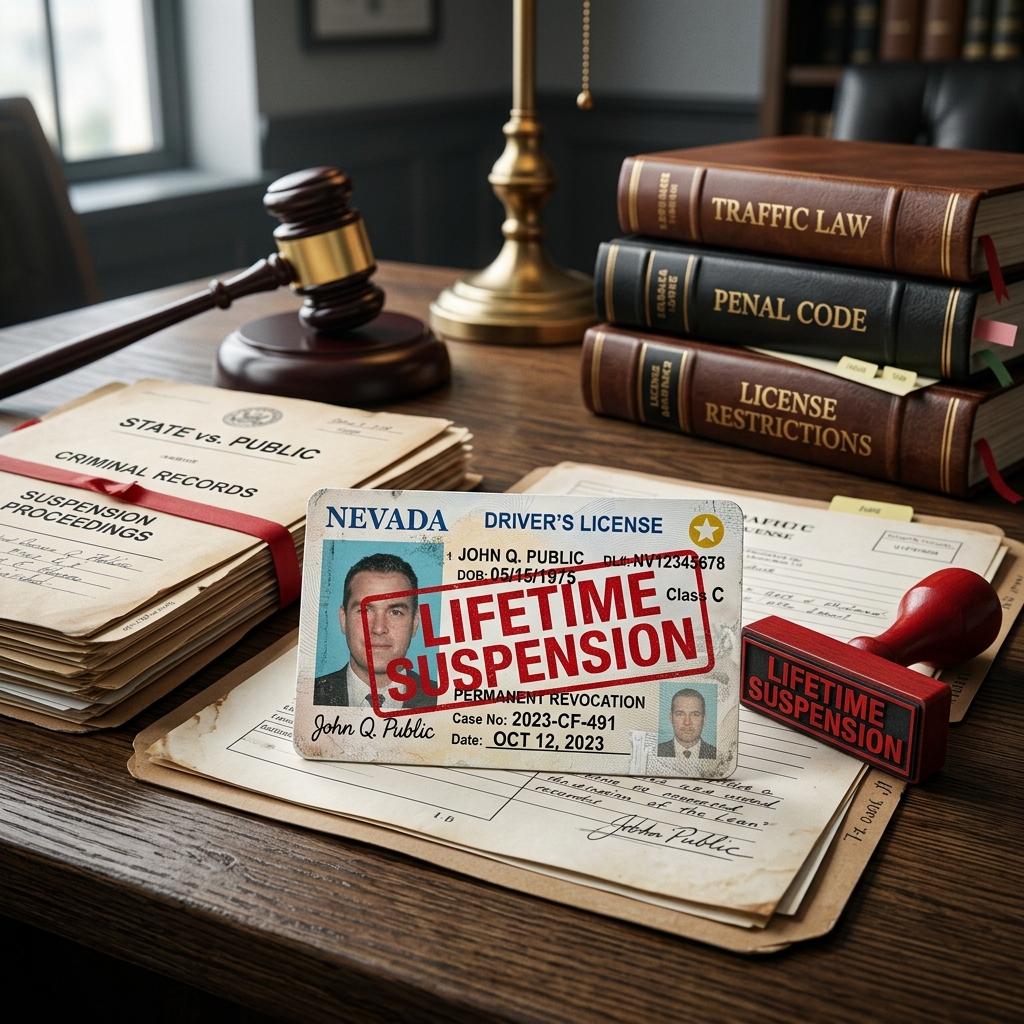
Most drivers expect that a suspended license will eventually be restored, often after paying fines or completing safety courses. In serious cases, however, a person’s privilege to drive can be taken away for the rest of their life. This is known as a lifetime driver’s license suspension or permanent revocation, and it is reserved for the most severe traffic and criminal offenses.
This article explains what lifetime suspensions are, when they arise, how they differ from ordinary suspensions, the daily consequences of permanently losing the right to drive, and why in a few states there may be limited paths to reinstatement.
Suspension vs. Revocation: Key Legal Distinctions
Traffic laws use several different terms to describe limits on the right to drive. Understanding the differences is essential when evaluating how serious a sanction really is.
- Suspension: The license is temporarily taken away for a defined period. When the suspension ends, the driver can usually restore their license by paying fees, meeting court conditions, and satisfying state requirements.
- Revocation: The license is cancelled. After the revocation period, the driver must apply for a new license, which may involve re-taking written and road tests and passing extensive eligibility checks.
- Lifetime suspension or permanent revocation: The law or the court specifies that the driver’s operating privilege is revoked indefinitely, sometimes with no right to reapply, and sometimes with only a narrow chance to seek reinstatement after many years.
| Type of sanction | Duration | Can you reapply? | Typical reasons |
|---|---|---|---|
| Definite suspension | Fixed period (days to months) | Yes, usually automatic once conditions are met | Speeding, unpaid tickets, minor alcohol offenses, points accumulation |
| Revocation | Longer period (months to years) | Yes, but must apply for a new license and meet stricter criteria | Serious traffic violations, major crashes, repeated impaired driving |
| Lifetime suspension / permanent revocation | Indefinite (may be permanent) | Varies by state: some never allow, others permit limited petitions after many years | Multiple serious impaired-driving offenses, vehicular homicides, certain felony traffic crimes |
When Can a License Be Suspended for Life?
Lifetime suspensions are most often associated with habitual dangerous driving, especially repeated alcohol- or drug-related offenses, or criminal conduct that causes death or serious injury.
Repeat Alcohol or Drug-Impaired Driving
Several states allow permanent revocation when a driver accumulates multiple impaired-driving convictions within a defined time frame. For example, Wisconsin law authorizes lifetime revocation if a person has four or more alcohol or drug impairment-related offenses and the fourth occurs within 15 years of the previous offense.
Other frameworks focus on a combination of impaired driving and additional serious offenses. Again in Wisconsin, permanent revocation may be imposed if a person has two alcohol- or drug-related convictions within 25 years plus two or more qualifying convictions such as certain vehicular homicides or felony offenses involving a motor vehicle.
Vehicular Homicide and Serious Traffic Felonies
Lifetime suspension can also be triggered when a driver causes another person’s death or severe injury through dangerous operation of a vehicle. States may treat these crimes as felonies and authorize class-one or similar high-level suspensions that can last for life.
- Causing a fatal crash while driving under the influence
- Second-degree reckless homicide involving a vehicle
- Felony offenses in which a motor vehicle is used as part of the crime
In Ohio, for instance, a person whose license has been suspended for life under certain felony provisions may fall under a special statute governing motions to modify or terminate long-term suspensions.
Habitual Violator Statutes
Many states have habitual offender laws that track repeat dangerous drivers. The penalties in these schemes vary, but they can include lengthy or lifetime suspensions based on the number and severity of prior offenses. While some jurisdictions have moved away from lifetime bans, others still impose permanent consequences for extreme patterns of unsafe driving.
How Courts and Licensing Agencies Decide on Lifetime Sanctions
In most cases, the legislature sets the basic rules for when lifetime suspensions are allowed. Courts and motor vehicle departments then apply those rules and, within authorized limits, exercise discretion.
Role of the Court
When a driver is convicted of a serious traffic or criminal offense, the sentencing court may be required by statute to impose a particular type of suspension or revocation. For offenses like vehicular homicide or certain felonies, the court’s power may include ordering that the person’s driving privileges are stripped for life.
Courts also consider factors such as:
- Number of prior convictions
- Severity of harm caused (e.g., fatality or permanent injury)
- Evidence of alcohol or drug dependence
- Risk of future danger to the public
Role of the Motor Vehicle Department
Licensing agencies such as a state Department of Motor Vehicles (DMV) or Department of Transportation often administer long-term revocation schemes. They review the driver’s record, apply regulatory rules, and determine whether a person qualifies for restoration when the law allows reapplication.
These agencies can also adopt regulations, within the scope of legislative authority, that define when repeat offenders may never be licensed again. Courts have upheld some of these regulatory frameworks as valid exercises of administrative discretion, provided they comply with constitutional limits.
Consequences of a Lifetime Suspension
Permanent loss of driving privileges has wide-ranging impacts that go far beyond the inability to operate a car legally.
Daily Life and Employment
- Work and income: Many jobs require driving. A lifetime suspension can exclude a person from entire sectors such as delivery, commercial driving, sales, service work, and construction.
- Family responsibilities: Transporting children to school, caring for elderly relatives, or attending medical appointments becomes challenging without the ability to drive.
- Housing and mobility: People may have to relocate to areas with public transportation or depend on others for basic travel.
Legal and Financial Consequences
- Criminal liability for driving while revoked: Driving without valid privileges after a lifetime suspension can result in new criminal charges and potential jail time.
- Insurance issues: Even if reinstatement someday becomes possible, insurers generally view lifetime or long-term revocations as extreme risk factors, leading to high premiums or refusal to insure.
- Ongoing supervision: Conditions such as probation, treatment programs, or reporting requirements may accompany the original sentence, particularly in alcohol- or drug-related cases.
Are Lifetime Suspensions Always Truly Permanent?
Although the term “lifetime” suggests a sanction that can never be changed, some states allow limited opportunities to seek restoration after many years. The rules are highly state-specific.
Examples of Limited Reinstatement Paths
In Wisconsin, a law change allows some drivers whose operating privileges were permanently revoked to apply for reinstatement after ten years, even though the revocation was originally described as lifetime.
Ohio law permits individuals whose licenses were suspended for life under certain high-level suspensions to file a motion with the sentencing court seeking modification or termination. They must meet strict conditions, including long periods without new offenses and proof of financial responsibility.
- Length of time: At least 10–15 years must have passed since the suspension began or since release from prison.
- Clean record: The person must demonstrate they have not been convicted of new felonies or significant moving violations during the entire period.
- Proof of responsibility: Courts may require evidence of sobriety, completion of treatment, and valid liability insurance or other financial responsibility.
By contrast, in some jurisdictions there is no statutory mechanism to reverse a lifetime ban, and the person may remain barred from driving indefinitely.
Reinstatement After Revocation vs. Lifetime Ban
Drivers who have ordinary revocations (not lifetime) often follow standardized procedures to regain their licenses. These processes illustrate how much stricter the situation is when a permanent ban is in place.
Typical revocation restoration steps include:
- Serving the full revocation period
- Paying all required fees and fines
- Providing proof of insurance or other financial responsibility
- Completing any mandated education or impaired-driver programs
- Re-taking written and road tests, if required
- Submitting paperwork such as crash reports or court documents to the DMV
When a lifetime suspension is involved, these routine procedures may not be available at all. Instead, the individual might have only one option: filing a formal motion or petition with the court, if state law allows, and convincing the judge that public safety will not be compromised by restoring their driving privileges.
Practical Steps if You Face a Lifetime Suspension
If you are at risk of a lifetime suspension or have already received one, quick and informed action is critical. Laws and procedures differ widely, so the specific steps depend on your state and your case.
Immediately After Charges or Conviction
- Consult a qualified attorney: Traffic and criminal laws controlling license suspensions are complex. An attorney can explain potential penalties, negotiate pleas, and argue for lesser sanctions where possible.
- Understand mandatory minimums: Some offenses carry required suspensions or revocations that a judge cannot reduce; knowing these rules can shape legal strategy.
- Comply with court orders: Observing probation terms, treatment requirements, and other conditions can influence future decisions about restoration.
Long-Term Management of a Lifetime Ban
- Do not drive without legal privileges: Driving while your license is revoked or suspended can lead to new criminal charges and eliminate any future chance of reinstatement.
- Maintain a clean record: If your state allows a later petition, a spotless record over many years will be central to showing rehabilitation.
- Document sobriety and treatment: Keep records of alcohol or drug treatment, counseling, and testing, as courts may require evidence that substance misuse has been addressed.
- Plan for alternative transportation: Relying on public transit, ride-shares, or assistance from family and friends may be necessary for work and daily life.
Frequently Asked Questions (FAQs)
1. Is a lifetime suspension the same as a permanent revocation?
In many states, the terms are used interchangeably to describe the indefinite removal of driving privileges. However, some laws labeled as “permanent” still allow a person to apply for reinstatement after a set number of years, so the exact meaning depends on state statutes.
2. Can I ever drive again if I have a lifetime suspension?
It depends entirely on your state’s law and the specific reason for the suspension. Some jurisdictions provide no legal path to drive again. Others allow a motion or petition for modification after a long period of time, but only if you meet strict criteria such as a clean record and proof of financial responsibility.
3. What kinds of offenses usually lead to lifetime suspensions?
Common triggering events include repeated alcohol- or drug-related driving offenses, vehicular homicides, and certain felony crimes involving the use of a motor vehicle. Habitual offender laws may also impose lifetime sanctions when a driver accumulates multiple serious violations over a defined timeframe.
4. Do all states allow lifetime license suspensions?
No. Some states have moved away from true lifetime bans, placing upper limits on the length of suspensions even for habitual offenders. Others still authorize permanent revocation in narrow, severe circumstances. Because policies vary, it is important to consult local law or an attorney in the relevant state.
5. Should I hire a lawyer if I am facing a possible lifetime suspension?
Given the severity and lasting consequences of a lifetime suspension, obtaining legal advice is strongly recommended. A lawyer can interpret the statutes that apply to your case, advise on plea options, and represent you if you seek modification or reinstatement in one of the states that permits it.
References
- Lifetime revocation — Wisconsin Department of Transportation. 2021-09-15. https://wisconsindot.gov/Pages/dmv/license-drvs/susp-or-rvkd/lifetime-rev.aspx
- Suspensions and revocations — New York State Department of Motor Vehicles. 2023-05-10. https://dmv.ny.gov/points-and-penalties/suspensions-and-revocations
- Request restoration after a driver license revocation — New York State Department of Motor Vehicles. 2022-08-01. https://dmv.ny.gov/points-and-penalties/request-restoration-after-a-driver-license-revocation
- Lifetime Suspension of Driver’s License — LegalMatch Law Library. 2020-07-06. https://www.legalmatch.com/law-library/article/lifetime-suspension-of-drivers-license.html
- Section 4510.54 – Motion for modification or termination of suspension — Ohio Revised Code. 2018-10-29. https://codes.ohio.gov/ohio-revised-code/section-4510.54
- Lifetime revocation — Law Office of Brad E. Mazarin. 2016-09-10. https://www.bradmazarin.com/lifetime-revocation-2
- Can I reverse a lifetime license suspension? — Rigney Law. 2021-02-03. https://www.rigneylawindy.com/can-i-reverse-a-lifetime-license-suspension/
Similar Articles








Read full bio of medha deb


