
Marriage Rules for Foreign Nationals: A Practical Guide
Understand how foreigners can legally marry in the U.S. or abroad, what documents you need, and how local law affects the validity of your marriage.
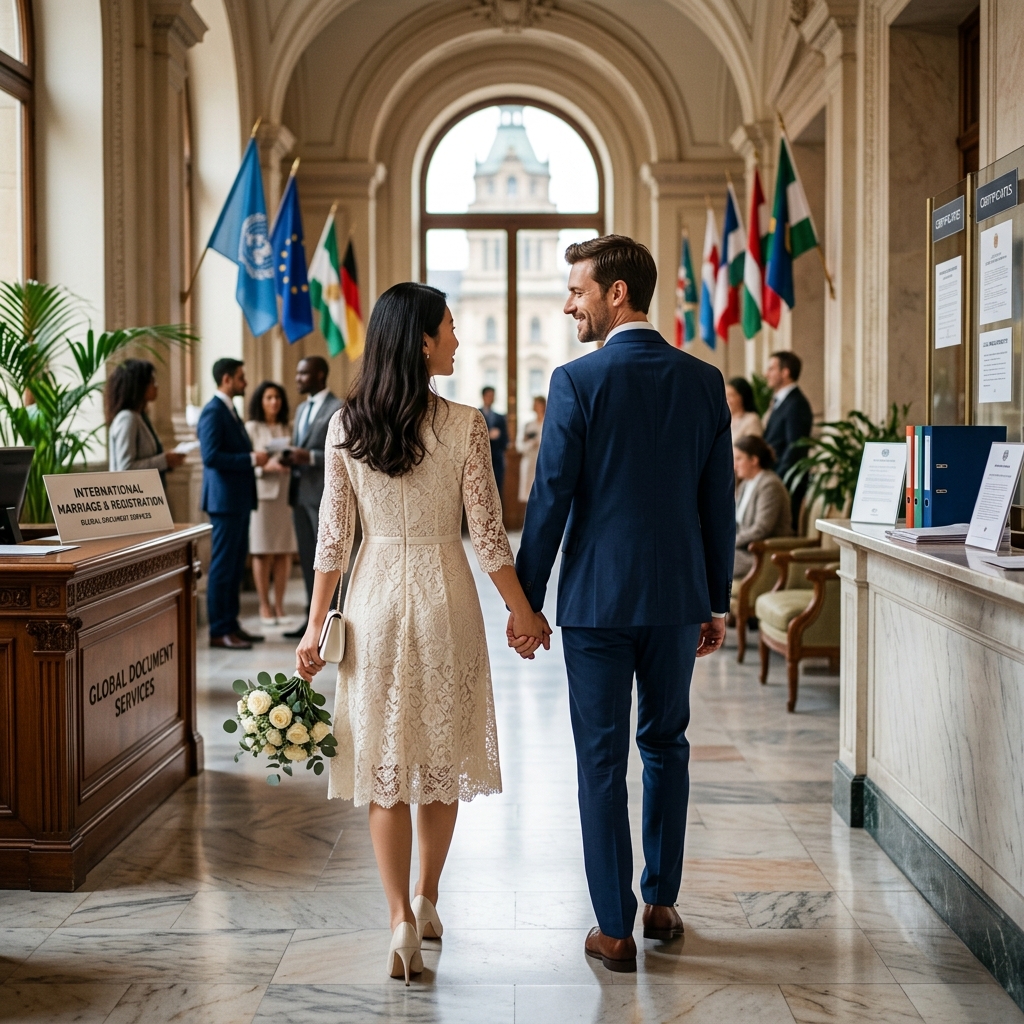
Foreign nationals marry every day in the United States and around the world, but the legal rules that govern those marriages can be complex. This guide explains the key requirements that apply when one or both spouses are foreigners, whether the wedding is in the U.S. or abroad, and how those rules interact with immigration law and recognition of the marriage in other countries.
1. Core Principle: Marriage Is Governed by Local Law
Whether you marry in New York, Paris, or Manila, the basic rule is that your marriage must comply with the law of the place where the ceremony occurs. U.S. immigration authorities use a place-of-celebration rule: a marriage is legally valid for immigration purposes if it is valid under the law where it was performed.
This principle has several practical consequences:
- No single global standard: Age limits, documentation, and procedures differ widely between jurisdictions.
- Civil recognition matters: For immigration, authorities recognize civil marriages backed by an official marriage certificate, not purely religious or informal unions.
- Compliance affects later rights: If the marriage violates local law (for example, not meeting age or consent rules), it may later be rejected for immigration, tax, or inheritance purposes.
2. Marrying in the United States When One or Both Spouses Are Foreigners
In the U.S., marriage is primarily regulated by state law. There is no federal requirement for citizenship or legal immigration status in order to marry.
2.1 Basic State-Level Requirements
Although details vary, most U.S. states follow similar patterns for issuing a marriage license.
- Minimum age: Typically 18 for marriage without parental consent, though some states allow younger ages with court or parental approval.
- Valid identification: Government-issued ID such as a passport, driver’s license, or consular ID is usually required.
- Proof of marital status: Some states ask for proof that prior marriages ended (divorce decree or death certificate) or require an affidavit of single status.
- Marriage license application: Couples must apply with a county clerk or similar authority and pay the applicable fee.
- Waiting periods or expirations: Certain states impose a short wait between license issuance and the ceremony, and licenses may expire if not used within a set time.
Local offices generally do not check immigration databases. As a result, foreigners—including those without lawful immigration status—can still obtain a marriage license as long as state criteria are met.
2.2 Immigration Status and the Right to Marry
Marriage in the U.S. is treated as a civil right that does not depend on immigration status. A person can be:
- A temporary visitor (on a tourist, student, or work visa)
- A lawful permanent resident (green card holder)
- Undocumented (without legal status)
In all of these situations, state law governs access to marriage, not federal immigration law. However, immigration status becomes highly relevant later when a couple seeks immigration benefits based on the marriage.
2.3 U.S. Citizen or Resident Marrying a Foreign National
When a U.S. citizen or permanent resident marries a foreign national, there are two distinct legal questions:
- Is the marriage valid under state law? This depends on the state’s marriage requirements.
- Does the marriage confer immigration benefits? This is governed by federal immigration law and regulations.
The marriage itself does not automatically grant a foreign spouse a visa or green card. Instead, the U.S. citizen or resident must file appropriate immigration petitions, and the foreign spouse must complete consular processing or status adjustment.
| Scenario | Marriage Validity | Immigration Consequences |
|---|---|---|
| U.S. citizen + foreign spouse | Valid if state requirements met | Can support green card, naturalization path if later conditions met |
| Permanent resident + foreign spouse | Valid if state requirements met | Foreign spouse may qualify for immigrant visa or status adjustment but not automatically |
| Two foreign nationals in U.S. | Valid if state requirements met | May be used for immigration in other countries or later U.S applications if law permits |
3. Marrying Abroad When One or Both Spouses Are Foreigners
Many couples choose to marry outside the United States for personal, cultural, or practical reasons. When a U.S. citizen or resident marries abroad, the foreign country’s laws govern the ceremony and documentation.
3.1 Typical Requirements in Foreign Countries
National and local authorities abroad often impose conditions that are different from U.S. rules. Common requirements include:
- Residency periods: Couples may need to reside in the country for a set time before marrying.
- Proof of legal capacity to marry: Many civil law countries require certification that no impediment exists to the marriage, often in the form of an official statement or affidavit.
- Age and consent rules: The age of majority for marriage and parental consent rules vary.
- Blood tests or medical certificates: Some jurisdictions require health checks before marriage.
- Translated and authenticated documents: Birth certificates, divorce judgments, and other records may need translation and authentication or legalization.
U.S. diplomatic and consular officers cannot perform marriages; couples must work with local civil or religious authorities authorized under that country’s law.
3.2 Affidavits of Eligibility to Marry
Because the U.S. does not issue a formal certificate of capacity to marry, U.S. citizens may need to execute an affidavit abroad stating they are free to marry. Typically:
- The affidavit is signed before a U.S. consular officer or local authority.
- The document may need witnesses or accompanying evidence of single status.
- Foreign marriage registrars rely on this affidavit as proof that no legal impediment exists under home-country law.
3.3 Recognition of Foreign Marriages in the United States
Foreign marriages that comply with local law are generally recognized as valid in the U.S., including for immigration purposes. Key factors include:
- Legality where celebrated: The marriage must meet the substantive and procedural rules of the country where it occurred.
- Public policy limits: Certain marriages, such as those violating strong U.S. public policy, may not be recognized even if valid abroad.
- Proper documentation: Couples should retain certified copies of marriage certificates and translations for future legal use.
4. Marriage and U.S. Immigration Benefits
Many foreigners marry hoping to obtain immigration benefits, such as a green card or eventual U.S. citizenship. While marriage can create a pathway, it is not a guarantee.
4.1 Proving a Valid Marriage for Immigration Purposes
When a foreign spouse applies for a visa, green card, or naturalization based on marriage, authorities examine whether the marriage is:
- Legally valid: The couple must show a civil marriage certificate from the jurisdiction where the ceremony took place.
- Bona fide: Immigration agencies look for evidence that the marriage was entered into in good faith and not primarily for immigration benefits.
- Ongoing marital union (in some cases): For certain naturalization provisions, the applicant must show that they live in marital union with their U.S. citizen spouse.
Evidence often includes shared leases, bank accounts, insurance policies, photos, and other documentation showing the couple’s life together.
4.2 Special Rules for Naturalization Based on Marriage
U.S. immigration law allows some spouses of U.S. citizens to apply for naturalization earlier than the usual five-year residency period. To use these provisions, the applicant must demonstrate:
- A valid civil marriage to a U.S. citizen under the place-of-celebration rule.
- That the spouse has been and remains a U.S. citizen from filing until the oath of allegiance.
- Continuous residence and living in marital union for the required period (often three years).
If the U.S. citizen spouse loses citizenship before the applicant takes the oath, the applicant becomes ineligible under these marriage-based provisions.
4.3 Fraud and Conditional Status Considerations
U.S. law includes mechanisms to deter and detect marriage fraud in immigration. While detailed rules are complex, the core ideas are:
- Marriage-based immigrant status may be conditional when the marriage is recent, requiring further proof after two years to remove conditions.
- If authorities determine a marriage was entered into solely to obtain immigration benefits, the foreign spouse may be denied status and removed from the country.
These rules underline the importance of ensuring that the marriage complies both with local marriage law and with immigration regulations.
5. Practical Planning Tips for Foreigners Considering Marriage
For foreigners planning a wedding, careful preparation reduces the risk of legal or immigration complications. Consider the following practical steps.
5.1 Before You Choose Where to Marry
- Clarify your goals: Are you primarily concerned with cultural tradition, legal benefits, immigration, or convenience?
- Research the local marriage requirements in the jurisdiction where you plan to marry, including residency and documentation.
- Consult official sources such as government or embassy websites to obtain up-to-date information rather than relying on informal advice.
5.2 Document Checklist for Foreign Nationals
Requirements differ, but foreigners should expect to gather at least:
- Valid passport as primary identification.
- Birth certificate (possibly with certified translation).
- Evidence of termination of prior marriages (divorce or death certificates).
- Affidavit of eligibility to marry or single status, where required.
- Additional documents demanded by the local marriage registrar, such as medical certificates or proof of residency.
5.3 Coordinating Marriage and Immigration Strategy
If marriage and immigration are connected objectives, couples should:
- Understand that civil marriage is necessary but not sufficient for immigration benefits.
- Review available visa categories, such as fiancé visas or immigrant visas for spouses of U.S. citizens or residents.
- Preserve a thorough paper trail of the relationship and marriage for potential future applications.
- Seek legal advice from qualified immigration professionals when circumstances are complex.
6. Frequently Asked Questions (FAQs)
Can two foreigners marry in the United States?
Yes. As long as they meet state-level requirements for a marriage license—such as age, identification, and any local procedures—their marriage can be legally recognized, regardless of their citizenship.
Do you need lawful immigration status to marry in the U.S.?
No. U.S. states do not typically require proof of lawful immigration status to issue a marriage license. Marriage eligibility is based on state law criteria, not federal immigration status checks.
Will my foreign marriage be recognized in the United States?
In general, a marriage performed abroad is recognized in the U.S. if it was legally valid where it took place and does not conflict with strong U.S. public policy. You will need official documentation, such as a certified marriage certificate.
Does marrying a U.S. citizen automatically grant a green card?
No. Marriage to a U.S. citizen creates eligibility to apply for a green card, but the foreign spouse must still go through the immigration process, including petitions, screening, and interviews.
Who should I contact to learn the rules for marrying in a specific foreign country?
You should contact the office that issues marriage certificates in that country or its tourist information bureau, and you may also consult the relevant U.S. embassy or consulate for guidance on documentation required from U.S. citizens.
References
- Marriage and Marital Union for Naturalization — U.S. Citizenship and Immigration Services. 2023-01-01. https://www.uscis.gov/policy-manual/volume-12-part-g-chapter-2
- Marriage — U.S. Department of State, Bureau of Consular Affairs. 2023-06-01. https://travel.state.gov/en/international-travel/living-abroad/marriage.html
- Marriage of U.S. Citizen Abroad — U.S. Embassy Luanda. 2022-05-01. https://ao.usembassy.gov/services/marriage-of-u-s-citizen-abroad/
- How to Marry a Non-U.S. Citizen — Boundless Immigration. 2023-04-01. https://www.boundless.com/immigration-resources/marry-non-u-s-citizen
- Can Two Immigrants Get Married in the United States? — Rahman Law PLLC. 2023-03-01. https://rahmanlawpllc.com/blog/can-two-immigrants-get-married-in-us/
Similar Articles








Read full bio of medha deb


