
Understanding Sex Crime Registration Duties
A practical, plain‑language guide to sex crime registration rules, duties, consequences, and legal options for people facing registry requirements.
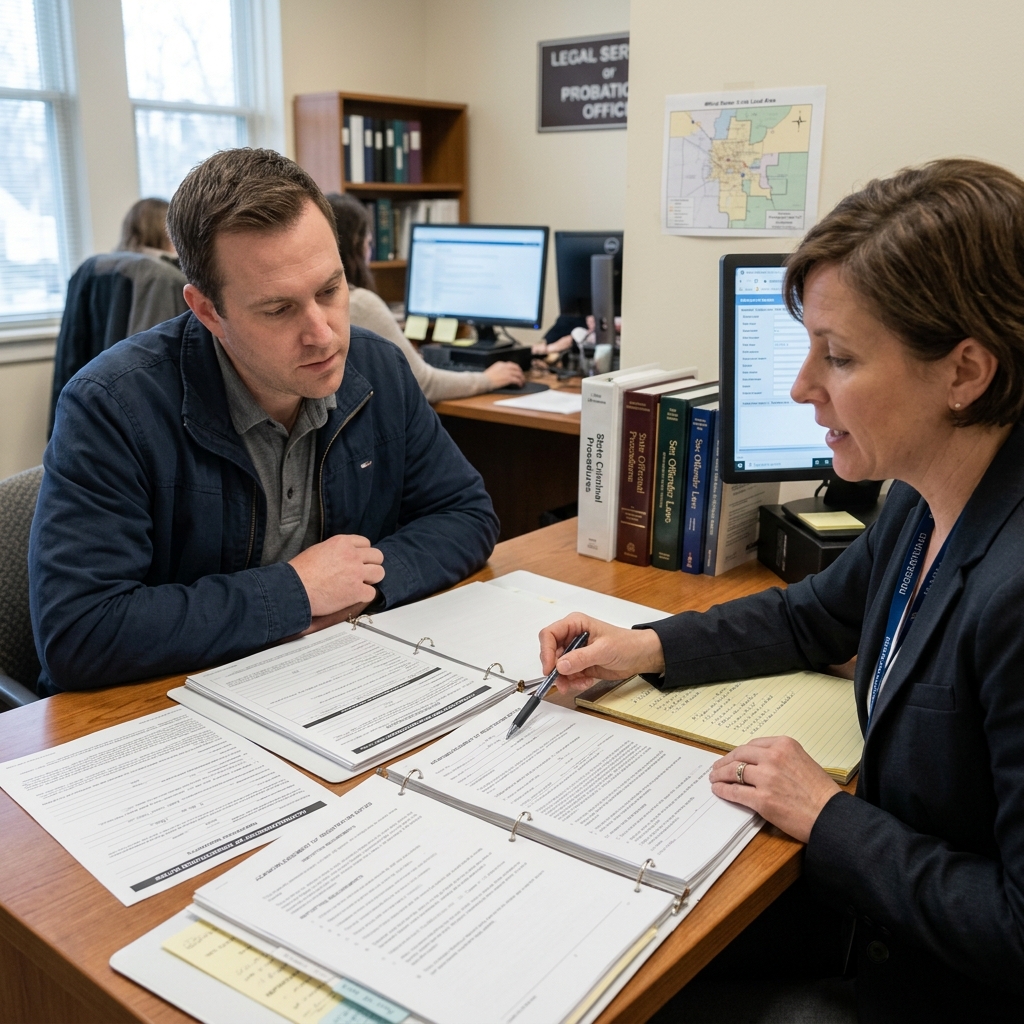
Sex crime registration laws create long-term obligations for people convicted of certain sexual offenses. These requirements can affect where a person lives, works, attends school, and even how they travel. Although the rules vary by state, federal law sets minimum standards that every jurisdiction must meet.
This guide explains who must register, what information must be provided, how often updates are required, the restrictions commonly imposed on registrants, and the consequences of failing to comply. It also highlights situations where consulting a criminal defense attorney or civil rights lawyer is especially important.
1. What Is Sex Crime Registration?
Sex crime registration, often called sex offender registration, is a legal system for tracking individuals convicted of qualifying sexual offenses after they return to the community. Registries exist at the federal, state, territorial, and tribal levels, and they are used both for law enforcement monitoring and public notification.
- Primary purpose: Monitor and track people convicted of sex offenses after release.
- Public safety goal: Provide information to law enforcement and, in many jurisdictions, to the public through searchable online databases.
- Scope: Applies to a wide range of offenses defined as “sex offenses” under federal and state law, from serious violent crimes to some non-violent or digital offenses.
The federal system integrates state, territorial, and tribal data into the National Sex Offender Public Website (NSOPW), while states and territories maintain their own registries and detailed rules.
2. Who Has to Register?
Under federal law, the Sex Offender Registration and Notification Act (SORNA) defines a sex offender as any individual who has been convicted of a sex offense as defined in the statute. That includes convictions under federal, military, state, territorial, tribal, or local law, and in some circumstances, foreign convictions.
2.1 General Categories of Registerable Offenses
Although each state has its own list, many registries include offenses such as:
- Sexual assault and rape
- Child sexual abuse and exploitation
- Possession, production, or distribution of child pornography
- Sex trafficking or certain prostitution-related offenses
- Indecent exposure or lewd acts in public, particularly near schools or parks
Some states also require registration for non-violent or borderline conduct, such as consensual sexual activity between teenagers where age differences trigger statutory offenses, or certain online and digital crimes. This makes it critical to consult legal counsel if there is any possibility that a conviction could lead to registry duties.
2.2 Key Federal Minimum Standards
SORNA sets national minimum standards for who must register. Highlights include:
- Conviction-based: Registration is tied to a qualifying sex offense conviction.
- Multiple jurisdictions: A registrant must register in every jurisdiction where they live, work, or attend school.
- Foreign convictions: Certain foreign sex offense convictions can trigger registration if statutory criteria are met.
2.3 Exceptions for Some Consensual Conduct
Federal law recognizes limited situations where consensual sexual conduct does not trigger mandatory registration under SORNA, even if a conviction occurs. For example:
- Consensual sexual activity between two adults without custodial authority (such as inmate–scenarios) generally is not a registerable offense under SORNA.
- For consensual sexual conduct involving minors, if both participants are at least 13 and no more than four years apart in age, federal law does not require registration based solely on that conduct.
However, states are free to adopt stricter rules and may still require registration in these situations. Understanding your local law is crucial.
3. When and How Registration Begins
Registration usually begins around the time of release from custody or placement on community supervision. Federal guidelines require states to have procedures ensuring that individuals are informed of and enrolled in registry requirements as they leave prison or jail.
3.1 Initial Registration
Key features of initial registration typically include:
- Before or upon release: Many jurisdictions require individuals to provide registration information before leaving prison, jail, or a juvenile facility.
- Strict time limits: People must often register with local law enforcement within a short window after release or arrival in a new state (for example, 72 hours in some states).
- In-person reporting: Most systems require registrants to appear in person at a designated office, such as a sheriff’s department, to sign forms and provide identifying information.
3.2 Homeless or Transient Registrants
People without a fixed address still must register. In some states, a registrant who is homeless must report where they sleep and update this information at set intervals (often more frequently than those with permanent housing).
4. Information Required on the Registry
Registrants must provide detailed personal and identifying information. While exact requirements differ by jurisdiction, common data elements include:
| Type of Information | Typical Examples | Purpose |
|---|---|---|
| Biographical identifiers | Name, aliases, date of birth, sex | Basic identity verification and record matching |
| Contact and location | Residential address, mailing address, phone numbers | Monitoring residence and jurisdiction of registration |
| Physical identifiers | Photograph, fingerprints, sometimes DNA profile | Law enforcement identification and future investigations |
| Employment and education | Employer name and address, school enrollment | Track workplaces and campuses where registrants are present |
| Criminal history | Offense of conviction, sentencing details, risk level | Risk classification and length of registration |
| Online and travel-related data | Email addresses, online identifiers, travel or immigration documents | Assist investigations involving online or cross-border activity |
Much of this information is provided to law enforcement and shared across jurisdictions; a subset is typically available to the public through online registries.
5. Ongoing Duties: Updating and Verifying Information
Sex crime registration is not a one-time event. Registrants must keep information current and appear periodically for verification. Federal law requires offenders to update their registration whenever they change residence, employment, or school.
5.1 Frequency of Required Updates
Update and verification schedules vary, but common patterns include:
- Annual reporting: Many registrants must report in person at least once each year, often near their birthday.
- More frequent reporting for some categories: Transient registrants or those classified as sexually violent predators may be required to appear every 30 or 90 days.
- Event-driven updates: Any change of address, employer, school, or certain personal information often must be reported within a short statutory time frame (for example, three business days).
5.2 Consequences of Missing an Update
Failing to keep information current is treated seriously. Under federal law, knowingly failing to register or update registration as required by SORNA constitutes a separate federal crime. States also impose their own criminal penalties, which may include new charges, extended registration terms, or probation and parole violations.
6. Length of Registration and Classification Levels
The duration of registration depends on both federal classification and state law. Some people must register for a limited period; others face lifetime registration.
6.1 Federal Tiers and Minimum Timeframes
SORNA divides registrants into tiers based on offense severity and sets minimum registration periods. States may impose longer terms but cannot go below these minimums if they are implementing SORNA standards.
6.2 State-Level Timeframes
Examples of state practice illustrate the variation:
- Fixed-term registration: In some states, people must register for a set number of years (often 10 or more) after completing all custody and supervision.
- Lifetime registration: Many jurisdictions require lifetime registration for serious or repeat offenses, or for certain risk classifications.
- Enhanced duties for “predators”: Individuals labeled sexually dangerous predators may face additional reporting requirements, such as semi-annual check-ins on top of yearly reporting.
7. Restrictions Often Imposed on Registrants
Beyond registration itself, many states impose additional civil and criminal restrictions on people with sex offense convictions. These are separate from registry duties but often tied to registry status.
7.1 Common Residency and Movement Restrictions
- Residence limits: Prohibitions on living within a specified distance of schools, playgrounds, or certain child-focused facilities.
- Presence restrictions: Limits on entering school grounds or childcare centers without prior notice or permission.
- Travel reporting: Requirements to report interstate or international travel to authorities.
7.2 Employment and Name-Change Rules
- Employment barriers: Restrictions on working in occupations involving direct contact with children or vulnerable adults, and sometimes in specific locations (such as schools or parks).
- Limits on name changes: In some jurisdictions, registrants are barred from changing their names to prevent evasion of monitoring.
Violating these restrictions, even if not directly related to registry reporting, can lead to new criminal charges or probation violations.
8. Penalties for Failing to Register
Noncompliance with sex crime registration laws can result in both state and federal charges. Under SORNA, it is a federal offense for a qualifying registrant to knowingly fail to register or update registration as required.
8.1 Federal Liability
- Knowing failure: The government must typically show that the person knew of their duty to register and intentionally did not comply.
- Separate crime: Failure to register can be prosecuted independently of the underlying sex offense, leading to additional imprisonment or supervised release.
8.2 State-Level Consequences
- New criminal charges: Many states treat failure to register or provide false information as a felony.
- Enhanced supervision: Noncompliance can trigger revocation of parole or probation, resulting in return to custody.
- Longer registration periods: Some jurisdictions extend the length of registration or classification level when a registrant violates reporting rules.
9. Relief, Removal, and Legal Challenges
While sex crime registration is often long-term, there may be limited avenues for relief depending on the jurisdiction, offense, and individual history.
9.1 Petitions for Removal or Downgrading
Some states allow individuals who have complied with all requirements for a specified period and have no new qualifying offenses to petition a court for removal from the registry or reduction in classification level. These procedures are usually complex and require careful legal preparation.
9.2 Constitutional and Civil Rights Issues
Registries have been challenged on constitutional grounds, including:
- Ex post facto claims: Arguments that retroactively applying registration to older convictions amounts to additional punishment.
- Due process concerns: Challenges to risk classification decisions and public labeling without robust hearing procedures.
- Privacy and liberty interests: Claims that broad public disclosure and severe residency restrictions infringe on fundamental rights.
Outcomes vary widely in different courts and states, and many registry schemes remain in force despite ongoing litigation.
10. Practical Steps If You Must Register
Anyone who is required to register should treat compliance as a high priority. The stakes include additional criminal charges and long-term consequences for housing and employment.
10.1 Compliance Checklist
- Obtain and read written notice of your registry obligations before release.
- Confirm where you must register (home, employment, and school jurisdictions).
- Keep copies of all registration forms and verification receipts.
- Track deadlines for annual or more frequent in-person check-ins.
- Document every address, employment, or school change and report them within the required timeframe.
10.2 When to Contact an Attorney
Legal advice is especially important in situations such as:
- You are unsure whether a past or pending conviction triggers registration.
- You are moving to a new state with different registry rules.
- You have missed a deadline or provided incomplete or inaccurate information.
- You want to explore options for early removal or reclassification.
- You believe registry requirements or restrictions are being applied illegally or unfairly.
11. Frequently Asked Questions (FAQs)
Q1: Is every sex offense conviction automatically registerable?
Answer: Not always. Registration depends on statutory definitions of “sex offense” in the jurisdiction and federal law. Some consensual conduct is excluded from federal mandatory registration, but states may still require it. A lawyer can explain whether a specific conviction triggers registry duties.
Q2: How long do I have to remain on the registry?
Answer: The length of registration varies by offense, risk level, and state law. Some people must register for a fixed period, such as 10 years after completing their sentence, while others are subject to lifetime registration.
Q3: What happens if I move to another state?
Answer: In most cases, you must register in the new state and comply with its laws, often within a few days of arrival. Federal standards also require you to keep registration current in each jurisdiction where you live, work, or attend school.
Q4: Are registry details available to the public?
Answer: Yes, in many jurisdictions. Online databases maintained by state agencies or the federal NSOPW provide names, photographs, addresses, and offense details for public viewing.
Q5: Can I ever be removed from the registry?
Answer: In some states, people may petition for removal or reduction in classification after meeting strict criteria, such as a long period of compliance without new offenses. This process usually requires legal representation.
References
- Sex Offense Registration — The Center for HIV Law and Policy. 2023-05-01. https://www.hivlawandpolicy.org/issues/sex-offense-registration
- Sex offender registries in the United States — U.S. overview (encyclopedic, citing primary sources). 2023-09-10. https://en.wikipedia.org/wiki/Sex_offender_registries_in_the_United_States
- Summary of California Registration Laws — California Department of Justice, Megan’s Law. 2022-08-15. https://www.meganslaw.ca.gov/AboutSexOffenders/SummaryOfCALaws
- Current Law: Sex Offender Registration and Notification Act (SORNA) — SMART Office, U.S. Department of Justice. 2023-01-20. https://smart.ojp.gov/sorna/current-law
- Sex Offender Registry Frequently Asked Questions — Georgia Bureau of Investigation. 2021-11-05. https://gbi.georgia.gov/about-us/frequently-asked-questions/sex-offender-registry-frequently-asked-questions
- Sex Offender Registry Requirements Across the United States — Probation Information Network. 2022-04-10. https://www.probationinfo.org/sex-offender-registry/
- Sex Offender Registration and Notification Act (SORNA) — U.S. Department of Justice, Criminal Division. 2020-09-01. https://www.justice.gov/criminal/criminal-ceos/sex-offender-registration-and-notification-act-sorna
Similar Articles








Read full bio of Sneha Tete




