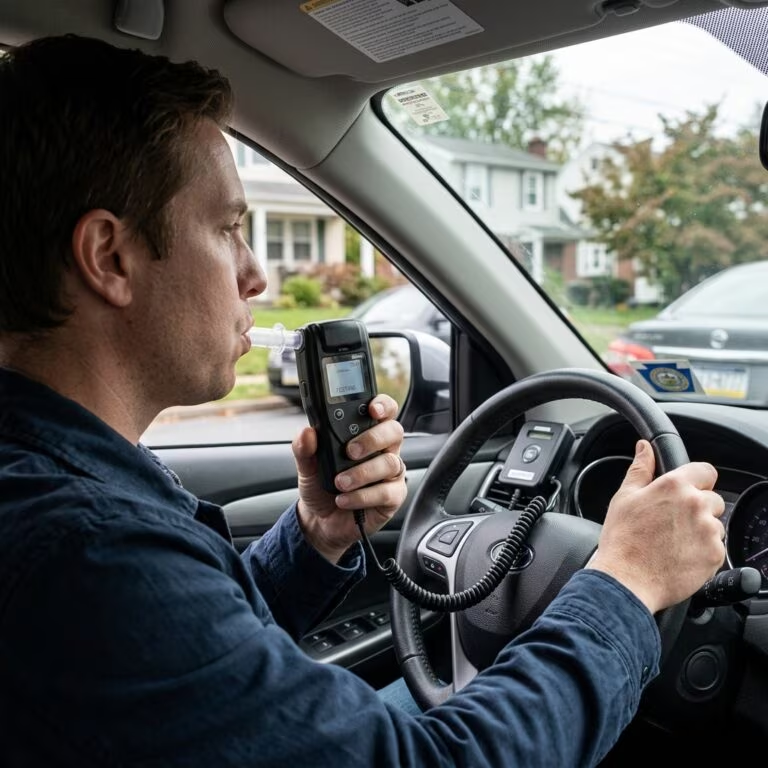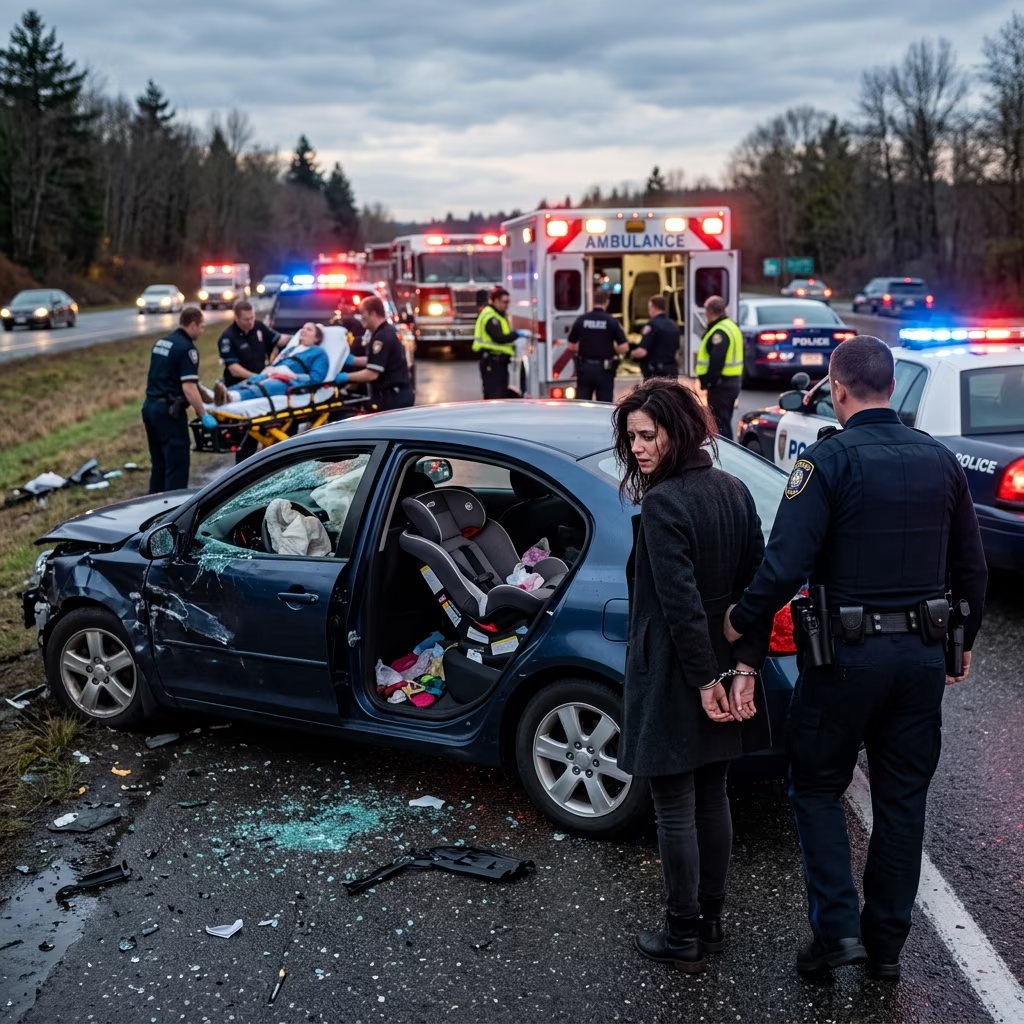
Driving under the influence is always treated seriously, but the situation becomes far more severe when a drunk or drug-impaired driver has a minor passenger in the vehicle and that child is injured. In many states, this combination turns an ordinary DUI into a felony-level offense involving child endangerment or vehicular assault, often carrying multi-year prison sentences and long-term child protection consequences.
This article explains how the law typically treats DUI cases involving minors and injury, why penalties are enhanced, and what accused drivers and caregivers should understand about the criminal and family-law fallout. It is based on general principles seen across U.S. jurisdictions; specific rules vary by state, so local legal advice is essential.
Why DUI With a Minor Passenger Is Treated Differently
Most states distinguish between standard DUI and DUI that involves child passengers because the law views minors as especially vulnerable and unable to protect themselves from an impaired driver’s decisions.
- Heightened risk of harm: Children are physically smaller and may be unable to escape the vehicle or use safety restraints correctly, increasing the chance of serious injury.
- Policy focus on child protection: Legislatures often explicitly aim to deter adults from placing minors in harm’s way by creating separate offenses or enhancements dealing with DUI and minors.
- Moral blameworthiness: Courts and lawmakers generally view choosing to drive impaired with a child as more blameworthy than driving impaired alone, justifying harsher punishment.
As a result, many jurisdictions treat DUI with a minor passenger as either:
- a stand-alone crime such as “DUI child endangerment,” or
- a sentencing enhancement applied to the underlying DUI charge, increasing penalties beyond the normal range.
When Injury Occurs: From Enhanced DUI to Felony Charges
Adding injury to a child passenger significantly escalates the legal consequences. In many states, the combination of intoxicated driving, a minor passenger, and injury transforms the case from a misdemeanor into a felony offense such as vehicular assault or aggravated child endangerment.
| Scenario | Common Charge Type | Penalty Range (Illustrative) |
|---|---|---|
| DUI, no minor, no injury | Standard misdemeanor DUI | Fines, license suspension, up to 1 year in jail for a first offense in many states |
| DUI with minor, no injury | Child endangerment or enhanced DUI | Additional fines, mandatory jail, possible upgrade to felony depending on state |
| DUI with minor and injury | Felony DUI, vehicular assault, or felony child endangerment | Multi-year prison terms, larger fines, lengthy probation, long license revocations |
| DUI with minor and death | Vehicular homicide or manslaughter | Long-term or maximum felony sentences; in some states up to 25 years or more |
Whether prosecutors file separate charges for child endangerment or vehicular assault depends on the structure of each state’s criminal code. Generally, however, injury to a child passenger leads to both enhanced DUI penalties and additional felony counts based on the harm caused.
Examples of State Approaches to DUI With Minors and Injury
While precise penalties differ, several states illustrate the broader national pattern of treating DUI with minor passengers and injury as a serious felony-level matter.
New York: Leandra’s Law and Serious Child Injury
New York’s well-known Leandra’s Law specifically targets impaired driving with children. Under this law:
- A first-time offender driving while intoxicated or impaired with a child under 16 in the car may face a Class E felony punishable by up to four years in state prison.
- If the impaired driving causes serious physical injury to the child, the driver may be charged with a Class C felony, punishable by up to 15 years in state prison.
- If the child dies, the driver faces a Class B felony, with possible sentences of up to 25 years in state prison.
- Convicted drivers generally must install ignition interlock devices on any vehicle they own or operate for at least six months, in addition to any imprisonment.
- Parents or guardians who drive impaired with their own children may be reported to the state’s child abuse and maltreatment registry.
New York criminal law separately recognizes vehicular assault in the second degree, which occurs when an intoxicated or drug-impaired driver causes serious physical injury to another person, including a child passenger. This offense is also a Class E felony, carrying a potential prison term of up to four years.
Pennsylvania and Connecticut: Child Endangerment and Risk of Injury
Other states take comparable approaches. For example:
- In Pennsylvania, DUI with a minor passenger under 18 can be treated as a first-degree misdemeanor, with penalties of up to five years in prison and a fine of up to $10,000, even before considering any injury-related charges.
- In Connecticut, impaired driving that creates a risk of injury to a minor can lead to separate charges for “risk of injury,” punishable by one to ten years in prison and fines up to $10,000.
In both jurisdictions, if the child is actually injured, prosecutors may layer on additional assault, child endangerment, or vehicular crime charges, substantially increasing exposure to prison.
General Trends Across States
Although each state uses its own terminology, several common themes emerge:
- DUI with a child passenger frequently triggers mandatory minimum jail or prison terms.
- Injury to the minor often converts the case into a felony, even if a standard DUI without injury would have been a misdemeanor.
- Penalty ranges can increase dramatically, with upper limits of four, ten, or fifteen years in prison depending on the severity of injury and prior record.
- Fines are typically higher, and courts often impose extended periods of probation, treatment, and monitoring.
Typical Penalties in DUI With Minor Injury Cases
While the exact sentence depends on state law, the judge, the facts of the case, and the defendant’s history, DUI with a minor passenger and resulting injury commonly leads to a combination of the following consequences:
- Imprisonment: Felony DUI or vehicular assault charges may carry terms ranging from one to several years. Some states allow sentences up to 15 or 25 years where serious injury or death occurs.
- Substantial fines: Fines can run from thousands to tens of thousands of dollars, especially for higher-level felonies or first-degree misdemeanors.
- License suspension or revocation: Drivers may lose their license for extended periods, sometimes for multiple years, and may need to meet strict conditions for reinstatement.
- Ignition interlock requirements: Courts frequently require installation of ignition interlock devices, which prevent a vehicle from starting if alcohol is detected in the driver’s breath sample.
- Mandatory treatment and education: Judges often order alcohol or drug treatment programs, DUI education classes, and ongoing evaluation for substance abuse.
- Probation and monitoring: Many defendants serve lengthy probation terms with strict conditions such as abstaining from alcohol, undergoing random testing, and avoiding new offenses.
- Child-related repercussions: A conviction involving injury to a minor passenger can trigger child protective investigations, custody consequences, or placement on child abuse registries where applicable.
Child Protection and Family Law Consequences
Beyond criminal penalties, DUI with an injured child passenger almost always has ramifications for the family. Authorities may view the incident not only as a traffic crime but also as evidence that the adult failed to protect the child’s safety.
Typical child protection consequences include:
- Reports to child welfare agencies: Law enforcement may be required to notify child protective services when a parent or guardian drives impaired with a minor and the child is harmed.
- Investigations into neglect or abuse: Agencies may open cases to determine whether the adult’s conduct constitutes abuse, neglect, or endangerment, which can lead to services or court intervention.
- Court orders and safety plans: Juvenile or family courts may issue safety plans, restrict parental contact, or require supervised visitation while evaluating the child’s best interests.
- Long-term records: Some states maintain registries of individuals found responsible for child maltreatment, which can affect employment, professional licensing, and future custody disputes.
Factors That Influence Sentencing
Sentencing in DUI with minor injury cases depends on more than the statutory maximum penalties. Judges typically consider a range of aggravating and mitigating factors:
- Severity of the child’s injuries: More serious or permanent injuries usually lead to more severe punishment.
- Driver’s blood alcohol concentration (BAC): Very high BACs or evidence of significant impairment may support aggravated charges.
- Prior DUI or criminal record: Repeat offenders often face enhanced penalties and reduced likelihood of leniency.
- Number and ages of minor passengers: Having multiple children in the vehicle or very young children can be treated as aggravating.
- Compliance with safety restraints: Failing to properly secure children in safety seats or seat belts may be viewed negatively.
- Post-incident conduct: Cooperation with law enforcement, seeking prompt medical care for the child, and efforts at rehabilitation may help mitigate the sentence.
Common Defenses and Legal Strategies
Facing charges for DUI with a minor passenger and resulting injury is extremely serious, but the prosecution still must prove its case beyond a reasonable doubt. Defense strategies vary but often include:
- Challenging the stop or arrest: If the initial traffic stop or subsequent arrest violated constitutional requirements (for example, lack of reasonable suspicion or probable cause), the defense may seek to suppress evidence such as breath or blood test results.
- Disputing impairment evidence: Defense counsel may contest the accuracy or reliability of chemical tests, the administration of field sobriety tests, or the interpretation of symptoms of impairment.
- Questioning causation of injury: In vehicular assault or similar charges, the prosecution must typically show that the driver’s impairment caused the injury. The defense may argue that other factors, such as road conditions or another driver’s negligence, were responsible.
- Challenging the classification of injuries: Many statutes distinguish between minor and “serious physical injury.” Medical records and expert testimony may be used to contest whether the injury meets the legal threshold for a higher-level felony.
- Negotiated plea agreements: Depending on the evidence and the child’s condition, defense attorneys may seek plea deals that reduce the level of the felony, limit custody time, or focus on treatment rather than extended incarceration.
None of these strategies excuses the underlying risk to the child, but they can affect the legal outcome and sentence. Early consultation with an experienced criminal defense lawyer is crucial in any case involving minor passengers and injury.
Frequently Asked Questions (FAQs)
Is DUI with a minor passenger always a felony?
No. In some states, DUI with a child passenger is treated as a misdemeanor with enhanced penalties unless additional factors, such as injury, high BAC, or prior offenses, are present. In others, simply having a child in the vehicle while intoxicated is enough to make the offense a felony.
What turns a DUI involving a child into a more serious felony?
Factors that commonly elevate charges include serious physical injury or death of the child, very high BAC, prior DUI convictions, and additional criminal conduct (for example, fleeing the scene). These can lead to charges such as vehicular assault, aggravated DUI, or child endangerment in felony form.
Can I lose custody of my child after a DUI injury incident?
A criminal conviction alone does not automatically terminate parental rights, but it can trigger child protective investigations and influence custody decisions. Courts will consider whether the incident indicates ongoing risk to the child and may impose conditions or restrictions to ensure safety.
Does installing an ignition interlock device help my case?
Ignition interlock requirements are often mandated by statute after conviction, especially in felony or aggravated DUI cases. Voluntarily installing an interlock and engaging in treatment before sentencing may demonstrate responsibility and remorse, which some judges consider positively.
What should I do if I am charged with DUI involving my child?
Because penalties can include prison, substantial fines, and child protection actions, seeking immediate legal counsel from an attorney experienced in DUI and child-related offenses is essential. Your lawyer can explain local law, evaluate the evidence, and help you respond in both criminal and family courts.
References
- DUI or DWI With a Minor in the Vehicle & Legal Penalties — Justia. 2023-05-01. https://www.justia.com/criminal/drunk-driving-dui-dwi/handling-a-dui-stop/dui-with-minor-in-vehicle/
- DUI & Child Endangerment Laws: DUI With a Minor — LawInfo. 2022-08-10. https://www.lawinfo.com/resources/dui/dui-child-endangerment-laws-dui-with-a-minor.html
- Child Endangerment Drunk Driving Laws — Mothers Against Drunk Driving (MADD). 2022-07-01. https://madd.org/wp-content/uploads/2022/07/DUI-Child-endangerment.pdf
- Leandra’s Law — Rensselaer County, New York. 2023-03-15. https://www.rensco.com/419/Leandras-Law
- Drinking and Driving. Not An Option. — New York State Governor’s Traffic Safety Committee. 2024-01-20. https://trafficsafety.ny.gov/drinking-and-driving-not-option-0
- NY Penal Law § 120.03: Vehicular Assault in the Second Degree — Tilem & Associates / New York Penal Law summary. 2023-09-30. https://criminaldefense.1800nynylaw.com/new-york-penal-code/new-york-penal-code-120-03-vehicular-assault-in-the-second-degre/
- Penalties for Driving Under the Influence With Minor Passengers — Connecticut General Assembly, Office of Legislative Research. 2012-03-01. https://www.cga.ct.gov/2012/rpt/2012-R-0060.htm