
Chemical Tests After a DUI Arrest: Your Rights and Risks
Understand how DUI chemical testing, implied consent laws, and test refusal can affect your license, criminal case, and future.
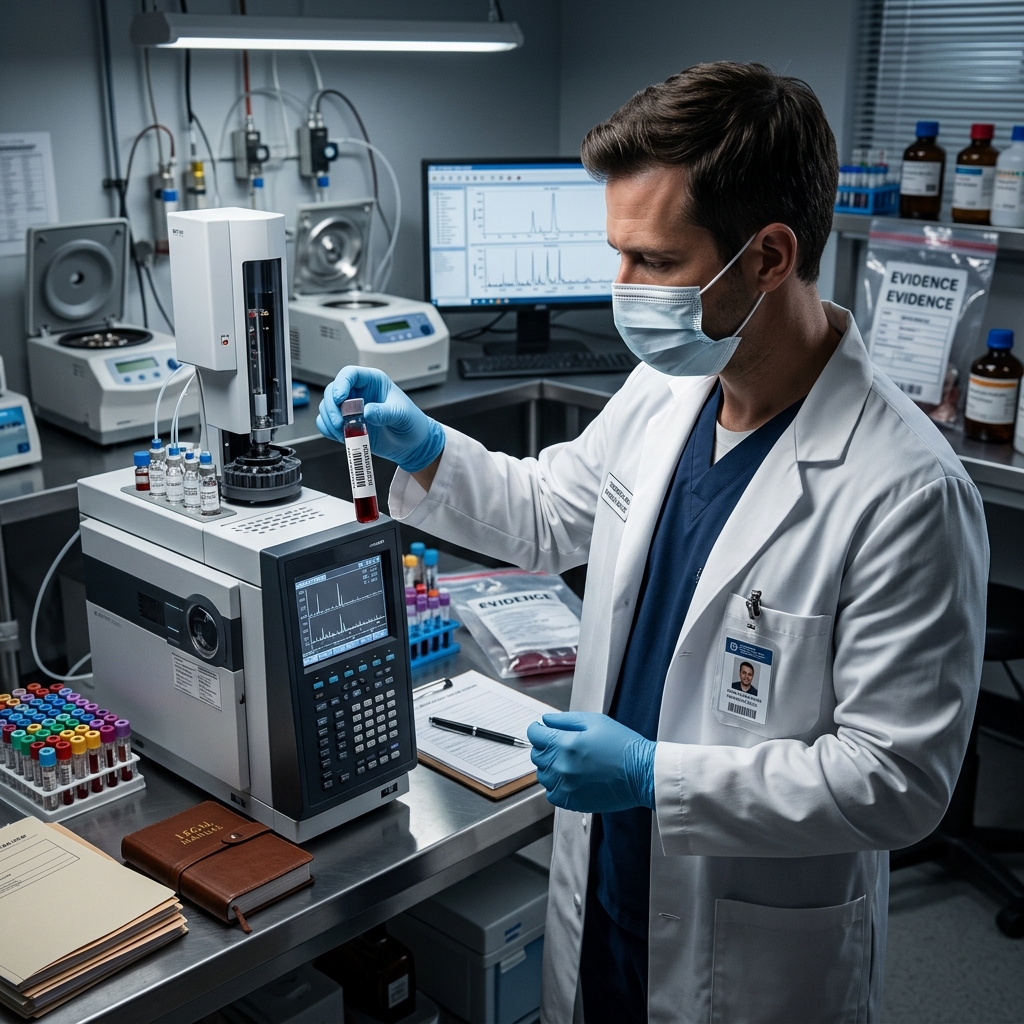
When you are arrested on suspicion of driving under the influence (DUI or DWI), law enforcement will almost always request that you take a chemical test to measure your blood alcohol concentration (BAC) or the presence of drugs. The decision to submit to or refuse this testing carries serious legal consequences, often including automatic license suspension and potential impact on your criminal case.
This guide explains how DUI chemical tests work, what implied consent laws mean, the differences between pre-arrest roadside tests and post-arrest chemical tests, and what may happen if you refuse. Because DUI law is largely state-specific, this article offers a general overview and highlights common patterns across U.S. states.
1. What Is a DUI Chemical Test?
A DUI chemical test is a scientific method used by law enforcement to determine whether a driver has alcohol or drugs in their system and, if so, at what concentration. These tests are typically requested after a lawful arrest for suspected impaired driving.
1.1 Common Types of Chemical Tests
While procedures vary by state, three main forms of chemical testing are widely used:
- Breath tests – Station-house or jail-based breathalyzer devices analyze deep-lung air to estimate BAC. These machines are typically calibrated and certified for evidentiary use in court.
- Blood tests – A blood draw performed by qualified medical personnel can directly measure alcohol levels and detect a wide range of drugs, including cannabis, prescription medications, and controlled substances.
- Urine tests – Less common than breath or blood, urine tests may be used in some jurisdictions, particularly where drug use is suspected or blood testing is impractical.
States may specify which test must be offered first or allow officers to choose based on circumstances, such as suspected drug impairment or medical issues affecting breath testing.
1.2 Portable vs. Evidentiary Testing
It is critical to understand the distinction between roadside screening tests and post-arrest evidentiary tests:
- Portable breath tests (PBTs) – Handheld devices used at the roadside to help an officer decide whether there is probable cause to arrest. Many states treat PBT results as non-evidentiary, meaning they are not typically admissible at trial as proof of BAC.
- Evidentiary tests – Breath, blood, or urine tests given after arrest at a police station, jail, or medical facility. These tests are usually subject to strict calibration, maintenance, and procedural rules so that their results can be used in court.
Some states permit drivers to decline a roadside PBT without immediate license consequences, but refusal of an evidentiary test after arrest usually triggers automatic administrative penalties under implied consent statutes.
2. Implied Consent Laws: What You Agreed to When You Started Driving
Almost every U.S. state enforces an implied consent law. These laws provide that, by driving on public roads, you are considered to have agreed in advance to chemical testing if you are lawfully arrested for DUI or in certain specified circumstances.
2.1 How Implied Consent Works
Implied consent laws do not mean police can force you to take a test in every situation. Instead, they set up a trade-off:
- You have the ability to refuse a chemical test (except in limited circumstances like a warrant-based blood draw).
- If you refuse, the state can impose automatic administrative sanctions such as license suspension, fines, or ignition interlock requirements, even if you are never convicted of DUI.
For example, Illinois law deems any person who drives in the state to have consented to chemical testing upon arrest for DUI; refusing testing results in a statutory summary suspension of driving privileges, ranging from 12 months for a first refusal to 3 years for a second within five years.
2.2 Typical Consequences of Violating Implied Consent
Although the details differ by jurisdiction, refusal of an evidentiary chemical test under implied consent laws commonly leads to:
- Mandatory license suspension for a fixed period, often longer than the suspension for a DUI conviction at the same offense level.
- Administrative penalties imposed by the motor vehicle department, independent of any criminal court outcome.
- Refusal evidence that may be used by prosecutors in the DUI case to argue consciousness of guilt or to seek enhanced penalties.
Colorado, for example, classifies drivers who refuse chemical testing as Persistent Drunk Drivers, potentially requiring ignition interlock devices and other sanctions even without a criminal conviction.
3. License Suspension for Test Refusal vs. Test Failure
Many drivers are surprised to learn that refusing a chemical test can, in some situations, lead to harsher license penalties than simply taking the test and failing.
| Scenario | Typical Administrative Outcome* |
|---|---|
| Take test and BAC is above legal limit | License suspension for a defined period (often shorter than refusal); may be reduced with eligibility for restricted or hardship license, depending on state. |
| Refuse post-arrest chemical test | Mandatory license suspension that may be significantly longer (e.g., 12–18 months or more); in some states, fewer opportunities for restricted licenses. |
*Outcomes vary by jurisdiction and prior record; this table shows common patterns rather than specific state rules.
In Pennsylvania, for instance, refusing a blood or breath test after arrest can lead to a 12-month suspension for a first refusal and an 18-month suspension if you have a prior DUI conviction or prior refusal. This suspension is separate from any suspension imposed for a DUI conviction itself.
4. Criminal Consequences of Refusing a Chemical Test
Refusing chemical testing not only affects your license; it can also influence your criminal case. In many states:
- Refusal can be charged as a separate violation or enhancement, carrying its own fines and possible jail time.
- Prosecutors may introduce evidence of refusal at trial, asking jurors to infer that you refused because you knew you were impaired.
- Courts may impose heightened penalties upon a DUI conviction when refusal is proven, such as longer jail sentences or higher fines.
Some jurisdictions specify mandatory minimum penalties for refusal combined with a DUI conviction. For example, Pennsylvania law allows for mandatory jail time and significant fines when a driver both refuses testing and is convicted of DUI, with penalties escalating for repeat offenses.
5. When Can Police Compel a Chemical Test?
Implied consent laws typically govern administrative penalties, but there are separate rules about when law enforcement can compel a blood test or other chemical test without your voluntary consent.
5.1 Warrant-Based Blood Draws and “No-Refusal” Initiatives
In response to the risk of refusal, some states use “no-refusal” programs. Under these policies, officers who have probable cause to believe a driver is impaired promptly seek a search warrant from a judge authorizing a blood draw. Once the warrant is issued, a driver who continues to refuse may face additional charges, such as contempt of court or obstruction of justice.
Even outside of formal no-refusal initiatives, courts may permit warrant-based blood testing where there is probable cause and exigent circumstances, subject to constitutional limits imposed by U.S. Supreme Court decisions on search and seizure.
5.2 Special Situations and Hospital Testing
In some cases, especially after serious accidents, hospitals may conduct routine blood tests for medical reasons. Depending on state law, prosecutors may later obtain those medical records through lawful process and use the results to support DUI charges, even if you refused law enforcement testing.
6. State-Specific Examples of Chemical Testing Rules
Although general principles are similar nationwide, details can vary widely. Here are a few examples illustrating different approaches:
6.1 Illinois
- Drivers are deemed to have consented to chemical testing when they drive on Illinois roads and are arrested for DUI.
- Refusal leads to a summary suspension of driving privileges, typically 12 months for a first refusal and 3 years for a second within five years.
- The suspension is administrative and applies even if the DUI charge is later dismissed, though drivers may request a hearing to contest it.
6.2 Colorado
- Driving in Colorado constitutes implied consent to chemical testing as part of an impaired driving investigation.
- Refusal can lead to classification as a Persistent Drunk Driver, triggering ignition interlock requirements for at least two years, regardless of criminal conviction.
- Colorado law lists behaviors that count as refusal, including delaying the test, failing to choose between offered options, or not cooperating with instructions.
6.3 Pennsylvania
- Refusal occurs when a driver fails to submit to an evidentiary blood or breath test after arrest.
- Refusal triggers a license suspension of 12 months (first offense) or 18 months (if prior DUI or prior refusal), separate from any DUI-related suspension.
- Drivers may still face DUI charges based on other evidence, including medical blood work, even if they refuse police-administered tests.
7. Weighing the Choice: Should You Submit to a Chemical Test?
Whether to take a chemical test is a highly fact-specific decision, and the best course can vary based on your state law, your prior record, and the circumstances of the stop. This article cannot offer personalized legal advice, but it can outline some of the key considerations that often arise.
7.1 Potential Advantages of Taking the Test
- Avoiding longer refusal suspensions – In many states, license suspensions for refusal are longer and harder to challenge than suspensions for failing the test.
- Preserving eligibility for restricted licenses – Some jurisdictions limit hardship or work-only licenses for drivers who refused testing.
- Possibility of lower BAC than expected – If your BAC is below the legal limit or only slightly above, the result may give your attorney more room to negotiate or mount a defense.
7.2 Potential Risks of Taking the Test
- Providing strong evidence – A high BAC or clear presence of drugs can be powerful evidence for the prosecution.
- Per se DUI cases – Many states have “per se” DUI laws where a BAC at or above 0.08% is sufficient for conviction regardless of observed driving behavior.
- Possible additional charges – Extremely high BAC levels may trigger enhanced penalties or aggravated DUI charges in some jurisdictions.
7.3 Why Legal Advice Matters
Because implied consent penalties apply quickly and can be severe, speaking with a qualified DUI attorney as soon as possible after arrest is critical. In some states, you have a limited number of days (sometimes as few as 10) to request a hearing to challenge a refusal-based suspension or other administrative action.
8. Practical Tips if You Are Asked to Take a Chemical Test
If you find yourself in a DUI investigation, consider the following practical points, keeping in mind that specific rights and obligations depend on your state’s laws:
- Understand what type of test is being offered – Ask whether the device is a roadside screening test or an evidentiary test at the station.
- Expect clear warnings – Many states require officers to inform you of the consequences of refusal, including length of suspension and other sanctions.
- Know that delaying can count as refusal – Attempting to stall, failing to provide an adequate sample, or insisting on speaking to a lawyer before testing (in some states) may be treated as refusal.
- Follow instructions carefully – Improper blowing into a breathalyzer or failing to cooperate with requested procedures can also be interpreted as refusal.
- Consider requesting an independent test – Some states allow drivers who have taken a police-administered test to obtain an additional test at their own expense, which may be useful for a defense.
9. Frequently Asked Questions (FAQs)
9.1 Do I have to take a roadside portable breath test?
In many states, you are not legally required to submit to a portable breath test at the roadside before arrest, and refusing that device often does not carry the same automatic license suspension as refusing a post-arrest evidentiary test. However, laws differ, and refusing any test may influence an officer’s decision to arrest. Always consult local law or an attorney for state-specific rules.
9.2 What happens if I refuse a breath or blood test after arrest?
Most states impose an automatic administrative suspension of your driver’s license, typically ranging from several months to multiple years, depending on prior offenses. You may also face enhanced criminal penalties if ultimately convicted of DUI, and your refusal can be used as evidence in court.
9.3 Can I talk to a lawyer before deciding whether to take the test?
Some states do not recognize a right to consult an attorney before deciding whether to submit to a chemical test. In Colorado, for example, asking to speak to a lawyer before taking the test is specifically identified as a form of refusal, with the same penalties as saying “no” outright. Other states may allow limited consultation. Because rules differ drastically, local legal advice is essential.
9.4 Can I be forced to give blood if I refuse?
Officers generally cannot force a blood draw solely based on implied consent laws. However, they may obtain a search warrant authorizing a blood test if they have probable cause, sometimes under “no-refusal” initiatives. Once a warrant is issued, continued refusal may lead to additional charges or the use of reasonable force within constitutional limits.
9.5 If my DUI charges are dismissed, does my refusal suspension go away?
Not necessarily. Implied consent suspensions are often independent of the criminal case. For instance, Illinois and Pennsylvania both treat refusal-based license suspensions as administrative actions that can remain in effect even if the DUI charge is reduced or dismissed, unless successfully challenged through a separate hearing process.
9.6 Are drug DUIs treated differently from alcohol DUIs for testing?
From a testing standpoint, drug-related DUIs often rely more heavily on blood or urine tests, since breath analyzers are designed primarily for alcohol. States may have specific thresholds for certain substances (such as THC levels in Illinois) or may treat the presence of any amount of a controlled substance as sufficient for a DUI charge.
10. Key Takeaways
DUI chemical testing is a central piece of impaired driving enforcement. While you may technically refuse a test, doing so typically triggers immediate and significant consequences, especially for your driving privileges. Implied consent laws in nearly all states mean that driving itself carries an obligation to submit to lawfully requested post-arrest testing, and refusal is rarely a cost-free decision.
Because the stakes are high and the rules are complex, anyone facing a DUI investigation or refusal allegation should seek advice from an experienced DUI defense attorney as quickly as possible, particularly to preserve deadlines for requesting administrative hearings or challenging license suspensions.
References
- Refusing a Chemical Test in a DUI Stop & Implied Consent Laws — Justia. 2023-01-01. https://www.justia.com/criminal/drunk-driving-dui-dwi/handling-a-dui-stop/refusing-to-perform-a-breathalyzer-or-provide-a-blood-sample/
- DUI Chemical Testing in Illinois — Frontline Legal Services. 2023-06-01. https://www.frontlinelegal.com/practice-areas/illinoisduidefense/dui-chemical-testing-in-illinois/
- Chemical Tests for Drinking and Driving in New York — DWI Team. 2022-05-01. https://dwiteam.com/dwi-resources/chemical-tests-for-drinking-and-driving/
- FAQ — No DUI Colorado. 2023-08-01. https://noduicolorado.org/faq/
- Refusing DUI Testing in Pennsylvania — The Zuckerman Law Firm. 2023-04-01. https://www.zuckermanfirm.com/dui-refusal
Similar Articles








Read full bio of Sneha Tete




