
Amending Bankruptcy Filings: A Practical Guide
Learn when and how to correct, update, or expand your bankruptcy paperwork so your case proceeds smoothly and accurately.
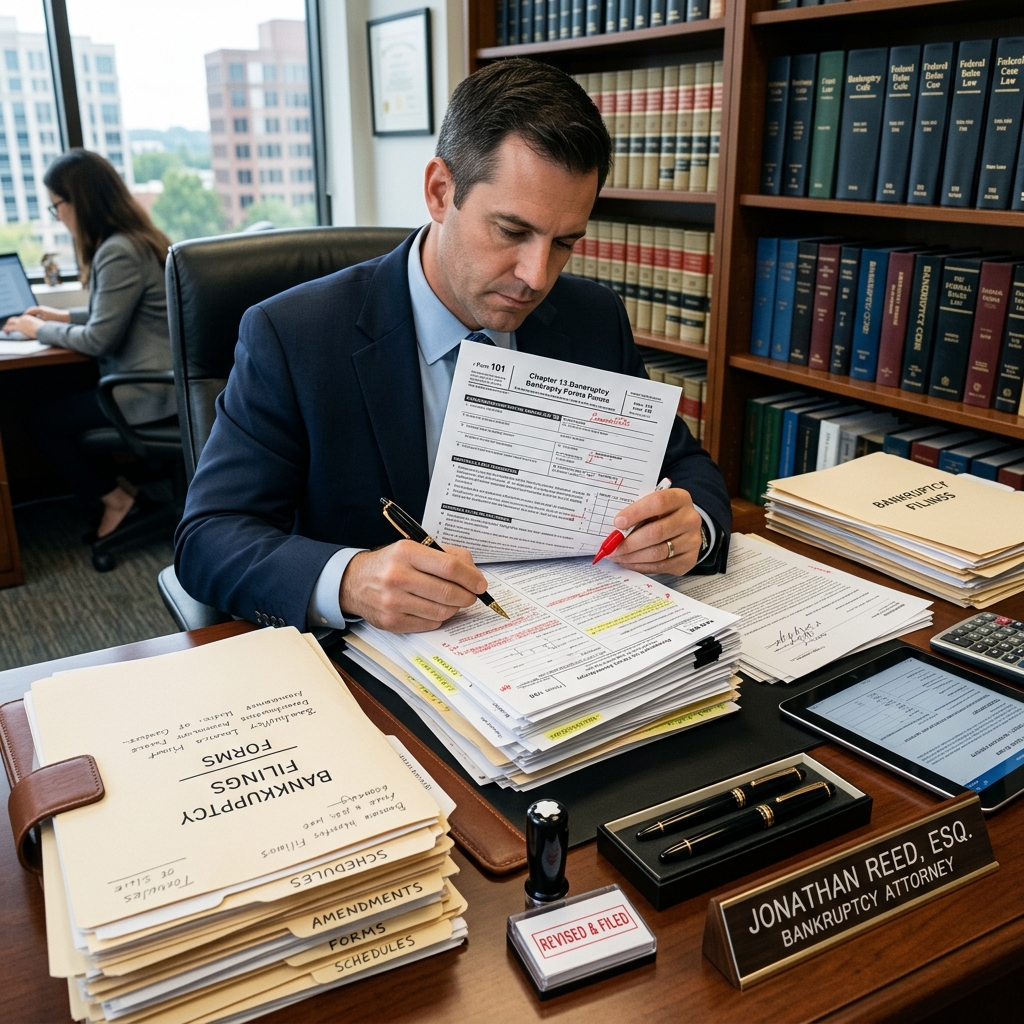
Accuracy is critical in a bankruptcy case. Every form, schedule, and statement you file is submitted under penalty of perjury, and the court, trustee, and creditors rely on that information to make decisions. At the same time, bankruptcy law recognizes that people make mistakes or experience changes after they file. That is why the rules provide a clear framework for amending bankruptcy filings when needed.
This guide explains in plain language when amendments are allowed, why they matter, and how to correct your paperwork properly so your case continues smoothly.
Why Amendments Matter in Bankruptcy
Bankruptcy is built on full disclosure. The court expects you to list all assets, debts, income sources, and recent financial activity. If something is missing or incorrect, amending your filings is often the best way to protect your rights and avoid serious problems.
Key reasons amendments are important include:
- Protecting the integrity of your case: Correct forms reduce the risk of objections from the trustee or creditors and help support a discharge of eligible debts.
- Ensuring all creditors receive notice: Adding omitted creditors allows them to be included in the case and receive required notifications.
- Reducing the chance of allegations of fraud: Promptly fixing errors shows good faith and can prevent suspicion that you are hiding information.
- Reflecting real changes in circumstances: Income, expenses, or property values may change after filing; amendments keep your case up to date.
When You Are Allowed to Amend Bankruptcy Forms
Under the federal bankruptcy rules, a debtor generally may amend a voluntary petition, list, schedule, or statement any time before the case is closed.
In practice, that means:
- You can amend your forms throughout the life of the case, from filing up to the point when the court closes it.
- Many courts also permit certain amendments even after discharge, if the case is reopened by motion.
- Local rules may provide additional procedural requirements or time-related expectations, especially for amendments filed close to the meeting of creditors.
Although amendments are widely permitted, you must follow both the Federal Rules of Bankruptcy Procedure and your local bankruptcy court rules when filing them.
Common Reasons to Amend Bankruptcy Filings
People amend their bankruptcy paperwork for many different reasons. Some issues are purely clerical, while others involve substantial changes in financial information. Typical situations include:
- Forgotten creditors: You discover a lender, medical provider, collection agency, or other creditor that was not listed on your original schedules.
- Incorrect debt amounts or classifications: A balance is wrong, a secured debt was listed as unsecured, or a priority debt was miscategorized.
- Unlisted assets: You did not include certain bank accounts, vehicles, interests in businesses, or other property.
- Updated income or expense information: Changes in employment, hours, or household expenses require a more accurate budget.
- Clarifying the Statement of Financial Affairs: You realize that prior transfers, lawsuits, or payment history were incomplete or misstated.
- Changes to a Chapter 13 plan: You need to adjust payment amounts or plan terms because of new circumstances.
Regardless of the specific reason, the basic process of amending a form is similar: obtain the form, mark it as amended, update the information, and file and serve it according to court rules.
Overview of the Amendment Process
While each court has detailed local procedures, the general steps to amend bankruptcy filings are fairly consistent across jurisdictions.
| Step | What You Do |
|---|---|
| 1. Identify the issue | Determine exactly which information is missing, wrong, or outdated. |
| 2. Obtain a blank form | Download a clean copy of the specific form or schedule you need to correct, usually from the U.S. Courts forms page or the local court site. |
| 3. Review local rules | Check your bankruptcy court’s local rules or instructions for amendment procedures, cover sheets, and fees. |
| 4. Complete the amended form | Fill in the updated information; in many courts you must re‑state all information on the form, not just changes. |
| 5. Mark the document as amended | Check the “amended” box on the form or clearly write “Amended” at the top so the court knows it is a revision. |
| 6. Prepare any required cover sheets | Many courts require an amendment cover sheet, especially when changing schedules or creditor lists. |
| 7. File with the court | Submit the amended paperwork following your court’s filing procedures and pay any required fees. |
| 8. Serve the trustee and affected creditors | Send copies of the amendment to the bankruptcy trustee and any creditors whose rights may be affected. |
| 9. File a certificate of service | Provide proof to the court that the documents were properly served, including method of service and date. |
Which Forms Are Commonly Amended?
Almost any document in a bankruptcy case can be amended, but some are amended more often than others.
Petition and Core Schedules
- Voluntary petition: May be amended if basic identifying information or chapter selection needs correction.
- Schedules A/B through J: Debtors frequently amend these schedules to update assets, liabilities, income, and expenses.
- Summary of assets and liabilities: If you change schedules, the summary may need corresponding updates.
Statement of Financial Affairs
The Statement of Financial Affairs requires disclosure of past transactions, lawsuits, and other financial activity. If any of this information was incomplete or mistaken, you may file an amended version.
List of Creditors and Mailing Matrix
- Creditor schedules (D, E/F): These schedules list secured, priority, and general unsecured debts. They are amended when creditors are added, removed, or reclassified.
- Mailing matrix: The mailing matrix contains creditor addresses used for court notices. It must be updated if you correct or add addresses.
Chapter 13 Plan
In Chapter 13 cases, the repayment plan often changes during the case. Debtors may amend the plan to raise or lower payments, adjust treatment of specific debts, or reflect changed income.
Fees for Amending Bankruptcy Filings
Some amendments are free; others require a modest fee. The specific amount can vary by district and by the type of document amended, but common patterns include:
- Amending schedules of creditors or creditor lists: Courts often charge a small fee when you add, delete, or change debts or adjust the mailing matrix.
- Most other forms: Many courts do not charge a fee to amend the majority of other schedules or statements, although you should always review the current fee schedule before filing.
Because fee structures can change, it is wise to check the official bankruptcy court fee schedule for your district prior to filing any amendments.
Key Role of Local Bankruptcy Court Rules
While the federal rules provide the general right to amend, local rules explain how to exercise that right in a particular court. For example, one court may require filing a complete amended schedule, while another allows you to complete only the corrected portion.
Important local rule topics include:
- Required cover sheets or local forms for amendments.
- Instructions on whether the entire document must be re‑filed or only the changed portions.
- Specific wording or checkboxes to indicate that a filing is amended.
- Deadlines or expectations for serving creditors and filing certificates of service.
- Additional requirements for amending Chapter 13 plans or statements of financial affairs.
Debtors who represent themselves should carefully read the local rules available on the court’s website or contact the clerk’s office for procedural guidance.
Serving Trustees and Creditors After an Amendment
Amending your forms is only part of the process. You must also notify the trustee and affected creditors so they are aware of the change.
Typical service requirements include:
- Sending a copy of the amended document to the Chapter 7, 13, or 11 trustee.
- Providing copies to creditors whose rights could be impacted by the change, such as newly added creditors or those whose debt amount or classification has changed.
- Filing a certificate of service that states who was served, how they were served (for example, first‑class mail), and the date of service.
Proper service helps ensure court orders and notices reach the right parties and supports the validity of your amended filings.
Amending After Discharge or Case Closure
In many cases, debtors discover a mistake only after they have received their discharge or after the court has closed the case. At that stage, the ability to amend is more limited but not necessarily lost.
- Under the federal rules, the right to amend normally applies until the case is closed.
- If the case is already closed, you may need to file a motion asking the court to reopen the case for the limited purpose of amendment.
- Courts review such motions case by case and may consider factors such as the importance of the correction and potential prejudice to creditors.
Because the procedure for reopening and amending a closed case can be complex, many debtors consult an experienced bankruptcy attorney before proceeding.
Practical Tips to Avoid Multiple Amendments
Although amendments are allowed, frequent corrections can be time‑consuming and may draw extra scrutiny. You can reduce the need for amendments by carefully preparing your initial filings. Consider the following practical tips:
- Gather comprehensive documentation: Collect account statements, pay stubs, tax returns, and asset records before completing forms.
- Use current information: Confirm balances and addresses rather than relying on older documents.
- Double‑check every schedule: Review your assets, debts, and income line by line.
- Ask questions early: If you are unsure how to list something, seek guidance from the clerk’s office or an attorney before filing.
- Re‑read your Statement of Financial Affairs: Make sure that transfers, lawsuits, and payment history are complete and accurate.
FAQs About Amending Bankruptcy Filings
Can I amend my bankruptcy forms at any time?
Subject to the federal rules, a debtor may amend a voluntary petition, list, schedule, or statement any time before the case is closed. After closure, you generally must seek court permission to reopen the case before filing amendments.
Do I always have to pay a fee to amend?
No. Fees often apply when amending creditor schedules or lists, but many other amendments do not require a fee. You should check your court’s current fee schedule to see whether the specific amendment you plan to file carries a cost.
What happens if I forget to list a creditor?
If you inadvertently omit a creditor, you can typically file an amended schedule and mailing matrix to add that creditor so they receive notice and can participate in the case. Depending on timing and local law, omitting a creditor may have consequences for whether that debt is discharged, so prompt correction is important.
Do I need a lawyer to amend my bankruptcy filings?
The rules do not require you to hire a lawyer, and many courts provide instructions for self‑represented debtors. However, because amendments can affect discharge rights, creditor treatment, and trustee decisions, legal advice is often helpful—especially for complex cases or amendments filed after discharge.
How do I show that a document is amended?
Most bankruptcy forms contain a checkbox or space indicating that the document is an amended version. If not, courts commonly require you to write “Amended” at the top of the form or follow specific local instructions.
References
- Rule 1009. Amending a Voluntary Petition, List, Schedule, or Statement — Legal Information Institute, Cornell Law School. 2023-01-01. https://www.law.cornell.edu/rules/frbp/rule_1009
- How to Amend Bankruptcy Forms — Nolo. 2024-01-01. https://www.nolo.com/legal-encyclopedia/amend-update-change-bankruptcy-forms.html
- Amending Schedules and Forms (Local Rule 1009-1) — U.S. Bankruptcy Court, Eastern District of Michigan. 2022-06-01. https://www.mieb.uscourts.gov/prose/amending-schedules-and-forms-local-rule-1009-1
- Amending Schedules and Mailing Matrix — U.S. Bankruptcy Court, District of Columbia. 2023-05-01. https://www.dcb.uscourts.gov/amending-schedules-and-mailing-matrix
- Amending Bankruptcy Forms — Oregon Fresh Start. 2023-02-01. https://oregonbankruptcyfreshstart.com/amending-bankruptcy-forms/
- Bankruptcy Amendments: How To Correct or Update Your Forms — Upsolve. 2023-11-01. https://upsolve.org/learn/can-i-amend-my-bankruptcy-forms-after-i-file/
- Can My Bankruptcy Petition Be Amended After Filing? — David M. Siegel & Associates. 2019-01-01. https://davidmsiegel.com/can-bankruptcy-petition-amended-filing/
Similar Articles








Read full bio of medha deb




