
Forged and Stolen Passports: U.S. Crimes, Risks, and Penalties
Understand how U.S. law treats forged or stolen passports, the criminal penalties for misuse, and what to do if you are investigated or charged.
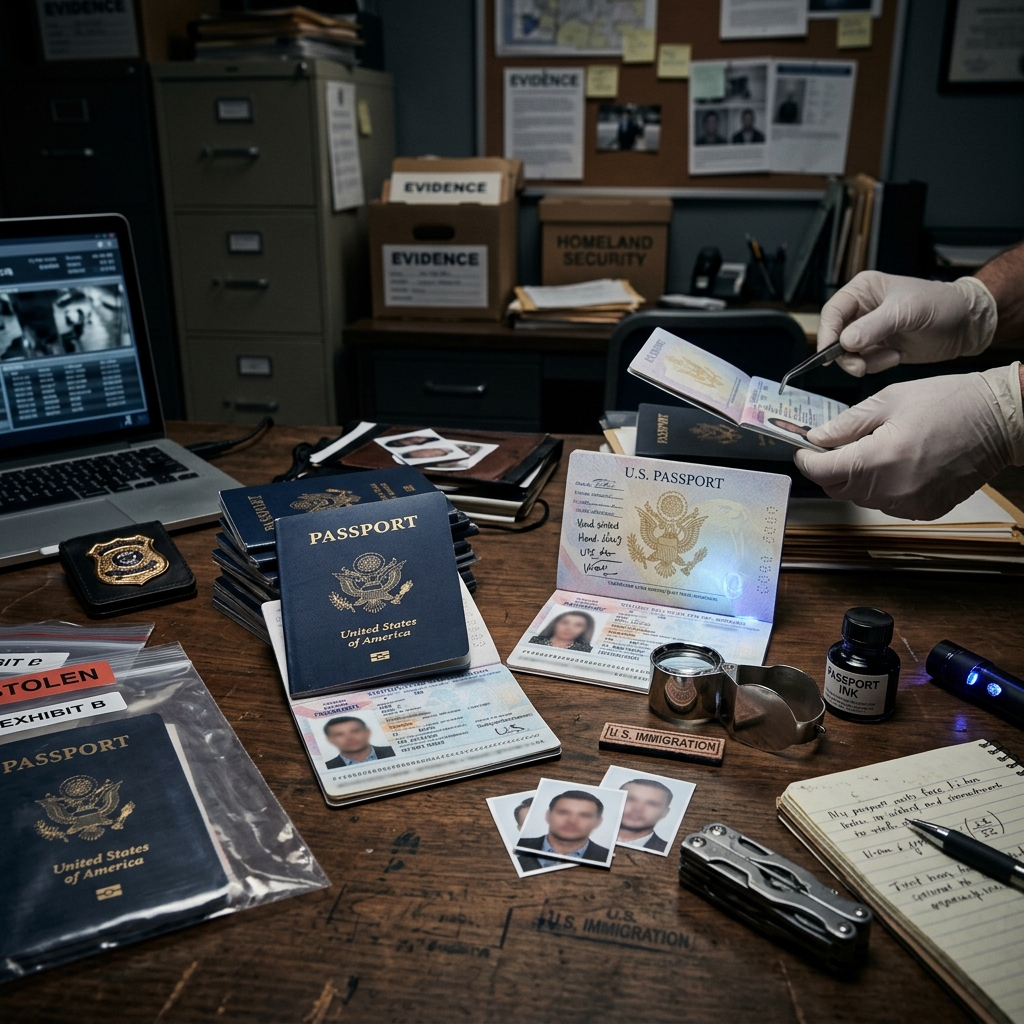
Using a forged, altered, or stolen passport to enter or remain in the United States is not just a paperwork problem—it is a serious federal crime that can lead to long prison terms, large fines, and permanent immigration consequences. Passing a fake passport at the border, borrowing someone else’s passport, or using genuine documents obtained with lies can all fall under U.S. passport fraud laws.
What U.S. Law Considers “Passport Fraud”
Under U.S. federal law, passport fraud covers a range of conduct involving the unlawful making, alteration, or use of a passport or an instrument that appears to be a passport. While the facts vary from case to case, most situations fall into a few broad categories.
Core Legal Definition
At a high level, a person may commit passport fraud if they:
- Falsely create or alter a passport or document that looks like a passport, such as by counterfeiting, forging, or mutilating it.
- Knowingly use or attempt to use such a forged, altered, or invalid passport to travel, identify themselves, or gain immigration benefits.
- Provide a forged or altered passport to someone else, knowing it is false.
- Misuse a genuine passport by using someone else’s document, or by using your own in violation of restrictions, such as traveling under false pretenses.
The main federal statutes involved are found in Title 18 of the U.S. Code, including provisions on forgery or false use of passports and misuse of passports.
Common Types of Passport Fraud
| Type of Conduct | Typical Example |
|---|---|
| Using a counterfeit passport | Buying a fully fake passport from a document vendor and showing it at a U.S. port of entry. |
| Altering a genuine passport | Changing the photo, personal data, or expiration date on a real passport. |
| Impersonating another person | Using a real passport issued to someone else who looks similar. |
| False application for a passport | Submitting fake birth documents or assuming the identity of a deceased individual to obtain a U.S. passport. |
| Visa and immigration document fraud | Forging visas or other entry documents, or using them under a false identity. |
The U.S. Department of State notes that offenders frequently commit passport crimes to hide their identity, illegally enter or remain in the country, commit financial crimes, or support activities such as drug trafficking and alien smuggling.
Why People Use Forged or Stolen Passports
Authorities regularly identify forged or stolen passports at airports and land borders. Motivations differ, but certain patterns are common.
- Evading law enforcement: Fugitives or individuals wanted in another country may try to travel under a different identity to avoid detection.
- Bypassing immigration rules: Some people attempt to enter the U.S. despite prior deportation orders, inadmissibility for criminal records, or lack of a valid visa.
- Supporting organized crime: Drug traffickers, human smugglers, and other organized groups often rely on fraudulent documents to move people and money.
- Financial and identity fraud: Stolen passports may be used to open bank accounts, commit credit fraud, or launder money.
- Terrorism-related purposes: Fake or altered passports can be used to facilitate travel linked to international terrorism, which carries especially severe penalties.
The underlying purpose of the misconduct often determines how aggressively prosecutors pursue the case and what penalties they seek.
Key Federal Statutes Governing Passport Crimes
Several federal statutes are central to prosecutions involving forged or stolen passports. The most important are within 18 U.S.C. §§ 1541–1546, which address passport and visa fraud in immigration matters.
Forgery or False Use of Passport – 18 U.S.C. § 1543
Section 1543 makes it a crime to falsely make, forge, counterfeit, mutilate, or alter a passport, or to willfully and knowingly use, or furnish to another for use, such a false or altered passport.
- Prohibited acts: Creating fake passports, altering genuine ones, or using any passport that is forged, altered, or otherwise invalid.
- Intent requirement: The government must show that the person acted willfully and knowingly, intending the passport to be used.
Misuse of Passport – 18 U.S.C. § 1544
Section 1544 covers the misuse of a passport, which often involves genuine documents being used unlawfully.
Examples include:
- Using someone else’s passport to travel.
- Giving your passport to another person so they can travel in your name.
- Using your passport in violation of applicable laws or restrictions, such as misrepresenting the purpose of your travel when that misrepresentation is part of a larger fraud.
Related Immigration Document Offenses – 18 U.S.C. § 1546
Section 1546 targets fraud and misuse of visas, permits, and other immigration documents, which frequently appear in cases involving forged or stolen passports.
- Forgery or counterfeiting of visas and other entry documents.
- Using or possessing such forged documents.
- Appearing under a false name or personating another during the immigration process.
- Making false statements in documents required by immigration laws.
These statutes often work together in a single case—someone might be charged simultaneously with passport forgery, misuse of a passport, and fraud involving visas or entry documents.
Penalties for Forged or Stolen Passport Offenses
Passport crimes are felonies, and penalties can be severe. The exact punishment depends on the statute, prior record, and whether the passport fraud was linked to other serious crimes such as drug trafficking or terrorism.
Baseline Federal Penalties
For many passport and visa offenses under 18 U.S.C. §§ 1541–1546, the Department of Justice has noted a statutory maximum prison term of around 10 years for basic violations, excluding certain aggravating circumstances. Under specific sections, the penalty may be enhanced when fraud is connected to other serious crimes.
Some key penalty points include:
- Forgery or false use of passport (18 U.S.C. § 1543): Up to 10 years in prison for a first or second offense not tied to terrorism or drug trafficking.
- Misuse of passport (18 U.S.C. § 1544): Frequently punished by similar ranges—up to 10 years for less serious misuse, increasing with aggravating factors.
- Fines: Convictions may also carry substantial fines, which in serious cases can reach hundreds of thousands of dollars under general federal sentencing provisions.
Enhanced Penalties for Drug Trafficking and Terrorism
Congress has explicitly increased penalties when passport or visa fraud supports drug trafficking or international terrorism.
- If connected to drug trafficking: The maximum sentence can rise to around 15–20 years, depending on the specific statute and circumstances.
- If connected to international terrorism: The maximum can increase up to approximately 20–25 years for certain violations.
These enhancements reflect the U.S. government’s view that fraudulent travel documents are a critical tool for serious criminal networks and terrorist organizations.
Other Consequences Beyond Prison and Fines
Even after any prison term ends, a forged or stolen passport conviction can produce long‑lasting collateral consequences:
- Permanent criminal record that may limit employment, housing, and licensing opportunities.
- Immigration consequences such as removal, bars on reentry, and ineligibility for many forms of immigration relief.
- Loss or denial of future passport privileges, especially for repeat violators.
- Supervised release after incarceration, with strict reporting and travel restrictions.
Immigration Consequences of Passport Fraud
For non‑U.S. citizens, passport fraud is not only a criminal issue but also a serious immigration problem. The same conduct can trigger both criminal prosecution and removal proceedings.
Inadmissibility and Deportability
Although specific grounds of inadmissibility and deportability are defined in the immigration statutes rather than in the passport fraud provisions themselves, conduct such as presenting false documents at a port of entry or entering through fraud can make a noncitizen inadmissible or removable under immigration law.
- Fraud or misrepresentation at entry can bar admission and, in many cases, permanently affect eligibility for visas or permanent residence.
- Convictions for passport or document fraud can be treated as serious crimes, supporting removal and limiting relief such as adjustment of status, cancellation of removal, or certain waivers.
- Prior removal and reentry with fraud may lead to particularly aggressive prosecution and stiff penalties.
Impact on Future Travel and Legal Status
After a passport fraud conviction, even if a person is not deported, they may encounter years of increased scrutiny, secondary inspection at borders, and denials of visas or immigration benefits. U.S. authorities and foreign governments share information about document fraud and may treat such records as red flags for future travel.
How Passport Fraud Cases Are Investigated
Investigations usually involve multiple agencies. The U.S. Department of State’s Diplomatic Security Service (DSS) leads many passport and visa fraud investigations, often working with the Department of Homeland Security, Customs and Border Protection (CBP), and other federal partners.
Typical Triggers for an Investigation
- Suspicious document at a port of entry, detected by CBP or automated systems.
- Inconsistencies in a passport application, such as mismatched personal data or questionable supporting documents.
- Information from foreign partners or local law enforcement about stolen or compromised passports.
- Tips and reports from the public, banks, or other institutions that encounter suspected fraudulent identification.
Evidence Commonly Used
In building a case, investigators may rely on:
- Forensic examination of the passport or visa to identify alterations or counterfeit features.
- Database checks to confirm whether a passport number is valid or reported stolen.
- Records from passport agencies, consulates, and embassies showing application histories.
- Surveillance footage or witness statements from border crossings, post offices, or consular locations.
- Communication records showing contact with document vendors or co‑conspirators.
Possible Defenses and Legal Strategies
Every case is fact‑specific, but certain recurring issues often shape the defense in forged or stolen passport prosecutions.
Lack of Knowledge or Intent
Most passport statutes require that the defendant act willfully and knowingly. A person who did not realize the passport was fake or altered, or who reasonably believed it was valid, may argue that the government cannot prove the mental state required for conviction.
- Purchasing what seemed to be a legitimate passport through an agency without clear signs of fraud.
- Using a passport provided by family or community members without understanding it was unlawful.
Mistaken Identity or Lack of Involvement
In some situations, someone may be accused of participating in a larger passport fraud scheme—such as manufacturing or supplying documents—when the evidence actually reflects another person’s actions. Demonstrating that the accused was not the person who applied, altered, or used the passport can be a critical defense theme.
Challenging the Evidence
Defense counsel may also:
- Question the reliability of forensic document analysis or expert testimony.
- Move to suppress statements obtained in violation of constitutional rights.
- Challenge the chain of custody of the passport or digital evidence.
- Highlight inconsistencies in witness accounts or official records.
Negotiated Resolutions
Because penalties can be high, many cases are resolved through plea negotiations. The defense may seek to:
- Reduce the number or severity of charges, especially those linked to terrorism or drug trafficking enhancements.
- Argue for a lower sentence based on lack of prior record, coercion, or humanitarian circumstances.
- Coordinate criminal and immigration strategies to minimize the long‑term impact where possible.
Practical Steps if You Are Accused or Under Investigation
Anyone who learns they are being investigated or charged with a passport‑related offense should act quickly and cautiously.
- Seek qualified legal counsel: Passport and immigration document crimes are complex, often involving multiple statutes and agencies. A defense attorney with federal and immigration experience is critical.
- Do not make statements without legal advice: Anything said to investigators, at the border, or in interviews may later be used in court.
- Gather documents: Collect any receipts, correspondence, or records showing how you obtained the passport or related documents.
- Consider immigration implications: Non‑citizens should consult both criminal defense and immigration counsel to understand the full scope of risk.
Frequently Asked Questions About Forged or Stolen Passports
Is using a fake passport always a federal crime in the U.S.?
Yes. Passport and visa fraud are treated as federal offenses in the United States, governed primarily by statutes in Title 18 of the U.S. Code. States may have additional identity‑related crimes, but the core passport violations are prosecuted federally.
What if I only used someone else’s passport once and no other crime was involved?
Even a single use of another person’s passport can qualify as misuse of a passport under 18 U.S.C. § 1544 and may be punishable by years in federal prison and fines. Lack of additional criminal conduct might help in sentencing, but it does not make the conduct legal.
Can I be deported for passport fraud if I am not a U.S. citizen?
Yes. Non‑citizens convicted of passport or immigration document fraud face strong risks of removal and long‑term bars to reentry or immigration benefits, particularly where fraud occurred at or related to entry into the United States.
Does it matter if I did not personally forge the passport?
Even if someone else created or altered the document, knowingly using a forged, stolen, or altered passport, or providing it to another for use, can still be a crime under federal law. The key issue is usually whether you knew or should have known about the fraud.
Who investigates passport and visa fraud?
The U.S. Department of State’s Diplomatic Security Service leads many passport and visa fraud investigations, often in coordination with the Department of Homeland Security, Customs and Border Protection, and the Department of Justice.
References
- 18 U.S. Code § 1543 – Forgery or false use of passport — Legal Information Institute, Cornell Law School. 2023-01-01. https://www.law.cornell.edu/uscode/text/18/1543
- Immigration Matters — 18 U.S.C. §1541–1546 — U.S. Department of Justice, Criminal Resource Manual. 2015-01-01. https://www.justice.gov/archives/jm/criminal-resource-manual-1524-false-identification-immigration-matters-18-usc-1541-1546
- Passport and Visa Fraud — U.S. Department of State. 2021-08-01. https://www.state.gov/passport-and-visa-fraud
- Passport and Visa Fraud — U.S. Embassy & Consulates in Indonesia, U.S. Department of State. 2021-05-01. https://id.usembassy.gov/passport-and-visa-fraud/
- What Are the Federal Misuse of a Passport Laws? — Eisner Gorin LLP. 2022-06-01. https://www.egattorneys.com/misuse-of-passport-laws
- Looking for a Passport Crimes Lawyer? | Expert Legal Defense — Human Rights Lawyer. 2022-09-01. https://humanrights-lawyer.com/attorney-for-passport-crimes/
Similar Articles








Read full bio of Sneha Tete




