
Legal Consequences of Forging a U.S. Passport
Understand how U.S. law treats passport forgery, the methods criminals use, and the severe penalties and defenses involved.
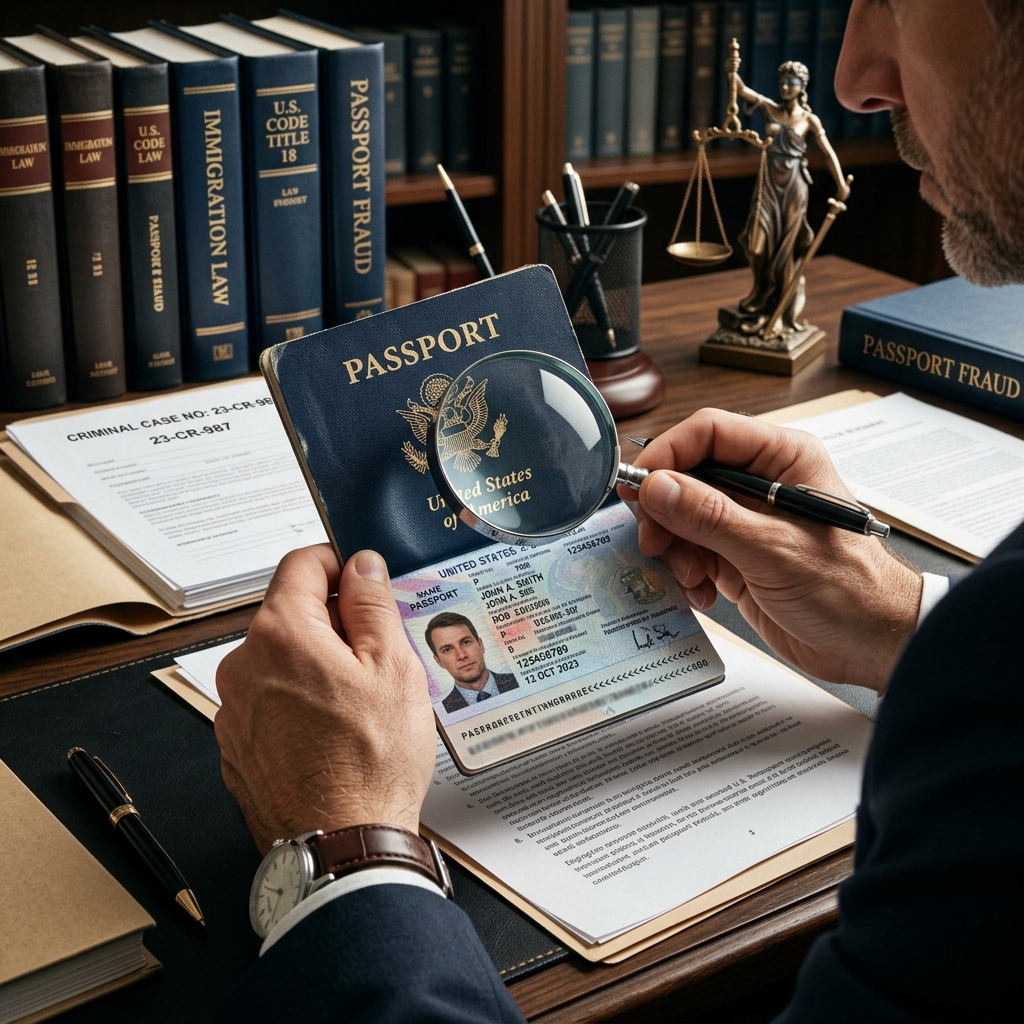
Forging or falsely using a United States passport is a serious federal crime that can result in long prison sentences, heavy fines, and lasting immigration and travel consequences. Passport forgery is not treated as a minor paperwork violation; it is closely linked to national security, border protection, and identity integrity and is prosecuted aggressively by federal authorities.
What Counts as Passport Forgery Under U.S. Law?
Under federal law, the offense commonly referred to as passport forgery is governed by 18 U.S.C. § 1543, titled “Forgery or false use of passport.” This statute criminalizes both the creation of fake passports and the use of forged or altered passports.
In simple terms, passport forgery includes any intentional manipulation or creation of a passport to misrepresent someone’s identity or legal status for an unlawful purpose. The law covers both physical tampering and more sophisticated digital or document-based fraud schemes.
Core Legal Elements of Passport Forgery
To obtain a conviction under federal law, prosecutors generally must prove that the defendant:
- Falsely made, forged, counterfeited, mutilated, or altered a passport, or an instrument that appears to be a passport;
- Acted with the intent that the document be used as a genuine passport;
- Or knowingly used, attempted to use, or furnished to another such a forged or altered passport;
- Or knowingly used a previously valid passport that has become void under its own conditions (for example, after revocation or invalidation).
This means that both the person who manufactures the forged passport and the person who presents it at a border crossing, airline counter, or government office can be charged. Even providing a fake passport to someone else for their use is covered.
Common Ways Passports Are Forged or Misused
Modern U.S. passports incorporate numerous security features, including special paper, embedded chips, holograms, microprinting, and unique inks. Despite this, criminal networks and individuals still attempt to defeat these safeguards using several methods. These schemes generally fall into four broad categories.
1. Altering Genuine Passports
One common approach is to start with a legitimate passport and modify parts of it to match a new identity or to extend its apparent validity. These alterations can be subtle but are usually detectable when examined closely or scanned with security equipment.
- Photo substitution – Removing or overlaying the original photograph with a different person’s image to allow someone else to travel under the true holder’s identity.
- Data page changes – Tampering with text on the biographical page, such as the name, date of birth, nationality, or expiration date, often through scraping, printing, or overlay techniques.
- Manipulating visa or entry stamps – Adding or modifying stamps to suggest lawful entry or exit that never occurred, or to obscure overstays.
These methods typically disrupt embedded security features, making them detectable with trained inspection or automated systems used at ports of entry.
2. Entirely Counterfeit Passports
Another category involves the creation of an entire passport from scratch. This requires access to printing technology, specialized materials, and knowledge of design details. Sophisticated forgery operations may attempt to mimic:
- The cover design and texture, including color, emblem, and embossing;
- Internal page layouts, background patterns, and watermarks;
- Security threads, microprinting, and holographic elements on the data page;
- Machine-readable zones and embedded chips programmed to contain false data.
High-quality counterfeit passports can deceive untrained observers, but they typically fail under close examination or electronic verification against official databases.
3. Misuse of Blank or Stolen Passport Stock
Some schemes rely on blank passport books that are stolen before they are personalized. Because these documents are genuine government-issued materials, they can be particularly dangerous if criminals manage to imprint false identity data on them.
Once obtained, blank passports may be personalized using specialized printers and laminating equipment, producing documents that appear genuine in both look and feel. Detection often requires comparison with issuance records or real-time database checks.
4. Using Someone Else’s Real Passport (Identity Theft)
In many cases, criminals do not alter the document at all. Instead, they rely on identity theft and use a real passport issued to another person. This can occur through:
- Theft or loss of passports later sold on black markets;
- Borrowing passports from acquaintances or family for unlawful travel;
- Assuming the identity of a deceased person and applying for a passport in that name.
If the individual closely resembles the true holder, basic visual inspection may not reveal the fraud, which is why biometric checks and electronic verification have become increasingly important in border security.
Why People Commit Passport Forgery
Forged or misused passports are tools for a wide variety of criminal and immigration-related activities. The U.S. Department of State identifies several recurring motives behind passport fraud and passport forgery.
- Concealing true identity — to evade law enforcement, hide a criminal record, or obtain a new identity.
- Illegal entry or re-entry — to enter the United States without inspection, avoid deportation, or return after removal.
- Smuggling or trafficking — assisting others in crossing borders unlawfully, including human trafficking operations.
- Circumventing child protection rules — avoiding the two-parent consent requirements when seeking passports for children.
- Financial or fraud schemes — opening bank accounts, obtaining loans, or engaging in other fraud using false identity documents.
Because forged passports can be connected to terrorism, drug trafficking, and organized crime, Congress has authorized enhanced penalties when passport forgery facilitates those serious offenses.
Federal Penalties for Passport Forgery
Under 18 U.S.C. § 1543, passport forgery and false use of a passport carry substantial penalties. The statute authorizes fines and imprisonment, with sentencing ranges that depend in part on the purpose of the offense.
Baseline Federal Penalties
For many passport forgery offenses not linked to terrorism or drug trafficking, federal law allows imprisonment of up to 10 years for a first or second offense.
When the offense is repeated or involves more serious circumstances, penalties can increase:
- Up to 10 years for most first or second offenses;
- Up to 15 years for certain subsequent offenses;
- Up to 20 years if the forgery facilitates a drug trafficking crime;
- Up to 25 years if the forgery facilitates an act of international terrorism.
In addition to incarceration, defendants can face fines up to $250,000 per count in many cases, especially when charged with federal felony passport or visa fraud.
Comparison with Related Passport and Visa Offenses
| Statute | Core Conduct | Typical Maximum Penalty* |
|---|---|---|
| 18 U.S.C. § 1543 | Forgery or false use of passport | 10–25 years, depending on terrorism or drug trafficking links |
| 18 U.S.C. § 1544 | Misuse of a passport (e.g., using another person’s passport) | Similar 10–25 year ranges for aggravated cases |
| 18 U.S.C. § 1546 | Fraud and misuse of visas and related immigration documents | Up to 10–25 years, with enhancements for drug or terrorism ties |
*Actual sentences vary based on the U.S. Sentencing Guidelines, criminal history, and specific facts.
State-Level Charges Related to Passport Forgery
Passport forgery is primarily a federal offense because passports are issued by the U.S. government. However, state authorities may bring related charges involving forged documents or identity fraud when conduct occurs within their jurisdiction.
For example, some states treat passport forgery similarly to other forgery crimes involving public records or government instruments. In New York, possessing or falsifying a forged government-issued document can be classified as a class D felony, punishable by up to seven years in prison. Charges may include:
- Forgery in the second degree;
- Criminal possession of a forged instrument;
- Identity theft and related fraud counts.
Even if federal prosecutors decline to pursue the case, state prosecutors can still bring charges based on state forgery, fraud, or identity theft laws.
Investigating and Detecting Passport Forgery
Passport forgery investigations typically involve coordination between federal agencies and international partners. The U.S. Department of State’s Diplomatic Security Service (DSS) plays a central role in detecting and investigating passport and visa fraud.
Key Investigative Tools and Methods
- Document examination — trained forensic document examiners review security features, inks, lamination, microprinting, and chips to detect alterations or counterfeiting.
- Database verification — electronic systems compare passport numbers, personal details, and issuance data with official records.
- Border screening — Customs and Border Protection officers use automated kiosks, biometric tools, and visual inspection to identify suspect documents.
- International information-sharing — cooperation with foreign governments and organizations like INTERPOL helps identify stolen or compromised passport stocks.
- Public reporting — DHS and State Department encourage citizens to report suspected passport or visa fraud through dedicated channels.
Because forged passports may be connected to broader criminal schemes, investigations often extend beyond the document itself to look at money flows, travel patterns, and co-conspirators.
Potential Defenses and Legal Issues
Anyone charged with passport forgery should seek experienced criminal defense counsel. Defenses depend heavily on the specific facts but often focus on challenging the government’s proof of intent, knowledge, and involvement.
Common Defense Themes
- Lack of intent to defraud — arguing that the defendant did not intend for the document to be used as a real passport or was unaware of modifications.
- No knowledge of forgery — claiming the accused believed the passport was genuine or acted in reliance on others.
- Insufficient evidence linking the defendant — challenging chain of custody, identity of the person who created the document, or reliability of witness testimony.
- Procedural and constitutional issues — contesting unlawful searches, seizures, or statements obtained in violation of rights.
In some cases, plea negotiations may focus on reducing exposure to enhanced penalties for terrorism- or drug-related conduct by distinguishing the offense from those aggravating factors.
Collateral Consequences of Passport Forgery Convictions
The impact of a passport forgery conviction goes beyond prison time and fines. Individuals may face serious collateral consequences, including:
- Immigration consequences — noncitizens can be placed in removal proceedings and may be barred from future lawful entry or immigration benefits.
- Travel limitations — difficulty obtaining future passports, visas, or entry permissions into other countries.
- Criminal record — a federal felony record can affect employment, professional licensing, and housing eligibility.
- Loss of government benefits — in some situations, access to certain benefits, security clearances, or positions may be restricted.
Given the seriousness of these outcomes, even an initial investigation for passport forgery should be treated with urgency.
Preventing Passport Forgery and Fraud
Governments and individuals can take steps to reduce the risk of passport forgery and misuse. At the policy level, the United States continues to enhance passport security features and modernize issuance and verification systems.
Practical Steps for Individuals
- Secure your passport — keep it in a safe place and promptly report loss or theft to the U.S. Department of State.
- Monitor for identity theft — review credit reports and official records for signs that someone is using your identity.
- Use official channels — apply for passports and visas only through authorized government offices or licensed providers.
- Be wary of document offers — avoid anyone offering “guaranteed” passports or visas through informal networks or online ads.
By staying vigilant, individuals can reduce the chance that their passports or identities are exploited in forgery schemes.
Frequently Asked Questions About Passport Forgery
Is using a friend’s passport to travel a crime?
Yes. Using someone else’s passport, even if it is genuine, can be prosecuted under passport misuse statutes such as 18 U.S.C. § 1544 and may expose both the user and the true holder to criminal liability.
How severe are federal sentences for passport forgery?
Sentences can be very severe. For many cases, the maximum is up to 10 years, but if the offense is connected to drug trafficking or international terrorism, the maximum can rise to 20 or 25 years, respectively.
Can I be charged if I did not personally create the fake passport?
Yes. Federal law criminalizes not only making a forged passport but also knowingly using, attempting to use, or furnishing one to another person. Participation in a scheme can lead to conspiracy or aiding-and-abetting charges.
What should I do if I suspect passport fraud or forgery?
If you suspect passport fraud, you can report it to the U.S. Department of State’s Diplomatic Security Service through its crime tip channels or contact a nearby field office. If you are personally under investigation, immediately consult a qualified criminal defense attorney.
Are passport forgery laws different for visas and other travel documents?
Visa and related document fraud are covered by 18 U.S.C. § 1546, which imposes similar penalties for counterfeiting, forging, or misusing visas, permits, and related immigration documents.
References
- 18 U.S. Code § 1543 – Forgery or false use of passport — Legal Information Institute, Cornell Law School. 2024-01-01. https://www.law.cornell.edu/uscode/text/18/1543
- New York Passport Crimes Defense Lawyer — Dupée & Monroe P.C. 2023-05-10. https://www.dupeelaw.com/criminal-defense-attorney/passport-crimes/
- Federal Passports and Visas Charges – 18 U.S. Code Chapter 75 — LV Criminal Defense. 2023-02-15. https://www.lvcriminaldefense.com/usc/passports-and-visas/
- 18 USC 1543: Forgery or false use of passport — Office of the Law Revision Counsel, U.S. House of Representatives. 1994-01-01. https://uscode.house.gov/view.xhtml?req=granuleid:USC-1994-title18-section1543&num=0&edition=1994
- Passport and Visa Fraud — U.S. Department of State, Diplomatic Security Service. 2022-08-05. https://www.state.gov/passport-and-visa-fraud
- Passport and Visa Fraud — Saland Law, New York Criminal Lawyers. 2023-07-20. https://www.new-york-lawyers.org/practice-areas/federal-criminal-defense/passport-and-visa-fraud/
Similar Articles








Read full bio of medha deb




