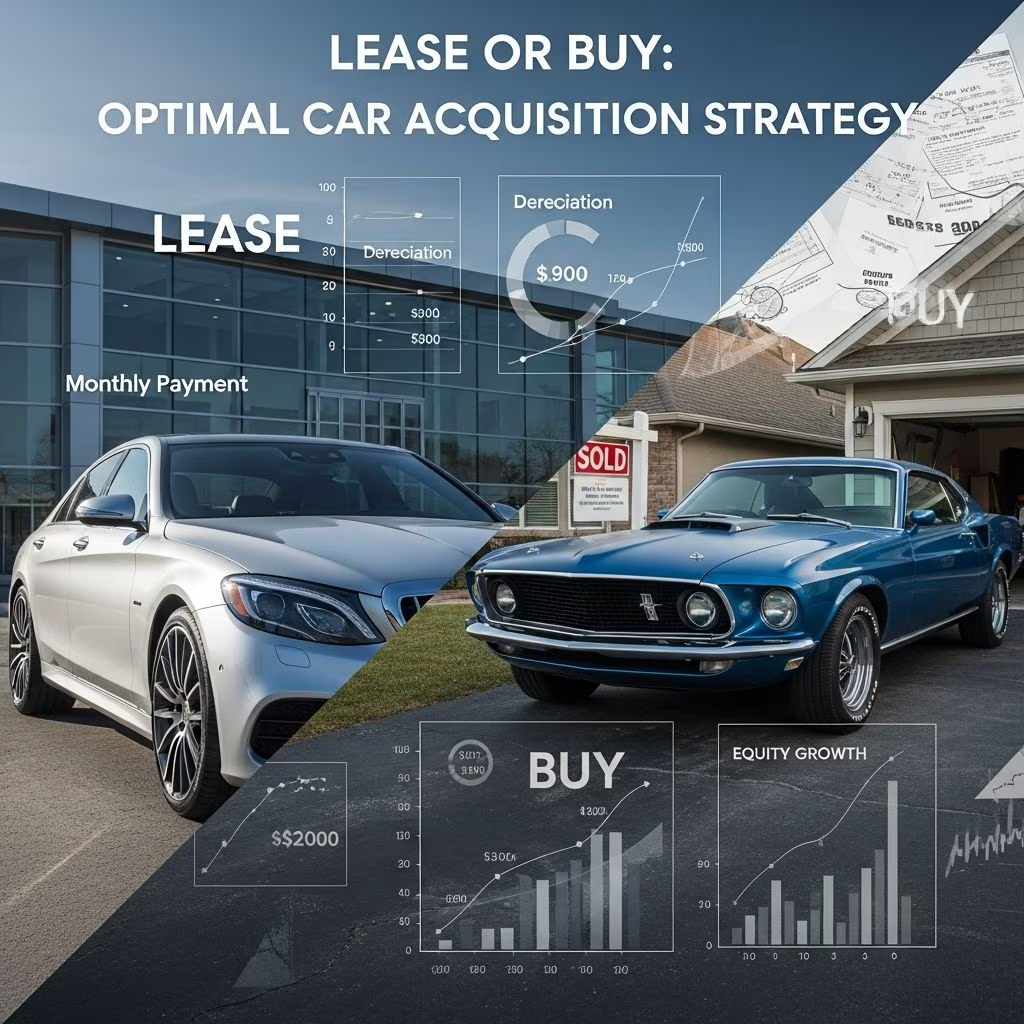
Deciding between leasing and purchasing a vehicle involves weighing financial commitments, driving habits, and personal priorities. Leasing offers reduced upfront costs and access to cutting-edge models, while buying builds equity and provides unrestricted use. This guide explores these options comprehensively to empower your choice.
Understanding Vehicle Leasing Fundamentals
Leasing functions as a long-term rental agreement where you pay for the car’s depreciation during the term, typically 24 to 36 months. Payments cover the difference between the initial value and projected residual value, plus interest and fees. This structure results in lower monthly outlays compared to loans, freeing up capital for other needs.
- Payment Advantages: Average lease payments trail loan equivalents by 30-50%, per industry data, enabling affordability for premium vehicles.
- Warranty Coverage: New cars under lease remain factory-warrantied, minimizing repair expenses.
- Technology Access: Frequent upgrades ensure latest safety tech like adaptive cruise control and autonomous braking.
However, lessees forfeit ownership, facing mileage caps—often 10,000-15,000 annually—and penalties for excess wear. Early exits incur steep fees, locking you into the contract.
The Case for Purchasing Your Vehicle
Buying secures full ownership post-financing, granting freedom over usage, modifications, and resale. Loans amortize principal and interest, building equity that can offset future purchases.
- Equity Accumulation: Payments contribute to asset value, unlike rental-like leases.
- Mileage Freedom: No limits, ideal for high-mileage commuters exceeding 15,000 miles yearly.
- Customization Liberty: Alter aesthetics or performance without voiding agreements.
Drawbacks include higher initial payments and eventual maintenance beyond warranties, plus resale hassles amid depreciation.
Financial Breakdown: Costs Side-by-Side
Total ownership costs hinge on duration and habits. Short-term (under 3 years), leasing shines; long-term (over 5 years), buying prevails.
| Aspect | Leasing | Buying |
|---|---|---|
| Monthly Payment | $250-$400 (avg.) | $350-$550 (avg.) |
| Upfront Costs | Low (first payment + fees) | Higher (down payment) |
| 5-Year Total Cost | $18,000-$24,000 | $22,000-$30,000 (net after equity) |
| Mileage Penalty | $0.15-$0.30/mile over limit | None |
| End Term | Return or buyout | Own outright |
These figures draw from averaged 2026 models; actuals vary by credit, vehicle, and terms.
Hidden Pitfalls in Each Approach
Leasing traps include disposition fees ($300-$500) at return and charges for dings or tires. Overages compound: 5,000 extra miles cost $750-$1,500. Buying risks post-warranty repairs ($1,000+ annually after 5 years) and market-driven resale losses.
Tax implications differ: Lessees deduct business-use portions; buyers capitalize depreciation. Fuel efficiency and insurance rates also factor—newer leased cars often save here.
Lifestyle Alignment: Who Benefits Most?
- Lease Ideal For: Urban drivers, low-mileage professionals, luxury seekers wanting biennial refreshes, business fleets leveraging deductions.
- Buy Ideal For: Families, road-trippers, modifiers, budget-conscious long-haulers aiming for payment-free driving.
EV trials suit leasing for tech trials without commitment; highway warriors favor buying to dodge mileage fees.
Negotiation Tactics for Best Deals
Shop multiple dealers, compare APRs (aim under 5%), and haggle residuals. For leases, push higher mileage allowances; for buys, seek 0% financing promotions. Pre-approve loans externally to strengthen position.
Tools like payment calculators reveal true costs—input down payments, rates, terms for apples-to-apples views.
Future Trends Shaping 2026 Decisions
EV incentives boost leasing via residual protections; subscription models emerge as hybrids. Rising rates (projected 4-6%) narrow lease advantages, tilting toward buys for fixed-rate loans.
Frequently Asked Questions
What if I exceed lease mileage?
Expect 15-30 cents per excess mile, plus inspections for wear. Negotiate 12,000-18,000 upfront.
Can I modify a leased car?
Limited to reversibles; permanents risk fees at return.
Is buying always cheaper long-term?
Yes, if kept 5+ years; leasing wins for 2-3 year cycles with low miles.
What about early lease termination?
Costly—remaining payments plus fees; trading may offset via dealer buyout.
EV leasing vs. buying?
Leasing accesses tax credits indirectly; buying claims full rebates but ties to ownership.
Strategic Decision Framework
Assess: Annual miles? Ownership desire? Budget flexibility? Score high-mileage/long-hold as buy; low-mileage/new-car lust as lease. Run personalized math before signing.
References
- Leasing vs. Buying a Car – Pros and Cons — Navy Federal Credit Union. 2025-10-15. https://www.navyfederal.org/makingcents/auto/buying-vs-leasing-a-car.html
- Should You Lease or Buy Your Next Car? Pros and Cons Explained — HV Auto. 2026-01-20. https://hv.auto/should-you-lease-or-buy-your-next-car-pros-and-cons-explained/
- Buying or Leasing a Car in 2026: Which Make is Best for You? — Consumer Reports. 2026-03-01. https://www.consumerreports.org/cars/buying-a-car/leasing-vs-buying-a-new-car-a9135602164/
- Should I Lease or Buy My Next Car? — Modera Wealth Management. 2025-11-10. https://moderawealth.com/should-i-lease-or-buy-my-next-car/
- Should I Lease or Buy a Car? — NerdWallet. 2026-02-14. https://www.nerdwallet.com/auto-loans/learn/7-lease-vs-buy-questions-right
- Leasing vs. Buying A Car — PNC Insights. 2025-12-05. https://www.pnc.com/insights/personal-finance/borrow/leasing-vs-buying-a-car.html