
Will Your Law School Survive the Coming Crunch?
Assess the mounting pressures on U.S. law schools amid enrollment drops, financial woes, and policy shifts threatening widespread closures.
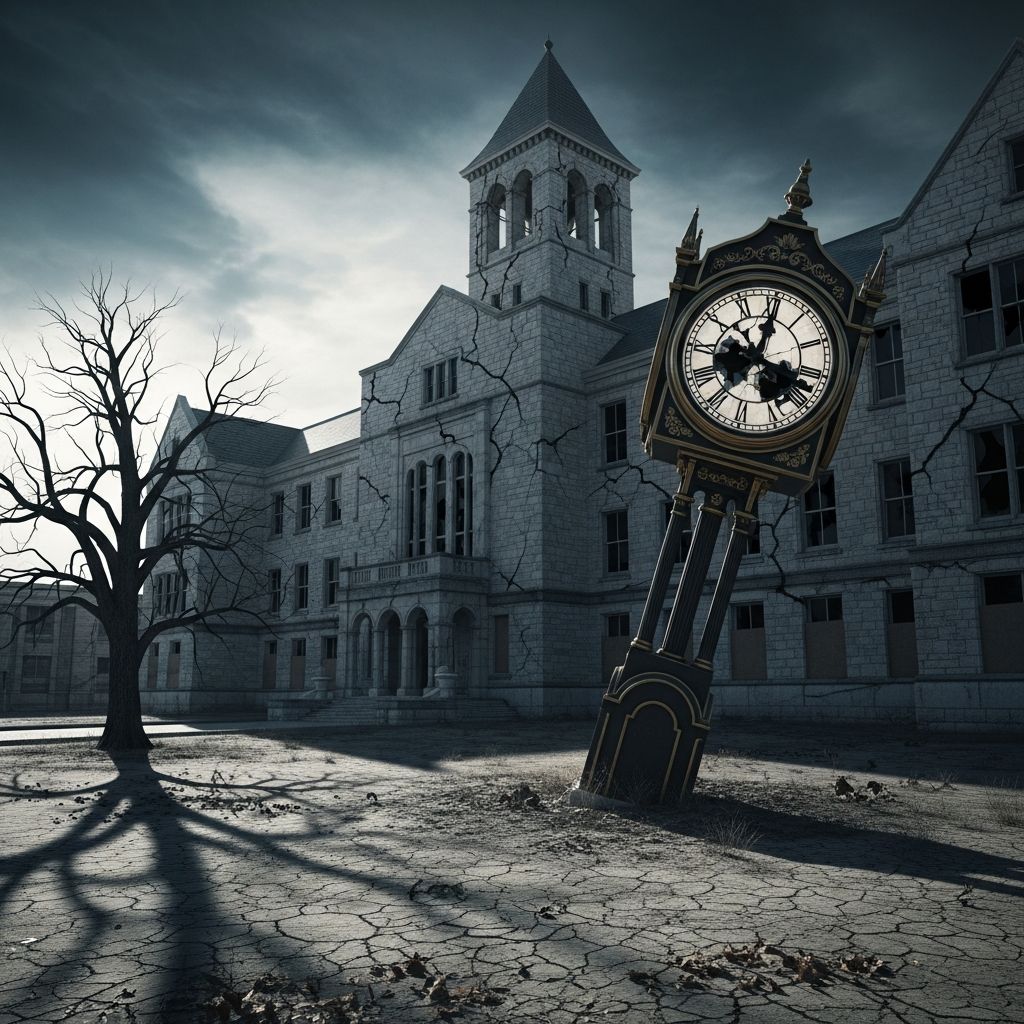
U.S. law schools confront a perfect storm of declining applicant pools, escalating financial deficits, and stringent federal regulations on student loans. Projections indicate that dozens of programs could shutter within the next few years, reshaping the legal education landscape.
Demographic Shifts Reshaping Applicant Pools
The foundational issue stems from a sharp decline in the number of college graduates eligible for law school. By 2028, this pool had contracted by approximately 15%, severely impacting mid- and lower-tier institutions. Elite schools in the top 20 rankings maintain robust applications, but those ranked 50th and below scramble for fewer qualified candidates, often resorting to generous scholarships that erode revenue.
This “demographic cliff” accelerates as fewer high school graduates enter college overall. Schools dependent on tuition—many of which borrowed heavily for facilities during peak enrollment years—now face insolvency. Financial projections reveal some programs depleting reserves within months, forcing cuts to faculty, courses, and hands-on clinical training.
Federal Loan Policies: A Ticking Time Bomb
New legislation like the One Big Beautiful Bill Act (OBBBA) introduces accountability measures tying federal student aid to post-graduation earnings. Law schools must demonstrate that a significant portion of graduates earn above the median for their “field of study” to retain loan access. With projected 2025 loan default rates of 14-29%, far exceeding private sector benchmarks, regulators are poised to enforce strict criteria.
The bimodal salary distribution in law exacerbates this: top graduates from elite firms inflate state medians, while many from lower-tier schools enter lower-paying roles or non-legal jobs. If “field of study” narrowly defines as lawyers only, roughly 50% of graduates fall below median earnings, risking program ineligibility. Broader inclusions like paralegals might offer relief, but in high-cost markets like New York or California, BigLaw salaries still dominate medians.
| Scenario | Impact on Law Schools | At-Risk Programs |
|---|---|---|
| Narrow Definition (Lawyers Only) | 1/3 of schools lose aid | Lower-tier nationwide |
| Broad Definition (Legal Occupations) | Some survival, but urban schools fail | NY, TX, CA regionals |
| No Change | Temporary reprieve | All tuition-dependent |
This table illustrates potential outcomes based on Department of Education rulemaking, highlighting vulnerability for non-elite programs.
Financial Distress and Operational Cuts
Many schools operate on razor-thin margins, with tuition covering 90%+ of budgets. A drop from, say, 200 to 170 first-year students slashes $6 million in revenue, compounded by scholarship hikes to attract enrollees. Debt service from boom-era expansions drains liquidity, leading to deferred maintenance, reduced course offerings, and slashed experiential learning—ironically, the programs most valued by modern students.
- Revenue Loss: 15-30% enrollment drops trigger cascading deficits.
- Cost Cuts: Faculty layoffs, program mergers, and facility neglect.
- Debt Burden: Loans for new buildings become unsustainable.
By 2029, initial closures of unranked privates signaled the trend, escalating to 22 full shutdowns by 2030, with 30-40 more teetering. Transfers disrupt students, eroding credits and scholarships, further deterring applicants.
Rankings Revolt and Market Signals
Dissatisfaction with U.S. News & World Report methodologies prompted several schools to withdraw from rankings participation. This move aims to prioritize mission over metrics but complicates applicant decisions amid instability. Prospective students increasingly weigh closure risks, accelerating the downward spiral for vulnerable institutions.
AI Disruption and Hiring Headwinds
Artificial intelligence tools automate routine legal tasks, prompting firms to scale back entry-level hires. Coupled with record enrollments, this creates a “dangerous one-two punch”: oversupply of graduates chasing shrinking opportunities. Gen Z unemployment, already double the national average, foreshadows tougher job markets, questioning law school’s return on investment.
Regulatory Overhaul and ABA Scrutiny
Over 200 ABA-accredited schools produce 100,000+ graduates annually, fueling a legal services market costing $71 billion yearly. Critics argue this sustains government bloat and fraud, targeting the ABA for political bias and lax oversight. Calls to close graduate law programs entirely gain traction, potentially curbing oversupply.
Signs Your School is at Risk
Prospective and current students can gauge vulnerability through key indicators:
- Rankings below top 50 with heavy tuition reliance.
- Recent scholarship escalations or enrollment dips.
- Unranked status or recent USNWR withdrawal.
- High graduate debt-to-income ratios per ABA disclosures.
- Geographic location in competitive, high-median markets.
Elite programs remain insulated, but regionals face existential threats.
Student Impacts: Transfers, Debt, and Career Paths
Closures upend lives: students transfer mid-program, losing credits or aid; others drop out amid uncertainty. Non-legal career pivots become common, amplifying loan defaults. Federal rules could bar risky schools from aid, stranding enrollees.
Strategic Responses for Law Schools
Survivors adapt via mergers, online expansions, or specialization in high-demand areas like tech law. Some pivot to non-JD programs, but core JD viability hinges on enrollment stabilization—an unlikely prospect short-term.
Frequently Asked Questions (FAQs)
What percentage of law schools might close soon?
Forecasts suggest 22 closures by 2030, with 30-40 more in peril, particularly lower-tier privates.
How do student loan rules affect programs?
Schools must prove graduates exceed field medians for aid eligibility; failures trigger shutdowns.
Are top schools safe?
Yes, top 20 programs thrive on applicant abundance; risk concentrates in ranks 50+.
Does AI threaten law jobs?
Yes, automating entry-level work amid high enrollments squeezes hiring.
Should I avoid law school now?
Weigh risks: elite options safer, but research finances and job outcomes thoroughly.
Navigating Uncertainty as an Aspiring Lawyer
Prioritize accredited, financially stable schools with strong bar passage and employment stats. Diversify skills in AI-resistant areas like policy or compliance. Monitor DOE rulemaking on OBBBA for aid shifts. The legal education crisis demands caution, but opportunities persist for strategic choosers.
(Word count: 1782)
References
- The 2030 Law School Collapse Has Already Begun — Steve Schwarz, LSAT Unplugged (YouTube Transcript). 2026 (approx.). https://www.youtube.com/watch?v=R8lsOqQo5rU
- Are a Bunch of Law Schools About to Shut Down? — Akash Kanojia. 2025 (approx.). https://www.akashkanojia.com/are-a-bunch-of-law-schools-about-to-shut-down/
- Should the U.S. Close Its Graduate Law Schools? — Minding the Campus. 2025-04-10. https://mindingthecampus.org/2025/04/10/should-the-u-s-close-its-graduate-law-schools/
- Law Schools Leaving the U.S. News Rankings — Spivey Consulting Podcast. 2026 (approx.). https://www.spiveyconsulting.com/podcasts/law-schools-withdrawing-from-us-news-rankings-podcast
- Is it worth it to go to law school? AI, hiring… — Fortune. 2026-01-26. https://fortune.com/2026/01/26/is-it-worth-it-to-go-to-law-school-ai-hiring-entry-level/
Similar Articles








Read full bio of Sneha Tete




