
Law Firm Dress Codes: Flip-Flops and Shorts Allowed?
Navigating professional attire in law offices: When can lawyers ditch suits for flip-flops and shorts without risking professionalism?
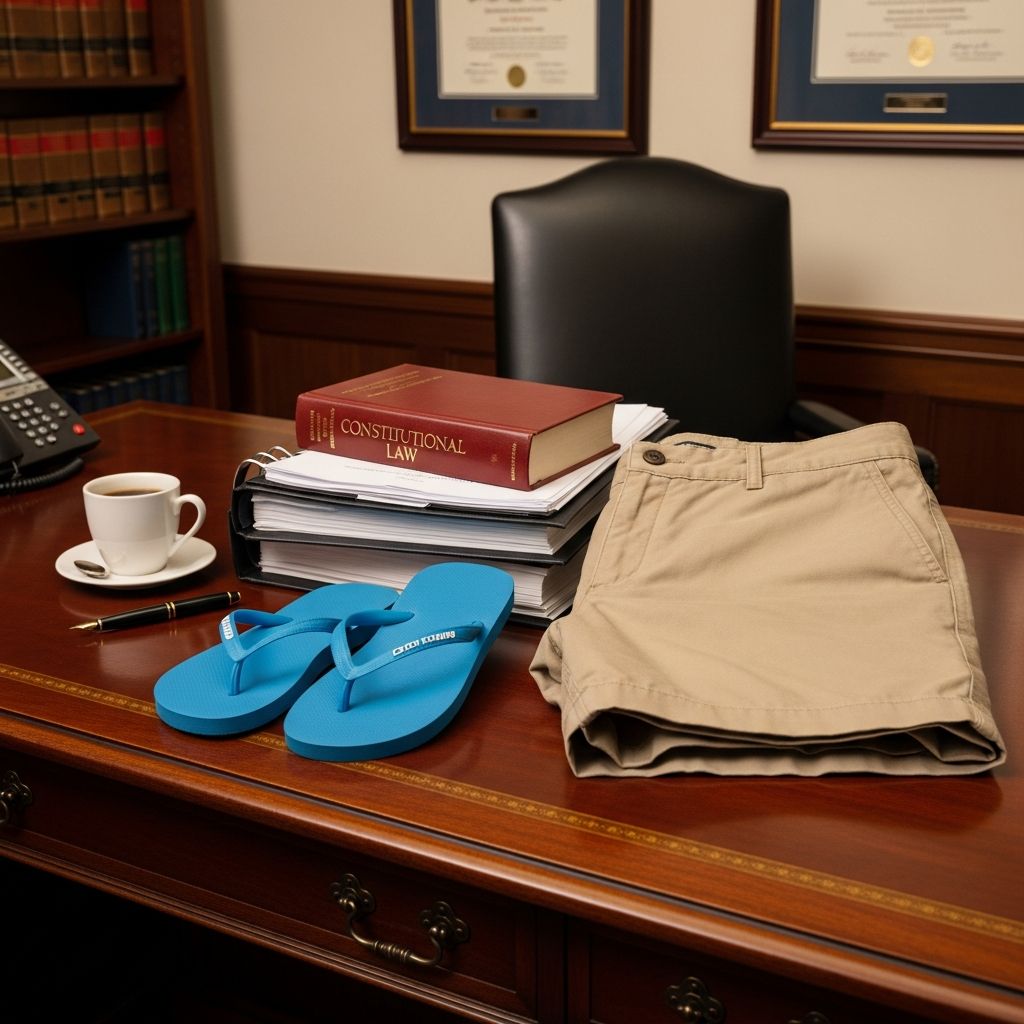
Professional appearance remains a cornerstone of legal practice, influencing client perceptions, courtroom decorum, and firm culture. While traditional suits dominate, shifts toward business casual raise questions about casual items like flip-flops and shorts. This guide examines current standards, regional variations, and practical strategies for lawyers balancing comfort and authority.
Evolution of Attire Standards in Legal Settings
Legal dress codes have transitioned from rigid formality to flexible policies reflecting modern workplaces. Historically, suits and ties symbolized gravitas, but post-pandemic remote work and generational shifts promote comfort without sacrificing professionalism. Firms now often adopt “business casual” during standard hours, reserving formal wear for client meetings or court.
Key drivers include client demographics—corporate clients favor suits, while tech startups tolerate relaxed looks—and office location. Coastal or creative hubs lean casual, unlike conservative inland practices. Policies emphasize readiness: many require keeping formal attire on-site for unexpected court appearances.
Office Environment: Defining Business Casual for Lawyers
Business casual bridges formal and everyday wear, allowing slacks, collared shirts, and loafers while banning extremes. For men, tailored trousers with button-down shirts work; polo shirts suit internal days but not client interactions. Women opt for blouses with skirts or pants, avoiding tight or short styles.
- Acceptable basics: Neutral slacks, knee-length skirts, closed-toe flats or low heels, subtle jewelry.
- Seasonal tweaks: Lighter fabrics in summer, but no bare legs unless hosiery is standard.
- Grooming essentials: Polished shoes, ironed shirts, minimal cologne/perfume.
Flip-flops and shorts? Rarely office-appropriate except designated “casual Fridays” in progressive firms. They signal leisure, undermining authority during impromptu client visits.
Courtroom Mandates: No Room for Casual Choices
Courts enforce stricter rules to uphold judicial dignity. Federal and state guidelines prohibit shorts, flip-flops, t-shirts, tank tops, low-cut tops, or hats. Men need suits, coats, ties with slacks (no jeans); women require tailored suits, dresses, or blouses with skirts/pants.
| Category | Men | Women | Prohibited |
|---|---|---|---|
| Attorneys/Parties | Suit, tie, dress shoes | Tailored suit/dress, heels/flats | Shorts, flip-flops, jeans, revealing clothes |
| Spectators | Coat, slacks | Blouse/skirt, covered shoulders | Same as above + sunglasses |
Spectators must also dress respectfully, with men wearing coats. Violations risk entry denial, emphasizing preparation like spare suits in offices.
Client Interactions: Tailoring Looks to Expectations
Clients judge competence partly by appearance; mismatched attire erodes trust. Business clients expect suits; creative sectors allow khakis and blazers. Firms send alerts for visitor days, requesting formal wear.
Polls show 70% of executives prefer traditionally dressed lawyers, linking polish to reliability. Remote meetings demand neat tops with professional backgrounds, as video magnifies details.
Gender-Neutral Guidelines and Common Pitfalls
Modern policies avoid gender specifics, focusing on fit and modesty. Avoid showing skin: button shirts fully, skip spaghetti straps, ensure undergarments stay hidden. Skirts hit 2-3 inches above knees when seated; fabrics shouldn’t cling.
- Athleisure ban: Yoga pants, track suits, gym shoes unfit any day.
- Footwear fails: Scuffed shoes or sandals signal neglect; opt for leather.
- Accessories limit: Tasteful pieces only—no large hoops or flashy prints.
For interviews, err formal: navy suits, polished leather shoes.
Seasonal and Firm-Specific Policies
Summer heat prompts relaxations like “dressy casual” from Memorial Day to Labor Day in some firms. Capris or flip-flops might appear Fridays only, but core rules persist: nothing too short, tight, or revealing.
Remote-heavy firms minimize codes, prioritizing video readiness. Leaders communicate via emails or poems for buy-in. Check handbooks; inquire HR on ambiguities.
Building a Professional Wardrobe on a Budget
Invest wisely: suits in navy/charcoal with extra trousers extend life. Versatile pieces like blazers pair with slacks or skirts. Dry clean sparingly; alternate wears.
Shop sales for quality: wool blends for durability. Maintain via shining shoes weekly, ironing shirts.
FAQs on Legal Attire
Can lawyers wear shorts to the office?
Generally no, except rare casual Fridays in relaxed firms. Shorts evoke recreation, clashing with professional image.
Are flip-flops ever acceptable for lawyers?
Never in court or client settings; office-only in beachside or ultra-casual firms, but risky. Closed-toe loafers preferred.
What defines business casual in law firms?
Slacks, collared shirts, blazers, dress shoes—comfortable yet polished, excluding jeans, t-shirts, athletic wear.
Do court dress codes apply to virtual hearings?
Yes, full professional attire recommended; visible top must suit jacket/tie standards.
How to handle dress code for new law jobs?
Ask about policy day one; observe colleagues; keep formal backup ready.
Future Trends: Comfort Meets Credibility
Hybrid work accelerates casual shifts, but AI interviews and client VR demand sharp visuals. Firms blending policies—casual daily, formal as-needed—retain talent while projecting strength. Personal style emerges via colors/patterns within bounds, fostering individuality.
Ultimately, attire communicates respect for role, clients, courts. When uncertain, overdress: polish trumps peril.
References
- Dress code for law firms — Law Absolute. 2023. https://www.lawabsolute.com/recruitment-news/article/dress-code-for-law-firms/
- Appropriate Courtroom Attire — U.S. District Court, Eastern District of Texas. 2022-10-01. https://www.txed.uscourts.gov/sites/default/files/judgeFiles/Appropriate_Courtroom_Attire.pdf
- Look Like a Lawyer: Dressing for Success — Epstein & Schwartz. 2024. https://www.epsteinschwartz.com/knowledge-center/look-like-lawyer-dress-for-success/
- Dress Code – Law Department — NYC.gov. 2025. https://www.nyc.gov/site/summerorientation/resources/dress-code.page
- Law Firm Dress Code Too Much Trouble? — Attorney at Work. 2023-06-15. https://www.attorneyatwork.com/law-firm-dress-code-too-much-trouble/
Similar Articles








Read full bio of medha deb




