
Landlords’ Rights on Medical Marijuana in Rentals
Navigating legal complexities: How landlords can manage medical marijuana use, cultivation bans, and tenant accommodations effectively.
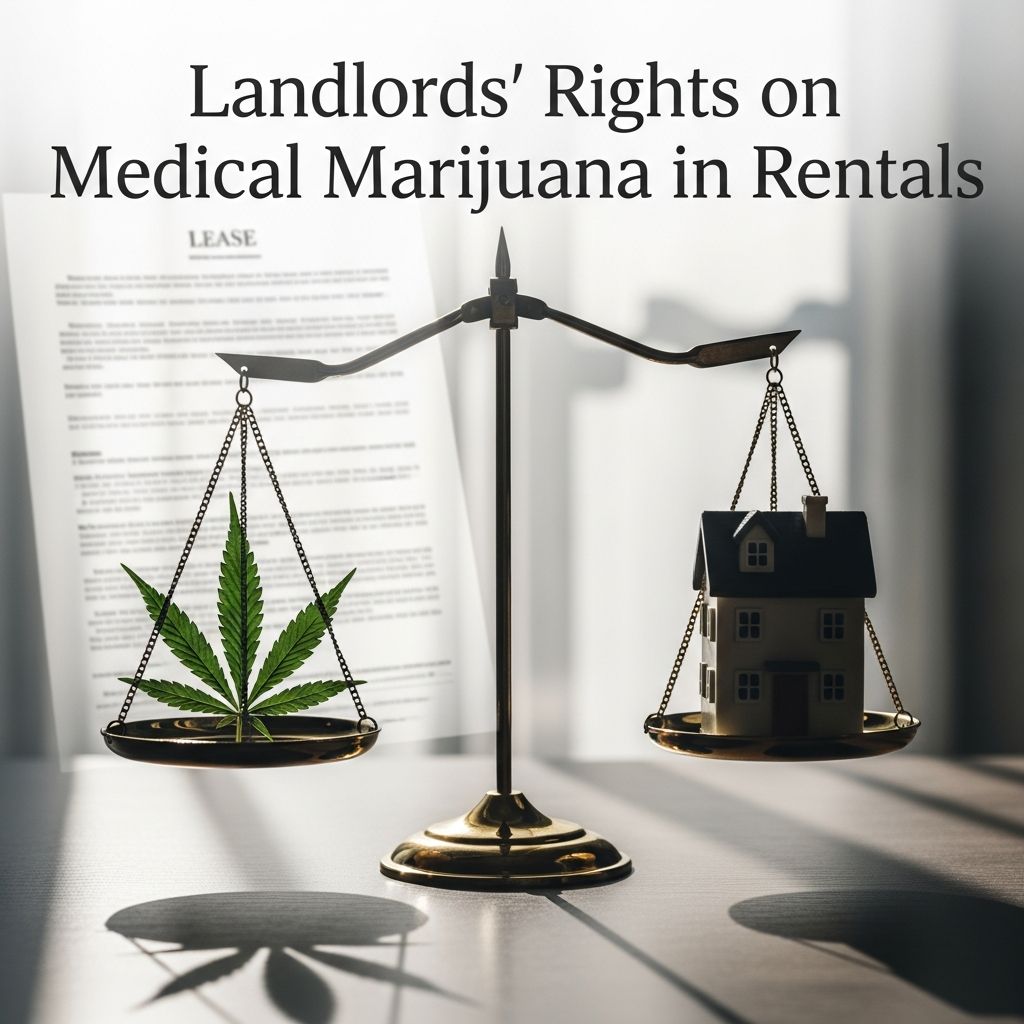
Medical marijuana laws create unique challenges for landlords, balancing tenant rights with property protection amid conflicting federal and state regulations. This article provides a detailed roadmap for property owners to address these issues legally and practically.
Understanding the Legal Landscape of Cannabis
Cannabis regulations differ sharply between federal and state levels. Federally, marijuana remains classified as a Schedule I controlled substance under the Controlled Substances Act, illegal for any use. However, as of 2026, over 30 states plus the District of Columbia permit medical marijuana, with many also allowing recreational use.
Medical marijuana typically requires a doctor’s recommendation and a state-issued card, distinguishing it from recreational access available to adults over 21 in permissive states. Landlords must research their specific state’s statutes, as variations exist—for instance, Texas’s Compassionate Use Program limits low-THC products for certain conditions.
In multi-unit housing, these laws impact not just individual tenants but shared spaces, odors, and secondhand smoke concerns. Property owners in federally assisted housing face stricter rules, where marijuana use disqualifies applicants and reasonable accommodations are denied.
Federal Preemption and Its Implications for Properties
Federal law trumps state law on marijuana, giving landlords leverage to prohibit possession, use, or cultivation entirely. Even in states legalizing medical cannabis, properties tied to federal financing—like Section 8 or public housing—must reject marijuana users.
For market-rate rentals, this preemption allows broad bans, but state protections may shield medical cardholders from discrimination based solely on status. Cultivation remains a flashpoint; landlords can evict for growing plants regardless of medical authorization, citing property damage risks.
Crafting Robust Lease Agreements
Clear lease language is a landlord’s primary defense. Include specific clauses prohibiting marijuana smoking, vaping, or cultivation indoors and outdoors. A generic no-smoking policy may not suffice for cannabis; explicitly name it to avoid disputes.
Sample provisions might state: “Tenant shall not use, possess, or cultivate marijuana or cannabis-derived products on the premises, including medical use, due to federal illegality and potential property harm.” Outline violations leading to notices and eviction.
Prohibit unlicensed sales too, covering both legal and illegal substances to maintain neutrality. Regularly update leases to reflect evolving laws, consulting local attorneys for compliance.
Handling Requests for Reasonable Accommodations
When tenants request exceptions for medical marijuana, treat it as a Fair Housing Act (FHA) accommodation. Verify the request: a medical card alone may not suffice; policies should require doctor’s documentation without invading privacy.
Engage interactively: discuss alternatives like edibles or tinctures that avoid smoke. Document all communications, neighbor surveys for odor complaints, and research on non-smoking methods.
Denials must be justified—e.g., undue burden from fire risks, property damage, or neighbor impacts. In non-federal properties, some states mandate consideration, but landlords retain discretion if alternatives exist.
| Step | Action | Purpose |
|---|---|---|
| 1. Verify | Request medical documentation | Confirm legitimacy without excess inquiry |
| 2. Discuss | Explore smoke-free options | Find mutual solutions |
| 3. Document | Record all interactions | Protect against lawsuits |
| 4. Decide | Approve/deny with rationale | Ensure FHA compliance |
Risks of Marijuana Cultivation on Rental Properties
Growing marijuana poses severe hazards: high water usage causes mold, improper electrical setups spark fires, and odors permeate structures, devaluing properties. Even state-legal grows can violate leases, justifying eviction.
Landlords universally ban cultivation; medical licenses do not grant growing rights in rentals. Insurance complications arise, as federal illegality may void coverage for damages.
- Mold and Water Damage: Excessive humidity from grows fosters toxic mold.
- Fire Hazards: Grow lights overload circuits.
- Odor Intrusion: Affects adjacent units, prompting complaints.
- Structural Alterations: Unauthorized vents or fans damage walls.
Multi-Unit Housing Challenges and Solutions
Apartments amplify issues like secondhand smoke or vapor traveling vents. Landlords can enforce no-smoking policies via leases, specifying premises coverage.
Survey residents for impacts before accommodations; equal access to clean air is key. Promote FDA-approved alternatives or non-inhalation methods to minimize conflicts.
In states like Massachusetts, leases can ban smoking but not private use if odor-free. Public housing agencies evict medical users at discretion.
Enforcement Strategies and Eviction Processes
Upon violations, issue cure-or-quit notices citing lease terms. Document evidence: photos, complaints, odors. Proceed to eviction if unresolved, emphasizing federal illegality for courts.
Avoid self-help; use legal channels. In permissive states, cultivation or smoke breaches suffice for termination.
State-Specific Considerations
Laws vary: Texas restricts to low-THC oils. Others differentiate medical protections. Always check .gov sites like state health departments for updates.
For example, in medical-only states, recreational bans are straightforward; dual-legal states require nuanced accommodation handling.
Insurance and Liability Concerns
Marijuana incidents risk claim denials due to federal status. Broad no-smoking/no-substance clauses safeguard coverage. Notify insurers of state laws proactively.
Best Practices for Property Managers
- Consult fair housing attorneys annually.
- Train staff on verification without discrimination.
- Use standardized forms for requests.
- Monitor legislation via official sources.
- Prioritize odor control tech like ventilation.
Frequently Asked Questions
Can I ban all marijuana in my leases?
Yes, federal law supports prohibitions, even for medical use in rentals.
Must I allow medical grows?
No, ban cultivation outright due to damage risks; licenses don’t mandate it.
What if a tenant sues for accommodation denial?
Document alternatives offered; undue burden justifies denial.
Does a no-smoking policy cover vaping?
Specify “smoking or vaping” explicitly.
How do federal properties handle this?
Deny all use and accommodations.
Future Trends in Cannabis and Rentals
With potential federal rescheduling, state laws may harmonize, but property rights likely persist. Landlords should prepare for edibles normalization while banning combustion.
(Word count: 1678)
References
- Landlord’s Guide to Marijuana in Rentals — TurboTenant. 2023. https://www.turbotenant.com/education/be-a-better-landlord/landlords-guide-to-marijuana-in-rentals/
- Marijuana in Multi-Unit Residential Settings — Public Health Law Center. 2019-08-01. https://www.publichealthlawcenter.org/sites/default/files/resources/Marijuana-in-Multi-Unit-Residential-Setting-2019-1.pdf
- Tenants and Marijuana: What’s a landlord to do? — Adjusters International. 2010. https://www.adjustersinternational.com/pubs/insights-for-your-industry/tenants/index.html
- Fair Housing and Marijuana – Do You Have To Permit Its Use? — Fair Housing Institute. 2023. https://fairhousinginstitute.com/fair-housing-and-marijuana-do-you-have-to-permit-its-use/
- Can landlords ban medical marijuana use in rental properties? — WKYT (YouTube). 2023. https://www.youtube.com/watch?v=ZnIozpkj44Y
- Compassionate Use Program — Texas State Law Library. 2023. https://guides.sll.texas.gov/cannabis/compassionate-use
Similar Articles








Read full bio of medha deb




