
Landlord Entry Rights: Tenant Privacy Protections
Understand when landlords can legally access your rental property and how to safeguard your privacy rights effectively.
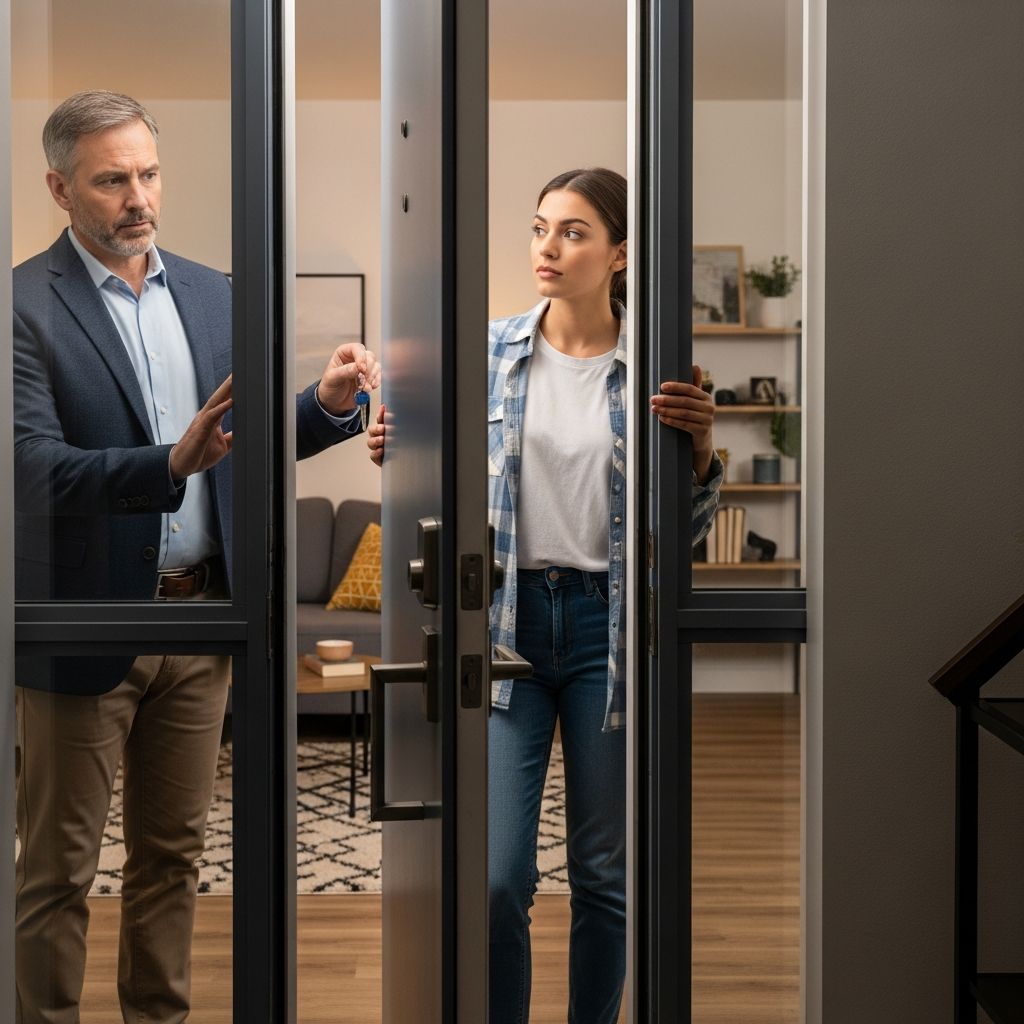
Rental properties offer tenants a fundamental right to privacy, but landlords retain specific legal access rights for maintenance and safety. This article examines permissible entry scenarios, notice obligations, and safeguards against abuse, drawing from established statutes and legal precedents.
Foundational Tenant Privacy Expectations
Tenants enjoy a protected expectation of privacy within their leased spaces, encompassing living areas, balconies, garages, and yards as defined in agreements. State laws or court rulings enforce this privacy, restricting landlord access to defined circumstances.
Privacy rights prevent arbitrary intrusions, ensuring undisturbed use of the premises. Violations can lead to legal remedies, emphasizing the balance between property management needs and resident autonomy.
Core Scenarios Permitting Landlord Access
Landlords may access units under limited conditions, always prioritizing tenant consent where feasible. Key authorized purposes include:
- Conducting essential repairs or improvements.
- Performing routine inspections for maintenance needs.
- Displaying the property to potential buyers, renters, or contractors.
- Delivering contracted services like pest control.
- Addressing emergencies threatening safety or property.
These entries require adherence to procedural rules to remain lawful.
Notice Requirements for Non-Emergency Entries
Advance notification forms the cornerstone of legal entry protocols. Statutes typically mandate 24 hours or “reasonable” notice, delivered via writing, email, or documented verbal means.
Entry times restrict to standard business hours, generally 8 AM to 5 PM weekdays, though leases or laws may specify variations. Weekends often fall outside “reasonable” unless agreed otherwise.
| State Example | Minimum Notice | Allowed Hours |
|---|---|---|
| Florida | 24 hours (repairs) | 7:30 AM – 8:00 PM |
| General U.S. | 24-48 hours or reasonable | Business hours |
This table highlights variations; always consult local statutes for precision.
Emergency Access Without Prior Notice
Imminent dangers like fires, floods, or gas leaks justify immediate entry sans notice. Landlords must act to protect lives, prevent damage, or preserve premises integrity.
Post-emergency, documentation of the situation proves necessity. Tenants cannot alter locks impeding such access, as leases typically prohibit unapproved changes.
Tenant Consent and Unreasonable Denial
Affirmative tenant permission enables entry at mutually convenient times. Florida Statute §83.53 explicitly states tenants must not unreasonably refuse access for inspections, repairs, or showings.
Refusal breaches lease terms, potentially triggering cure notices or eviction proceedings after failed compliance. Valid denials stem from inadequate notice or improper purpose; otherwise, cooperation is required.
Access During Tenant Absences
Prolonged tenant absence—equating to half a rental period (e.g., 15 days monthly)—permits entry if needed for listed purposes. Current rent and notified absences limit access to consent or preservation needs.
Landlords should log entries meticulously to avoid disputes over property condition or theft claims.
Third-Party Entries: Inspectors and Authorities
Building officials or police may seek access via landlord facilitation after proper tenant notice. Complaints targeting specific issues justify coordinated entry, respecting notice rules.
Landlords avoid liability by verifying requests’ legitimacy and documenting involvement.
Prohibitions Against Access Abuse
Statutes forbid leveraging entry rights for harassment or excessive intrusions. Frequent, unannounced visits or odd-hour attempts violate tenant peaceful enjoyment rights.
Documented patterns of abuse support tenant claims for injunctions, damages, or lease termination. Leases reinforcing statutory limits strengthen protections.
State-Specific Regulations: Spotlight on Florida
Florida’s §83.53 comprehensively governs access: landlords enter for protection anytime; repairs require 24-hour notice within 7:30 AM-8 PM; other purposes need consent, emergency justification, or address unreasonable withholding/absence.
Unless abusing rights, compliance ensures lawful operations. Tenants denying reasonable access risk eviction via 7-day cure notices.
Florida Statute §83.53(2): “The landlord may enter the dwelling unit at any time for the protection or preservation of the premises.”
Practical Strategies for Tenants
To safeguard privacy:
- Review lease clauses on access protocols.
- Request written notices for all non-emergency entries.
- Accompany landlord during visits when possible.
- Report violations to housing authorities or attorneys promptly.
- Maintain entry logs with dates, times, and purposes.
Proactive communication fosters mutual respect, minimizing conflicts.
Landlord Best Practices for Compliance
Effective property managers:
- Provide ample written notice, exceeding minimums.
- Schedule entries mutually.
- Limit entourage to necessary personnel.
- Respect tenant schedules and privacy post-entry.
- Retain records justifying all accesses.
These habits reduce litigation risks and enhance tenant retention.
Frequently Asked Questions
Can a landlord enter my apartment without permission?
Generally no, except emergencies or tenant absence under specific conditions. Reasonable notice or consent is required otherwise.
What counts as reasonable notice in most states?
Typically 24-48 hours in writing, during business hours. Florida specifies 24 hours for repairs between 7:30 AM-8 PM.
What if I unreasonably deny entry?
You may violate lease terms, facing cure notices or eviction. Legitimate reasons like improper notice allow refusal.
Do emergencies require notice?
No, immediate threats to safety or property permit unannounced entry.
Can landlords change locks or enter with contractors?
Entry with workers follows standard rules; tenants cannot change locks without permission to ensure emergency access.
Resolving Access Disputes
Disagreements warrant mediation before litigation. Local tenant unions or bar associations offer guidance. Courts prioritize statutory compliance, awarding damages for proven harassment.
Understanding rights empowers informed decisions, promoting harmonious landlord-tenant relations.
References
- When Landlords Have a Legal Right of Entry to Rental Units — Justia. Accessed 2026. https://www.justia.com/real-estate/landlord-tenant/information-for-landlords/right-of-entry/
- Explaining The Florida Landlord’s Right Of Entry — Seward Law Office. Accessed 2026. https://www.sewardlawoffice.com/explaining-the-florida-landlords-right-of-entry/
- Chapter 83 Section 53 – 2011 Florida Statutes — The Florida Senate. 2011-01-01. https://www.flsenate.gov/Laws/Statutes/2011/0083.53
- When Can Florida Landlords Enter Property? — Brian Kowal Law. Accessed 2026. https://briankowallaw.com/blog/when-can-a-florida-landlord-enter-the-property/
- The 2025 Florida Statutes – §83.53 — Florida Legislature. 2025. https://www.leg.state.fl.us/statutes/index.cfm?App_mode=Display_Statute&URL=0000-0099%2F0083%2FSections%2F0083.53.html
- Your Rights When a Landlord Enters Your Rental in Florida — Korte & Patel, P.A. Accessed 2026. https://www.kortepa.com/your-rights-when-a-landlord-enters-your-rental-in-florida
- Right To Inspect and Right To Enter – Landlord and Tenant Law — Salcines Law. Accessed 2026. https://salcineslaw.com/right-to-inspect-and-right-to-enter-landlord-and-tenant-law/
- Rights and Duties of Tenants and Landlords — The Florida Bar. Accessed 2026. https://www.floridabar.org/public/consumer/tip014/
Similar Articles








Read full bio of medha deb




