
Key Factors in Restaurant Injury Lawsuits
Essential considerations for pursuing compensation after injuries at restaurants, from negligence proof to legal deadlines.
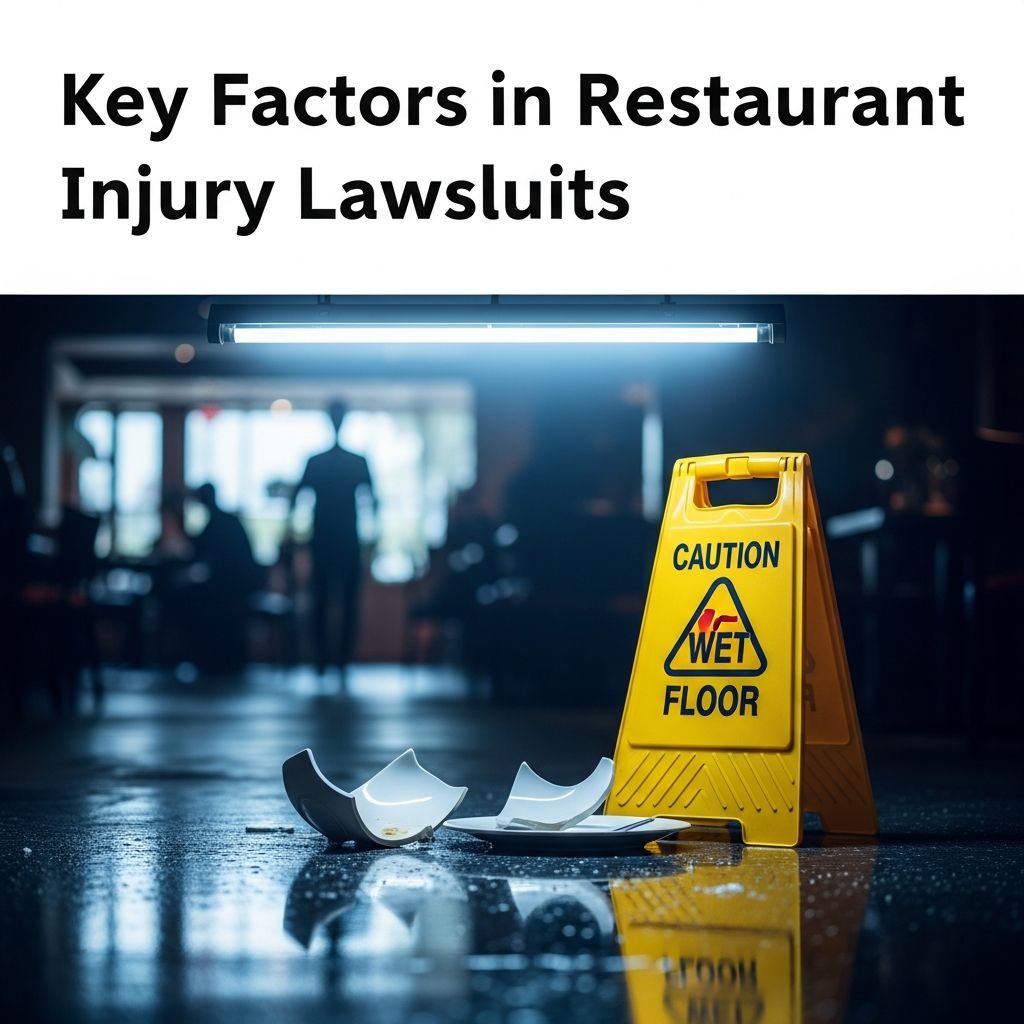
Restaurants serve as social hubs where people gather to eat, relax, and celebrate, but they can also be sites of unexpected accidents leading to serious harm. When negligence by restaurant staff or owners results in injuries like slips on wet floors, foodborne illnesses, or burns from hot surfaces, victims may have grounds to seek legal recourse. Understanding the foundational principles of premises liability and personal injury law is crucial for anyone considering a claim. This article explores the essential considerations, from establishing fault to navigating timelines and potential defenses, empowering injured patrons to make informed decisions.
Understanding Premises Liability in Dining Establishments
Premises liability holds property owners accountable for maintaining safe conditions for visitors. Restaurants, as commercial properties, owe a high duty of care to patrons, who are classified as invitees under the law. This means owners must regularly inspect for hazards, promptly address dangers, and provide warnings where risks cannot be immediately eliminated.
Common hazards in restaurants include slick floors from spills or recent mopping, cluttered walkways with cords or debris, inadequate lighting in parking areas, and structural issues like uneven steps or potholes. For instance, if a server spills a drink and fails to place a caution sign, leading to a patron’s fall, the establishment may be liable if they knew or should have known about the spill.
- Wet surfaces: Frequent in high-traffic areas near kitchens or restrooms.
- Tripping obstacles: Loose mats, exposed wires, or improperly stored equipment.
- Food-related risks: Overly hot dishes causing burns or contaminated items leading to illness.
- Exterior dangers: Icy walkways or poorly lit lots during evening hours.
Proving a breach requires demonstrating that the restaurant deviated from reasonable standards of care expected in the industry. Courts evaluate what a prudent operator would do, often referencing health codes and safety regulations enforced by local authorities.
Proving Negligence: The Core of Your Claim
Negligence forms the backbone of most restaurant injury cases. To succeed, plaintiffs must establish four key elements: duty, breach, causation, and damages.
| Element | Description | Example in Restaurant Context |
|---|---|---|
| Duty of Care | Legal obligation to keep premises safe | Restaurant must clean spills promptly |
| Breach | Failure to meet that duty | No wet floor sign after mopping |
| Causation | Breach directly caused injury | Slip on unmarked wet floor leads to fracture |
| Damages | Actual harm suffered | Medical bills, lost wages, pain |
Evidence is paramount. Immediately after an incident, document the scene with photos, note witness contacts, and seek medical attention to create a record linking the injury to the event. Surveillance footage from the restaurant often captures critical moments, but access requires legal action during discovery.
Food poisoning claims add complexity, as symptoms may arise hours or days later. Victims must preserve receipts, medical reports confirming pathogens like E. coli or Salmonella, and expert testimony tracing contamination to the restaurant’s handling practices.
Gathering and Preserving Vital Evidence
Time-sensitive actions post-injury can make or break a case. Report the incident to management on-site to generate an official record. Request copies of any incident reports they file, as these admit knowledge of the hazard.
Medical documentation is irreplaceable. Even minor injuries warrant a doctor’s visit to establish causation and quantify damages. Bills, prescriptions, and physician notes detailing treatment and prognosis support claims for economic and non-economic losses.
- Photographs and videos of the hazard and your injuries.
- Witness statements from fellow diners or staff.
- Receipts proving you were a paying customer (establishes invitee status).
- Expert reconstructions for complex cases like structural defects.
Restaurants may alter conditions post-incident, known as spoliation, so act swiftly. Hiring an attorney early facilitates subpoenas for internal logs, such as cleaning schedules or maintenance records, revealing patterns of neglect.
Navigating Statutes of Limitations and Filing Deadlines
Every state imposes a statute of limitations, typically 2-3 years from the injury date, after which claims are barred. For minors or cases involving government-owned properties, deadlines may differ. Missing this window forfeits rights to compensation.
Filing begins with a demand letter or complaint outlining facts, negligence, and demanded compensation. Courts then enter discovery, where both sides exchange evidence. Many cases settle here to avoid trial costs, but preparation for litigation strengthens negotiation leverage.
Consider jurisdiction: Chain restaurants may involve corporate defendants across states, complicating venue. Personal injury attorneys assess the best forum for maximum recovery.
Potential Defenses and Overcoming Contributory Fault
Defendants often argue comparative negligence, claiming the plaintiff shares blame. For example, if a patron ignores a warning sign or runs in the restaurant, recovery may reduce proportionally. “Open and obvious” hazards, like a visible spill in broad daylight, can weaken claims unless the owner failed to mitigate.
Other defenses include assumption of risk (e.g., known dangerous conditions) or third-party liability, such as a vendor’s faulty equipment. Thorough investigation counters these by pinpointing primary negligence.
Pure contributory negligence jurisdictions bar recovery if the plaintiff is even slightly at fault, though most states follow modified rules allowing partial awards.
Calculating Compensation: Economic and Non-Economic Damages
Victims seek reimbursement for tangible losses like hospital stays, surgeries, therapy, and wage losses, plus intangibles such as chronic pain, emotional distress, and reduced quality of life. Future costs, discounted to present value, require economic experts.
High verdicts often stem from catastrophic injuries: spinal damage from falls or long-term gastrointestinal issues from poisoning. Punitive damages, rare, punish egregious conduct like ignoring repeated health violations.
- Economic: Medical expenses, lost earnings, property damage.
- Non-economic: Suffering, disfigurement, loss of enjoyment.
- Punitives: For willful misconduct (uncommon).
Food Safety Violations and Health Code Breaches
Beyond slips, food-related claims arise from improper storage, undercooking, or cross-contamination. Health departments inspect regularly, and violation histories bolster negligence arguments. Proving causation demands lab tests matching illnesses among multiple patrons.
Restaurants face strict liability in some product liability overlaps for contaminated food, shifting burden to prove safety measures were followed.
The Role of Experienced Legal Representation
Attorneys specializing in premises liability handle investigations, negotiate with insurers, and litigate if needed. Contingency fees mean no upfront costs; payment comes from settlements. They maximize value by countering lowball offers and preparing for trial.
Select counsel with restaurant case experience, as chains deploy sophisticated defenses. Free consultations assess viability without commitment.
Frequently Asked Questions (FAQs)
What should I do immediately after a restaurant injury?
Seek medical care, report to staff, document the scene, and contact a lawyer promptly to preserve evidence.
Can I sue a restaurant chain or just the local owner?
Yes, both may be liable; corporate policies often influence local practices.
Is food poisoning easy to prove against a restaurant?
No, it requires medical evidence linking symptoms to their food, often with expert analysis.
What if the hazard was ‘obvious’?
Owners must still warn or fix it; obviousness reduces but doesn’t eliminate liability in most states.
How much are typical settlements?
Varies widely; minor cases settle for thousands, severe for hundreds of thousands or more.
References
- How a Lawyer Helps You Sue a Fast Food Restaurant — AZ Law Now. 2023-05-15. https://azlawnow.com/lawyer-sue-fast-food/
- Can I Sue a Restaurant or Retailer if I Was Injured on Its Property? — Super Lawyers. 2024-02-10. https://www.superlawyers.com/resources/premises-liability-plaintiff/can-i-sue-a-restaurant-or-retailer-if-i-was-injured-on-its-property/
- 5 Common Legal Issues Restaurants Face — NWBizLaw. 2021-10-01. https://www.nwbizlaw.com/blog/2021/october/5-common-legal-issues-restaurants-face/
- When Can You Sue a Restaurant in New Jersey? — Brandon J. Broderick. 2023-11-20. https://www.brandonjbroderick.com/when-can-you-sue-restaurant-new-jersey
- Can You Sue a Restaurant for Falling on Their Property? — Cutter Law. 2024-01-05. https://cutterlaw.com/faqs/can-you-sue-restaurant-for-falling-on-property/
- Injured at a restaurant? How to file a lawsuit — Shouse Law Group (YouTube). 2019-03-12. https://www.youtube.com/watch?v=iegGOAn6_Kw
- Suing an NJ Club, Restaurant, or Concert Venue — Drazin & Warshaw. 2023-08-18. https://www.drazinandwarshaw.com/blog/suing-an-nj-club-restaurant-or-concert-venue-what-you-need-to-prove-in-a-premises-liability-case/
Similar Articles








Read full bio of medha deb




