
Just Kidding Defense: 4 Evidence-Based Strategies In Court Now
Unpacking whether claiming 'I was just kidding' holds up as a defense in criminal, defamation, and civil cases across jurisdictions.
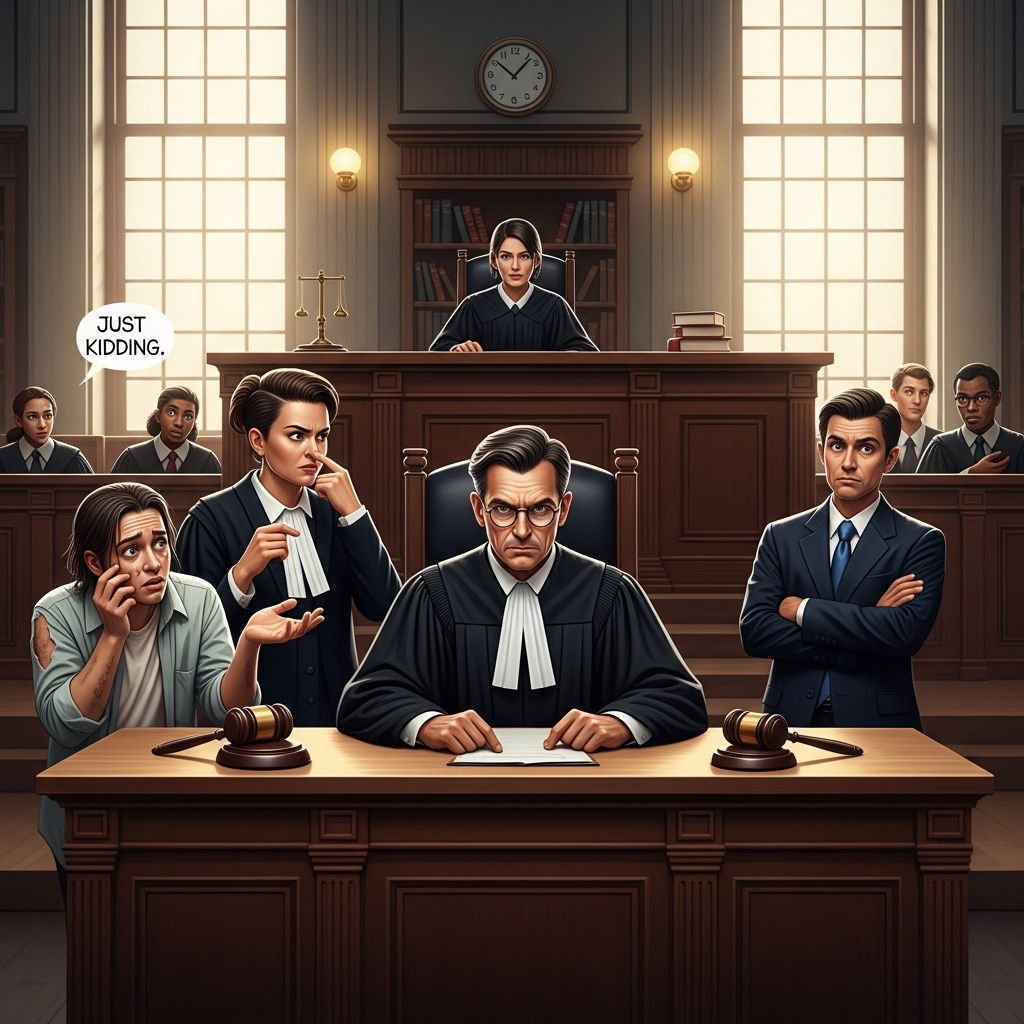
In everyday conversations, uttering “just kidding” often diffuses tension after a provocative remark. But when words or actions lead to legal trouble, does this simple phrase carry any weight in a courtroom? This article delves into the legal validity of claiming a statement or act was merely a joke, examining its role across criminal law, defamation suits, and intellectual property disputes. While humor can sometimes shield speakers, courts scrutinize context, intent, and harm to determine if jest excuses liability.
The Core Concept: Lack of Intent as a Defense
At the heart of many “just kidding” claims lies the legal principle of mens rea, or guilty mind. Criminal prosecutions require proving not just an act (actus reus) but also the intent behind it. If a defendant convincingly shows their actions stemmed from playful mischief rather than malice, charges may falter.
For instance, pranks that escalate unexpectedly highlight this defense’s boundaries. A harmless surprise might morph into tragedy if it causes injury, shifting focus to recklessness. Prosecutors bear the burden to disprove lack of intent, making it a potent tool when evidence supports non-serious motives.
Criminal Cases: When Pranks Cross the Line
Pranks frequently land people in court, but outcomes hinge on perceived intent. Consider scenarios where “fun” leads to harm: tampering with food could constitute poisoning if allergies trigger severe reactions, regardless of joking intent. Similarly, startling someone vulnerable, like an elderly person, might result in manslaughter charges if death ensues from fright.
- Low-risk pranks: Fake spider scares or whoopee cushions rarely lead to charges, as harm is absent and intent clearly non-malicious.
- High-risk pranks: Involving weapons, vehicles, or health vulnerabilities invites scrutiny for recklessness, undermining “just kidding” claims.
- Digital pranks: Cyberbullying disguised as jokes often fails this defense, with courts viewing repeated online harassment as intentional.
Successful defenses require evidence like witness testimony affirming the playful context or absence of prior grudges. Consulting a criminal defense attorney early can frame the narrative around no intent, potentially leading to dismissal.
Defamation Law: Humor as a Shield
In civil defamation cases, where false statements damage reputation, humor introduces nuance. Courts assess if a reasonable person would interpret the remark as factual assertion or jest. Satire, parody, and exaggeration often prevail, protecting speakers under free speech principles.
U.S. courts have long recognized comedy’s role. In a notable Second Circuit ruling, a mock interview’s absurd elements convinced judges no reasonable viewer took it literally, dismissing defamation claims. This aligns with precedents emphasizing context: statements in comedic settings like roasts gain leeway.
“If a man in jest conveys a serious imputation, he jests at his peril.” This 1831 Irish ruling, echoed in U.S. cases, warns that unclear jokes risk liability.
However, superiority humor—belittling targets for laughs—complicates matters. South African law, balancing reputation and expression, critiques tests overly focused on ridicule, arguing they stifle valid jest. Defendants may invoke qualified privilege or fair comment defenses, but success demands provable non-literal intent.
Intellectual Property: Parody and Trademarks
Humor extends to IP disputes. Parodies critiquing marks or works can evade infringement if they avoid consumer confusion. Courts weigh if the joke targets the original (parody “of”) versus using it casually (parody “with”).
| Factor | Supports Defense | Undermines Defense |
|---|---|---|
| Detectability | Clear exaggeration or absurdity signals humor | Subtle puns may confuse audiences |
| Target | Direct critique of the mark/work | Incidental use for unrelated laughs |
| Context | Comedy shows, satire publications | Commercial products mimicking originals |
| Consumer Perception | No likelihood of confusion | Profit-driven misleading use |
Recent cases illustrate: A New York court protected a play parodying a musical for its transformative value. Conversely, the Ninth Circuit faced criticism for overly broad humor protections in trademark spats, prioritizing speech over mark holders’ rights. Strong marks ironically bolster parodies, amplifying the comedic contrast.
International Perspectives on Jest in Law
Beyond the U.S., jurisdictions vary. South Africa’s defamation framework struggles with subjective humor appreciation, advocating expanded defenses like qualified privilege for jokes. Australian and U.S. cases share historical roots, recognizing jokes’ defamatory potential while protecting satire.
In Europe, ECHR Article 10 safeguards expression, including offensive humor, unless it incites hatred. These global views underscore context-dependency: a joke’s legality pivots on audience, medium, and cultural norms.
The ‘Just Joking’ Defense in Social Contexts
Outside formal law, “just joking” often deflects accountability in workplaces, schools, or online. Psychologically, it tests boundaries, but adults invoking it evade dialogue on harm. Legally, this tactic falters if patterns suggest malice, as in harassment claims.
Courts increasingly reject it for marginalized groups, viewing power imbalances. A punchline targeting vulnerabilities rarely excuses injury, prompting calls for nuanced standards balancing mirth and dignity.
Strategies for Defendants: Building a Jest Defense
If facing charges, proactive steps strengthen claims:
- Document context: Gather videos, messages proving playful intent.
- Witness statements: Accounts from observers confirming non-serious tone.
- Expert testimony: Comedians or psychologists explaining humor norms.
- Legal counsel: Tailor arguments to jurisdiction-specific precedents.
Avoid self-incrimination by not admitting fault casually. Early attorney involvement transforms potential disasters into acquittals.
Limitations and Risks of Relying on Humor
Not all jests succeed. Reckless acts causing harm override intent claims. In defamation, thin-skinned plaintiffs may sue, forcing costly defenses even if victorious. IP parodies must navigate fair use doctrines meticulously.
Socially, repeated “jokes” erode trust, inviting sanctions. The defense works best for isolated, contextually clear incidents, not habitual behavior.
Frequently Asked Questions (FAQs)
Can “just kidding” dismiss criminal charges?
It can if proven as lack of intent, but fails for reckless pranks causing harm. Prosecutors must disprove mens rea.
Does humor protect against defamation lawsuits?
Yes, if reasonable viewers see it as jest, per U.S. precedents like comedy dismissals. Unclear jokes risk peril.
Is parody a full trademark defense?
No, it’s a factor reducing confusion likelihood. Detectable critiques fare better.
How does culture affect joke legality?
Greatly—subjective appreciation influences courts globally.
Should I joke about sensitive topics legally?
Proceed cautiously; power dynamics and harm potential heighten risks.
Key Takeaways for Everyday Life
While “just kidding” offers legal leverage in select scenarios, prudence trumps reliance on it. Understand your audience, medium, and fallout potential. In doubt, err toward restraint—courtrooms rarely laugh along.
References
- Is “Just Kidding” a Criminal Defense? — FindACriminalDefenseAttorney.com. 2014. https://www.findacriminaldefenseattorney.com/Featured-News/2014/Is-Just-Kidding-a-Criminal-Defense-.aspx
- Just Humor Them in Infringement and Defamation Cases — Commercial Litigation Update. 2022 (approx., based on cases). https://www.commerciallitigationupdate.com/just-humor-them-in-infringement-and-defamation-cases
- Just joking: jest as a defence to defamation — OpenUCT (University of Cape Town). N/A (academic). https://open.uct.ac.za/items/a12f4ba4-04e1-45be-b078-9feeccf32aed
- Defamatory Humor and Incongruity’s Promise — USC Gould School of Law (academic PDF). 2021 (Vol 21-1). https://gould.usc.edu/why/students/orgs/ilj/assets/docs/21-1%20Little.pdf
- The Just Joking Defense — Inside Higher Ed. N/A. https://www.insidehighered.com/blogs/mama-phd/just-joking-defense
Similar Articles








Read full bio of medha deb




