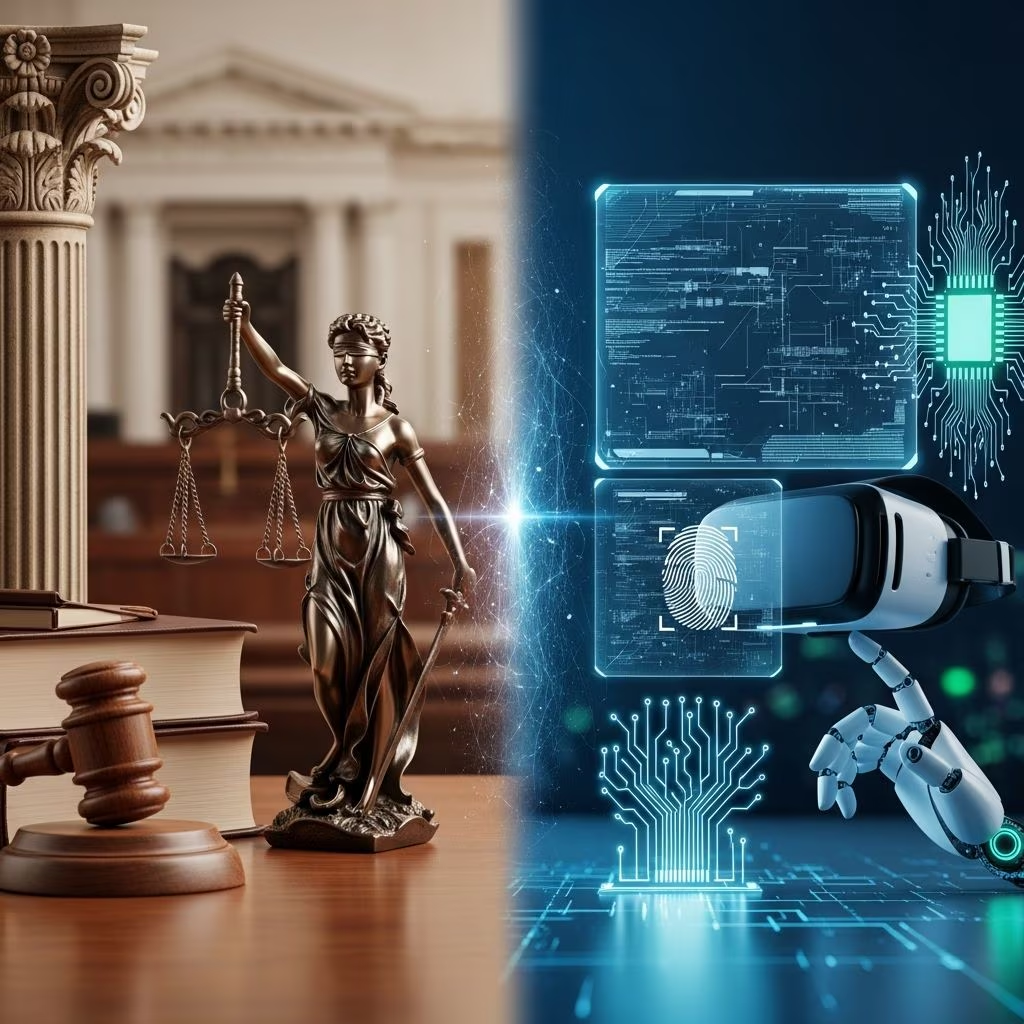
The rapid pace of technological innovation presents profound challenges for judicial systems designed in an analog era. Courts must now grapple with cases involving artificial intelligence, blockchain, and digital platforms, demanding new competencies and infrastructures. This article delves into strategies for adaptation, drawing from global examples and expert recommendations to bridge the widening gap between law and technology.
The Surge of Technology-Driven Litigation
Emerging technologies like AI and decentralized systems are generating complex legal disputes that traditional courts struggle to adjudicate efficiently. State legislatures, acting faster than federal counterparts, have enacted pioneering regulations—such as New York’s 2015 BitLicense for virtual currencies—leading to inevitable challenges in court. The U.S. Supreme Court’s 2024 Loper Bright decision, overturning Chevron deference, further shifts responsibility to judiciaries, reducing agency roles in tech regulation amid anticipated federal deregulation.
This influx requires proactive preparation. Without it, backlogs will grow, eroding public trust. Courts must anticipate surges in cases questioning AI decision-making, smart contract enforceability, and data privacy in blockchain applications.
Building Specialized Technology Tribunals
One transformative approach is establishing dedicated “Emerging Tech Courts,” akin to Delaware’s Chancery Court or Texas’s Business Court. These specialized venues concentrate expertise among judges passionate about technology, accelerating resolutions and fostering precedent.
Such courts could attract tech firms, boosting local economies. For instance, judges trained in algorithms and cryptography would dissect AI bias claims or NFT ownership disputes with precision, unlike generalists overburdened by diverse dockets.
- Expertise development: Judges gain deep knowledge through focused caseloads.
- Speed: Streamlined procedures reduce trial times.
- Economic incentives: Jurisdictions become hubs for tech litigation.
Enhancing Judicial Technological Proficiency
Beyond structural changes, individual judges need robust training. Ethical codes mandate technological competence; the Model Code of Judicial Conduct (MCJC) Rule 2.5 requires judges to stay current with tech benefits and risks, while lawyers must uphold technical skills under MRPC 1.1.
Yet funding cuts, like California’s $97 million reduction in 2024, hinder progress. Solutions include mandatory workshops on AI ethics, blockchain basics, and cybersecurity. The National Center for State Courts (NCSC) urges “technology competence,” emphasizing AI limits and risks.
Digital Infrastructure Revolutionizing Court Operations
Courts worldwide are deploying digital tools to streamline processes. Electronic case management and e-filing platforms enable real-time updates, slashing resolution times—Brazil’s labor courts saw 13% faster adjudications and 11% in enforcement via electronic processing.
In Kenya, data analytics pinpointed delay causes, halving adjournment rates from 20% to 10% with performance reports. The U.S. federal judiciary prioritizes realizing technology’s value while managing risks, enhancing productivity across courts.
| Innovation | Benefits | Examples |
|---|---|---|
| E-Filing & Case Tracking | Reduces processing time by 10-15% | Brazil Labor Courts |
| Data Analytics | Optimizes resource allocation | Kenya Judiciary |
| Remote Hearings | Increases accessibility | U.S. Pandemic Response |
AI Integration: Boosting Efficiency and Access
Artificial intelligence promises to reshape justice delivery. AI assists self-represented litigants with form guidance and procedure navigation, minimizing errors for underserved populations. Online Dispute Resolution (ODR) handles low-stakes matters like small claims digitally, ideal for remote or mobility-impaired users.
Global pioneers include British Columbia’s Civil Resolution Tribunal and Singapore’s Community Justice System, using AI for case matching and mediation. The Pew Charitable Trusts notes how pandemic-era tech, like bulk e-filing, eased lawyer workloads and ensured continuity.
Texas’s 2020 ODR framework mandates adherence across counties, blending online resolution with traditional proceedings.
Navigating Ethical and Privacy Pitfalls
AI’s adoption demands vigilance on ethics. Transparency in algorithms is vital for due process; courts must audit systems and enable appeals. Privacy safeguards protect sensitive data, while bias mitigation prevents discriminatory outcomes.
NCSC guidance stresses judicial oversight of AI risks, balancing innovation with fairness. Cybersecurity is paramount, as digital courts face heightened threats.
- Transparency: Explainable AI decisions.
- Accountability: Regular audits and human oversight.
- Bias Checks: Diverse training data.
Global Perspectives on Judicial Modernization
International models offer blueprints. China’s Internet Courts resolve cases fully online, leveraging AI for efficiency. Europe’s push for digital justice emphasizes interoperability and user-centric design.
In the U.S., the Conference of Chief Justices (CCJ) and COSCA advocated tech for affordability since 2006, accelerated by COVID-19. Future strategies include hybrid models blending virtual and in-person elements.
Resource Allocation and Funding Imperatives
Sustaining progress requires investment. Budgets must fund training, software, and hardware without compromising core functions. Public-private partnerships could supply tools, with safeguards against vendor lock-in.
Performance metrics, powered by case data, guide allocations—identifying bottlenecks for targeted improvements.
Future Horizons: Courts in a Tech-Dominated World
By 2030, AI may predict case outcomes or automate routine rulings, but human judgment remains irreplaceable. Courts embracing change will deliver swifter, fairer justice, attracting talent and investment.
Challenges persist: equitable access for low-tech users, international harmonization, and adapting to quantum computing or metaverse disputes. Proactive policies today ensure resilience tomorrow.
Frequently Asked Questions (FAQs)
What role do state courts play in emerging tech regulation?
State courts are pivotal, handling challenges to nimble state laws on AI and blockchain amid federal gaps.
How does AI improve access to justice?
AI guides self-represented parties and powers ODR, resolving disputes online without court appearances.
Are judges required to be tech-savvy?
Yes, ethical codes demand technological competence, including understanding AI risks.
What are the risks of AI in courts?
Key concerns include bias, lack of transparency, privacy breaches, and over-reliance diminishing human oversight.
Can specialized tech courts work in practice?
Models like Delaware Chancery show yes, building expertise and efficiency.
References
- Three Ways State Courts Can Get Ready for the Coming Rise in Emerging Technology Cases — Michele Benedetto Neitz, Tech Policy Press. 2025-01-07. https://techpolicy.press/three-ways-state-courts-can-get-ready-for-the-coming-rise-in-emerging-technology-cases
- Five Ways Digital Technologies Are Transforming Courts and Access — World Bank Blogs. Accessed 2026. https://blogs.worldbank.org/en/governance/five-ways-digital-technologies-are-transforming-courts-and-acces
- Bridging the Gap: The Imperative for Courts to Embrace Technology — Everlaw Blog. Accessed 2026. https://www.everlaw.com/blog/legal-technology/bridging-the-gap-the-imperative-for-courts-to-embrace-technology-in-the/
- AI in the Courts: Innovation and Access to Justice — Justice Speakers Institute. Accessed 2026. https://justicespeakersinstitute.com/ai-in-the-courts-innovation-and-access-to-justice/
- How Courts Embraced Technology, Met the Pandemic Challenge — Pew Charitable Trusts. 2021-12. https://www.pew.org/-/media/assets/2021/12/how-courts-embraced-technology.pdf
- AI & the Courts: Judicial and Legal Ethics Issues — National Center for State Courts. Accessed 2026. https://www.ncsc.org/resources-courts/ai-courts-judicial-and-legal-ethics-issues
- Priority 5: Realizing Technology’s Full Value and Managing Its Risks — U.S. Courts. Accessed 2026. https://www.uscourts.gov/data-news/reports/strategic-planning/strategic-plan-federal-judiciary/priority-5-realizing-technologys-full-value-and-managing-its-risks