
Jail vs Prison: Key Differences Explained
Understand the fundamental distinctions between jail and prison, from operations to inmate experiences and rehabilitation opportunities.
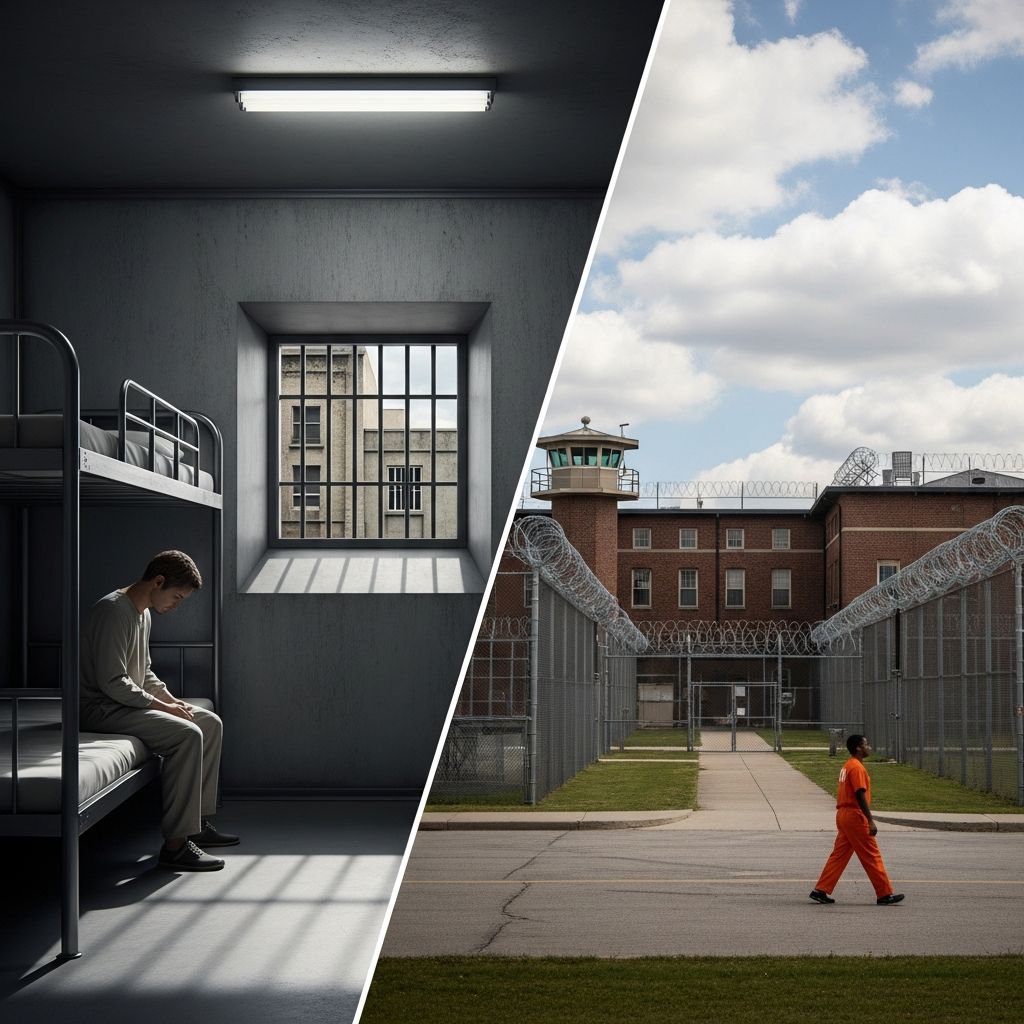
In the U.S. criminal justice system, jail and prison serve distinct roles in managing offenders, yet they are often confused by the public. Jails handle short-term holds for those awaiting trial or minor sentences, while prisons focus on long-term confinement for serious convictions. This article delves into their operational variances, inmate conditions, and broader implications.
Defining Local Detention: The Role of Jails
Jails represent the initial point of contact for many within the justice system. Operated primarily by county sheriffs or city police departments, these facilities detain individuals post-arrest during booking processes. Their core functions include holding suspects pending bail hearings, trials, or sentencing, accommodating stays from mere hours to under a year for misdemeanor convictions.
Unlike larger institutions, jails multitask beyond detention. They process releases on recognizance, manage work-release programs for low-risk inmates, and sometimes house those unable to post bail for felonies until transfer. Capacity constraints often lead to overcrowding, prompting some jails to ‘rent’ space to state systems for overflow. Violence remains relatively low due to transient populations and shorter stays.
Long-Term Confinement: Understanding Prisons
Prisons, managed by state departments of corrections or the federal Bureau of Prisons, cater to convicted felons serving sentences exceeding one year, often decades or life. With 1,566 state prisons and 98 federal ones, they dwarf jails in scale and security. Inmates here have exhausted appeals and entered punitive rehabilitation phases.
Prison populations exceed 1.2 million, with many serving life terms—over 200,000 as of recent data. Facilities classify by security: minimum-security camps allow dormitory living and work programs, while supermax units isolate high-risk individuals. These institutions emphasize retribution, deterrence, incapacitation, and rehabilitation.
Core Distinctions: A Side-by-Side Comparison
To clarify variances, consider this table outlining primary differences:
| Aspect | Jail | Prison |
|---|---|---|
| Operator | Local/county (sheriffs, police) | State/federal governments |
| Stay Duration | Short-term (<1 year) | Long-term (>1 year) |
| Population | Pre-trial, misdemeanors | Convicted felons |
| Security | Basic measures | High, multi-level (min to max) |
| Size | Smaller, multi-purpose | Larger, specialized |
| Programs | Limited (basic services) | Extensive (education, therapy) |
This comparison highlights how jails prioritize temporary custody, while prisons invest in structured long-term management.
Operational Management and Oversight
Jail administration falls under local jurisdictions, leading to variability in standards. Sheriffs oversee daily operations, from intake to medical screenings, with staffing often stretched thin. Federal guidelines via the Prison Rape Elimination Act (PREA) apply, but enforcement depends on local resources.
Prisons operate under centralized state or federal authority, enabling uniform policies on classification, discipline, and release preparation. The Bureau of Prisons, for instance, standardizes federal operations across 122 facilities. Private prisons, contracted by some states, introduce profit motives but face scrutiny over quality control. Oversight bodies like the Department of Justice monitor compliance with constitutional standards.
Inmate Daily Life: Contrasts in Environment
Life in jail revolves around uncertainty. Inmates navigate communal areas with limited privacy, enduring brief lockdowns and restricted outdoor time. Meals, hygiene, and recreation are basic, with visitation often daily but short. Mental health support exists but is rudimentary due to high turnover.
Prison routines are regimented. Inmates follow schedules including counts, meals, work assignments, and programs. Minimum-security allows more freedom—dormitory housing, outdoor access, and community labor—while maximum-security enforces solitary-like conditions. Family visits occur monthly, with conjugal options rare. Overcrowding exacerbates tensions, though programs mitigate idleness.
Rehabilitation and Reentry Support
Jails offer minimal programming: basic education, AA meetings, or counseling for short stays. Focus remains on detention over reform.
Prisons prioritize reintegration with vocational training, GED classes, substance abuse therapy, and cognitive behavioral programs. Federal prisons emphasize work contributing to self-sufficiency. Success metrics include recidivism reduction, though challenges persist with life-sentenced populations. Reentry planning involves halfway houses and parole supervision.
Legal Pathways: From Jail to Prison
Post-arrest, individuals enter jail for arraignment. Bail-eligible defendants may leave; others await plea deals or trials. Misdemeanor convictions yield jail time or fines. Felony guilty verdicts trigger sentencing: under one year stays local; longer terms send to prison, sometimes after jail transit.
Appeals or sentence reductions can alter paths, but most felony offenders transition to prisons. Juveniles typically enter youth facilities unless tried as adults.
Challenges Facing Both Systems
Overcrowding plagues jails (pre-trial detainees comprise 70% of populations) and prisons (long sentences exacerbate capacity). COVID-19 highlighted vulnerabilities, prompting releases and remote hearings. Mental health crises affect 25% of inmates, straining underfunded services. Reforms advocate alternatives like diversion programs to reduce reliance on incarceration.
Frequently Asked Questions (FAQs)
What happens immediately after arrest?
Inmates go to jail for booking, fingerprinting, and initial hearings. Release or detention follows based on charges and bail.
Can misdemeanor offenders go to prison?
No, sentences under one year serve in jail; prisons are for felonies.
Are private facilities common?
Some states use private jails/prisons via contracts, but public ones dominate.
How secure are minimum-security prisons?
They feature open dorms, work release, and low fencing for nonviolent offenders.
What programs help with reentry?
Prisons offer education, job training, and therapy; jails provide basics.
Navigating the System: Practical Advice
For those facing charges, understanding these distinctions aids decision-making. Consult attorneys early for bail strategies or plea options minimizing prison time. Families should prepare for visitation rules varying by facility. Broader reforms push for sentencing equity and community alternatives, signaling evolving justice priorities.
This overview equips readers with knowledge to demystify incarceration. While jails bridge arrest to resolution, prisons enforce accountability through extended supervision.
References
- Jail Vs Prison: What are the Differences? — First Step Alliance. Accessed 2026. https://www.firststepalliance.org/post/jail-vs-prison
- What Is The Difference Between Jail and Prison in Ohio — Criminal Attorney Columbus. Accessed 2026. https://www.criminalattorneycolumbus.com/what-is-the-difference-between-jail-and-prison/
- The Difference Between Jail and Prison — The Koffel Law Firm. Accessed 2026. https://www.koffellaw.com/faqs/what-is-the-difference-between-jail-and-prison/
- What Are the Differences Between Jails and Prisons? — A&E. Accessed 2026. https://www.aetv.com/articles/what-are-the-differences-between-jails-and-prisons
- FAQ: What is the Difference Between Jail and Prison? — Prison Fellowship. Accessed 2026. https://www.prisonfellowship.org/resources/training-resources/in-prison/faq-jail-prison/
- The Difference between Jail and Prison — Vera Institute of Justice. 2023-02-21. https://www.vera.org/news/u-s-jails-and-prisons-explained
Similar Articles








Read full bio of Sneha Tete




