
iPad Technology for Modern Legal Practice
Discover how iPads transform legal workflows, boost efficiency, and streamline case management.
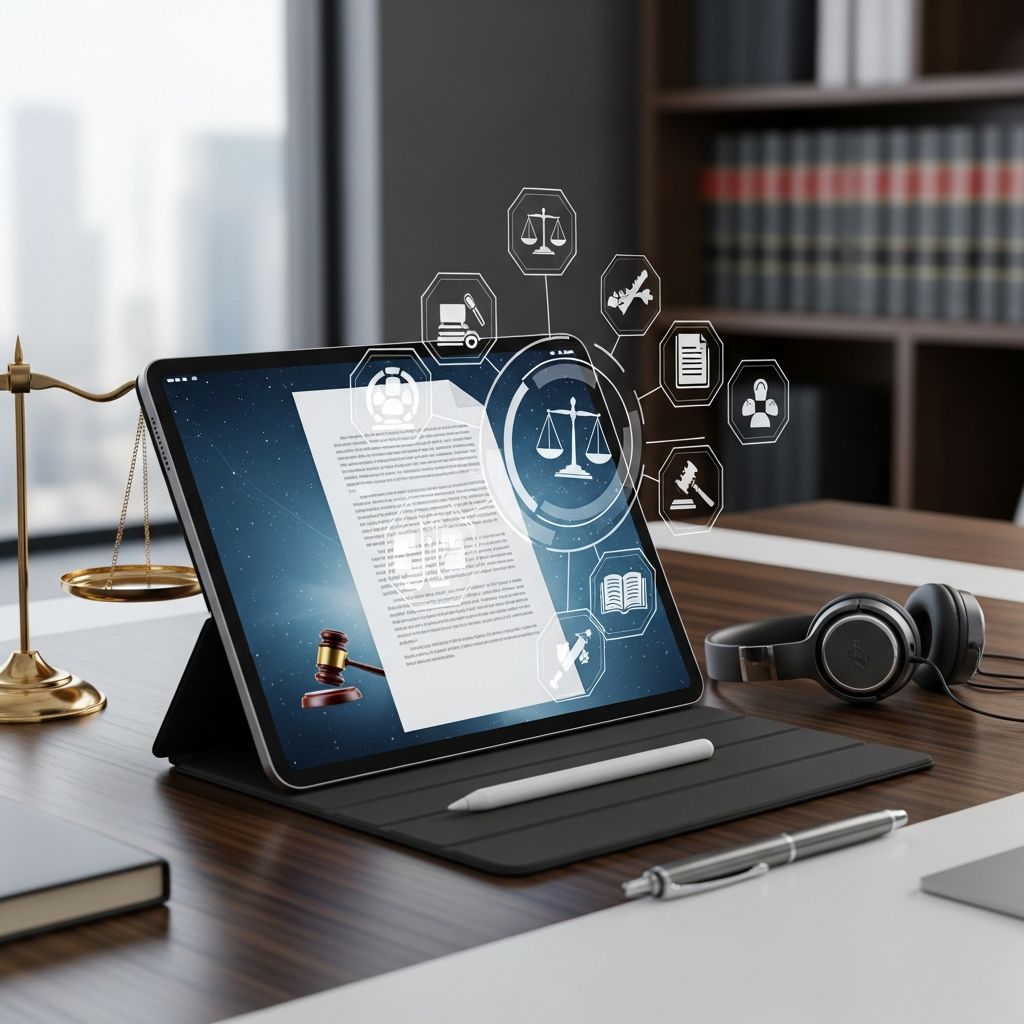
The legal profession has undergone significant technological transformation over the past decade, with portable computing devices revolutionizing how attorneys work. Among these innovations, tablet devices have emerged as essential tools that allow legal professionals to streamline operations, reduce paper consumption, and deliver enhanced client services. The portability and functionality of these devices have made them particularly valuable for attorneys who need flexibility while maintaining access to critical case materials and practice management tools.
Research from the American Bar Association demonstrates widespread adoption of tablets in legal settings, with approximately 81 percent of attorneys who use tablets for work-related tasks choosing iOS-based devices. This preference reflects both the reliability of these platforms and the extensive ecosystem of applications specifically designed for legal practice. The growing integration of tablets into law firm operations represents a fundamental shift toward mobile-first practice management and court engagement strategies.
Modernizing Client Engagement and Intake Procedures
One of the most immediate applications of tablet technology in law offices involves transforming how firms interact with new clients during initial consultations. Traditional client intake methods rely on paper forms that require manual data entry, create filing challenges, and consume significant resources. By implementing digital intake processes on tablets, firms can dramatically reduce administrative overhead while simultaneously improving the client experience.
When clients arrive at a law office equipped with a tablet loaded with customized intake forms, they experience a modern, professional environment that signals the firm’s commitment to innovation. Digital forms can incorporate smart features such as conditional logic that displays relevant questions based on previous answers, ensuring that all necessary information is collected without overwhelming the client with extraneous fields. Once completed, the information syncs automatically with practice management systems, eliminating manual data entry and reducing transcription errors.
This approach yields tangible benefits beyond convenience: firms eliminate printing expenses, reduce paper storage requirements, and accelerate the onboarding process. Legal assistants spend less time transcribing client information and more time on substantive work, while attorneys receive clean, organized data immediately upon client arrival.
Transforming Courtroom Evidence Presentation
Courtroom technology has evolved dramatically, with tablets now serving as platforms for sophisticated evidence presentation systems that rival traditional presentation methods. Modern legal practice requires attorneys to present complex information—including documents, photographs, videos, and multimedia evidence—in ways that capture judicial attention and facilitate understanding. Tablet-based presentation tools enable attorneys to organize evidence intuitively, retrieve specific materials instantly, and annotate documents in real time during testimony.
The advantages of tablet-based courtroom presentation extend beyond mere convenience. Visual information processed effectively influences judicial and jury decision-making, making the quality of evidence presentation a substantive component of case strategy. Attorneys can highlight critical passages, zoom into specific details, display video evidence seamlessly, and transition between different document types without technical delays or fumbling with multiple systems. Some jurisdictions now place tablets directly in judges’ hands and jury boxes, allowing these decision-makers to examine evidence independently while following attorney presentations.
This technological approach eliminates the burden of transporting physical documents, exhibits, and evidence boxes to court. Solo practitioners and small firm attorneys particularly benefit from this capability, as it levels the playing field by allowing them to present cases with the professionalism and polish typically associated with larger firms with dedicated litigation support teams.
Streamlining Deposition and Transcript Management
Depositions represent critical moments in litigation where attorneys must manage complex documents, track testimony details, identify inconsistencies, and make immediate strategic decisions. Traditional deposition management involves carrying extensive paper files, manually searching through transcripts, and struggling to correlate testimony with supporting documents. Specialized tablet applications designed specifically for deposition work have transformed this process.
Modern deposition apps enable attorneys to access complete transcripts on their devices, annotate specific passages using custom categories relevant to their cases, and organize information in searchable formats. Rather than relying on memory or handwritten notes about where critical testimony appears in lengthy transcripts, attorneys can instantly locate relevant sections, flag important contradictions, and cross-reference exhibits. The ability to mark up transcripts with custom categories—such as liability, damages, credibility issues, or case-specific themes—creates personalized organizational systems that accelerate case analysis.
Additionally, these applications integrate seamlessly with courtroom presentation tools, allowing attorneys to display specific deposition testimony directly to witnesses during cross-examination. This capability strengthens cross-examination effectiveness by confronting witnesses with their own prior statements displayed on screens they can see, creating powerful moments that influence juror perception of witness credibility.
Enabling Virtual Client Communication and Collaboration
Modern legal practice increasingly requires seamless communication between attorneys, clients, staff members, and opposing counsel across geographical distances. Tablets facilitate professional video conferencing through multiple platforms, enabling face-to-face conversations that foster stronger working relationships and clearer communication compared to telephone consultations. When clients can see their attorney, ask questions in real time, and build personal connection through video interaction, their satisfaction and confidence in representation typically increases.
Video conferencing capabilities prove particularly valuable for attorneys managing multiple office locations, handling clients in distant jurisdictions, or conducting business while traveling. Staff members can participate in meetings and training sessions remotely without requiring everyone to gather in a conference room. This flexibility supports work-life balance initiatives and reduces time spent traveling between offices while maintaining collaboration effectiveness.
Beyond client communication, video conferencing on tablets enables attorneys to conduct mediations efficiently, participate in remote hearings, and maintain team cohesion across distributed work environments. The professional appearance of video communication through tablets reinforces the attorney’s credibility and technological sophistication.
Implementing Mobile Payment Processing Solutions
Law firm accounting has traditionally relied on separate point-of-sale systems or manual billing processes that create inefficiencies and potential errors. Tablets equipped with appropriate payment processing applications transform these devices into complete payment terminals, enabling attorneys to process client payments directly during consultations, settlements, or other billing moments.
When attorneys can accept card payments immediately upon earning fees, cash flow improves, accounting reconciliation becomes simpler, and clients appreciate the convenience. Rather than requiring clients to remember to pay later or write checks, payment processing on tablets completes financial transactions instantly. This approach works particularly well for settlement conferences, where all parties can finalize financial arrangements and execute payments without delays.
It remains essential that firms use payment processing capabilities exclusively for earned legal fees and maintain strict compliance with attorney accounting rules, bar association regulations, and financial services regulations governing lawyer trust accounts. Proper implementation ensures that payment processing enhances efficiency while maintaining the ethical standards essential to legal practice.
Organizing Legal Research and Reference Materials
Attorneys must maintain immediate access to vast quantities of reference materials, including court rules, ethical guidelines, case law, and jurisdiction-specific procedures. Traditionally, this requirement meant carrying multiple heavy reference books or relying on internet connectivity to access online databases. Specialized reference apps address this challenge by enabling attorneys to download relevant materials to their tablets, creating searchable libraries accessible anywhere without internet connections.
These applications allow attorneys to organize rules by jurisdiction, create custom annotations, bookmark frequently referenced sections, and search across multiple documents simultaneously. When attorneys appear in unfamiliar courts or jurisdictions, they can instantly access local rules, procedural requirements, and ethical guidelines without carrying extensive reference libraries. This capability particularly benefits attorneys with multi-state practices or those frequently appearing in different courts.
Advanced reference apps incorporate custom highlighting categories that help attorneys identify relevant provisions at a glance, organize rules by practice area, and create personalized reference systems reflecting their specific practice needs and jurisdictional focuses.
Enhancing Note-Taking and Task Management in Hearings
During court hearings, client meetings, and case consultations, attorneys must capture information quickly and reliably while maintaining focus on substantive discussion. Handwriting applications on tablets enable attorneys to use stylus technology to jot notes in natural ways that mimic traditional pen-and-paper note-taking while creating digital records.
When judges provide hearing dates, court requirements, or procedural instructions during proceedings, attorneys can immediately record this information by hand on their tablets and transmit it to administrative staff via email. This process eliminates transcription delays and ensures that critical information reaches support staff without errors introduced through manual data entry. Handwriting apps also support sketching courtroom diagrams, creating visual representations of evidence layout, or drawing jury box configurations during jury selection discussions.
The advantage of digital handwriting over traditional paper notes includes automatic backup of information, searchability of handwritten content through optical character recognition technologies, and easy sharing with case teams who need access to notes immediately.
Centralizing Practice Management Functions
Comprehensive practice management extends beyond document review to encompass client records, matter calendars, time tracking, financial reporting, and administrative coordination. Cloud-based practice management applications accessible through tablets enable attorneys to manage virtually every aspect of their firms from portable devices, eliminating the requirement to return to offices to handle administrative functions.
Attorneys traveling to court appearances can update time entries reflecting work performed, review client account information, verify upcoming deadlines, access matter documents, and communicate with staff members—all through their tablets. This accessibility means that administrative obligations never interrupt courtroom focus or client meetings, and essential information remains immediately available regardless of location.
For solo practitioners and small firm attorneys, tablet-based practice management democratizes access to enterprise-level administrative tools previously available only through desktop systems or extensive IT infrastructure. Modern cloud-based platforms ensure that information stays synchronized across all devices and locations, eliminating concerns about version control or information silos.
Jury Selection and Case Strategy Visualization
Jury selection represents a critical phase of litigation where attorneys evaluate potential jurors, identify potential biases, and strategically develop juror profiles. Specialized applications designed for jury selection enable attorneys to create visual representations of jury box configurations, take notes on individual jurors during voir dire, and access juror information instantly during the selection process.
Rather than managing handwritten notes about multiple jurors scattered across different papers, attorneys can maintain organized digital profiles accessible instantly. Visual jury box diagrams created on tablets help attorneys track seating positions, identify juror relationships or connections, and strategically position challenge decisions. These applications often include search and filtering capabilities, enabling attorneys to quickly retrieve specific juror information during rapid-fire questioning.
Additionally, tablets facilitate collaborative jury strategy development, allowing trial teams to collectively review juror profiles, discuss challenge strategies, and develop case themes with all team members viewing the same information simultaneously.
Supporting Comprehensive Trial Preparation
Trial preparation involves coordinating multiple work streams including witness management, exhibit organization, legal research, deposition review, and strategy development. Tablets support comprehensive trial preparation by consolidating necessary materials and tools into single devices that support the entire preparation workflow.
Attorneys can use tablets to review case transcripts, organize evidence exhibits, create trial presentation materials, research legal issues, coordinate with expert witnesses, and develop cross-examination strategies. The portability means that trial preparation work continues during travel, court appearances, or off-site work. Rather than requiring attorneys to return to offices to access critical materials, tablets enable continuous work productivity regardless of location.
The integration of multiple specialized applications into cohesive tablet-based workflows means that attorneys transition seamlessly between different preparation tasks while maintaining access to all relevant case materials. Trial teams can share information efficiently, coordinate strategies across multiple attorneys, and maintain organized systems that prevent critical details from being overlooked.
Productivity Applications Supporting Legal Analysis
Beyond specialized legal applications, general productivity tools adapted for tablets support important legal work functions. Mind mapping applications help attorneys visualize complex case theories, organize witness information, and develop litigation strategies through visual representation of interconnected concepts. Presentation tools enable attorneys to create persuasive trial presentations, client communications, and deposition displays using intuitive tablet interfaces.
These general productivity applications complement specialized legal software, creating comprehensive ecosystems where attorneys can address virtually any practice management or case analysis need through appropriate tool selection. The tablet format supports intuitive interaction with these applications while maintaining professional quality standards.
Recommended Productivity Applications
- Mind mapping software for case theory visualization and strategic planning
- Presentation applications for creating trial graphics and client communications
- Document annotation tools for marking up discovery materials
- Cloud storage services for organizing and accessing case files remotely
- Calendar and reminder applications for managing deadlines and court appearances
Frequently Asked Questions
Q: What are the primary advantages of using tablets in legal practice compared to traditional methods?
A: Tablets eliminate the need to carry paper documents, reduce administrative overhead through digital workflows, enable mobile access to case materials and practice management tools, and support professional courtroom presentations that enhance case effectiveness.
Q: How do attorneys ensure confidentiality and security when using tablets for client information?
A: Law firms should implement encryption on tablets, use password protection, enable remote wipe capabilities for lost devices, use VPN connections for accessing sensitive information on public networks, and select practice management applications that comply with legal confidentiality requirements.
Q: Can tablets effectively replace desktop computers in legal practice?
A: While tablets cannot completely replace desktop computers for all functions, they excel at mobile tasks and can handle many legal practice requirements when paired with cloud-based applications and remote access capabilities to desktop systems when necessary.
Q: What types of applications are most valuable for litigation-focused practices?
A: Litigation practices benefit most from deposition review applications, trial presentation software, transcript annotation tools, jury selection apps, and practice management systems that integrate seamlessly with courtroom workflows.
Q: How much does implementing tablet technology in a law firm typically cost?
A: Costs vary significantly based on device selection, application choices, and firm size, but typically range from individual device investments of several hundred dollars plus monthly subscription fees for specialized legal applications and cloud storage services.
References
- 6 Ways to Use iPads in Your Law Firm — Clio. 2024. https://www.clio.com/blog/6-ways-to-use-ipads-in-your-law-firm/
- The Lawyer’s iPad: Using Tablets in Your Practice — Illinois State Bar Association. 2013. https://www.isba.org/ibj/2013/05/thelawyersipadusingtabletsinyourpra
- The iPad and the Law — Federal Bar Association. 2012. https://www.fedbar.org/wp-content/uploads/2012/05/focuson-ipad-may12-pdf-1.pdf
- Tech Report: Using a Tablet in Your Law Practice — State Bar of California. 2024. https://calawyers.org/solo-small-firm/tech-report-using-a-tablet-in-your-law-practice/
- iPad Apps for Lawyers, Law Faculty and Law Students: Productivity Applications — University of Wisconsin-Madison Library Research Guides. 2024. https://researchguides.library.wisc.edu/c.php?g=125287&p=819891
Similar Articles








Read full bio of Sneha Tete




