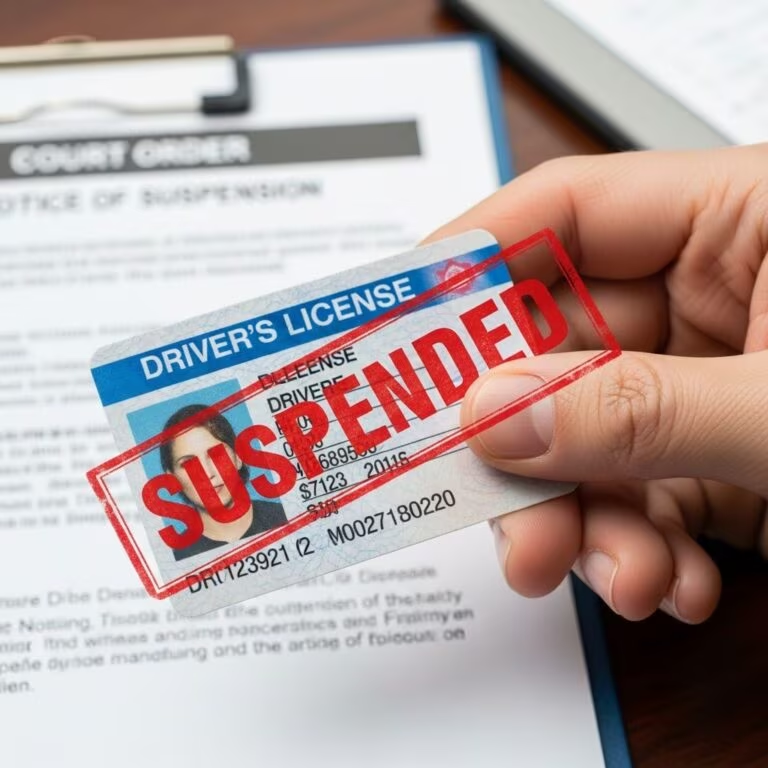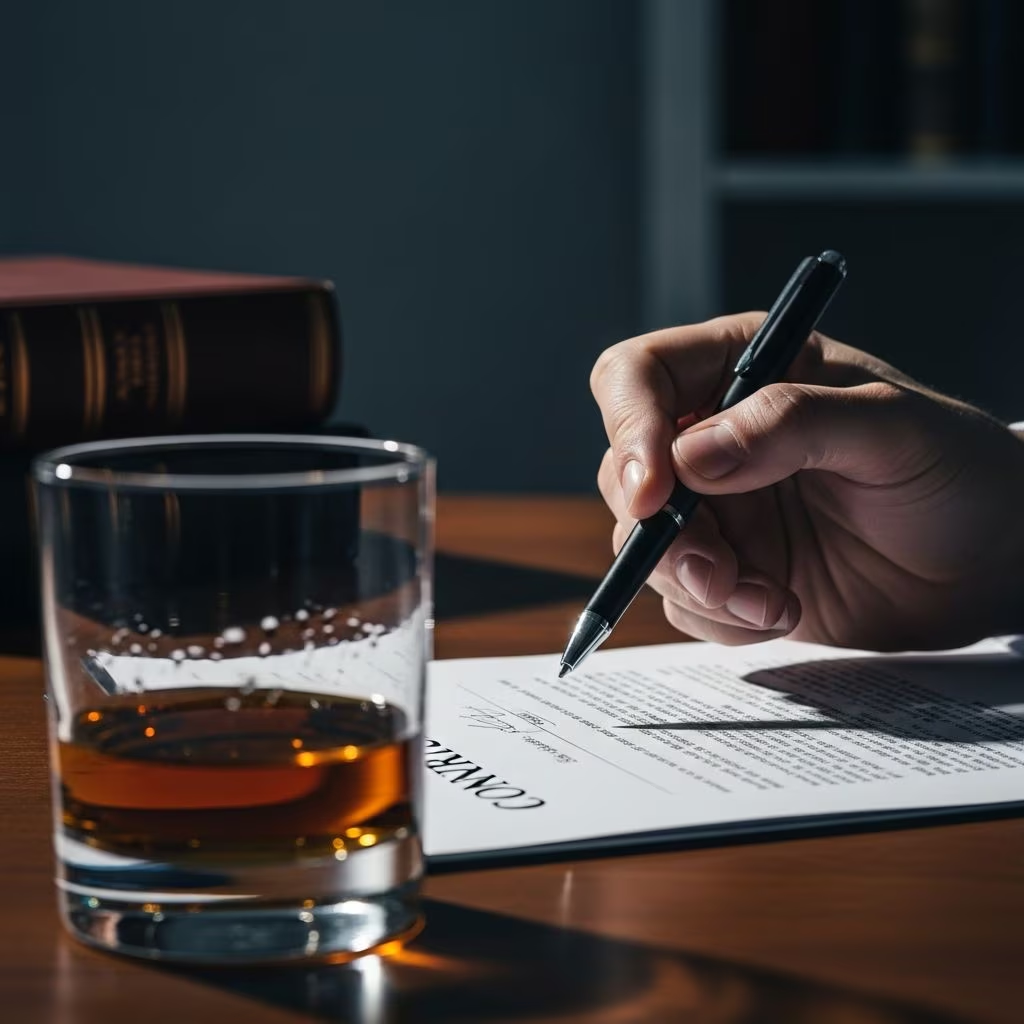
Businesses frequently encounter situations where customers under the influence of alcohol attempt to sign agreements, such as liability waivers for activities or service contracts. The core question is whether these signatures create enforceable obligations or expose owners to disputes. Generally, contracts signed by intoxicated individuals may be voidable if they lacked mental capacity at the time, but outcomes depend on jurisdiction, degree of impairment, and specific circumstances.
Understanding Mental Capacity in Contract Law
Mental capacity is a foundational requirement for any valid contract. It ensures that all parties comprehend the agreement’s terms, consequences, and rights being waived. When alcohol impairs judgment, this capacity can be compromised, rendering the contract vulnerable to challenge.
- Legal Standard: Courts assess whether the person understood the nature and effect of the transaction. Mere consumption of alcohol does not automatically invalidate a signature; severe intoxication must be proven.
- Evidence of Impairment: Factors include blood alcohol levels, witness testimony, slurred speech, unsteady gait, or erratic behavior observed at signing.
- Burden of Proof: The challenging party must demonstrate incapacity, often requiring medical or expert testimony.
In recreational settings like gyms or adventure parks, waivers are common. However, if a signer was observably drunk, the waiver might not shield the business from ordinary negligence claims, escalating to gross negligence scrutiny.
Key Tests for Enforceability of Waivers and Contracts
Liability waivers must meet strict criteria to be upheld, especially involving impaired signers. California courts, for instance, enforce waivers against ordinary negligence but invalidate them for gross negligence or if capacity is absent.
| Requirement | Description | Impact on Intoxicated Signers |
|---|---|---|
| Clarity | Explicitly states risks and rights waived | Harder to enforce if signer couldn’t comprehend due to intoxication |
| Visibility | Readable font, not buried in fine print | Alcohol-induced reading difficulties strengthen invalidity claims |
| Voluntariness | No coercion or misrepresentation | Impaired judgment may imply undue influence |
| Scope | Covers specific activities and injuries | Limited protection if impairment unrelated to waived risks |
These elements ensure waivers are not mere formalities. Businesses serving alcohol, such as bars or event venues, face heightened risks since over-serving can trigger dram shop liability, independent of waivers.
Ordinary vs. Gross Negligence: Critical Distinctions
Waivers typically protect against ordinary negligence—simple carelessness like a slippery floor. Gross negligence, involving reckless disregard for safety, voids most waivers. For intoxicated signers:
- Ordinary Example: A gym patron trips on equipment after signing a waiver while tipsy; waiver likely holds if capacity is marginally present.
- Gross Example: An adventure operator ignores severe intoxication and sends a customer on a high-risk activity, leading to injury; waiver fails.
Premises liability laws reinforce this. Property owners owe a duty of reasonable care, amplified when serving alcohol to patrons.
Alcohol Service Laws and Business Responsibilities
State-specific dram shop acts impose liability on servers for injuries caused by intoxicated patrons. In California, selling to obviously intoxicated persons is a misdemeanor, with civil consequences under Business and Professions Code Section 25602.1 for minors, extending to common law negligence for adults.
- Statutory Liability: Applies to underage intoxicated sales, holding licensees accountable for third-party harms.
- Common Law: Broad duty to avoid negligent service, regardless of age.
Businesses must train staff to recognize intoxication signs: poor coordination, loud speech, bloodshot eyes. Refusing service protects against claims that waivers were signed without capacity.
Social Host Liabilities and Private Events
Private hosts face similar exposures under social host laws. Hosting parties where guests overconsume can lead to liability for guest injuries or third-party damages, like drunk driving accidents. Waivers signed by guests offer limited protection:
- Potentially bars guest’s own claims for on-site injuries.
- Does not shield against third-party lawsuits, as uninvolved victims cannot waive rights.
Hosts should monitor consumption, offer alternatives like rideshares, and document sobriety checks before any agreements.
Practical Strategies for Business Protection
To mitigate risks, implement proactive measures:
- Training Programs: Educate employees on intoxication identification and refusal protocols.
- Documentation: Record observations of customer sobriety before signing; use video if feasible.
- Waiver Design: Include sobriety affirmations: “I confirm I am not under the influence of alcohol or drugs.”
- Refusal Policy: Deny service or activities to impaired individuals, even if they insist on signing.
- Insurance: Secure liquor liability coverage tailored to your operations.
These steps not only strengthen defenses but demonstrate due diligence in court.
Case Studies: Real-World Outcomes
Consider a gym scenario: A member, after bar-hopping, signs a waiver and injures themselves on faulty equipment. Courts upheld the waiver due to clear language and no gross negligence proof. Contrast with a ski resort case where staff served shots to a visibly drunk visitor before a fatal run—waiver invalidated for gross negligence and incapacity.
In social settings, a homeowner’s waiver protected against a guest’s slip-and-fall but failed when the guest caused a car crash, exposing the host to third-party claims.
Common Pitfalls and How to Avoid Them
Avoid these errors:
- Assuming any signature suffices—always verify capacity.
- Ignoring third-party risks—waivers don’t cover outsiders.
- Overlooking state variations—consult local counsel.
Frequently Asked Questions (FAQs)
Can a waiver signed while drunk ever be enforceable?
Yes, if impairment was mild and the signer understood the terms. Severe intoxication typically voids it.
What if the business served the alcohol?
Dram shop laws may impose separate liability, overriding waivers.
Do social host waivers protect against drunk driving claims?
No, especially from third parties injured off-premises.
How to prove a signer was too drunk?
Use witnesses, videos, BAC tests, and behavior logs.
Are verbal agreements affected similarly?
Yes, capacity rules apply universally to contracts.
This comprehensive guide equips businesses to navigate intoxicated signature dilemmas, balancing customer service with legal safeguards. Always seek jurisdiction-specific legal advice.
References
- Can You Sue For Injuries If You Signed A Waiver Of Liability In California? — Kornberg Law Firm. 2023-05-15. https://kornberglawfirm.com/blog/sue-for-injuries-signed-waiver-of-liability-in-california/
- Laws and Liability — California Department of Alcoholic Beverage Control (ABC). 2025-01-10. https://www.abc.ca.gov/education/licensee-education/laws-and-liability/
- Are Liability Waivers Enforceable in California? — Salamati Law. 2024-08-22. https://www.salamatilaw.com/los-angeles-personal-injury-lawyer/are-liability-waivers-enforceable-in-california/
- California Liquor Liability Laws — Gomez Trial Attorneys. 2024-11-03. https://www.thegomezfirm.com/california-liquor-liability-laws/
- Avoid Massachusetts Social Host Liability by Having Guests Sign Waivers? — Boston Accident Lawyer Blog. 2023-07-12. https://www.bostonaccidentlawyerblog.com/avoid_massachusetts_social_hos/