
Crimes by International Students: Legal Risks
Discover the severe legal, academic, and immigration fallout for international students facing criminal charges in the United States.
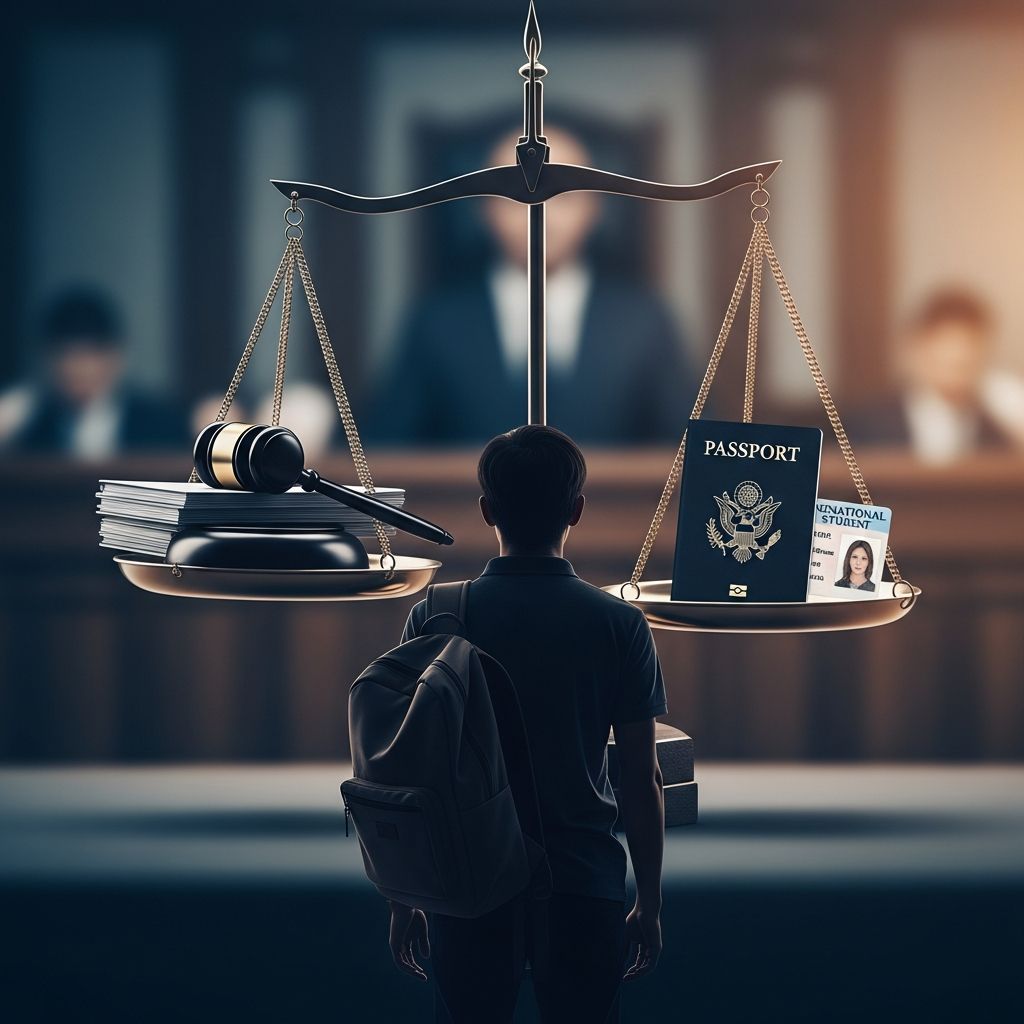
International students in the United States enjoy unique opportunities for education and cultural immersion, but they must adhere to the same criminal laws as U.S. citizens. A single arrest or conviction can trigger a cascade of consequences, from immediate academic disruption to permanent immigration barriers.
Navigating the U.S. Justice System as a Non-Citizen
Upon arrest, international students enter the U.S. criminal justice system without special privileges. Law enforcement treats them identically to residents, detaining them until bail or trial resolution. Unlike citizens, however, students on F-1 or similar visas face heightened stakes, as criminal proceedings often intersect with immigration enforcement.
Pending cases typically prohibit departure from the U.S., stranding students far from family for months or years. Fleeing can lead to arrest warrants or extradition via international treaties. Schools must report disciplinary actions to the Student and Exchange Visitor Information System (SEVIS) within 21 days, potentially terminating visa status even pre-conviction.
Immediate Academic and Visa Disruptions
Criminal charges alone can prompt university intervention. Many institutions suspend or expel students, violating full-time enrollment requirements essential for visa validity. Expulsion triggers SEVIS updates, alerting U.S. Immigration and Customs Enforcement (ICE), which may initiate status termination.
- Visa Revocation: F-1 visas can be canceled automatically upon conviction or enrollment lapse, barring re-entry without consular review.
- Travel Restrictions: Students cannot leave until case resolution, risking visa invalidation if unresolved.
- Re-Entry Barriers: Arrest records appear in background checks, complicating future visas or green cards.
Even acquittals do not guarantee reprieve; schools may act independently, and ICE retains discretion over status.
Defining Deportable Offenses: Crimes of Moral Turpitude
U.S. immigration law flags “crimes involving moral turpitude” (CIMT) as deportable if punishable by one year or more imprisonment. These encompass acts of fraud, harm, or dishonesty, though definitions vary by case.
| Crime Category | Examples | Deportation Risk |
|---|---|---|
| Theft Offenses | Forgery, burglary, embezzlement, retail theft | High; scales with value stolen |
| Violence/Sex Crimes | Assault, rape, sexual abuse, child pornography | Very High; often lifetime sex offender registration |
| Drug Violations | Marijuana, cocaine, heroin possession; varies by quantity | High; any controlled substance conviction |
| Fraud/Evasion | Fleeing police, public intoxication, minor alcohol offenses | Moderate to High |
| Other Serious | Homicide, aggravated felonies, domestic violence | Immediate deportation; asylum ineligibility |
Aggravated felonies—any crime with a one-year sentence—mandate removal proceedings, rendering students inadmissible forever.
Criminal Penalties Mirror Those for Citizens
Convictions carry standard U.S. punishments: fines, probation, jail, or prison. Plea deals, tempting for quick resolution, embed permanent records impacting immigration. International students must weigh criminal leniency against visa permanence.
Post-conviction, ICE may detain for removal hearings. Judges assess deportability, with limited waivers for minor offenses.
Long-Term Immigration Consequences
A criminal record haunts beyond immediate cases. Visa renewals demand disclosure; false answers void applications. Convictions create inadmissibility grounds, blocking U.S. re-entry for years or permanently.
- Green Card Path Blocked: Many offenses disqualify adjustment of status.
- Asylum Denial: Aggravated felonies bar persecution-based relief.
- Consular Processing Delays: NCIC hits from arrests slow visa issuance.
Alcohol-related misdemeanors, like DUIs, increasingly trigger scrutiny, despite minimal criminal penalties.
Strategic Responses: Legal Protections and Next Steps
Immediate attorney consultation is critical—criminal defense paired with immigration expertise. Avoid pleas without dual review, as misdemeanor convictions can doom visas.
- Retain Counsel: Specialized lawyers navigate intersections of courts.
- Notify School: Designated School Officials (DSOs) guide SEVIS compliance.
- Avoid Travel: Departing mid-case risks abandonment.
- Document Everything: Preserve records for appeals or waivers.
Waivers exist for select CIMTs if over 10 years old or rehabilitated, but success rates are low.
Preventive Measures for International Students
Proactive awareness averts pitfalls. Universities offer resources on U.S. laws, emphasizing zero tolerance for drugs, alcohol, and violence.
- Join orientation sessions on legal differences from home countries.
- Use campus safety apps and emergency contacts.
- Seek counseling for stress to avoid risky behaviors.
- Understand visa terms: full-time study is non-negotiable.
Statistics underscore risks: thousands of SEVIS terminations annually stem from criminal or status violations, per ICE data.
Frequently Asked Questions (FAQs)
Can an arrest without conviction affect my visa?
Yes, schools may suspend/expel based on charges alone, triggering SEVIS reports and potential ICE action. Visa status hinges on enrollment.
What if I plead guilty to a minor charge?
Even misdemeanors create records for immigration scrutiny. Consult lawyers before accepting deals.
Am I allowed to leave the U.S. during my case?
Typically no, until resolution. Leaving may be seen as flight, complicating return.
Does a DUI deport me automatically?
Not always, but multiple or severe cases flag as CIMT, risking revocation on re-entry.
Can I get my visa back after expulsion?
Possible via new application, but criminal records often bar approval. Seek waivers if eligible.
Case Studies: Real-World Impacts
Consider a student arrested for marijuana possession: criminal diversion granted, but university expulsion voids F-1 status, forcing return home. Another, charged with theft, pleads to misdemeanor—cleared criminally but deported after SEVIS termination.
These illustrate intertwined systems: criminal outcomes pale beside immigration finality.
References
- Foreign Students Charged With Crimes in the United States — Federal Criminal Law Center. 2025-04. https://federalcriminallawcenter.com/2025/04/foreign-students-charged-crimes-united-states/
- Criminal Defense for International Students and Visiting Persons — Bruno Law Offices. N/A. https://www.brunolawoffices.com/practice-areas/international-students-and-visiting-persons/
- What Happens if an International Student is Arrested? — SQ Attorneys. N/A. https://sqattorneys.com/what-happens-if-an-international-student-is-arrested/
- International Student: Immigration Consequences of Criminal Charges — Mazza Law. N/A. https://mazzalaw.com/immigration-international-student/
- Effect of arrest on visa status: F-1 Students — Indiana University Indianapolis. N/A. https://international.indianapolis.iu.edu/visas/f1-students/arrest.html
- Effects of Arrest on Visa Status — University of Maryland. N/A. https://marylandglobal.umd.edu/global-learning-all/international-students-scholars/life-umd/safety-and-emergency-resources/effects-arrest-visa-status
- How to Avoid Violating US Laws — Florida Polytechnic University. N/A. https://catalog.floridapoly.edu/content.php?catoid=28&navoid=2205
Similar Articles








Read full bio of Sneha Tete




