
Essential Immigration Law Guidance for U.S. Applicants
Navigate U.S. immigration with clarity: Understanding visa options, eligibility, and the immigration process.
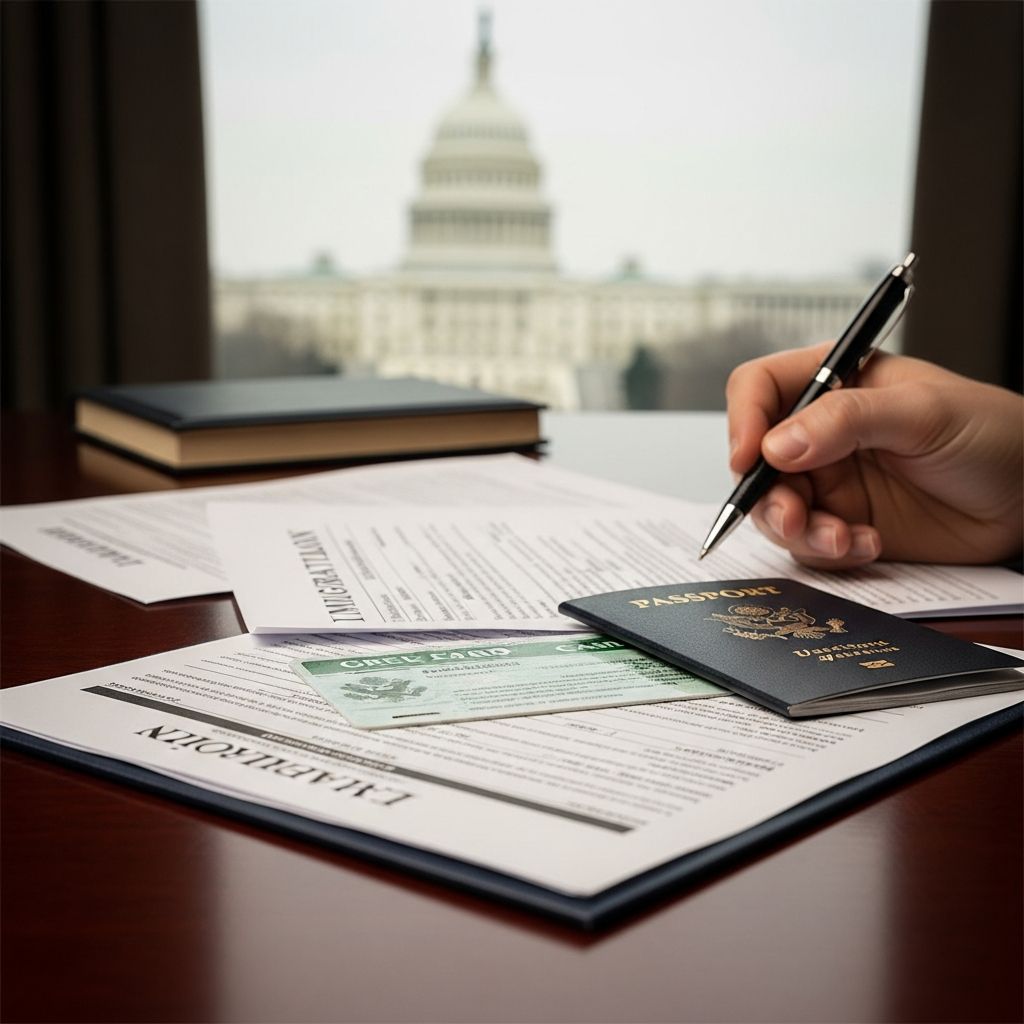
Understanding the U.S. Immigration System: A Practical Overview
Navigating U.S. immigration law represents one of the most significant undertakings many individuals face. The American immigration system encompasses numerous pathways, eligibility requirements, and procedural steps that can overwhelm those unfamiliar with its complexities. Whether you are considering relocating to the United States, sponsoring a family member, seeking employment opportunities, or fleeing persecution, understanding the fundamental principles of immigration law is essential for success. This comprehensive guide addresses the core concepts and practical considerations that shape the immigration experience.
Navigating Visa Categories and Immigration Pathways
The United States offers multiple visa categories designed to accommodate different circumstances and objectives. Understanding which visa aligns with your specific situation represents the first critical step in the immigration process.
Family-Based Immigration Routes
Family connections serve as one of the primary pathways to U.S. immigration. Immediate relatives of U.S. citizens—including spouses, parents of adult citizens, and unmarried children under age 21—qualify for expedited green card sponsorship. This family-based system reflects the American emphasis on reuniting households and maintaining kinship bonds across borders. Beyond immediate relatives, other family members may sponsor through preference categories, though these typically involve longer processing periods and numerical caps. Understanding your specific family relationship and its corresponding classification is crucial for determining your eligibility and expected timeline.
Employment-Oriented Immigration Categories
The United States attracts skilled professionals and workers through employment-based visas. Priority workers and individuals with exceptional ability qualify under the EB-1 category, which often leads directly to permanent residency. Other employment classifications address specialty occupations, professionals holding advanced degrees, and skilled workers filling labor shortages. Employment-based immigration requires sponsorship from a U.S. employer who demonstrates that the position cannot be filled by available American workers. These categories remain highly competitive and subject to annual quotas that frequently result in significant backlogs.
Humanitarian Immigration Protections
Individuals experiencing persecution based on protected grounds may seek protection through asylum or refugee status. These humanitarian pathways recognize that some individuals flee their home countries due to threats to their safety and fundamental rights. Asylum applicants present themselves at U.S. borders or ports of entry, while refugees apply from abroad through the U.S. Refugee Admissions Program. Both pathways can lead to permanent residency and eventual citizenship for those who meet the stringent legal criteria.
Diversity Visa Lottery Program
The Diversity Immigrant Visa Program, commonly known as the green card lottery, offers an alternative pathway by randomly selecting qualified individuals from countries with historically lower immigration rates to the United States. This program distributes a limited number of green cards annually and provides opportunities for individuals from underrepresented nations to immigrate. The lottery application process is straightforward but highly competitive, with millions of applicants competing for approximately 55,000 available visas.
Green Card Eligibility: Pathways to Permanent Residency
A green card represents the ultimate goal for many immigration applicants, as it grants permanent resident status and opens pathways toward citizenship. Eligibility for green card sponsorship varies significantly based on your immigration category and personal circumstances.
Family sponsorship remains the most common route, with specific relationships determining eligibility timelines and procedures. Employment-based green cards require demonstrated skills, qualifications, and a willing U.S. employer sponsor. Humanitarian protection through asylum or refugee status also leads to green card eligibility after maintaining status for one year. Some individuals may qualify for special immigrant categories, such as religious workers, Afghan or Iraqi nationals who assisted U.S. military forces, or individuals with extreme hardship family circumstances.
Understanding your eligibility category determines the documentation you must gather, the forms you must complete, and the timeline you can realistically expect. Many applicants benefit from consulting with qualified immigration attorneys who can evaluate their specific circumstances and identify the most advantageous pathways forward.
Essential Documentation: Gathering Required Evidence
Immigration applications demand comprehensive documentation that proves your identity, qualifications, relationships, and ability to support yourself in the United States. Submitting incomplete or inaccurate documentation remains among the most common reasons applications face delays or denials.
Fundamental Identity Documentation
Every immigration application requires valid proof of identity. A passport serves as the primary identity document, as it establishes citizenship and provides biographic information recognized internationally. Birth certificates corroborate your age, place of birth, and parentage. These foundational documents must be original or certified copies, as photocopies typically prove insufficient for immigration purposes.
Relationship Evidence for Family-Based Immigration
Family-sponsored applications require documentation proving your relationship to your U.S. citizen or permanent resident sponsor. Marriage certificates, divorce decrees, adoption papers, and birth certificates all serve as critical relationship evidence. For spousal sponsorship, documentation of ongoing family and financial interdependence strengthens applications. For child sponsorship, documentation establishing paternity or maternity may be required. Immigration officials scrutinize relationship documentation carefully to prevent fraudulent claims, so authentic, certified documents prove essential.
Professional Qualifications and Employment History
Employment-based applicants must substantiate their professional credentials and work history. Educational diplomas, professional certifications, licenses, and degrees from accredited institutions demonstrate qualification for the visa category sought. Letters from previous employers confirming job titles, responsibilities, and performance history establish work experience. For positions requiring specific certifications, official verification of credentials directly from issuing authorities carries significant weight. Research publications, patents, awards, and recognition in your field strengthen applications for categories emphasizing exceptional ability or priority worker status.
Financial Capability Documentation
U.S. immigration law requires demonstrating that you will not become a public charge—meaning you have sufficient financial resources to support yourself without government assistance. Applicants and their sponsors submit bank statements, investment account documentation, and tax returns from recent years. Affidavits of support, completed by sponsoring family members or employers, legally commit sponsors to reimburse any government benefits you receive. Recent pay stubs, employment letters confirming ongoing employment, and retirement account statements all document financial stability. For self-employed individuals, business tax returns and financial statements prove income and business viability.
Common Application Mistakes and How to Avoid Them
Even well-intentioned applicants frequently make errors that complicate or derail immigration cases. Recognizing and avoiding these pitfalls significantly improves your likelihood of successful outcomes.
Form Completion and Accuracy Issues
Immigration forms demand meticulous attention to detail. Incomplete sections, illegible handwriting, or inconsistent information across multiple forms triggers delays and requests for clarification. Many applicants rush through forms without carefully reviewing instructions, leading to formatting errors or omitted required information. Before submitting any immigration forms, thoroughly review each section, verify that all required fields are completed, and confirm that information remains consistent across all documents submitted. Electronic forms offer advantages by flagging incomplete sections before submission, but paper-based forms require careful self-review.
Missing Critical Deadlines and Response Delays
Immigration cases operate within strict procedural timeframes. Requests for additional evidence typically allow 84 days for response, and missing this deadline can result in case denial. Interview appointments carry similarly strict requirements—failing to appear without documented emergency circumstances typically results in case dismissal. Calendar applications, reminder systems, and communication with immigration attorneys help ensure you never miss crucial deadlines. Even brief delays in responding to U.S. Citizenship and Immigration Services (USCIS) requests can jeopardize months or years of work toward immigration goals.
Inadequate or Insufficient Documentation
Submitting application packages missing key documents remains a frequent cause of processing delays and denials. Each immigration category specifies exactly which documents must accompany applications. Applicants sometimes assume certain documents are unnecessary or believe that partial documentation suffices. This assumption proves costly, as USCIS typically does not grant extensions to submit missing documents and instead issues requests for evidence that extend processing timelines considerably. Carefully consulting the official requirements checklist for your specific category prevents this common mistake.
Applying on an Inappropriate Visa Category
Some applicants, motivated by urgency or incomplete information, apply for visa categories misaligned with their actual circumstances. An individual intending to work may apply for a tourist visa, creating issues if immigration officials determine you misrepresented your intentions. Similarly, individuals with criminal history may inadvertently apply for categories that prohibit their admission. Matching your actual intentions, qualifications, and circumstances to the appropriate visa category prevents subsequent complications and protects the integrity of your application.
The Role of Immigration Attorneys in Your Application
While not all immigration matters require legal representation, immigration attorneys provide substantial value by identifying optimal pathways, ensuring documentation completeness, and navigating procedural complexities. Experienced immigration counsel understands evolving regulations, policy changes, and case law developments that significantly impact individual applications. Attorneys also advocate on behalf of clients when complications arise, represent clients in immigration proceedings, and develop strategic approaches to address potential vulnerabilities in applications. For complex cases involving criminal history, prior visa denials, or complicated family circumstances, professional legal guidance often proves essential for successful outcomes.
Critical Questions for Evaluating Your Immigration Situation
| Question Category | Key Considerations |
|---|---|
| Visa Category Alignment | Does your intended purpose and circumstances match the visa category you’re considering? Have you explored all available pathways? |
| Eligibility Requirements | Do you meet all mandatory requirements for your chosen visa category? Are there any grounds of ineligibility that apply to your situation? |
| Documentation Readiness | Have you gathered all required documents? Are your documents current, authentic, and properly certified where necessary? |
| Financial Capacity | Can you or your sponsor demonstrate sufficient financial resources? Do you understand public charge implications for your situation? |
| Timeline Expectations | What realistic processing timeline should you expect? Are you prepared for potential delays or requests for additional evidence? |
Frequently Asked Questions About U.S. Immigration Law
Q: What is the difference between a visa and a green card?
A: A visa authorizes entry to the United States for a specified purpose and duration. A green card, or permanent resident card, grants indefinite residency status and substantially more rights than visa holders. Visa holders must comply with visa conditions, while green card holders can live and work permanently throughout the United States.
Q: How long does the immigration process typically take?
A: Processing timelines vary dramatically based on visa category, current USCIS workload, and completeness of applications. Family-based immediate relative cases may process within 6-12 months, while employment-based categories or preference family cases can extend 2-7 years or longer. Humanitarian cases present unpredictable timelines depending on interview scheduling and case complexity.
Q: Can I work while my immigration application is pending?
A: Work authorization depends on your visa status and application category. Some categories automatically authorize employment upon application, while others require separate work permit applications. Tourist and visitor visa holders generally cannot work. Consulting with immigration attorneys clarifies work authorization options specific to your situation.
Q: What happens if my immigration application is denied?
A: Denial letters explain the specific reasons for rejection. Depending on the category and reason for denial, you may appeal to the Administrative Appeals Office, request reconsideration, or reapply with additional or corrected documentation. Some denials can be overcome; others may permanently bar future applications unless circumstances change substantially.
Q: Do I need an attorney for my immigration case?
A: While not legally required for most cases, attorneys significantly improve approval rates and help avoid costly mistakes. Cases involving criminal history, prior visa denials, complex family circumstances, or employment-based sponsorship particularly benefit from professional representation. Self-representation remains possible but carries higher risks of procedural errors.
Q: What is the public charge rule and how does it affect my application?
A: The public charge rule determines whether applicants might become dependent on government assistance. Applicants demonstrating insufficient income, significant debt, or lack of health insurance may face public charge determinations affecting admissibility. Sponsorship affidavits and evidence of financial resources mitigate public charge concerns.
Q: Can I adjust my visa status within the United States, or must I return to my home country?
A: Some applicants can adjust status within the United States, while others must complete consular processing abroad. Immediate relatives of U.S. citizens often adjust within the U.S., while employment-based applicants and some family-based applicants may require consular processing. Your immigration category and visa status determine which process applies.
References
- Top 10 Questions to Ask When Considering Immigration to the U.S. — Monrreal Law. Accessed April 3, 2026. https://monrreallaw.com/immigration-attorney/top-10-questions-when-considering-us-immigration/
- Immigration and Nationality Act (INA) Section 245: Adjustment of Status — U.S. Citizenship and Immigration Services (USCIS). https://www.uscis.gov/i-485
- Green Card Categories and Eligibility Requirements — U.S. Department of State, Bureau of Consular Affairs. https://travel.state.gov/content/travel/en/us-visas/immigrate.html
- Form I-864, Affidavit of Support — U.S. Citizenship and Immigration Services (USCIS). https://www.uscis.gov/i-864
- Visa Documentation and Application Requirements — U.S. Embassy & Consulates. https://travel.state.gov/content/travel/en/us-visas.html
Similar Articles








Read full bio of Sneha Tete




