New York law allows people harmed by police misconduct to seek justice through civil lawsuits, administrative complaints, and, in some cases, criminal investigations. While these paths are available, they come with strict deadlines, complex procedures, and important strategic choices. Understanding these rules early can make the difference between a strong claim and one that never gets heard.
Understanding What Counts as Police Misconduct
Police misconduct covers a wide range of behavior that violates the law or a person’s constitutional rights. Not every unpleasant interaction with an officer qualifies, but certain patterns and acts raise clear legal issues.
- Excessive force – Using more physical force than is reasonably necessary to make an arrest or control a situation.
- False arrest or unlawful detention – Arresting or detaining someone without probable cause or valid legal authority.
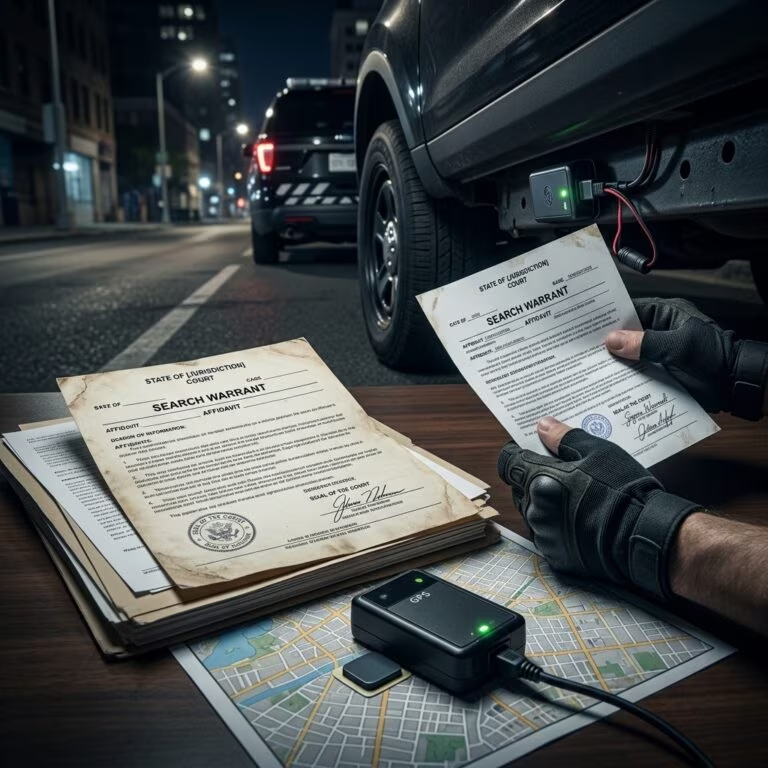
- Illegal search or seizure – Entering a home, searching property, or seizing items without a lawful warrant or recognized exception to the warrant requirement.
- Abuse of authority – Threats, intimidation, or using police power to punish someone rather than enforce the law.
- Sexual misconduct – Any sexual contact or coercion by an officer in connection with their official role.
- Racial profiling or biased policing – Targeting individuals based on race, ethnicity, religion, or other protected characteristics.
These behaviors can violate federal constitutional rights, state civil rights laws, and internal NYPD policies. That means you may have more than one avenue to pursue accountability.
Your Rights Under the Constitution and Civil Rights Laws
The core legal protections in police misconduct cases come from the United States Constitution and federal and state civil rights statutes.
- Fourth Amendment protections – The Fourth Amendment prohibits unreasonable searches and seizures. Courts evaluate police force and arrests under this standard by asking whether the officer’s actions were objectively reasonable in light of the circumstances.
- Fourteenth Amendment due process and equal protection – This amendment protects against discriminatory enforcement of the law and certain abuses that shock the conscience.
- Federal civil rights lawsuits (42 U.S.C. § 1983) – Section 1983 allows people to sue state and local officials, including police officers, who violate their constitutional rights while acting under color of law.
- New York civil rights protections – New York law includes additional safeguards, such as the Eric Garner Anti-Chokehold Act, which makes particular dangerous restraints a criminal offense and can support civil liability.
When you sue the police, you are usually arguing that officers violated these constitutional or statutory rights and that you suffered harm as a result. The legal theories you use will affect where you file, who you can sue, and the deadlines that apply.
Key Deadlines: Notice of Claim and Statutes of Limitations
One of the most critical aspects of suing the police in New York is timing. Missing a deadline can permanently block certain claims, even if the misconduct was serious and well documented.
Notice of Claim for New York City and Other Municipal Entities
If your claim is against a city or municipal entity (such as the City of New York or the NYPD), New York law usually requires a formal Notice of Claim before you file a lawsuit. This is not the lawsuit itself, but a mandatory warning to the government that you intend to sue.
- You must file the Notice of Claim within 90 days of the incident.
- The notice is typically filed with the appropriate municipal office, such as the New York City Comptroller for NYPD-related claims.
- The document should state the date, time, and location of the incident; identify involved officers if known; and describe what happened and your injuries.
After a Notice of Claim is filed, the municipality may investigate, request a hearing, or attempt to resolve the matter. If no resolution occurs, you may then proceed to file the lawsuit itself.
Time Limits to File Lawsuits
The time you have to actually file your lawsuit depends on the type of claim:
| Type of Claim | Defendant | Key Deadline |
|---|---|---|
| State law claims (e.g., negligence, assault) against a city or municipal entity | City of New York, NYPD, municipal agencies | Notice of Claim within 90 days; lawsuit within 1 year and 90 days from the incident. |
| Federal civil rights claims under 42 U.S.C. § 1983 | Individual officers; municipalities under certain circumstances | Generally 3 years from the date of the violation. |
Because these time limits can be complicated and sometimes vary based on the exact legal theory, consulting an attorney promptly is often recommended.
Immediate Steps After an Incident with Police
Your actions in the hours and days after a troubling encounter with police can shape how strong your case will be later. Even if you are unsure about suing, preserving evidence is crucial.
Prioritize Medical and Safety Needs
- Seek medical attention as soon as possible for any injuries, even if they seem minor.
- Obtain copies of hospital records, discharge papers, and bills; they may later document both injury and damages.
- If you remain in custody, request medical care through the jail or detention facility’s procedures.
Document Everything You Can
- Write down a detailed timeline of what happened, including exact times, locations, and officer names or badge numbers if known.
- Save any photographs or videos taken during or after the incident; back them up to secure storage.
- Collect names and contact information of witnesses who saw or heard any part of the encounter.
- Keep copies of summonses, arrest reports, desk appearance tickets, and any other documents you receive.
Early documentation helps counter the possibility that evidence may be lost, memories fade, or records are incomplete when you later request them.
Complaint Options Beyond a Lawsuit
Suing the police is not the only way to respond to misconduct. New York offers several administrative complaint systems, which may be used alone or alongside civil litigation.
Complaints to the Civilian Complaint Review Board (CCRB)
The CCRB is an independent agency in New York City that handles complaints about certain categories of misconduct by NYPD officers, including excessive force, abuse of authority, discourtesy, and offensive language.
- Complaints can be filed online, by phone, or by mail.
- You are encouraged to provide as much detail as possible, including location, involved officers, and any supporting files such as videos or photos.
- The CCRB investigates and may recommend discipline to the Police Commissioner, though it does not award money damages.
Internal Affairs and Other Investigative Bodies
In addition to the CCRB, people can report misconduct directly to NYPD Internal Affairs and, in some circumstances, to the New York State Attorney General’s office, especially for misconduct during protests.
- Internal Affairs focuses on officer corruption and policy violations within the department.
- The Attorney General’s office has taken on investigations relating to NYPD responses to certain demonstrations and civil rights concerns.
These complaints may result in discipline or policy changes, but they do not replace the deadlines or procedures for filing a civil lawsuit.
Civil Lawsuits: Who You Can Sue and What You Can Recover
When you decide to pursue a lawsuit, you may be able to name different defendants depending on what happened and which laws were violated.
Potential Defendants
- Individual officers – The officers whose actions directly violated your rights can often be sued personally under federal civil rights law.
- The municipality – Under certain circumstances, the city or police department may be liable for policies or customs that led to the misconduct, such as failure to train officers adequately.
- Other officials or agencies – In some cases, supervisory officials or related entities might be included if they played a significant role in the violation.
Types of Remedies
Depending on the claim, you might seek:
- Compensatory damages – Money for medical costs, lost income, pain and suffering, emotional distress, and other losses resulting from the misconduct.
- Punitive damages – Additional damages intended to punish particularly egregious conduct, usually against individual officers rather than municipalities.
- Injunctive relief – Court orders requiring a department or officer to do (or stop doing) certain things, such as changing policies or ending a particular practice.
In cases where a victim dies due to police conduct, family members or an estate representative may file wrongful death or survival actions linked to civil rights claims.
Building a Strong Case: Evidence and Legal Strategy
Police misconduct cases are often contested vigorously. Officers and municipalities may argue that the force used was reasonable, that probable cause existed, or that they are shielded by immunity. Carefully gathering evidence and working with experienced counsel can help address these defenses.
Important Evidence in Police Misconduct Cases
- Video and photographic evidence – Body-camera footage, surveillance video, cell phone recordings, and photographs of injuries or the scene are often critical.
- Witness statements – Accounts from bystanders, passengers, neighbors, or others who observed the interaction can support or contradict official narratives.
- Police and agency records – Incident reports, arrest paperwork, complaint histories, and use-of-force reviews may be obtained through discovery or public records processes.
- Medical documentation – Records from hospitals, clinics, and therapists help demonstrate the physical and psychological harm caused.
Why Legal Representation Matters
Civil rights and police misconduct cases involve specific procedural rules and complex constitutional arguments. Many organizations and bar associations emphasize the importance of consulting an experienced civil rights or personal injury attorney promptly after a potential violation.
- Lawyers can identify which claims are available and which defendants can be sued.
- They can ensure compliance with the Notice of Claim and statute of limitation rules.
- They can help you avoid making statements or signing documents that could weaken your case.
Common Myths About Suing the Police in New York
Misunderstandings about the law often prevent people from asserting their rights. Clarifying a few common myths can help you make informed decisions.
- Myth: You cannot sue if criminal charges are pending or were filed.
Reality: In many situations, you can pursue civil claims even if you were arrested or charged, especially if the arrest lacked probable cause or excessive force was used. However, timing and strategy are important, and you should get legal advice. - Myth: Verbal abuse alone always leads to a successful lawsuit.
Reality: Rudeness or insults may form the basis for CCRB complaints, but may not always support a strong civil damages claim unless linked to other rights violations. - Myth: Missing the 90-day Notice of Claim deadline means all claims are gone.
Reality: While missing the Notice of Claim deadline may bar certain state-law claims against municipalities, federal Section 1983 claims typically follow different time limits. You should still speak with counsel about remaining options.
Frequently Asked Questions
Do I need to file a Notice of Claim to bring a federal civil rights lawsuit?
For many federal civil rights claims under 42 U.S.C. § 1983, you do not need a Notice of Claim, and the typical deadline is about three years from the date of the violation. However, if you also plan to bring state-law claims against a city or municipal agency, the 90-day Notice of Claim rule still usually applies.
Can I file a complaint with the CCRB and still sue later?
Yes. Filing a CCRB complaint about NYPD misconduct does not prevent you from bringing a civil lawsuit. The CCRB process is administrative and focuses on discipline; it does not award damages. Lawsuit deadlines still apply even if a CCRB investigation is ongoing.
What if I do not know the officers’ names?
Lack of officer names does not automatically bar a claim. You can describe identifying details, such as badge numbers, physical descriptions, vehicle numbers, and locations in your Notice of Claim or complaint. Names may later be obtained through investigation or discovery. Providing as many details as possible early still helps.
Are there special rules for minors or people with disabilities?
In some situations, legal time limits can be affected by a person’s age or capacity. However, these rules are complex and can differ between state and federal claims. A lawyer familiar with New York civil rights litigation can explain how these rules might apply in a particular case.
Can I handle a police misconduct lawsuit on my own?
Technically, individuals can represent themselves in civil court, but police misconduct and civil rights cases are legally demanding and fact-intensive. Many legal organizations highlight that consulting an experienced attorney is highly advisable, especially because government defendants may raise immunity defenses and procedural challenges.
Taking the Next Step
If you believe you were a victim of police misconduct in New York, you do not have to decide immediately whether to sue. However, you should:
- Write down a detailed account of the incident as soon as possible.
- Preserve all photos, videos, and documents.
- Seek medical care and keep all related records.
- Consider contacting a qualified civil rights or personal injury attorney to discuss your options and deadlines.
Knowing the framework of New York’s laws, the role of the Notice of Claim, the availability of federal Section 1983 actions, and the support available through agencies like the CCRB can help you make informed decisions about pursuing justice after police misconduct.
References
- Can I Sue for Police Misconduct? (NYC) — LawHelpNY. 2023-05-01. https://www.lawhelpny.org/resource/notice-of-claim-form-city-of-new-york
- New York Police Brutality Lawyer — Stephen Bilkis & Associates. 2022-09-15. https://www.1800nynylaw.com/new-york-police-brutality/
- Notice of Claim — The Bronx Defenders. 2021-11-10. https://www.bronxdefenders.org/notice-of-claim/
- New York City Police Misconduct Attorney — Norinsberg Law. 2022-03-20. https://norinsberglaw.com/police-misconduct/
- File a Complaint of Police Misconduct — NYC Civilian Complaint Review Board (CCRB). 2023-06-01. https://www.nyc.gov/site/ccrb/complaints/file-a-complaint/file-online.page
- Civil Rights Litigation — Hacker Murphy LLP. 2022-04-05. https://hackermurphy.com/practice-areas/civil-rights/
- Police Misconduct Lawyers in New York City — New York City Bar Association. 2021-08-12. https://www.nycbar.org/get-legal-help/article/personal-injury-and-accidents/police-misconduct/