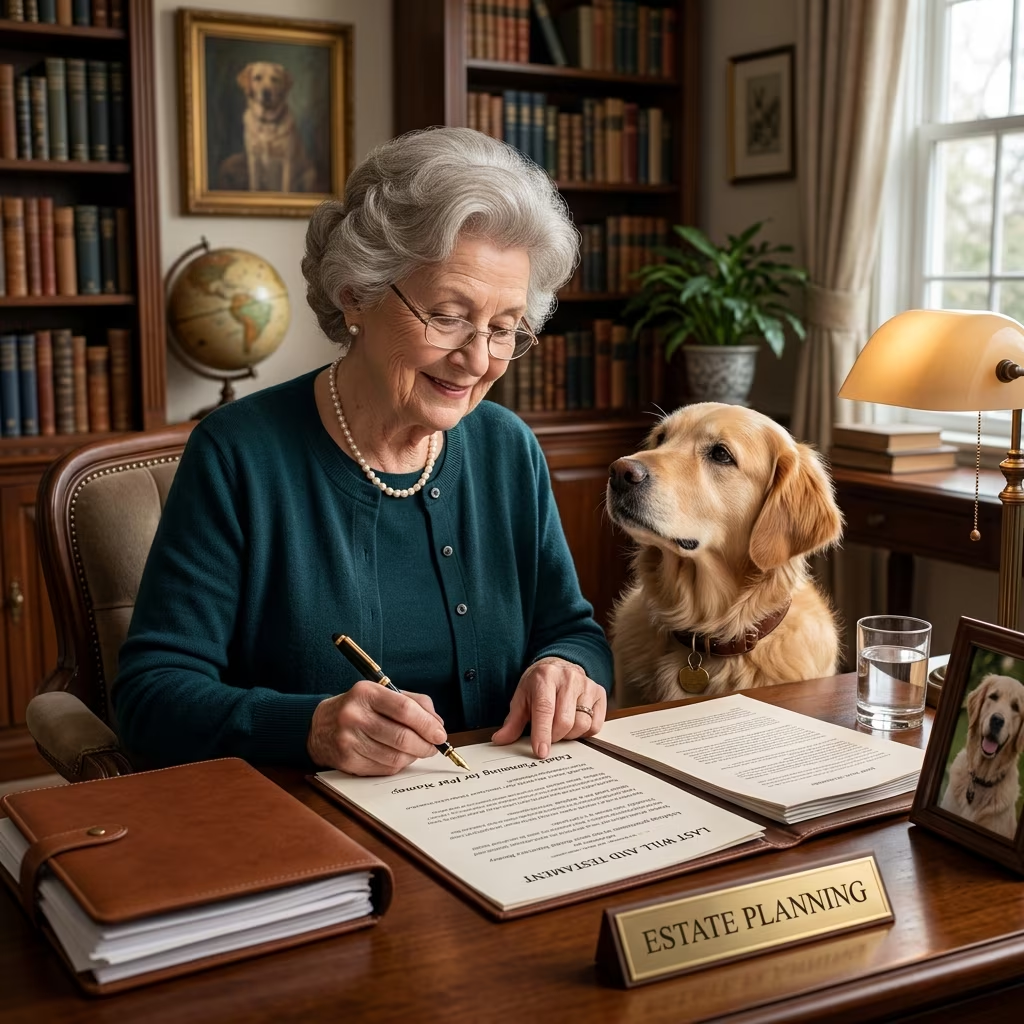
Planning for a Pet After You’re Gone
Many people think of pets as family, but the law usually treats them as property. That legal reality matters when you are deciding what should happen to a dog, cat, bird, or other companion animal after your death. A will can help you name a caretaker, leave instructions, and provide money for future care, but it cannot make a pet a legal heir.
The good news is that estate planning gives you several ways to protect an animal’s future. You can use a will, a pet trust, or a combination of both to reduce uncertainty and make your wishes easier to follow. The key is to be specific, realistic, and legally careful.
- Choose the person who will take over day-to-day care.
- Leave enough funds to support food, grooming, veterinary visits, and emergencies.
- Name a backup in case the first choice cannot serve.
- Put the instructions in writing so there is less room for confusion.
These choices are especially important if your pet has medical needs, behavioral quirks, or a long expected lifespan. The more detail you provide, the easier it is for someone else to step in responsibly.
Why a Pet Cannot Simply Inherit Money
Under traditional property rules, an animal cannot own property. That means you cannot leave a pet a bank account, a house, or direct control over assets. Instead, you must direct the property to a human beneficiary or to a trust that is used for the pet’s benefit.
This distinction is not just technical. It determines whether your plan will actually work. If you write vague instructions without identifying who controls the money, your wishes may be hard to enforce. If you leave assets directly to the pet, the gift will not function as intended because a pet cannot manage or receive property in its own name.
| Planning Option | What It Does | Main Benefit |
|---|---|---|
| Will with pet clause | Names a caregiver and may leave funds to that person | Simple to add to an existing will |
| Pet trust | Sets aside money for the pet’s care under trustee control | More enforceable and structured |
| Direct gift to caregiver | Leaves pet and money to a chosen person | Easy when the caregiver is trustworthy |
Each option has strengths and weaknesses, and the best choice depends on your state law, your estate size, and how much control you want to retain over the pet’s care.
Choosing the Right Person to Care for Your Pet
Picking the caregiver is often the most important part of pet planning. The person should be willing, capable, and genuinely comfortable with your animal. Friendship alone is not enough. A reliable caregiver should understand the pet’s temperament, daily routine, medical needs, and long-term habits.
Before naming anyone in your will, ask directly whether they are willing to accept the responsibility. Do not assume someone will take the pet simply because they love animals. Some people travel often, live in apartments that limit pets, or already care for multiple animals. A clear conversation now can prevent conflict later.
It also helps to identify an alternate caregiver. Life changes quickly, and the first person you choose may become unable to help. A backup plan can prevent emergency shelter placement or rushed rehoming.
- Confirm the primary caregiver is willing to serve.
- Choose someone who can handle the pet’s breed, age, and needs.
- List a secondary caregiver as a fallback.
- Keep contact information current in your estate documents.
In some situations, the caregiver and the person handling your estate may be different people. That separation can be useful if you want one person to manage money and another to provide hands-on care.
What to Include in Your Instructions
A strong pet provision does more than name a new owner. It also explains how the pet should be cared for. The purpose is not to create a rigid script for every detail of daily life, but to give practical guidance that reflects the animal’s normal routine and special needs.
You may want to address feeding preferences, medicine schedules, exercise habits, grooming needs, training issues, and veterinary care. If your pet is elderly or chronically ill, those instructions may be especially important. If your pet is young and healthy, you may still want to note preferences that will help preserve stability during the transition.
Useful details may include:
- The pet’s full name, species, breed, age, and identifying features.
- Dietary needs, food brands, and feeding times.
- Medication, allergy, or treatment information.
- Daily routines, exercise requirements, and social habits.
- The name and contact information of the current veterinarian.
You can also express preferences about housing, such as whether the animal should live indoors, remain with other pets, or avoid certain environments. While these requests may not be legally binding in every form, they can guide the caregiver and show your expectations clearly.
How to Provide Money for Future Care
Many pet owners want to leave funds so the caregiver is not burdened with the costs of food, grooming, boarding, or medical treatment. That is a sensible goal, but the money must be directed properly. Because the pet itself cannot own the money, the funds usually go to the caregiver or into a trust.
How much to leave depends on the pet’s likely lifespan, health, and standard of care. The amount should be enough to be useful but not so high that it creates unnecessary complications. Emergency veterinary care can be expensive, so planning for unplanned costs is just as important as budgeting for routine needs.
Possible funding methods include:
- Leaving a cash gift to the caregiver with written instructions to use it for the pet.
- Creating a trust that holds funds for the animal’s benefit.
- Funding the trust gradually during life as part of a broader estate plan.
- Setting aside a reserve for veterinary emergencies or end-of-life care.
If you want stronger control over how the money is used, a trust is usually more effective than a simple bequest. A trust can specify who manages the funds, how they are spent, and what happens to unused money later.
When a Pet Trust May Be Better Than a Will
A will can work well for straightforward situations, but a pet trust often gives more security. A trust can be designed to take effect at death or during incapacity, and a trustee can be legally obligated to follow the trust terms. That makes it easier to enforce the plan if disputes arise.
A trust is especially useful if your pet will need long-term support, substantial medical care, or oversight beyond a basic caretaking arrangement. It can also help if you want someone to manage the money separately from the person caring for the animal.
Common advantages of a pet trust include:
- Clear legal direction for how funds must be used.
- Better oversight of money set aside for the pet.
- Potential coverage during incapacity as well as death.
- Less risk that the caregiver uses the funds for unrelated purposes.
State rules differ, so the exact form of the trust matters. In some places, statutes specifically authorize pet trusts and may limit the amount that can be set aside. Because of that, it is wise to check local law before finalizing any estate plan.
Practical Mistakes to Avoid
Pet planning often fails because of avoidable oversights. One common mistake is naming a person in a will without asking first. Another is leaving money without explaining how it should be used. A third is failing to name a backup if the first choice is unavailable.
Another problem is assuming the law will automatically enforce every request you write. If you want a binding obligation, a will clause alone may not be enough. That is why many owners use trusts, written agreements, or both.
Watch for these common errors:
- Using vague language like “take good care of my pet” without details.
- Failing to confirm the caregiver’s willingness in advance.
- Leaving money directly to the animal rather than to a human or trust.
- Forgetting to update the plan after a move, divorce, or change in health.
It is also important to keep your pet plan consistent with the rest of your estate documents. If your will says one thing and your trust says another, your family may face unnecessary conflict.
A Simple Checklist for Pet Owners
If you want a straightforward way to begin, focus on a few core steps. You do not need to solve every possible issue at once, but you should get the essential parts in place.
- Write down the pet’s name, age, breed, and medical history.
- Select a primary caregiver and a backup caregiver.
- Discuss the plan with both people before naming them.
- Decide whether a will, a trust, or both will be used.
- Set aside funds for expected and unexpected care costs.
- Review and update the documents periodically.
Those steps can make the difference between a smooth transition and a stressful scramble. Even a modest plan is better than no plan at all.
Frequently Asked Questions
Can I leave my pet money in my will?
You cannot leave money directly to the pet, but you can leave money to a caregiver or a trust for the pet’s benefit. That is the practical way to fund future care.
Do I have to use a trust?
No. A will can be enough for simple situations, especially if you trust the caregiver completely. A trust is often better when you want stronger control or legal enforceability.
Can I name more than one caregiver?
Yes. You can name a primary caregiver and a backup. That is a smart approach because it reduces the risk of an emergency if the first person cannot help.
What if my caregiver lives in another state?
That can work, but state law may affect how the transfer and funding operate. It is wise to confirm that the arrangement is practical under the law where the caregiver lives.
Should I speak with a lawyer?
Yes, especially if you want a trust, a larger funding arrangement, or help navigating state-specific rules. A lawyer can help make sure your plan is enforceable and consistent with the rest of your estate documents.
References
- Including Your Dog, Cat or Other Pet in Your Will or Trust — GoodRx. 2024-02-15. https://www.goodrx.com/pet-health/pets/pet-in-will-trust
- Can You Make a Last Will and Testament for Your Dog? (Yes, You … — FindLaw. 2024-01-18. https://www.findlaw.com/forms/resources/estate-planning/last-will-and-testament/can-you-make-a-last-will-and-testament-for-your-dog-yes-you-can.html
- Estate Planning for Pets: Secure Their Future — LegalShield. 2024-03-22. https://www.legalshield.com/blog/estate-planning-for-pets
- Including Animals in Your Will — Animal Legal Defense Fund. 2024-05-10. https://aldf.org/article/including-animals-in-your-will/
- Providing for Your Pet After You Die — Commonwealth of Virginia EAP. 2024-04-04. https://www.anthemeap.com/cova/find-legal-support/resources/estate-law/legal-assist/providing-for-your-pet-after-you-die
- Estate Planning for Pet Owners — Norris McLaughlin. 2024-02-28. https://norrismclaughlin.com/teit/estate-planning-basics/estate-planning-for-pet-owners/