
Understanding Excise Taxes in Plain English
A practical guide to how excise taxes work, who pays them, and why governments use them.
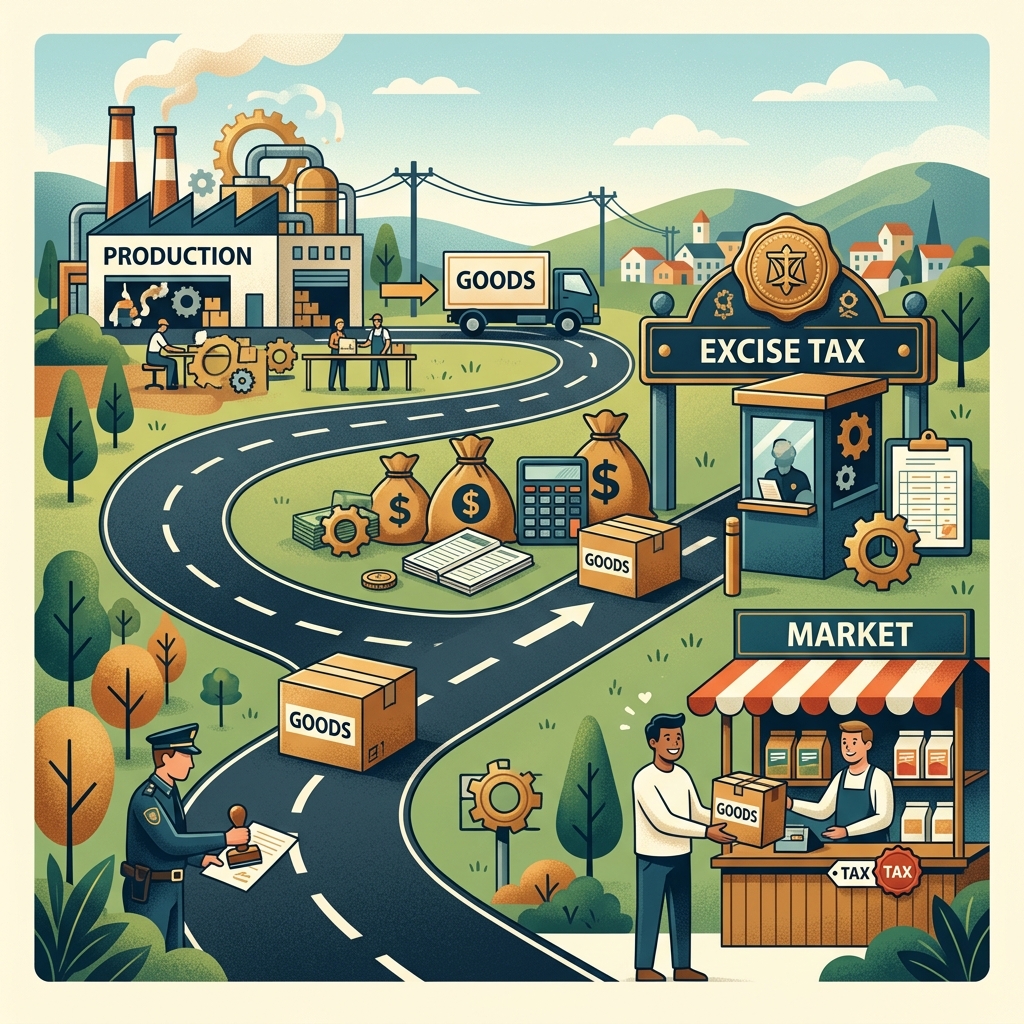
Excise taxes are a common part of the tax system, but many people only notice them when they show up in the price of fuel, alcohol, tobacco, airline tickets, or other specific purchases. Unlike broad taxes that apply to most sales, an excise tax targets a narrow category of goods, services, or activities. In practice, that means the tax is usually built into the price you pay rather than listed as a separate charge at checkout.
These taxes matter because they affect consumer prices, business compliance, and government revenue. They also serve policy goals: governments often use excise taxes to discourage certain behavior, fund transportation or public health programs, or collect revenue from products that have a measurable social cost.
What an excise tax actually is
An excise tax is a tax imposed on specific goods, services, or activities rather than on nearly all consumer purchases. It is usually considered an indirect tax because the business, importer, or manufacturer is often responsible for paying or remitting the tax to the government, even though the economic burden is commonly passed on to the consumer through higher prices.
In simple terms, excise taxes are selective taxes. They do not function like a general sales tax that applies to most retail transactions. Instead, they are directed at chosen items or conduct, such as gasoline, cigarettes, alcohol, airline travel, indoor tanning, tires, and certain health-related products or services.
How excise taxes differ from sales taxes
People often confuse excise taxes with sales taxes because both can increase the final cost of a purchase. The difference is that sales tax is usually a percentage of the total sale price and applies broadly, while excise tax is generally narrower and may be calculated as a fixed dollar amount per unit or as a percentage tied to a specific transaction.
| Feature | Excise Tax | Sales Tax |
|---|---|---|
| Scope | Applies to selected goods, services, or activities | Applies broadly to taxable retail sales |
| Method | Often a flat amount per unit, sometimes a percentage | Usually a percentage of sale price |
| Visibility | Often built into the product price | Usually shown separately at checkout |
| Purpose | Revenue collection and behavior influence | General revenue collection |
Another important difference is that excise taxes are frequently embedded earlier in the supply chain. They may be assessed at production, manufacture, importation, wholesale, or sale, depending on the law involved. That makes them less visible to the consumer, even though consumers usually end up paying them indirectly.
Why governments use excise taxes
Governments use excise taxes for two main reasons: to raise money and to shape behavior. On the revenue side, excise taxes can support highway systems, aviation programs, health-related funds, and other public services. Because they apply to targeted categories, they can provide a steady source of revenue from industries with large and repeated transactions.
On the policy side, excise taxes are often used to reduce consumption of products viewed as harmful or costly to society. For example, taxes on cigarettes and alcohol are frequently justified as a way to offset public health and social costs. Taxes on gasoline may be used to help pay for road infrastructure or discourage excessive driving.
This dual purpose explains why excise taxes are so common in areas where lawmakers want both a revenue stream and a policy signal. The tax itself becomes part of the price structure, which can influence buying decisions without requiring a separate penalty or restriction.
Who is responsible for paying and filing
Although consumers usually feel the cost, the legal responsibility for excise tax compliance often falls on businesses such as manufacturers, importers, retailers, or other taxable parties. The exact taxpayer depends on the type of excise tax and the stage at which the taxable event occurs.
For federal excise taxes in the United States, many businesses must report liability on Form 720, the Quarterly Federal Excise Tax Return. Some filers also have to make deposits during the quarter, rather than waiting until the filing deadline. This means excise tax compliance is not just a pricing issue; it is also a recurring reporting and payment obligation for affected businesses.
In practice, businesses often incorporate the tax into their pricing models. Even when the business remits the tax, it usually seeks to recover that cost through the amount charged to the end user. That is why excise taxes are often described as being legally paid by one party but economically borne by another.
Common goods and services subject to excise tax
Excise taxes are most often associated with a limited set of products and activities. At the federal level, examples include fuel, airline tickets, heavy trucks, tires, tobacco, alcohol, and indoor tanning services.
- Fuel: Frequently taxed to support transportation and infrastructure spending.
- Tobacco: Commonly taxed at a high rate to reduce consumption and fund public health priorities.
- Alcohol: Often taxed as a way to generate revenue and address social costs.
- Air travel: Sometimes taxed through ticket-based excise systems.
- Specialty products or services: Certain goods such as indoor tanning can be included when lawmakers want to influence behavior.
State and local governments also use excise taxes, sometimes on goods like gasoline, cigarettes, and alcohol, and sometimes on services such as hotel stays or car rentals. That means excise taxes can appear at multiple levels of government at the same time.
How excise taxes are calculated
Excise taxes may be calculated in one of two main ways. A specific excise tax is a fixed amount per unit, such as cents per gallon or dollars per pack. An ad valorem excise tax is based on a percentage of the value or price of the item or transaction.
The unit-based model is common when lawmakers want a predictable amount per item sold. For example, a per-gallon fuel tax is easier to apply consistently across volume-based sales. Percentage-based excise taxes are more common when the tax is tied to the price or value of the transaction, such as certain airline ticket taxes.
The calculation method matters because it affects both revenue and consumer behavior. A fixed per-unit tax tends to be more stable in amount, while a percentage-based tax rises and falls with price changes.
Why excise taxes are often less visible to consumers
Unlike sales tax, which is often listed as a separate line at the register, excise tax is usually included in the sticker price or product cost. That makes it less obvious to shoppers, even though the tax is still there.
This structure can make excise taxes feel indirect in everyday life. A driver may not see a separate excise line when buying gasoline, but the tax affects the price per gallon. The same is true for tobacco, alcohol, and other taxed goods where the business collects the amount indirectly through pricing.
That hidden quality is one reason excise taxes are sometimes called “embedded” taxes. Consumers pay them, but the payment is folded into the cost of the product instead of being charged separately at the point of sale.
Are excise taxes fair?
Whether excise taxes are fair depends on what standard is being used. Supporters argue that users of certain products should help cover the public costs those products create, especially when the goods are linked to health, environmental, or infrastructure burdens. From that perspective, excise taxes can be seen as a targeted user fee or a corrective tax.
Critics point out that excise taxes can be regressive, meaning they may take a larger share of income from lower-income consumers who spend a greater portion of their budget on taxed goods. Because many excise taxes apply to items people use regularly, the burden may feel heavier than a general tax spread across more categories.
In policy debates, both views matter. Excise taxes can be efficient and easy to collect, but they can also create unequal impacts depending on who buys the taxed goods and how often.
What businesses should watch for
For businesses, excise taxes create compliance duties that go beyond ordinary sales tax collection. Companies must determine whether their products, services, or transactions fall within a taxed category, identify the correct taxpayer, calculate the amount due, and file the necessary returns on time.
- Product classification: A business must know whether its goods or services are taxed.
- Tax base: The business must determine whether the tax is per unit or based on value.
- Filing schedule: Federal excise taxes are commonly reported quarterly on Form 720.
- Deposit rules: Some businesses must make deposits during the reporting period.
- Pricing strategy: The business may need to decide whether and how to pass the cost through to customers.
Because excise tax rules can vary by product and jurisdiction, businesses often need careful accounting systems and tax review procedures. A small classification error can change the tax due or create filing problems.
Where excise taxes appear in everyday life
Many people encounter excise taxes without realizing it. The price of a plane ticket may include a federal excise component. A bottle of alcohol may carry a built-in tax burden. A gas pump price may reflect transportation-related excise taxes. Even specialty services and certain goods used in specific industries may include embedded excise costs.
Because these taxes are tied to specific products rather than universal purchases, they often feel invisible until you compare prices or review a receipt closely. That invisibility is part of what makes excise taxes effective from an administrative standpoint: they are relatively easy for governments to collect through a small number of businesses and industries.
Frequently asked questions
Is an excise tax the same as a sales tax?
No. Sales tax applies broadly to taxable sales and is usually a percentage of the purchase price, while excise tax applies to selected goods, services, or activities and is often a fixed amount per unit or a targeted percentage.
Who really pays excise tax?
The business, importer, or manufacturer usually remits the tax, but consumers often bear the cost because it is built into the price of the item.
Why are excise taxes charged on products like tobacco and alcohol?
These products are often taxed because governments want revenue and also want to discourage use or offset public costs associated with consumption.
Do all excise taxes apply at the federal level?
No. Excise taxes can exist at federal, state, and local levels depending on the jurisdiction and the product or service involved.
How do businesses report federal excise tax?
Many businesses report federal excise tax using Form 720, the Quarterly Federal Excise Tax Return, and some are required to make deposits during the year.
Why the concept matters in practice
Excise tax is not just a technical tax term. It affects consumer prices, business compliance costs, and government budgeting decisions. It also shows how tax policy can be used not only to raise money but to influence behavior in targeted ways.
When you understand how excise taxes work, it becomes easier to see why certain goods cost more than expected and why some businesses must follow special filing rules. The tax is narrow in scope, but its impact is wide because it is embedded in so many everyday transactions.
References
- Excise – Wikipedia — Wikipedia contributors. 2026-07-10. https://en.wikipedia.org/wiki/Excise
- Excise Tax Definition | TaxEDU Glossary — Tax Foundation. 2026-07-10. https://taxfoundation.org/taxedu/glossary/excise-tax/
- What is Excise Tax? – Stripe — Stripe. 2026-07-10. https://stripe.com/resources/more/what-is-excise-tax
- Basic things all businesses should know about excise tax — Internal Revenue Service. 2026-07-10. https://www.irs.gov/newsroom/basic-things-all-businesses-should-know-about-excise-tax
- Excise tax — Internal Revenue Service. 2026-07-10. https://www.irs.gov/businesses/small-businesses-self-employed/excise-tax
- What are the major federal excise taxes, and how much money do they raise? — Tax Policy Center. 2026-07-10. https://taxpolicycenter.org/briefing-book/what-are-major-federal-excise-taxes-and-how-much-money-do-they-raise
- How Do State and Local Excise Taxes Work? — Institute on Taxation and Economic Policy. 2026-07-10. https://itep.org/how-do-state-and-local-excise-taxes-work/
Similar Articles








Read full bio of Sneha Tete




