
Trampolines and Your Homeowners Insurance
Understand how owning a backyard trampoline can change your homeowners insurance, liability exposure, and safety responsibilities.
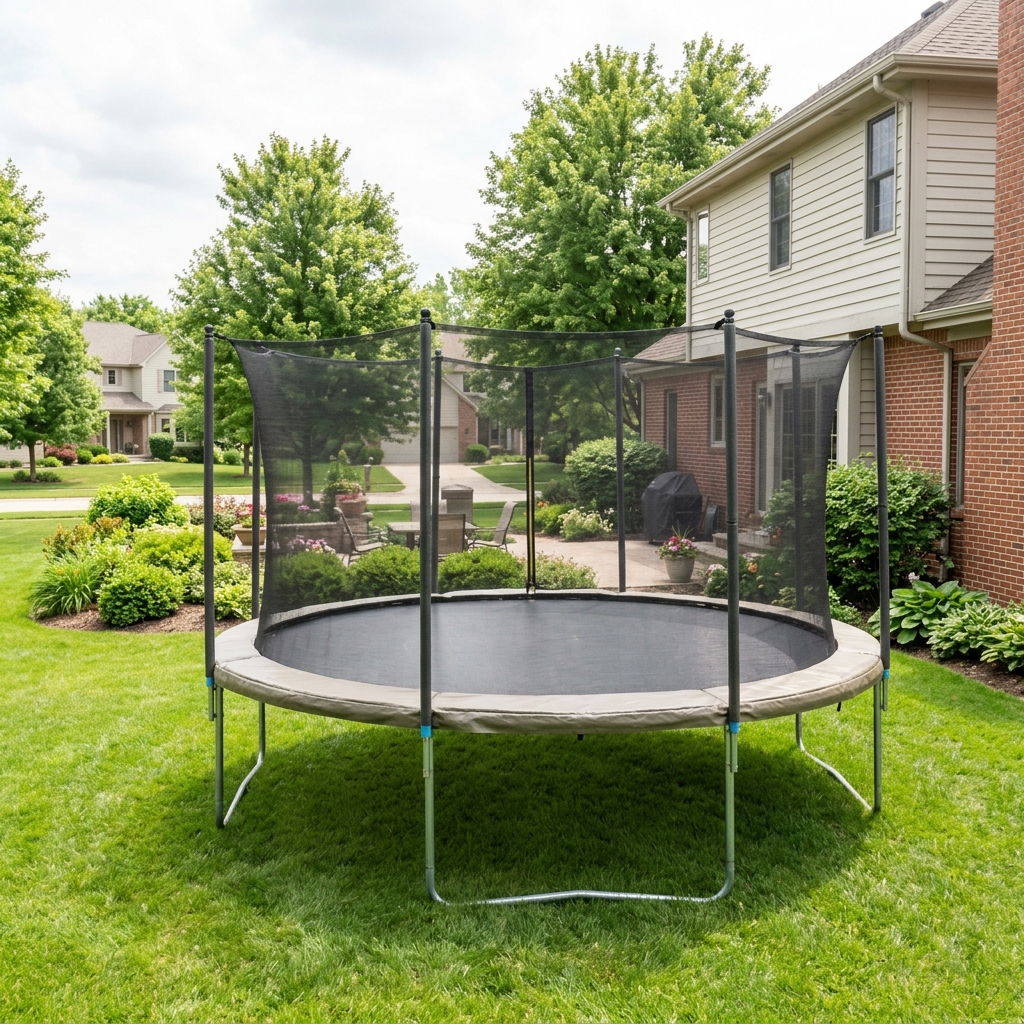
Backyard trampolines are a popular way for families to stay active and entertained. Yet, this seemingly simple purchase can have surprisingly complex consequences for your homeowners insurance, your finances, and your legal risk. Insurers often treat trampolines as high-risk equipment, and in some cases they may limit coverage, raise premiums, or refuse to insure your home if a trampoline is present.
This guide explains how trampolines interact with homeowners insurance, what typical policies do and do not cover, and what you can do to make your trampoline safer and more insurance-friendly. It also addresses common questions about liability, medical bills, and how to talk with your insurer before you set up a new trampoline.
Why Trampolines Are a Major Insurance Concern
Insurance companies evaluate risk, and trampolines are associated with a high rate of injury, especially among children. In the United States, tens of thousands of trampoline-related injuries occur each year, ranging from minor sprains to serious fractures and head trauma. Because these injuries often lead to medical claims and lawsuits, insurers scrutinize trampoline ownership closely.
Several factors make trampolines particularly concerning for insurers:
- High injury frequency: Falls from the trampoline, collisions between jumpers, and improper somersaults or flips frequently cause injuries.
- Risk to visiting children: Neighborhood kids and guests may be tempted to use a trampoline even without permission, increasing the chance of claims.
- Potential property damage: In storms, trampolines can be blown into houses, fences, or vehicles, creating additional loss exposure.
From the insurer’s perspective, a trampoline can turn an otherwise low-risk property into one with elevated liability and property risk. This is why companies may charge higher premiums, add exclusions, or decline coverage when a trampoline is present.
Understanding the “Attractive Nuisance” Doctrine
Many insurers and courts treat trampolines as an attractive nuisance. In law, an attractive nuisance is a condition on property that is both dangerous and likely to entice children, who may not fully appreciate the risk.
If a trampoline is considered an attractive nuisance, you may be legally responsible for injuries to children who access it—even if they:
- Did not have your permission to use the trampoline
- Entered your yard without your knowledge
- Ignored posted warnings or rules
This doctrine significantly increases your potential liability, because it extends your responsibility beyond invited guests. Insurers are aware of this exposure and often structure their policies to limit how much risk they take on related to trampolines.
How Trampolines Can Affect Your Homeowners Policy
There is no single nationwide rule about trampoline coverage. Instead, insurers adopt different approaches based on their internal guidelines and state regulations. When you inform your company that you own (or plan to own) a trampoline, several outcomes are possible.
Common Coverage Approaches
| Approach | What It Means | Typical Consequences |
|---|---|---|
| No specific trampoline exclusion | The policy covers liability and property damage involving trampolines, subject to standard limits and conditions. | Claims may be paid for injuries to guests or damage caused by the trampoline, but premiums may still be higher. |
| Explicit exclusion | The policy states that trampoline-related injuries or damage are not covered. | You are personally responsible for medical costs, legal fees, and repairs stemming from trampoline incidents. |
| Conditional coverage with safety requirements | Coverage applies only if you meet specific safety standards (such as enclosures or locked gates). | Failure to comply with requirements can result in denial of claims, policy changes, or cancellation. |
| Refusal to insure | The insurer will not issue or renew a policy if a trampoline is present on the property. | You must remove the trampoline or find a different insurer willing to cover your home. |
Key Policy Components Affected
When a trampoline is involved, three parts of your homeowners policy are most relevant:
- Liability coverage: This pays for bodily injury or property damage to others when you are legally responsible, and may cover legal defense costs.
- Medical payments to others: This can cover smaller medical bills for guests injured on your property, regardless of fault, up to policy limits.
- Property coverage: This may apply if your trampoline or other structures are damaged by a covered peril, such as wind or falling objects, depending on policy language.
Your insurer may modify any of these components or add endorsements that specifically address trampolines. Because details vary widely, reading your policy carefully and asking direct questions is essential.
Premiums, Exclusions, and Policy Cancellation
Owning a trampoline almost always affects how your home is priced and underwritten. Some companies respond by increasing premiums, while others treat trampolines as unacceptable risks.
Potential Changes When You Add a Trampoline
- Higher premiums: Because your liability risk is greater, your insurer may charge more for the same level of coverage.
- Special surcharges: Some companies add a specific fee or rating factor tied directly to trampoline ownership.
- Liability exclusions: The policy may state that injuries related to trampoline use are not covered at all.
- Non-renewal or cancellation: In some cases, insurers may cancel an existing policy or decline to renew if a trampoline is installed against their guidelines.
Importantly, failing to inform your insurer about a trampoline can lead to serious problems. If you misrepresent your property or omit relevant information, the company may deny related claims or cancel the policy after a loss.
Safety Practices That Can Support Coverage
Insurers are more willing to offer coverage when homeowners take concrete steps to manage risk. While safety measures cannot guarantee that injuries will not occur, they can reduce the likelihood and severity of accidents, and some companies explicitly require them as a condition of coverage.[10]
Practical Safety Measures
- Install an enclosure net: Surround the trampoline with a secure net to help prevent falls to the ground.[10]
- Use padding on springs and frame: Cover exposed springs, hooks, and frames with protective padding to reduce impact injuries.[10]
- Anchor the trampoline: Secure the legs to the ground to prevent tipping or movement during vigorous use or strong winds.[10]
- Choose a safe location: Place the trampoline away from concrete, fences, trees, and other hazards, on level ground with adequate clearance.
- Limit the number of jumpers: Allow one person at a time to reduce collisions and unbalanced jumping.
- Supervise children: Maintain adult supervision whenever the trampoline is in use, and enforce rules against dangerous maneuvers such as flips.[10]
- Control access: Use a fenced yard, locked gate, or cover to deter unsupervised or unauthorized use, especially by neighborhood children.
- Inspect regularly: Check for tears, broken parts, rust, or loose bolts and avoid use until any problem is repaired.[10]
Even with these precautions, many insurers still view trampolines as high risk. However, demonstrating strong safety practices may help you maintain coverage, qualify for conditional endorsements, or negotiate more favorable terms.[10]
Liability and Medical Bills: Who Pays When Someone Is Hurt?
When a trampoline injury happens, the financial impact depends on who was hurt, how the accident occurred, and what your policy covers. Understanding the distinction between health insurance, medical payments coverage, and liability coverage will help you anticipate who pays what.
Injuries to Household Members
If someone who lives in your home—such as your child—is injured while using your trampoline, their health insurance will typically be the primary source of coverage for medical treatment. Homeowners policies focus on injuries to others (non-residents) rather than those within your household.
Injuries to Guests and Neighbors
When a guest or neighbor is hurt, several parts of your homeowners policy may come into play:
- Medical payments to others: This coverage may pay for immediate medical expenses, such as clinic visits or X-rays, up to the limit stated in your policy, often regardless of fault.
- Liability coverage: If the injured person sues you or alleges that you were negligent (for example, due to lack of supervision or defective equipment), liability coverage may pay for legal defense and any settlement or judgment, within policy limits.
However, if your policy excludes trampoline injuries or imposes strict conditions that have not been met, you may have to pay these costs yourself. Because litigation over injuries can be expensive, some homeowners consider raising liability limits or purchasing an umbrella policy when they own a trampoline.
Best Practices Before Buying or Installing a Trampoline
To avoid unpleasant surprises, it is important to address insurance questions before you bring a trampoline home or assemble one in your yard. Proactive communication with your insurer can help you keep your coverage intact and make informed decisions about risk.
Questions to Ask Your Insurer
- Does my current homeowners policy cover trampoline-related injuries and damage, or is there an exclusion?
- Will adding a trampoline change my premium, surcharge, or eligibility for coverage?
- Are there any specific safety features or installation requirements I must meet to keep coverage in place (for example, netting, anchoring, or fenced yard)?[10]
- Do you offer a separate endorsement or rider for trampolines, and what does it cover?[10]
- Should I increase my personal liability limits or consider an umbrella policy because of the trampoline?
Document any instructions or conditions your insurer provides, and follow them closely. If you are told that trampolines are not permitted under your current policy, you will need to choose between foregoing a trampoline or switching to a company that is willing to insure homes with one.
Frequently Asked Questions About Trampoline Insurance
Does homeowners insurance always cover trampolines?
No. Coverage varies widely by insurer and policy. Some companies cover trampolines without extra conditions, others impose safety requirements, and many exclude them altogether or refuse to insure homes that have them.
Can my policy be cancelled because I own a trampoline?
Yes. Certain insurers treat trampolines as unacceptable risks. If your policy prohibits trampolines and you install one, the company may cancel or decline to renew your coverage. Always review your policy and speak with your agent before setting up a trampoline.
Will my premium go up if I add a trampoline?
In many cases, yes. The increased likelihood of injury and liability claims often leads insurers to charge higher premiums or add surcharges for properties with trampolines.
Are there ways to make my trampoline more acceptable to insurers?
Insurers commonly look for strong safety measures such as enclosure nets, padding on springs, anchoring systems, fenced yards, locked gates, and consistent adult supervision.[10] These steps cannot guarantee coverage, but they may help you meet policy conditions or qualify for endorsements.
Should I inform my insurer if I already have a trampoline?
Yes. Failing to notify your insurer can result in denied claims or policy cancellation if an injury or damage occurs and the company discovers the trampoline. Transparency allows you to understand your coverage and avoid disputes after an accident.
References
- Trampolines & Tree Houses – Homeowners Insurance — Allstate Insurance. 2023-05-10. https://www.allstate.com/resources/home-insurance/trampolines-and-homeowners-insurance
- Is Trampoline Insurance Included in My Homeowners Insurance? — American Family Insurance. 2022-09-15. https://www.amfam.com/resources/articles/at-home/does-home-insurance-cover-trampolines
- How a Trampoline Could Affect Your Homeowners Insurance — NerdWallet. 2023-07-12. https://www.nerdwallet.com/insurance/homeowners/learn/trampoline-home-insurance
- Does Homeowners Insurance Cover Trampolines? — Progressive Insurance. 2023-04-01. https://www.progressive.com/answers/does-home-insurance-cover-trampolines/
- Can Trampolines Raise Homeowners Insurance? — NJM Insurance Group. 2022-06-20. https://www.njm.com/ask/can-trampolines-raise-homeowners-insurance
- Trampoline Injuries & The Legal Scope of Homeowners’ Insurance — Justia. 2021-11-05. https://www.justia.com/insurance/homeowners-insurance/coverage-for-trampoline-injuries/
- Why Insurance Companies Care About Trampolines — Mackoul Risk Solutions. 2022-08-30. https://mackoul.com/blog/why-insurance-companies-care-about-trampolines/
- Make Your Trampoline Insurance-Friendly and Safe with These 5 Steps — Grange Insurance. 2023-03-19. https://www.grangeinsurance.com/tips/trampoline-insurance-and-safety
Similar Articles








Read full bio of medha deb




