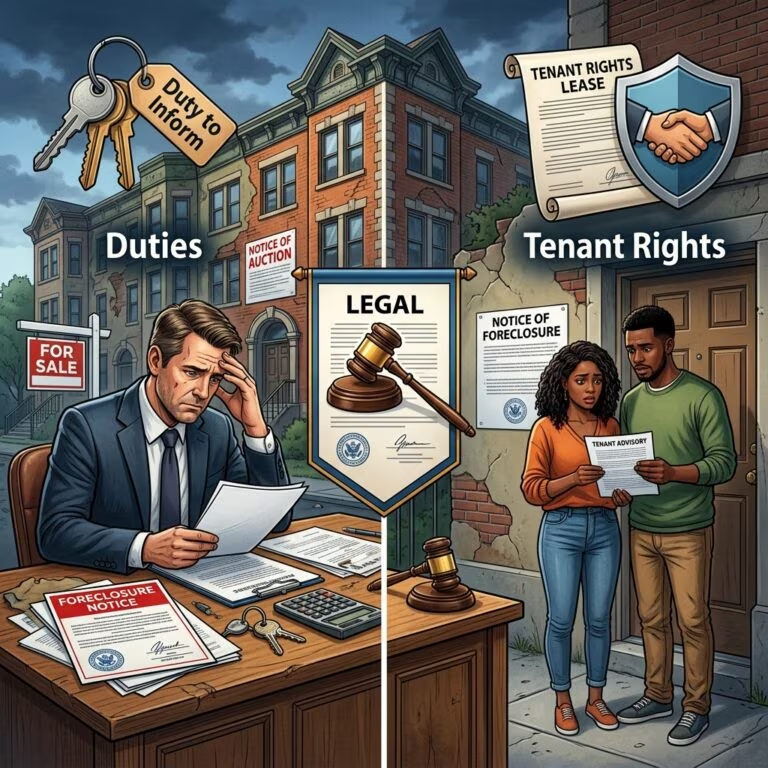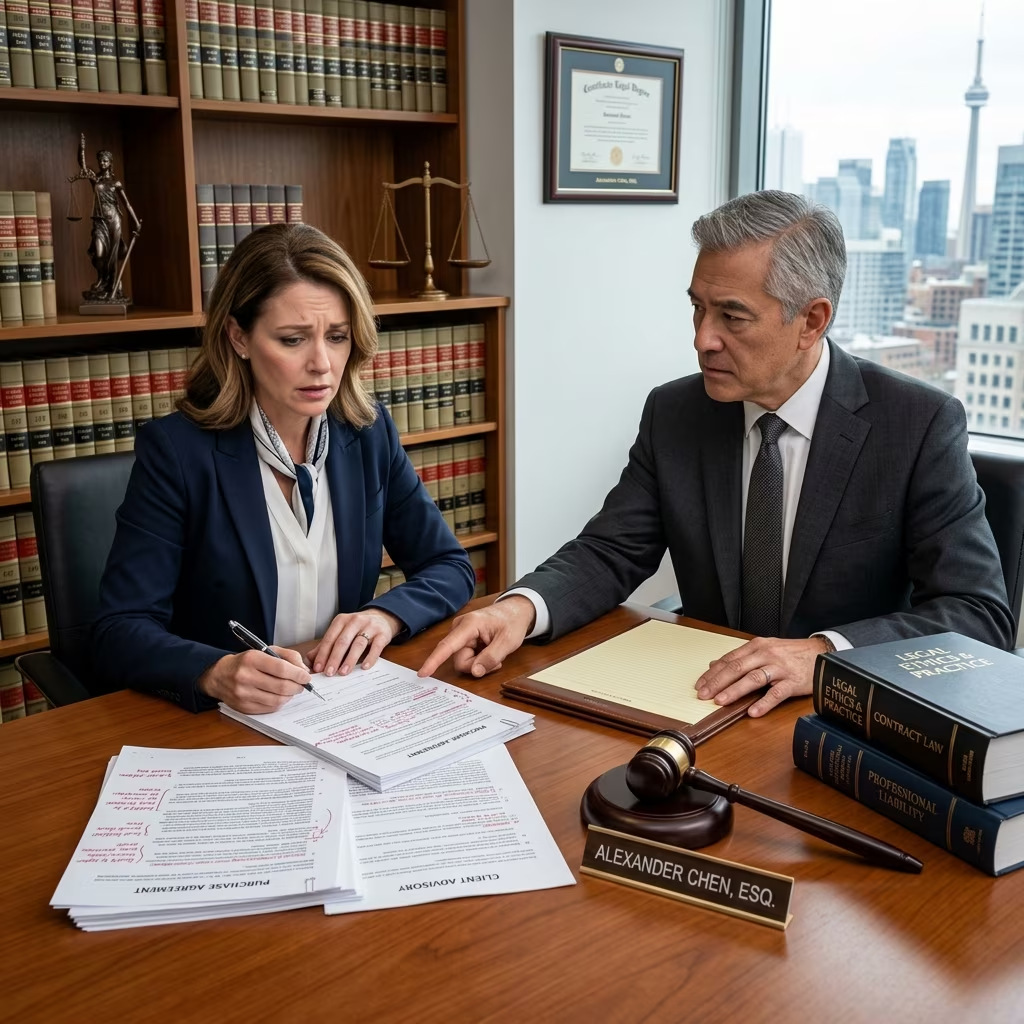
Real estate transactions are filled with contracts, disclosures, and negotiations, all of which have important legal consequences. When a real estate agent moves from explaining transaction terms into interpreting law or drafting complex legal documents, they risk engaging in the unauthorized practice of law (UPL), which can lead to disciplinary action, civil liability, and even criminal penalties in some jurisdictions. Understanding where the line is drawn—and how to stay on the safe side—is essential for every broker and agent.
What Is the Unauthorized Practice of Law in Real Estate?
Most states prohibit any person who is not licensed as an attorney from performing tasks that are considered the practice of law. While the exact definition varies by jurisdiction, common elements appear across state statutes and court decisions.
In the real estate context, unauthorized practice of law generally includes activities such as:
- Giving legal advice or interpreting how laws apply to a client’s specific situation
- Drafting or substantially modifying legal instruments affecting property rights
- Negotiating legal terms that require specialized legal knowledge
- Representing clients in legal forums or quasi-legal proceedings
According to state regulators, the boundary exists because legal matters require specialized training, licensure, and ethical oversight, and clients must be protected from mistaken or unreliable advice.
Typical Real Estate Tasks vs. Legal Work
Real estate professionals are expected to guide clients through the business aspects of buying, selling, or leasing property. Problems arise when routine assistance morphs into legal representation. The table below contrasts generally permissible tasks with higher-risk activities that may constitute UPL.
| Permissible Real Estate Activities | Activities That May Be UPL |
|---|---|
| Explaining the basic terms of a standard purchase agreement provided by the brokerage or association | Drafting custom contract clauses or addenda that alter legal rights beyond pre-approved forms |
| Assisting clients in filling in blanks on approved forms (names, price, closing date) | Preparing deeds, mortgages, leases, or other instruments affecting real estate for a fee when not an attorney |
| Negotiating price, occupancy date, or non-legal business terms between buyer and seller | Advising parties about legal rights, remedies, or interpreting statutes and case law |
| Encouraging parties to consult with their own attorneys regarding legal questions | Discouraging or substituting for legal counsel, or holding oneself out as a legal expert |
Courts and regulators often allow real estate agents to use standard forms and explain their business implications, but they draw the line at customized drafting or legal analysis.
Why States Strictly Regulate UPL
UPL rules serve several public policy goals:
- Consumer protection: Clients may assume that any professional discussing legal documents has adequate legal training. UPL rules ensure only licensed attorneys provide legal advice.
- Quality and accountability: Attorneys are subject to rigorous education, bar exams, ongoing ethics obligations, and discipline by state bars, providing a reliable framework for legal services.
- Integrity of the legal system: Allowing untrained individuals to perform legal tasks risks confusion, invalid contracts, and increased litigation.
For these reasons, state law often treats unauthorized practice not just as a regulatory violation but, in some instances, as a misdemeanor offense.
Common Scenarios Where Agents Risk UPL Liability
Real estate agents frequently encounter situations that appear routine but have significant legal dimensions. The following scenarios highlight where the boundary can be crossed.
Drafting or Modifying Legal Instruments
Several states specifically restrict non-attorneys from drafting deeds, mortgages, leases, or other instruments affecting real estate for compensation. In many jurisdictions, real estate professionals may only:
- Use fill-in-the-blank standard forms approved by the state commission or local real estate association
- Assist clients in completing factual information within those forms
- Prepare documents only as an incidental part of a transaction and not charge a separate fee for drafting
When an agent writes new contract provisions, alters legal obligations, or prepares complex instruments outside standard templates, courts have treated those acts as practicing law.
Giving Legal Advice on Rights and Remedies
Another common source of liability is advising clients about legal rights or potential court outcomes. Examples include:
- Predicting whether a contingency clause will be enforceable in court
- Advising on what damages a party might recover if the other side breaches
- Interpreting the legal effect of title defects or restrictive covenants
Professional organizations, such as national REALTOR® associations, emphasize that agents must avoid offering legal opinions and instead refer clients to qualified attorneys.
Representation in Legal or Quasi-Legal Forums
In some jurisdictions, appearing before certain tribunals or assisting in formal dispute resolution processes may be treated as legal practice. Risky situations include:
- Representing a client in mediation or arbitration when legal rights are being adjudicated
- Drafting settlement agreements that release claims or waive rights
- Preparing or filing documents in court on behalf of a client
Agents who step into these roles may face not only regulatory discipline but also claims that they engaged in UPL and caused harm.
Types of Liability and Penalties for UPL
Engaging in unauthorized practice of law can expose real estate agents and brokers to several types of liability:
Disciplinary Action by Real Estate Regulators
State licensing agencies often treat UPL as a serious violation of professional standards. For example, regulatory memoranda have long recognized that unlawful practice of law by brokers and salespersons is grounds for disciplinary action, which may include license suspension or revocation.[10]
Civil Lawsuits by Clients
Clients who believe they were harmed by an agent’s unauthorized legal advice or document drafting may sue for negligence, breach of fiduciary duty, or misrepresentation. Civil claims may allege that:
- The agent went beyond their licensed role and gave faulty legal guidance
- Improper drafting of a contract or deed led to financial loss or litigation
- The agent failed to advise the client to seek independent counsel when legal issues were apparent
Even when an agent acted with good intentions, courts can still impose liability if a reasonable professional should have known to defer to an attorney.
Criminal Consequences
In some states, UPL is a criminal offense. For instance, New York law treats unauthorized preparation of real estate instruments for compensation by a non-attorney as a misdemeanor. Similar statutes exist in other jurisdictions, reflecting how seriously legislatures view protection of legal services.
Safe Practices to Avoid Unauthorized Practice of Law
Real estate professionals can significantly reduce their risk of UPL liability by implementing practical safeguards in their daily work.
1. Understand the Limits of Your License
Agents and brokers should be thoroughly familiar with the scope of their licensing statutes and regulations. Key steps include:
- Reviewing state real estate commission guidance on permitted activities and UPL concerns[10]
- Participating in continuing education courses that cover legal boundaries and professional ethics
- Establishing internal policies that clarify what tasks require attorney involvement
2. Use Only Approved Standard Forms
Many states and local associations provide pre-approved real estate contracts designed for use by non-attorney licensees. Best practices include:
- Relying on standardized purchase agreements, listing contracts, and addenda issued by commissions or realtor groups
- Limiting your role to filling in factual information and explaining business implications
- Avoiding custom clauses unless drafted or reviewed by an attorney
Some regulatory agencies recommend making any contract prepared by a broker expressly subject to review and approval by each party’s attorney.
3. Refer Legal Questions to Qualified Attorneys
When clients raise legal questions—such as enforcing contingencies, resolving title defects, or interpreting complex covenants—agents should:
- Politely explain that they cannot provide legal advice
- Offer to connect the client with a trusted real estate attorney
- Encourage both sides in a transaction to seek independent counsel for significant legal issues
Maintaining relationships with local attorneys can improve client service while keeping agents within their lawful role.
4. Document Disclaimers and Referrals
Comprehensive documentation is a critical risk management tool. Recommended practices include:
- Including written disclaimers stating that any discussion of contract terms is not legal advice and that clients should consult an attorney
- Recording when and how clients are referred to lawyers, including email confirmations or notes in the file
- Retaining records of all communications involving legal questions or disputes
These records may later show that the agent respected UPL boundaries and encouraged clients to seek proper legal guidance.
5. Avoid Legal Opinions, Even Informal Ones
Offhand comments such as “This clause will hold up in court” or “You don’t need a lawyer for this” can be construed as legal advice. To avoid crossing the line:
- Use neutral language when describing contract provisions, focusing on factual and business aspects
- Decline to predict legal outcomes, remedies, or court interpretations
- Repeat the message that legal questions must be answered by attorneys
6. Train Teams and Supervise New Agents
Brokers overseeing salespersons should ensure consistent compliance by:
- Providing regular training on UPL risks and professional boundaries
- Reviewing marketing materials, emails, and form usage for potential legal language
- Encouraging a culture where agents are comfortable saying, “I can’t answer that—that’s a legal question.”
Best Practices Checklist for Real Estate Professionals
The following checklist can help agents quickly assess whether they are staying within their authorized role:
- Are you using only approved standard real estate forms?
- Have you avoided drafting or modifying legal clauses on your own?
- Do you refrain from predicting court outcomes or interpreting statutes?
- Do you regularly refer clients to attorneys for legal questions?
- Are your communications documented with clear disclaimers about legal advice?
- Does your brokerage provide ongoing training on UPL and legal boundaries?
If the answer to any of these questions is “no,” additional safeguards may be needed to manage UPL risk.
FAQs: Unauthorized Practice of Law and Real Estate Agents
Can I explain contract language to my client?
You may generally explain the business meaning of standard form clauses—such as how a financing contingency affects the closing timeline—but you should avoid offering legal interpretations or predicting enforceability in court. When in doubt, advise clients to ask an attorney.
Is it permissible to add a custom clause requested by my client?
Adding custom language can be risky because it may alter legal rights and obligations. In many jurisdictions, non-attorneys should not draft new legal provisions. A safer approach is to have an attorney prepare or review any custom clause before it is included.
What if my client refuses to hire a lawyer?
You cannot force clients to retain counsel, but you should clearly document that you recommended attorney involvement and declined to give legal advice. Written disclaimers and email confirmations can help show you respected UPL boundaries.
Can real estate agents be criminally charged for UPL?
Yes, in some states unauthorized practice of law is a misdemeanor offense, especially where statutes specifically prohibit non-attorneys from preparing real estate instruments for compensation. Beyond criminal exposure, regulators may impose discipline, and clients may sue civilly.
Do professional codes of ethics address UPL?
Major real estate organizations treat UPL as a serious ethical issue. For example, professional codes often require members to avoid unauthorized practice and to recommend clients seek legal counsel when issues arise. Violations can lead to ethics complaints and sanctions.
References
- Legal Memorandum LI04: Real Estate Brokers and Salespersons and Unauthorized Practice of Law — New York State Department of State. 2001-01-01. https://dos.ny.gov/legal-memorandum-li04-real-estate-brokers-and-salespersons-and-unauthorized-practice-law
- Can Realtors Be Liable for the Unauthorized Practice of Law? — Curley & Rothman LLC. 2025-04-30. https://www.curleyrothman.com/blog/2025/4/30/can-realtors-be-liable-for-the-unauthorized-practice-of-law
- RE Agents: Unauthorized Practice of Law — Avenue Legal Group. 2023-08-01. https://avenuelegalgroup.com/re-agents-unauthorized-practice-of-law/
- What Constitutes the “Unauthorized Practice of Law”? — National Association of REALTORS®. 2015-06-01. https://www.nar.realtor/news/real-estate-news/law-and-ethics/what-constitutes-the-unauthorized-practice-of-law
- Understanding the Unauthorized Practice of Law for Realtors: A Guide for Compliance — Federal Title & Escrow Company. 2022-10-15. https://www.federaltitle.com/understanding-the-unauthorized-practice-of-law-for-realtors-a-guide-for-compliance/
- Unauthorized Practice of Law by Realtors and Title Insurance Companies — Kentucky Law Journal. 1964-01-01. https://uknowledge.uky.edu/cgi/viewcontent.cgi?article=3219&context=klj
- The Unauthorized Practice of Law and The Problem of Multiple Client Loyalties — Arkansas Real Estate Commission. 2019-05-01. https://arec.arkansas.gov/news_post/the-unauthorized-practice-of-law-and-the-problem-of-multiple-client-loyalties/