
How Legal Jargon Can Damage Your Courtroom Success
Discover why excessive legal jargon undermines cases, alienates audiences, and erodes credibility in court and client interactions.
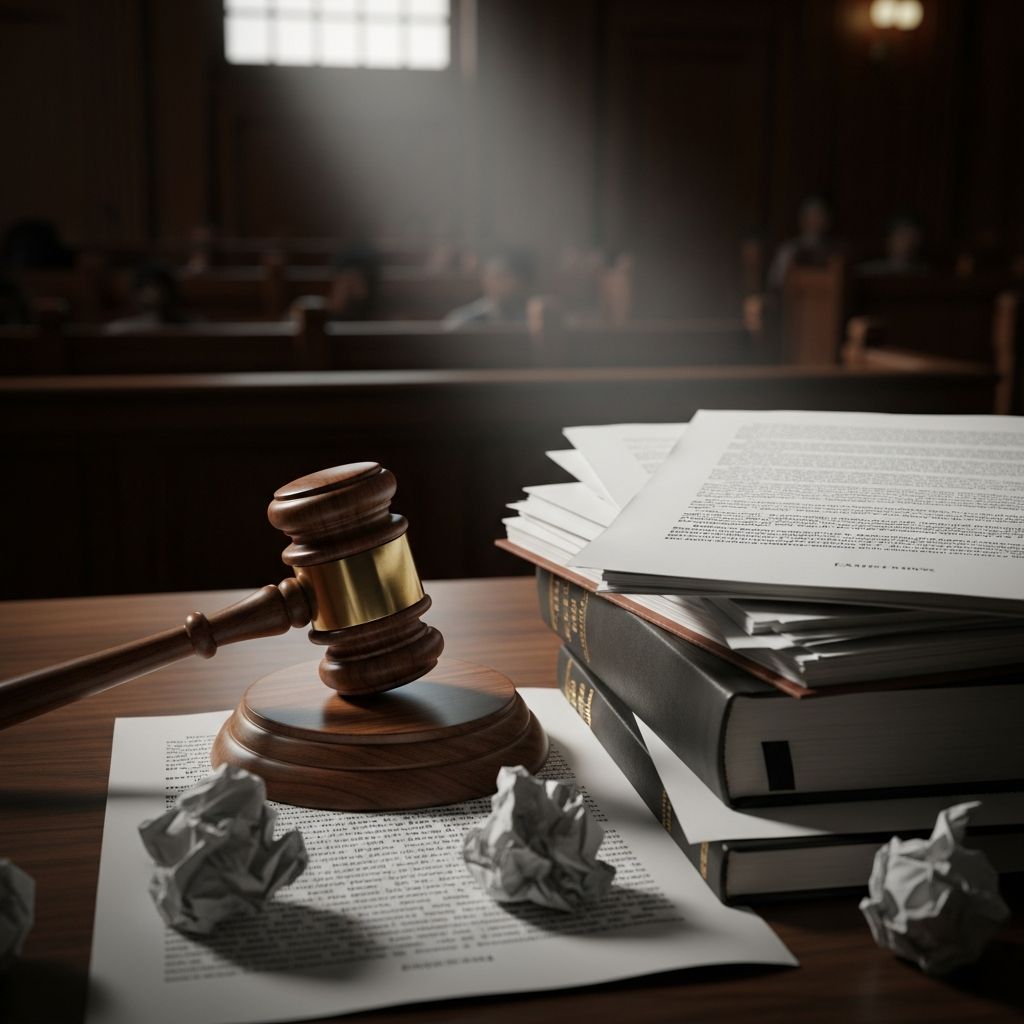
Clear communication forms the foundation of effective legal practice. Yet, many attorneys and litigants unwittingly sabotage their efforts by relying on dense legal jargon. This specialized vocabulary, while precise among experts, often confuses judges, juries, and clients, diminishing the strength of arguments and eroding trust. In high-stakes courtroom settings, where every word counts, opting for plain language can mean the difference between victory and defeat.
Judges frequently express frustration with convoluted phrasing that obscures key facts. Juries, drawn from diverse backgrounds, struggle to follow arguments laden with archaic terms. Clients, already anxious, feel alienated when explanations drown in legalese. This article delves into the pitfalls of jargon overuse, provides real-world examples, and offers actionable strategies for clearer expression to enhance case outcomes.
The Hidden Costs of Overusing Legal Terminology
Legal jargon, or legalese, evolved as a shorthand for professionals but carries significant risks in broader contexts. When attorneys deploy terms like “hereinbefore,” “aforementioned,” or “pursuant to,” they risk alienating non-experts. Studies show that 92% of clients prioritize understandable explanations from lawyers, underscoring how jargon erodes relationships and comprehension.
In court, jargon can mask weak arguments or appear as an attempt to intimidate. Judges may view it as obfuscation, leading to skepticism about the underlying claims. Juries, lacking legal training, tune out or misinterpret complex language, potentially swaying verdicts against the jargon-heavy side. Beyond the courtroom, client communications riddled with insider terms foster misunderstandings, increasing errors in instructions and expectations.
- Credibility Loss: Jargon signals elitism, making speakers seem out of touch.
- Comprehension Barriers: Non-lawyers process plain words 20-30% faster.
- Strategic Disadvantages: Opponents using simple language appear more relatable.
These costs compound in family law, civil disputes, and criminal trials, where emotional stakes amplify the need for clarity.
Common Jargon Traps That Undermine Arguments
Certain phrases recur in legal writing and speech, inviting pitfalls. Consider clinical labels like PTSD, OCD, or narcissism. Without expert backing, these sound like amateur diagnoses or personal attacks, distracting from factual evidence. Courts dismiss such terms as unsubstantiated, urging focus on observable behaviors instead.
Trendy terms like “gaslighting” fare no better. Popularized online, they lack legal precision and evoke emotional rather than evidentiary responses. Judges prioritize concrete descriptions—e.g., “repeatedly denied agreed facts”—over buzzwords that invite scrutiny.
Traditional legalese compounds issues. Words like “said,” “such,” and “as such” replace simple pronouns, creating ambiguity. For instance, “such property” might refer to a specific item or a category, confusing readers. Bryan Garner notes this archaic style in Garner’s Modern English Usage, advocating elimination for clarity.
| Jargon Phrase | Problem | Plain Alternative |
|---|---|---|
| Said property | Ambiguous reference | That property |
| Hereinafter | Archaic and stuffy | Below or later |
| Pursuant to | Overly formal | Under or according to |
| In the affirmative | Wordy | Yes |
| As such | Vague connector | Therefore |
This table highlights swaps that streamline communication without losing meaning. Avoiding these elevates persuasive power.
Why Juries and Judges Reject Jargon-Heavy Presentations
Juries represent everyday citizens, not legal scholars. When barraged with terms like “mens rea” without explanation (beyond essentials), they disengage. Research from judicial surveys reveals preferences for plain English, as it aids fair deliberations. Complicated language prolongs trials, frustrating everyone involved.
Judges, steeped in caselaw, still demand accessibility. Appellate courts overturn rulings tainted by incomprehensible briefs. In client-facing scenarios, jargon breeds distrust; one survey found clients perceiving jargon users as arrogant, harming retention.
Insurance contexts illustrate risks: staff using acronyms like BLO (Branch Legal Office) or BCM (Branch Claims Manager) confuse non-experts, halting settlements. Plain explanations expedite resolutions.
Strategies for Mastering Plain Legal Language
Transitioning to clear writing requires discipline. Start by defining terms on first use, then substitute. Replace “utilize” with “use,” “interface” with “meet.” Purge redundancies like “for the foregoing reasons” to “for these reasons.”
- Audience Analysis: Tailor language to listeners—juries get basics, experts get nuance.
- Active Voice: “The defendant breached the contract” beats passive jargon.
- Short Sentences: Aim for 20 words max per sentence.
- Daily Practice: Rewrite dockets in plain English.
- Feedback Loops: Share drafts with non-lawyers for comprehension checks.
Businesses adopting plain language cut costs via better compliance; law firms see similar gains in efficiency and wins.
Case Studies: Jargon Backfires in Real Trials
In a family court dispute, a parent labeled the other “narcissistic” without evidence. The judge rebuked it as inflammatory, shifting focus from custody facts and weakening the claim. Contrastingly, a civil suit using simple narratives secured a favorable jury verdict, crediting relatable storytelling.
Appellate briefs with legalese like “the above-captioned matter” faced reversals for opacity. Rewrites in plain terms succeeded on remand. These examples affirm: clarity persuades.
Building Client Trust Through Accessible Communication
Clients hire lawyers for translation, not immersion in jargon. Emails, consultations, and websites cluttered with legalese deter engagement. Plain websites convert better, per legal marketing data. Explain concepts like “mens rea” as “guilty mind,” demystifying law.
Stressed clients appreciate step-by-step breakdowns. This fosters loyalty, referrals, and accurate instructions, reducing malpractice risks.
Frequently Asked Questions (FAQs)
What counts as harmful legal jargon?
Archaic phrases (e.g., “herein”), clinical terms without evidence (e.g., PTSD), and buzzwords (e.g., gaslighting) that confuse or inflame.
Can I ever use technical terms in court?
Yes, for terms of art like “plaintiff,” but define them and prioritize plain alternatives elsewhere.
How does jargon affect jury decisions?
It causes confusion, reducing retention of facts and making arguments seem weak or elitist.
What if my opponent uses jargon?
Highlight clarity in your responses; judges notice and favor accessible presentations.
Tools for improving plain legal writing?
Use style guides like Garner’s, readability checkers, and peer reviews from laypeople.
Conclusion: Embrace Clarity for Stronger Cases
Mastering plain language transforms legal practice. It builds credibility, aids understanding, and sharpens arguments. Ditch jargon; let facts shine through simple words. Your cases—and clients—will thrive.
References
- Buzzwords: Why Using them in Court Can Hurt your Case — WNC Law. Accessed 2026. https://www.wnclaw.com/asheville-divorce-blog/buzzwords-in-court
- To Jargon or Not to Jargon — Attorney at Work. Accessed 2026. https://www.attorneyatwork.com/to-jargon-or-not-to-jargon/
- Avoid Jargon and Legalese — Elegant Legal Writing by Ryan McCarl. Accessed 2026. https://www.elegantlegalwriting.com/p/avoid-jargon-and-legalese
- Why You Should Forgo the Legalese When Communicating with Clients — Thomson Reuters Legal Blog. 2018. https://legal.thomsonreuters.com/blog/why-you-should-forgo-the-legalese-when-communicating-with-clients/
- For the Sake of Writing in Plain English — San Francisco Bar Association Blog. Accessed 2026. https://www.sfbar.org/blog/for-the-sake-of-writing-in-plain-english-at-the-very-least-banish-these-words-and-phrases/
- Demystifying Legal Jargon: A Plain Language Guide for Clients — LDM Global. 2023-10-27. https://www.ldmglobal.com/2023/10/27/legal-jargon/
Similar Articles








Read full bio of Sneha Tete




