
Hotel Entry Rights: Do ‘Do Not Disturb’ Signs Guarantee Privacy?
Uncover the truth about 'Do Not Disturb' signs: Do they legally block hotel staff entry, or can hotels enter for safety checks?
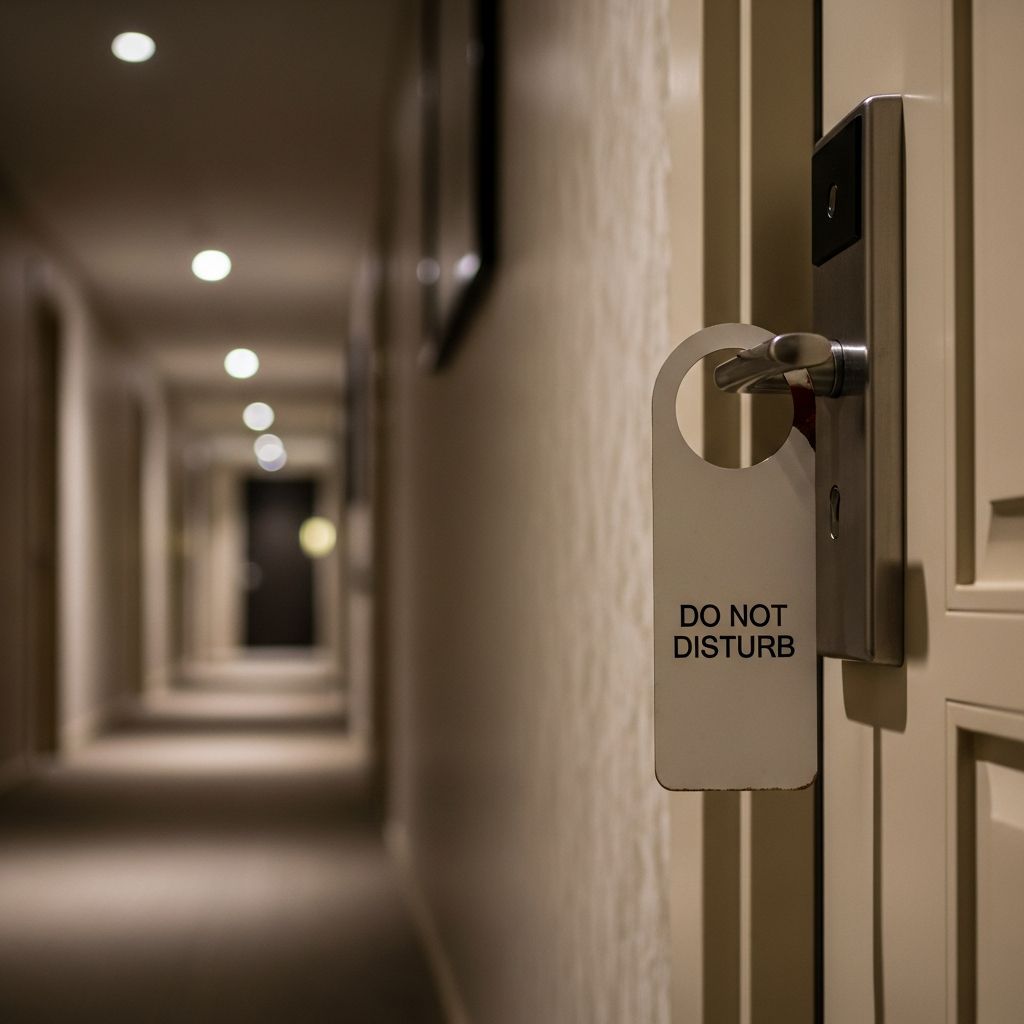
Travelers often hang ‘Do Not Disturb’ (DND) signs expecting absolute privacy in their hotel rooms, but these signs do not provide ironclad legal protection against entry by staff. Hotels balance guest privacy with responsibilities for safety, security, and property maintenance, allowing entry under specific conditions after reasonable notice.
The Purpose and Limitations of ‘Do Not Disturb’ Signs
These simple door hangers signal housekeeping to skip cleaning and respect guest downtime, primarily deterring routine interruptions. However, they lack legal enforceability to prevent all entries, serving more as a courtesy than a binding contract. Hotel policies typically outline that prolonged DND use triggers welfare checks to ensure no harm has occurred to occupants.
Guests enjoy a reasonable expectation of privacy in paid rooms until checkout, akin to temporary homes. Yet, this expectation is not absolute; hotels act as landlords with duties to protect all guests and staff. Ignoring a DND indefinitely could signal distress, prompting intervention.
Legal Framework Governing Hotel Room Privacy
Under the Fourth Amendment, hotel rooms qualify as protected spaces against unreasonable searches, extending constitutional safeguards to temporary lodgings. Courts assess privacy expectations based on subjective beliefs and societal norms. A DND sign contributes to this expectation but insufficiently blocks hotel-authorized entries for legitimate reasons.
In cases like United States v. Lanier, post-checkout discoveries invalidated privacy claims, affirming hotels’ rights to inspect after occupancy ends. For active guests, staff should avoid self-investigation of suspected crimes, instead notifying authorities to preserve evidence admissibility.
Evolution of Hotel Policies Post-Safety Incidents
High-profile events, including the 2017 Las Vegas shooting, spurred policy shifts. Chains recognized risks of unchecked rooms hiding dangers, leading to standardized wellness protocols. These changes prioritize collective safety without wholly eliminating privacy.
- Daily Visual Checks: Many properties now mandate room inspections every 24 hours, regardless of signage.
- Manager Escalation: Extended DND periods alert supervisors for non-intrusive welfare assessments.
- Knock and Announce: Staff must still attempt contact before entering, respecting basic courtesy.
Major Chains’ Specific ‘Do Not Disturb’ Protocols
Leading hotel groups have formalized responses to DND signs, blending privacy respect with proactive safety measures.
| Hotel Chain | DND Policy Summary | Entry Trigger | Procedure |
|---|---|---|---|
| Walt Disney World Resorts | Replaced DND with ‘Room Occupied’; reserves entry rights for safety/maintenance. | Anytime for security. | Knock first, then visual check. |
| Hilton | 24-hour limit; management checks if sign persists. | After 24 hours. | Visual inspection by manager; clock starts on first notice. |
| Wynn Resorts | Entry after 12 consecutive hours. | 12 hours. | Staff entry for welfare. |
These policies reflect industry consensus: privacy yields to imminent risks. Hilton’s VP emphasized timely alerts to prevent oversights.
Common Scenarios Where Hotels Override DND Signs
Beyond policy, real-world triggers include noise complaints, maintenance emergencies, or suspicious inactivity. For instance, prolonged silence might prompt a knock-check to rule out medical emergencies or self-harm.
Housekeeping errors, like inadequate training, sometimes lead to inadvertent violations, eroding trust. Guests report relentless knocking despite signs, often due to cleanliness obsessions over guest signals.
- Wellness Concerns: Hotels monitor for guest vulnerability, entering if unresponsive after knocks.
- Security Threats: Post-incident protocols allow sweeps for hidden dangers.
- Property Protection: Unattended leaks or damages justify immediate access.
Guest Rights and Recourse for Unauthorized Entries
If staff enters improperly, guests can demand compensation, file complaints, or pursue legal action for privacy invasion. Successful claims hinge on proving unreasonable intrusion without justification. Many properties offer refunds or upgrades as goodwill gestures.
To safeguard rights:
- Review hotel policy at check-in.
- Use electronic DND systems where available for logged requests.
- Communicate preferences clearly with front desk.
- Document violations with timestamps and photos.
Industry Trends: Toward Opt-Out Cleaning and Digital Alternatives
Modern hotels experiment with ‘opt-in’ housekeeping, reducing daily entries by default. Apps and keycard systems enable virtual DND toggles, tracking requests digitally for accountability. Some predict physical signs’ obsolescence as sustainability drives less frequent servicing.
Wheelchair-accessible properties pioneered stricter visual check mandates, ensuring inclusivity in safety protocols.
International Perspectives on Hotel Privacy
While U.S. policies emphasize safety post-tragedies, European hotels often honor DND longer, prioritizing privacy under GDPR-like data protections. Asian chains vary, with luxury brands adopting hybrid wellness checks. Travelers should research destination norms.
Frequently Asked Questions (FAQs)
Can a hotel legally enter my room with a DND sign?
Yes, after reasonable notice for safety, maintenance, or security, per most policies and law. Absolute privacy ends at policy limits like 24 hours.
What happens if staff ignores my DND sign?
Report to management; potential compensation if unwarranted. Hotels risk evidence suppression in legal matters.
Do all hotels have the same DND rules?
No, chains like Hilton (24 hours) differ from Wynn (12 hours). Always check property-specific guidelines.
Is a DND sign like a legal ‘no trespassing’?
No, it’s a service request, not a constitutional barrier. Courts uphold hotel entry duties.
What if I need total privacy for days?
Inform the front desk; some allow extensions but may require welfare confirmation.
Practical Tips for Maximizing Hotel Privacy
Enhance seclusion without conflict:
- Choose Extended-Stay Properties: Geared for minimal disturbances.
- Leverage Loyalty Perks: VIP status often grants ‘no service’ preferences.
- Airbnb Alternatives: Full apartments offer unchecked privacy.
- Room Selection: Corner units reduce neighbor/staff traffic.
Communicate via note or call: ‘Privacy requested until [time]; contact if urgent.’ This sets expectations proactively.
Balancing Privacy, Safety, and Hospitality Standards
The DND debate underscores tensions between individual rights and communal welfare. Hotels evolve policies responsively, informed by tragedies and feedback. Guests benefit from informed expectations, avoiding surprises during stays.
Ultimately, while DND signs deter routine service, they defer to hotels’ overriding duty of care. Understanding this dynamic empowers better travel decisions.
References
- Hotels Change Policy on ‘Do Not Disturb’ Signs — Wheelchair Travel. 2018-10-15. https://wheelchairtravel.org/hotels-change-policy-not-disturb-signs/
- The rules behind do not disturb signs — My Door Sign. 2023-05-20. https://www.mydoorsign.com/blog/do-not-disturb-rules/
- 21 Most Disturbing Violations of the Hotel ‘Do Not Disturb’ Policy — Pipeaway. 2023-03-10. https://www.pipeaway.com/hotel-do-not-disturb-policy/
- The Truth About Do Not Disturb Signs | Hotel Worker Explains — YouTube (Hotel Worker). 2022-11-12. https://www.youtube.com/watch?v=7AKbDoDdjjc
- How Much Longer Until “Do Not Disturb” Signs Are Gone From Hotel Rooms? — Eye of the Flyer. 2023-08-14. https://eyeoftheflyer.com/2023/08/14/how-much-longer-until-do-not-disturb-signs-are-gone-from-hotel-rooms/
Similar Articles








Read full bio of Sneha Tete




