
Home Searches on Probation: Know Your Rights
Understand when probation or parole allows warrantless home searches and how to protect your limited privacy rights effectively.
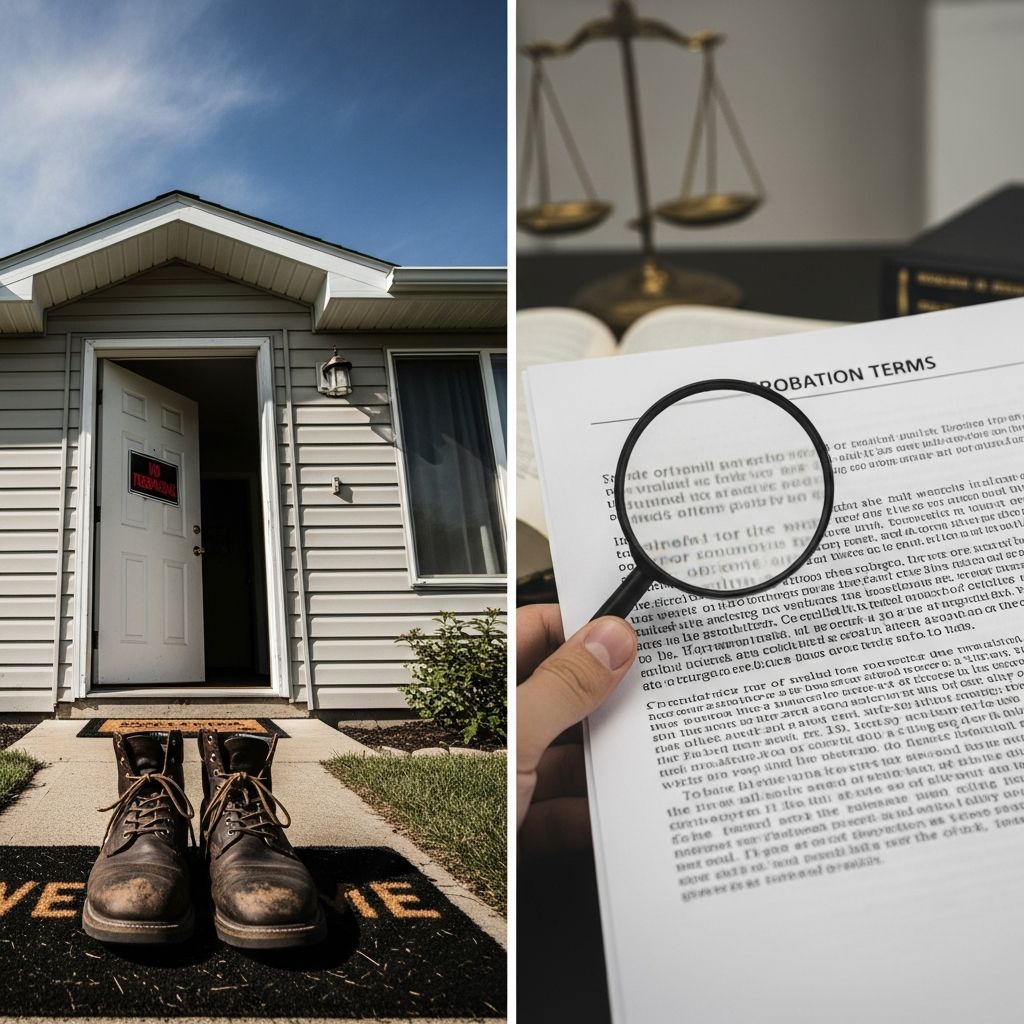
Individuals serving probation or parole often face heightened supervision, including the possibility of unannounced home searches without warrants. These conditions stem from agreements made post-conviction, balancing public safety with rehabilitative oversight. While the Fourth Amendment protects against unreasonable searches, probationary status typically waives some protections to ensure compliance.
Understanding Probation and Parole Supervision Basics
Probation allows offenders to avoid incarceration by adhering to court-imposed rules under officer monitoring. Parole releases prisoners early under similar supervised conditions. Both frameworks prioritize community reintegration but include invasive checks like home visits to verify rule adherence, such as abstaining from drugs or associating with certain individuals.
Key differences include: probation as a sentencing alternative versus parole as post-prison release. Yet, search provisions remain comparable across jurisdictions, rooted in U.S. Supreme Court precedents like Griffin v. Wisconsin (1987), which upheld warrantless searches by probation officers for reasonable suspicion.
Legal Foundation for Warrantless Home Entries
The cornerstone is the probation or parole contract, where individuals consent to searches as a privilege of supervised release. Courts view this as a valid waiver, reducing the need for warrants or probable cause in many cases. For instance, felony probation often mandates ‘search and seizure’ clauses, suspending standard privacy expectations.
Under California Department of Corrections and Rehabilitation (CDCR) guidelines, parolees relinquish rights to privacy in their person, residence, or property, permitting searches anytime by authorized officers without cause. This ‘anytime, anywhere’ authority underscores the diminished expectations during supervision.
Who Can Conduct These Searches?
- Probation Officers: Primary supervisors perform routine or suspicion-based visits, authorized by probation terms.
- Parole Agents: Similar role for parolees, often with law enforcement coordination.
- Police Officers: May join if probable cause exists or under probationer-specific exceptions, but generally require warrants for non-supervised individuals.
Informal probation (summary probation) might retain fuller Fourth Amendment rights, lacking formal officer oversight. Always review your specific order for clauses like ‘submit to search by any peace officer.’
Boundaries of Allowable Searches
Searches are not boundless. Officers target areas under the supervisee’s control: bedrooms, personal vehicles, and shared spaces like kitchens or living rooms. Private zones of cohabitants—such as a roommate’s locked room—remain off-limits absent separate consent or warrants.
| Search Area | Typically Allowed? | Conditions/Limits |
|---|---|---|
| Supervisee’s Bedroom | Yes | Full access without warrant. |
| Shared Kitchen/Bathroom | Yes | Common areas accessible to supervisee. |
| Roommate’s Private Room | No | Requires warrant or roommate consent. |
| Personal Vehicle | Yes, if used by supervisee | On or off property. |
| Cell Phone/Electronics | Possibly | If stipulated in conditions. |
These limits prevent overreach, as affirmed in cases emphasizing ‘reasonable’ scope tied to supervision needs.
Your Limited Privacy Rights During Supervision
While waived broadly, rights persist: searches must relate to probation goals, not harassment. Excessive or unrelated intrusions could violate due process. Officers need no prior notice for visits, enabling surprise checks. Arrests follow if violations like contraband are found.
For shared residences, cohabitants retain protections. If police accompany probation officers, their actions must align with the exception; otherwise, evidence might be suppressed in court.
Real-World Examples of Home Searches
Consider a supervisee whose officer discovers drugs during a routine visit, leading to revocation proceedings. In another scenario, a probationer in a shared apartment sees only common areas inspected, preserving housemate privacy. These illustrate practical application: compliance minimizes risks, while violations trigger swift consequences.
Parolees face even stricter regimes; CDCR agents can seize property anytime, day or night, underscoring minimal protections.
Strategies to Minimize Search Risks
- Review Conditions Thoroughstrongly: Understand exact search clauses upon sentencing.
- Maintain Compliance: Avoid prohibited items or associations to reduce visit frequency.
- Document Interactions: Note dates, reasons, and officers involved for potential challenges.
- Seek Legal Advice: Consult attorneys if searches seem improper.
- Communicate with Housemates: Inform them of potential visits to manage expectations.
Challenging Improper Searches in Court
If boundaries are crossed—e.g., searching unrelated areas—motion to suppress evidence. Success hinges on proving no valid waiver or unreasonable conduct. Appellate courts scrutinize, as in United States v. King, refining probable cause standards for parole searches. Formal probationers have stronger grounds than informal ones.
Frequently Asked Questions (FAQs)
Can police enter my home if a roommate is on probation?
Police may enter common areas with the probationer’s officer but need warrants for your private spaces unless you consent.
Do probation officers need reasonable suspicion for searches?
Often no; terms allow suspicionless checks, unlike general public standards.
What if I refuse a search?
Refusal typically violates conditions, risking revocation, arrest, or new charges.
Can searches include my phone or car?
Yes, if conditions specify and items are under your control.
How often do home visits occur?
Varies by risk level: high-risk cases see frequent, unannounced visits.
Does this apply nationwide?
Generally yes, but state laws vary; check local statutes.
Navigating Life Under Supervision Successfully
Success demands proactive compliance: regular officer meetings, clean living environments, and legal awareness. Many complete terms without incident by treating supervision as a structured path to freedom. Resources like public defenders aid in disputes.
Ultimately, while privacy is curtailed, informed navigation preserves dignity and accelerates release. Stay vigilant, document everything, and prioritize rehabilitation.
References
- Can my home be searched without a search warrant while I’m on parole or probation? — FreeAdvice.com. 2023. https://www.freeadvice.com/legal/can-my-home-be-searched-without-a-search-warrant-while-im-on-parole-or-probation/
- Can the police search my house and the vehicles on my property if someone on probation lives with me? — Avvo Legal Answers. 2014-10-20. https://www.avvo.com/legal-answers/can-the-police-search-my-house-and-the-vehicles-on-5585714.html
- When Can Your Home Be Searched When You Are on Probation? — Chambers Law Firm. 2023. https://www.chamberslawfirmca.com/when-can-your-home-be-searched-when-you-are-on-probation/
- What are my rights to privacy of person, residence, or property while on parole? — Root & Rebound Roadmap. 2024. https://roadmap.rootandrebound.org/parole-probation/state-parole/conditions-of-state-parole/all-people-on-parole-little-protection-against-sea/what-are-my-rights-to-privacy-of-person-residence-/
- How Do Probation Searches of Your Home Work? — Wallin & Klarich. 2023. https://www.wklaw.com/how-do-probation-searches-of-your-home-work/
Similar Articles








Read full bio of Sneha Tete




