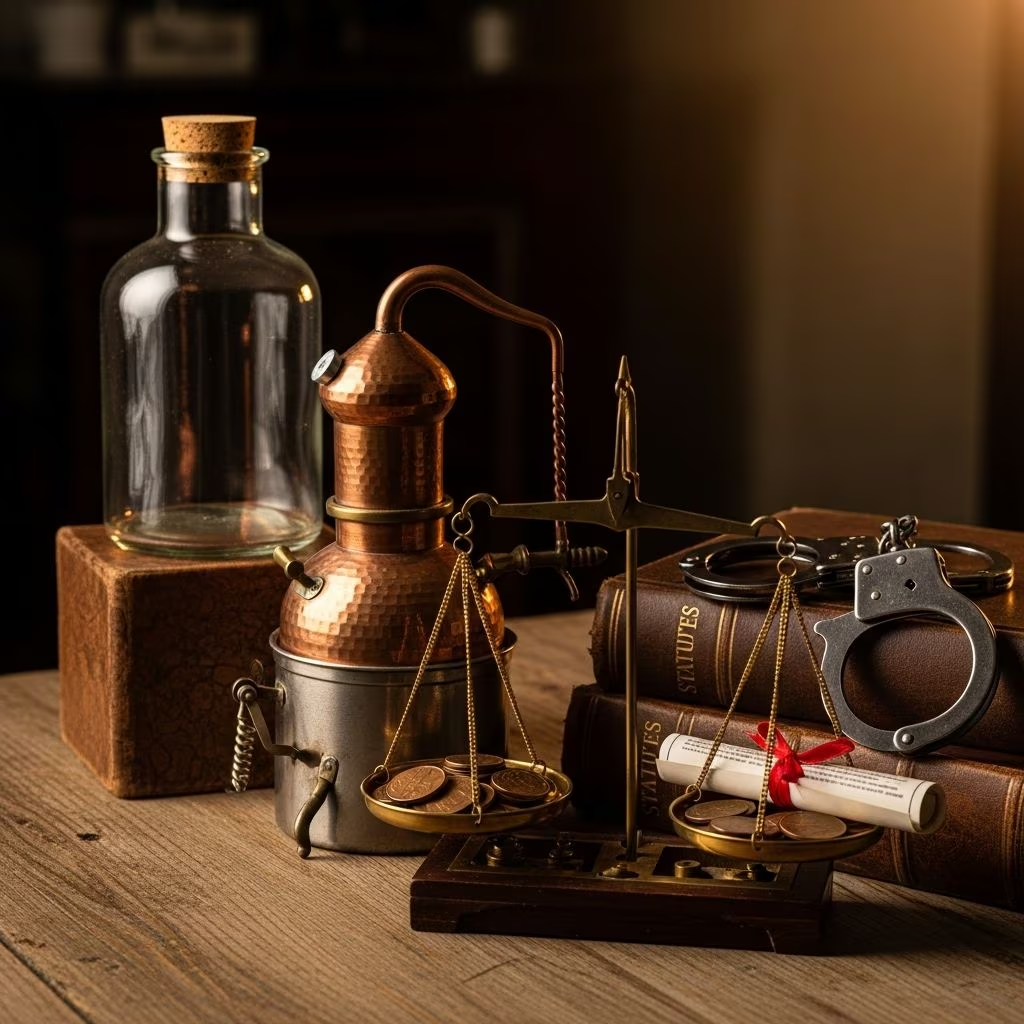
Distilling alcohol at home remains a federal felony in the United States, carrying potential prison time and hefty fines, despite permissions for brewing beer and wine. This prohibition stems from tax enforcement and safety considerations, though recent court decisions have begun to question its constitutionality.
Core Federal Prohibition on Home Distillation
The backbone of U.S. alcohol regulation is found in the Federal Alcohol Administration Act and related statutes enforced by the Alcohol and Tobacco Tax and Trade Bureau (TTB). Producing distilled spirits outside a permitted facility is illegal for individuals, regardless of intent to sell or consume personally.
Key reasons include preventing revenue loss from untaxed spirits and mitigating dangers like methanol production during improper distillation. Home setups often lack the professional controls of commercial plants, raising risks of explosions or toxic brews.
Severe Penalties Under Federal Law
Violators face felony charges with punishments including up to **5 years imprisonment** and fines reaching **$10,000** per offense. Additional consequences involve forfeiture of equipment, vehicles used in transport, and even property where distillation occurred.
- Incarceration: Maximum 5 years for producing spirits without a distilled spirits plant permit.
- Monetary Fines: Up to $10,000, scalable with offense severity or repeat violations.
- Asset Seizure: Stills, raw materials, finished product, and related property can be confiscated.
- Probation and Supervision: Post-release monitoring for serious cases.
These penalties apply even for small-scale personal use, distinguishing distillation from legal home fermentation of beer or wine, which faces no such federal bans.
State-Level Variations and Enforcement
While federal law sets the strictest bar, states add their own layers. Most mirror or amplify federal prohibitions, treating home distilling as a misdemeanor or felony depending on quantity and circumstances.
| State/Jurisdiction | Typical Penalty | Notes |
|---|---|---|
| Ohio | Felony: Up to 5 years prison, $10,000 fine | Matches federal; active lawsuits challenging bans. |
| Texas | Felony penalties align with federal | Site of 2024 ruling against federal ban. |
| Norway (Intl. Example) | Up to 6 months for possession; 2 years for production | Mandatory prison for sales; rare for small amounts. |
| EU Generally | Illegal but rarely enforced | No convictions documented for personal use. |
In Ohio, cases like a Granville brewer’s challenge highlight enforcement realities, where even prepared hobbyists risk prosecution without permits. States without specific statutes defer to federal rules.
Historical Roots of the Distilling Ban
The prohibition traces to the post-Prohibition era, when Congress sought to centralize tax collection after repeal. The 1935 laws required distilled spirits plants for any production, imposing occupational taxes to track output.
Prior to this, home distilling was common, especially in rural areas producing moonshine. Tax evasion during Prohibition fueled revenue losses, prompting blanket bans to simplify oversight. Today, higher excise taxes on spirits—versus beer and wine—underscore the fiscal motive.
Safety Hazards Driving Regulation
Beyond taxes, safety underpins the bans. Distillation concentrates alcohol through heating, risking fires, explosions from flammable vapors, and poisoning from congeners or methanol if cuts are mishandled.
- Flammable vapors can ignite at low temperatures.
- Methanol distillation produces blind-inducing toxins without precise temperature control.
- Improper copper stills leach metals into product.
Commercial operations mandate ventilation, fire suppression, and lab testing—impractical for garages. Federal rules via TTB ensure compliance, protecting public health.
Recent Legal Challenges and Victories
A pivotal shift occurred in 2024 when a Texas federal judge ruled the home distilling ban unconstitutional. In Hobby Distillers Association v. Alcohol and Tobacco Tax and Trade Bureau, Judge Mark Pittman held the prohibition exceeds Congress’s enumerated powers.
The court reasoned:
- Tax Power Limits: Ban doesn’t directly raise revenue or protect collections from commercial sales.
- Commerce Clause: Personal home use isn’t interstate commerce.
- Federalism: Leaves states free to regulate safety locally.
The ruling granted injunctive relief to plaintiffs, including the Hobby Distillers Association and individual Scott McNutt, blocking enforcement against them. A 14-day stay allowed appeal, but it marks a historic crack in the edifice.
Similarly, Ohio’s Granville case questions standing but argues the ban inflicts concrete injury by deterring lawful hobby pursuit. Outcomes could reshape access nationwide.
Practical Enforcement Realities
Despite harsh penalties, prosecutions target larger operations or those selling product. Forum discussions note U.S. uniqueness in strictness; EU nations tolerate small-scale personal distilling absent sales.
In Norway, a man producing 30 liters faced 120 suspended days and fines, showing even modest yields draw scrutiny. U.S. Alcohol and Tobacco Tax and Trade Bureau (TTB) prioritizes tax evaders and unsafe producers over casual hobbyists, but raids occur.
Alternatives for Alcohol Enthusiasts
Legal paths exist:
- Homebrewing: Unlimited beer/wine for personal use; no distillation.
- Distilled Spirits Plant Permit: Costly for commercial-scale only; not homes.
- State Loopholes: Rare permissions in places like Missouri for fuel alcohol, not beverage.
Infused spirits using store-bought vodka sidestep bans while mimicking distillation flavors.
Tax Implications and Revenue Protection
Spirits bear high federal excise taxes—$13.50 per proof gallon—versus $1.09 for beer. Home distilling bypasses this, costing billions historically. Permits ensure payment upon production.
Critics argue modern tracking tech negates blanket bans, as personal use doesn’t undercut markets.
Frequently Asked Questions
Is home distilling legal anywhere in the U.S.?
No state fully permits beverage distillation at home; federal law overrides. Some allow fuel ethanol production.
What if I distill just for personal use?
Still illegal federally; no “personal use” exemption like brewing.
Has anyone been prosecuted recently?
Yes, though rare for tiny amounts; larger or sales-linked cases draw action.
Does the 2024 Texas ruling make it legal nationwide?
No, it’s limited to plaintiffs pending appeal; doesn’t bind other courts yet.
Can I own a still without using it?
Possession alone risks penalties in some areas; federal law focuses on use.
Navigating the Gray Areas
Hobbyists weigh risks amid evolving law. Consult attorneys before experimenting, as even still ownership signals intent. Advocacy groups push reform, citing brewing precedents.
Global contrasts highlight U.S. rigidity: New Zealand permits 3x40L personal spirits annually post-permit. U.S. reform may follow court momentum.
Ultimately, while penalties deter, safety and compliance remain paramount. Stay informed on cases like Hobby Distillers Association for changes.
References
- The law and the reality – how is distilling law enforced? — Home Distiller Forum. 2014-09-15. https://homedistiller.org/forum/viewtopic.php?t=71184
- Here’s where a Granville man’s legal battle on home distilling stands — Buckeye Institute. 2023-05-12. https://www.buckeyeinstitute.org/blog/detail/heres-where-a-granville-mans-legal-battle-on-home-distilling-stands
- Federal court declares federal ban on at-home distilling unconstitutional — Competitive Enterprise Institute. 2024-10-01. https://cei.org/news_releases/federal-court-declares-federal-ban-on-at-home-distilling-unconstitutional/
- Judge Rules Home Distilling Ban Unconstitutional — Clawhammer Supply (YouTube). 2024-10-02. https://www.youtube.com/watch?v=FeoZwzAtGfU
- Is Home Distilling Legal? NO, and here’s what can happen — Beer Law Center. 2023-08-20. https://beerlawcenter.com/blog?p=is-home-distilling-legal-no-and-heres-what-can-happen