
Roots of Impeachment: From England to America
Uncovering the deep historical foundations of impeachment, tracing its evolution from medieval England to the U.S. Constitution and beyond.
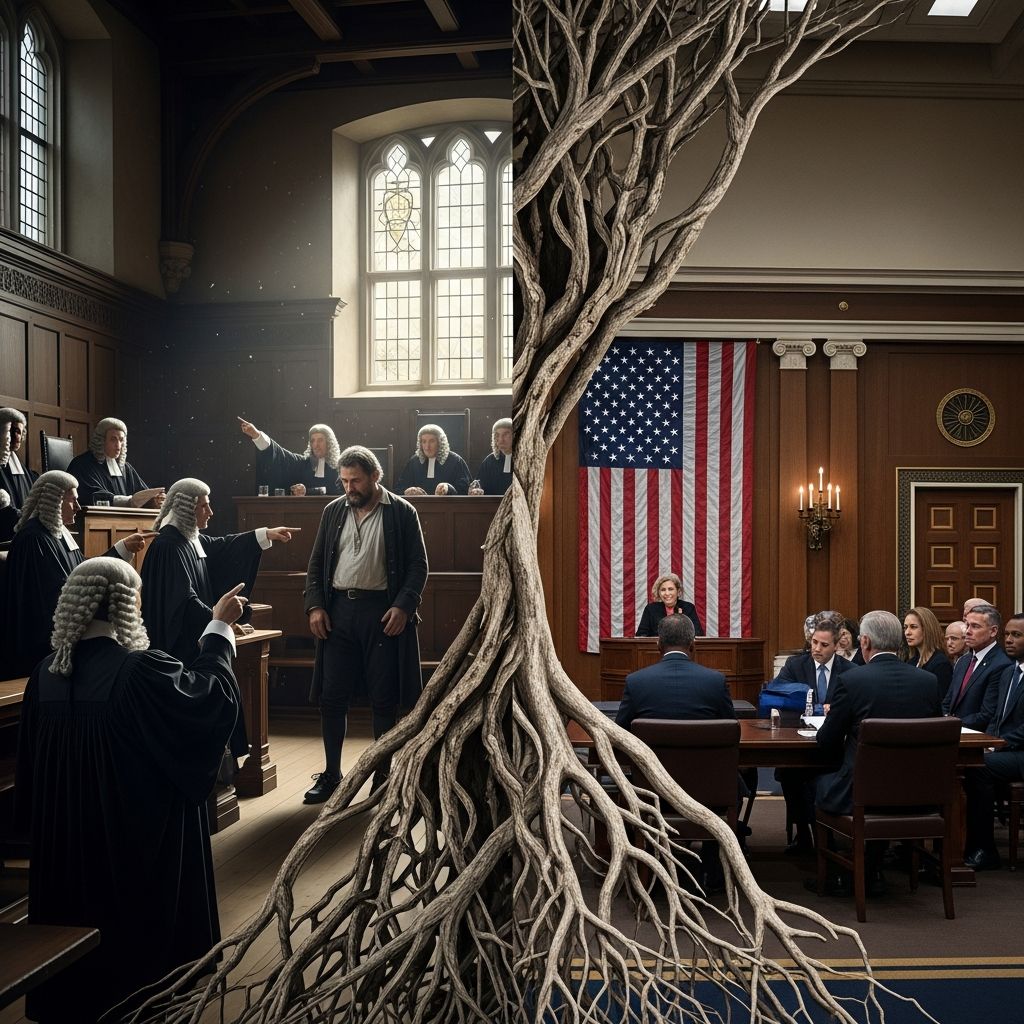
Impeachment stands as a cornerstone of accountable governance, designed to remove officials who betray public trust through grave misconduct. Originating in medieval England, this mechanism evolved through colonial adaptations and found its definitive form in the U.S. Constitution, balancing power among branches of government.
Origins in English Parliamentary Tradition
The practice of impeachment emerged in England during the late 14th century as a tool for Parliament to challenge royal authority. In 1376, the House of Commons initiated the first recorded impeachment against Lord Latimer, a royal advisor accused of corruption and abuse of power. This marked a shift from ordinary criminal courts, which often failed to prosecute high-ranking officials shielded by the Crown.
By the 15th and 16th centuries, impeachment became a formalized process. Parliament enacted statutes, such as the 1399 law, allowing the House of Commons to accuse individuals of crimes or misdemeanors, with trials conducted by the House of Lords. Penalties ranged from fines and imprisonment to death, emphasizing its punitive nature. Charges frequently targeted abuses like extortion, embezzlement, or subversion of government functions, reflecting Parliament’s aim to curb monarchical overreach.
Key cases underscored this evolution. In 1640, Thomas Wentworth, Earl of Strafford, faced impeachment for alleged tyranny and misuse of power during his role as Lord Deputy of Ireland. Though initially sentenced to death, his execution highlighted impeachment’s role in political accountability. Later, in the 18th century, Warren Hastings, Governor-General of India, endured a seven-year trial ending in acquittal in 1795, demonstrating the process’s endurance even amid shifting political winds.
Adoption in American Colonies and Early States
American colonists imported English impeachment practices, adapting them to local governance. Colonial charters and assemblies in places like Virginia and Massachusetts employed impeachment against officials for misconduct in office, limiting penalties to removal rather than capital punishment. This reflected a republican ethos prioritizing officeholder accountability over personal vengeance.
Post-1776, state constitutions embedded impeachment provisions. Seven of the original thirteen states explicitly included it, typically assigning accusation powers to lower houses and trials to upper chambers or councils. Punishments focused on ouster from office and disqualification from future roles, avoiding the harsher English sanctions. For instance, Pennsylvania’s 1776 constitution mandated impeachment for ‘maladministration’ or corruption, setting a precedent for broader definitions of misconduct.
- Virginia (1776): Limited to civil officers for treason or corruption.
- New York (1777): Extended to bribery and high crimes.
- Delaware (1776): Emphasized removal for neglect of duty.
These state experiments informed national framers, refining impeachment as a check on executive and judicial overreach without undermining stability.
Framing Impeachment in the U.S. Constitution
At the 1787 Constitutional Convention, delegates debated impeachment extensively, drawing from English and state precedents while innovating for a republican system. James Madison advocated it as essential against presidential ‘incapacity, negligence, or perfidy,’ ensuring communal defense.
Article II, Section 4 defines impeachable offenses: ‘Treason, Bribery, or other high Crimes and Misdemeanors.’ This phrase, borrowed from English law, carried a specific constitutional meaning—offenses subverting government or abusing power, not mere policy disputes. Delegates rejected vaguer terms like ‘maladministration,’ fearing it would enable partisan removals at Senate pleasure.
The process divides powers: House impeaches by simple majority; Senate convicts by two-thirds vote, acting as a judicial body with the Chief Justice presiding for presidential trials. This structure prevents hasty or purely political expulsions, contrasting English majority-rule convictions.
| Branch | Role | Voting Threshold |
|---|---|---|
| House of Representatives | Initiates charges | Simple majority |
| Senate | Tries and convicts | Two-thirds |
Impeachment targets the President, Vice President, and civil officers, excluding military personnel and members of Congress, who face expulsion instead.
Defining ‘High Crimes and Misdemeanors’
The ambiguous yet pivotal term ‘high Crimes and Misdemeanors’ encompasses acts threatening constitutional order, such as betrayal of trust or corruption. Historical English usage included non-criminal offenses like oppression or electoral interference, guiding Framers to prioritize systemic integrity over petty crimes.
Madison and Hamilton in Federalist No. 65 described it as offenses against national security or public justice. Modern interpretations maintain this: impeachment addresses fitness for office, not criminality alone. Policy disagreements, absent abuse, do not qualify, preserving executive independence.
Early Presidential and Judicial Precedents
Few presidents faced impeachment, but cases clarified boundaries. In 1804, House impeached Justice Samuel Chase for partisan rulings; Senate acquittal in 1805 established judicial independence absent corruption.
Andrew Johnson’s 1868 impeachment stemmed from Tenure of Office Act violations amid Reconstruction tensions. Acquitted by one Senate vote, it highlighted political motivations over strict constitutional breaches.
Judges dominated proceedings: 15 of 21 House impeachments before 2020 targeted federal judges, with 8 Senate convictions, often for bribery or intoxication on bench.
20th Century Cases and Modern Evolution
Richard Nixon resigned in 1974 amid Watergate, following House Judiciary impeachment recommendations for obstruction and abuse of power. No Senate trial occurred, but it affirmed impeachment’s role in scandals.
Bill Clinton’s 1998 impeachment for perjury and obstruction ended in Senate acquittal, criticized as partisan. Donald Trump’s two impeachments (2019, 2021) for abuse of power and incitement, respectively, also resulted in acquittals, sparking debates on norms erosion.
- Nixon: Obstruction, constitutional crisis avoidance via resignation.
- Clinton: Personal misconduct, insufficient threat to government.
- Trump I: Ukraine pressure, partisan divide.
- Trump II: January 6 events, post-term trial novelty.
Frequently Asked Questions (FAQs)
What is the origin of impeachment in the U.S.?
Impeachment traces to 14th-century England, adapted by colonies and enshrined in the Constitution for official accountability.
Who can be impeached under the Constitution?
The President, Vice President, and civil officers; not legislators or military.
What constitutes a ‘high crime or misdemeanor’?
Abuses subverting government or public trust, beyond ordinary crimes.
Has any U.S. President been removed by impeachment?
No; all impeached presidents were acquitted by the Senate.
Does impeachment require criminal conviction?
No; it addresses political accountability and fitness for office.
Implications for Contemporary Governance
Impeachment remains a delicate balance: potent check yet rare due to high thresholds. Frequent modern invocations risk dilution, yet inaction against abuses erodes norms. As Gerhardt notes, its judicious use preserves institutional integrity.
In an era of polarization, understanding its historical roots reminds us of its purpose: safeguarding democracy from within, not partisan weaponization.
References
- The Impeachment Process: The Constitution and Historical Practice — The Heritage Foundation. 2019-12-18. https://www.heritage.org/political-process/report/the-impeachment-process-the-constitution-and-historical-practice
- Historical Background on Impeachment — Legal Information Institute, Cornell Law School. N/A. https://www.law.cornell.edu/constitution-conan/article-1/section-2/clause-5/historical-background-on-impeachment
- ArtII.S4.4.2 Historical Background on Impeachable Offenses — Constitution Annotated, Congress.gov. N/A. https://constitution.congress.gov/browse/essay/artII-S4-4-2/ALDE_00000699/
- The Background and History of Impeachment — National Association of Criminal Defense Lawyers. 1998-11. https://www.nacdl.org/getattachment/d2c07be1-78ac-4a56-9048-e4dfdb996aa0/bowman-sepinuck-statement-to-the-house-judiciary-on-the-constitution-on-presidential-impeachment-november-1998-.pdf
- The History of Impeachment — University of Washington School of Law. N/A. https://www.law.uw.edu/news-events/discovery/season-6/the-history-of-impeachment/
Similar Articles








Read full bio of Sneha Tete




