
Understanding Gun Background Check Requirements
Comprehensive guide to what information is reviewed during firearm purchase background checks.
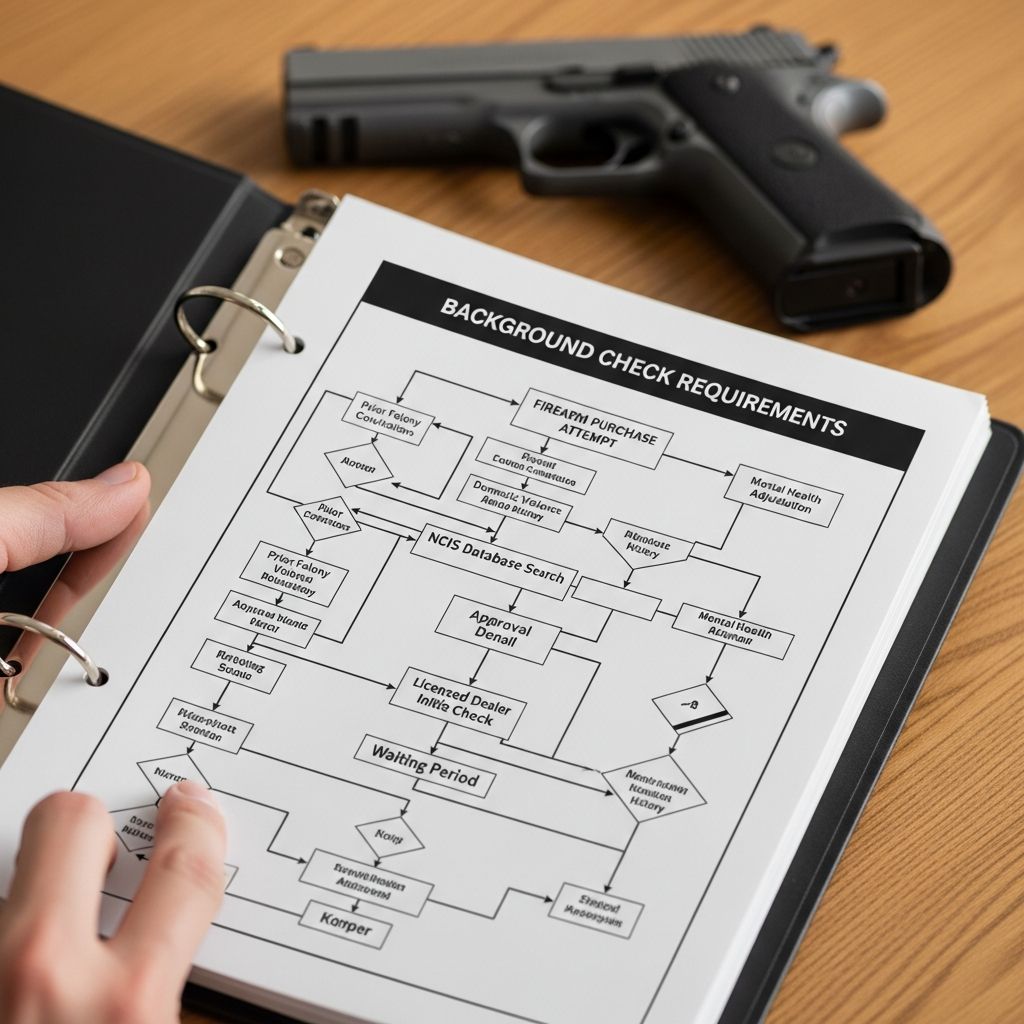
Screening Mechanisms for Firearm Purchases: A Comprehensive Overview
The process of purchasing a firearm in the United States involves mandatory scrutiny designed to prevent weapons from reaching individuals deemed unsafe to possess them. When a prospective buyer approaches a federally licensed firearms dealer, they initiate a screening mechanism that has evaluated millions of applicants since its inception. Understanding what information enters this evaluation system is essential for anyone considering a firearm purchase or simply seeking knowledge about how these legal safeguards function.
The National Instant Criminal Background Check System (NICS) serves as the primary tool for this evaluation process. Since 1998, this federal infrastructure has processed over 300 million background check requests, resulting in more than 3 million denials. The system operates by cross-referencing multiple government databases to identify whether an applicant falls into one of several prohibited categories under federal law.
The Mechanics of the Screening Process
When an individual decides to purchase a firearm from a licensed dealer, the process begins with the completion of ATF Form 4473, which contains 16 questions addressing an applicant’s background, substance use history, and criminal record. This form represents the initial documentation step in the evaluation process.
Once completed, the licensed dealer transmits the applicant’s responses along with their Social Security number to NICS, either online or by telephone. NICS personnel then cross-check this information against multiple federal databases to determine eligibility. The outcome of this check results in one of three responses: “proceed,” “denied,” or “delayed.” Approximately 90% of checks return an immediate “proceed” determination, enabling the sale to move forward.
Information Sources and Database Integration
The FBI draws information from three primary databases when conducting firearm purchase evaluations. The Interstate Identification Index contains a vast repository of criminal convictions maintained by various law enforcement agencies for multiple purposes. The National Crime Information Center (NCIC) functions as an electronic clearinghouse containing other criminal justice records, including protective orders and disposition information.
Additionally, the NICS Indices hold records contributed specifically by federal, state, and local agencies to flag individuals prohibited from firearm ownership. This third database includes information that would not necessarily appear in the other two criminal-focused databases, such as records related to mental health status and immigration violations. Some states, including Connecticut, add nearly all prohibitive records to the NICS Indices to expedite the denial process without requiring further FBI investigation.
Categories of Information That Disqualify Firearm Ownership
Federal law establishes specific categories of individuals who cannot legally possess firearms. The screening process examines multiple aspects of an applicant’s background to determine eligibility:
Felony Convictions and Criminal Records
Any felony conviction, regardless of when it occurred, results in permanent firearm purchase prohibition. Unlike certain other legal disqualifications that expire after a specified period, felony convictions do not diminish in their impact over time. If an individual was convicted of a felony decades ago, this conviction will still appear during the background check and will likely result in denial.
Active arrest warrants also trigger denial of firearm purchases. If law enforcement has issued a warrant for an individual’s arrest, they cannot legally purchase firearms until the warrant is resolved.
Domestic Violence Indicators
Misdemeanor domestic violence convictions carry particularly severe restrictions under federal law. The Lautenberg Amendment established that such convictions prohibit legal firearm ownership for life, with no expiration date. This contrasts with other misdemeanor convictions, which typically result in a 5-year prohibition period.
Additionally, any current restraining or emergency protective orders that explicitly prohibit firearm possession will appear on background checks and result in denial.
Mental Health Adjudications
Records of involuntary psychiatric confinement or judicial determinations of mental incompetence appear on background checks only when states submit this information to the NICS Indices. These records are intentionally excluded from the other two primary criminal databases, as they serve a different purpose than standard criminal records.
Substance Use and Drug Offenses
Unlawful drug use or addiction within the past 5 years will result in purchase denial. However, drug possession convictions occurring more than 5 years prior do not block firearm purchases. Individuals with documented histories of illegal substance use within this 5-year window face prohibition.
Immigration Status
Individuals unlawfully present in the United States are prohibited from owning firearms and will fail the background check. Immigration status enters the evaluation through the NICS Indices specifically because it represents a federal disqualifying factor.
Military Discharge Records
Service members with dishonorable discharges have their names forwarded to the NICS Indices, as dishonorable discharge alone triggers a firearm ban. Court-martial convictions for felony-level offenses such as assault, domestic violence, or drug possession may also result in firearm prohibition, with these records entered into NCIC.
What Does NOT Appear in Standard Background Checks
Understanding what does not appear on background checks is equally important for comprehensive knowledge of the screening process. Traffic violations, including speeding tickets and parking tickets, do not factor into standard firearm purchase evaluations. Even driving under the influence convictions handled as traffic matters rather than criminal charges are excluded from consideration.
Accident history and vehicle insurance records play no role in standard background checks for firearm purchases. The only exception occurs for individuals applying for firearms dealer licenses with the Bureau of Alcohol, Tobacco, Firearms and Explosives (ATF), as dealers require the ability to safely transport firearms and may be subject to Department of Motor Vehicle record reviews for commercial driving disqualifications.
State-Level Variations and Enhanced Protections
While federal law provides the baseline for firearm purchase restrictions, individual states maintain authority to implement additional requirements and protections. Some states function as “point of contact” agencies, conducting their own background checks using both state and federal records. This approach allows states to include records that may not be incorporated into the federal NICS database.
Notably, state files are not automatically included in the federal database, creating potential gaps in the federal system. States that assume the point-of-contact role can incorporate state-specific records and records maintained at the state level that federal NICS might not access.
The Private Sale Exception and Its Implications
A significant gap in the federal background check system exists for private firearm sales. Federal law requires only federally licensed firearms dealers to initiate background checks before selling firearms. Unlicensed private sellers face no federal mandate to conduct background checks on purchasers.
This distinction creates what is commonly referred to as the “private sale exemption.” Approximately 22% of gun owners report obtaining their most recent firearm without undergoing a background check. This gap particularly manifests at gun shows and in online sales, where unlicensed sellers can conduct transactions without triggering NICS screening.
However, several states have enacted laws addressing this loophole by mandating background checks for all firearm sales, regardless of whether the seller is licensed. These state-level initiatives represent efforts to close the federal exemption.
Outcomes and Enforcement Following Denial
When the FBI determines that a buyer falls into a prohibited category, the agency issues a retrieval order to the Bureau of Alcohol, Tobacco, Firearms and Explosives. The ATF then assumes responsibility for recovering the firearm. These retrieval orders occur relatively infrequently; historical data indicated that of over 45,000 default proceeds issued in 2000, approximately 5,000 resulted in retrieval orders.
Public Health Implications and Statistical Context
Research demonstrates the impact of background check procedures on public safety outcomes. States requiring background checks for private handgun sales have documented 48% fewer firearm suicides, while suicide rates by other methods remain nearly identical in these jurisdictions. This correlation suggests that background check requirements may serve as meaningful interventions in suicide prevention.
Additionally, approximately 30% of firearms involved in criminal trafficking are connected to gun shows, where background checks are not uniformly required by federal law. This statistic underscores how variations in background check requirements create opportunities for firearms to enter criminal distribution networks.
Frequently Asked Questions
Q: How long does a standard NICS background check take?
A: Approximately 90% of background checks return an immediate “proceed” determination within minutes or hours. Some checks receive a “delayed” status, during which the FBI has up to three business days to make a determination before the dealer can proceed with the sale in certain circumstances.
Q: Will a minor drug conviction from years ago prevent me from purchasing a firearm?
A: Drug convictions generally prohibit firearm purchases for 5 years from the conviction date. However, unlawful drug use or addiction within the past 5 years results in permanent prohibition regardless of conviction history. The key distinction lies between when the conviction occurred versus when the substance use occurred.
Q: Can I purchase a firearm if I have a speeding ticket or DUI on my driving record?
A: Standard speeding tickets and parking violations do not affect firearm purchase eligibility. Driving under the influence charges, if handled as traffic violations rather than criminal charges, also typically do not impact background checks. However, criminal charges related to DUI may disqualify purchases depending on the specific conviction classification.
Q: What happens if there is a mistake or false match in the background check system?
A: The background check system can sometimes produce false matches through mistaken identity or data entry errors. Applicants who receive a denial can request detailed information about the reason for denial and can file appeals through established procedures to correct erroneous information.
Q: Does the background check include civil lawsuits or bankruptcies?
A: No, civil lawsuits and bankruptcy filings do not appear in standard firearm purchase background checks. The screening process focuses exclusively on criminal history and specific federal prohibitive categories rather than civil legal matters.
Q: Are there different background check requirements for purchasing different types of firearms?
A: Federal law applies the same background check requirements regardless of the specific type of firearm being purchased. Whether buying a handgun, rifle, or shotgun from a licensed dealer, the NICS screening process remains consistent.
References
- What Does a Gun Background Check Show? — McMinn Logan Gray. 2024. https://mcminnlogangray.com/what-does-a-gun-background-check-show/
- How a Federal Gun Background Check Works – The Trace — The Trace. 2015. https://www.thetrace.org/2015/07/gun-background-check-nics-guide/
- Firearm background checks: Explained — USAFacts. 2024. https://usafacts.org/articles/firearm-background-checks-explained/
- Background Check Procedure Laws in California — Giffords Law Center. 2024. https://giffords.org/lawcenter/state-laws/background-check-procedures-in-california/
- Universal Background Checks for Gun Purchases — American Academy of Pediatrics. 2024. https://www.aap.org/en/advocacy/state-advocacy/universal-background-checks-for-gun-purchases/
- Background Checks on All Gun Sales — Everytown for Gun Safety. 2024. https://www.everytown.org/solutions/background-checks/
Similar Articles








Read full bio of Sneha Tete




