
Attending Supreme Court Oral Arguments: Your Complete Guide
Discover proven strategies and essential tips for securing a seat at U.S. Supreme Court oral arguments and experiencing history firsthand.
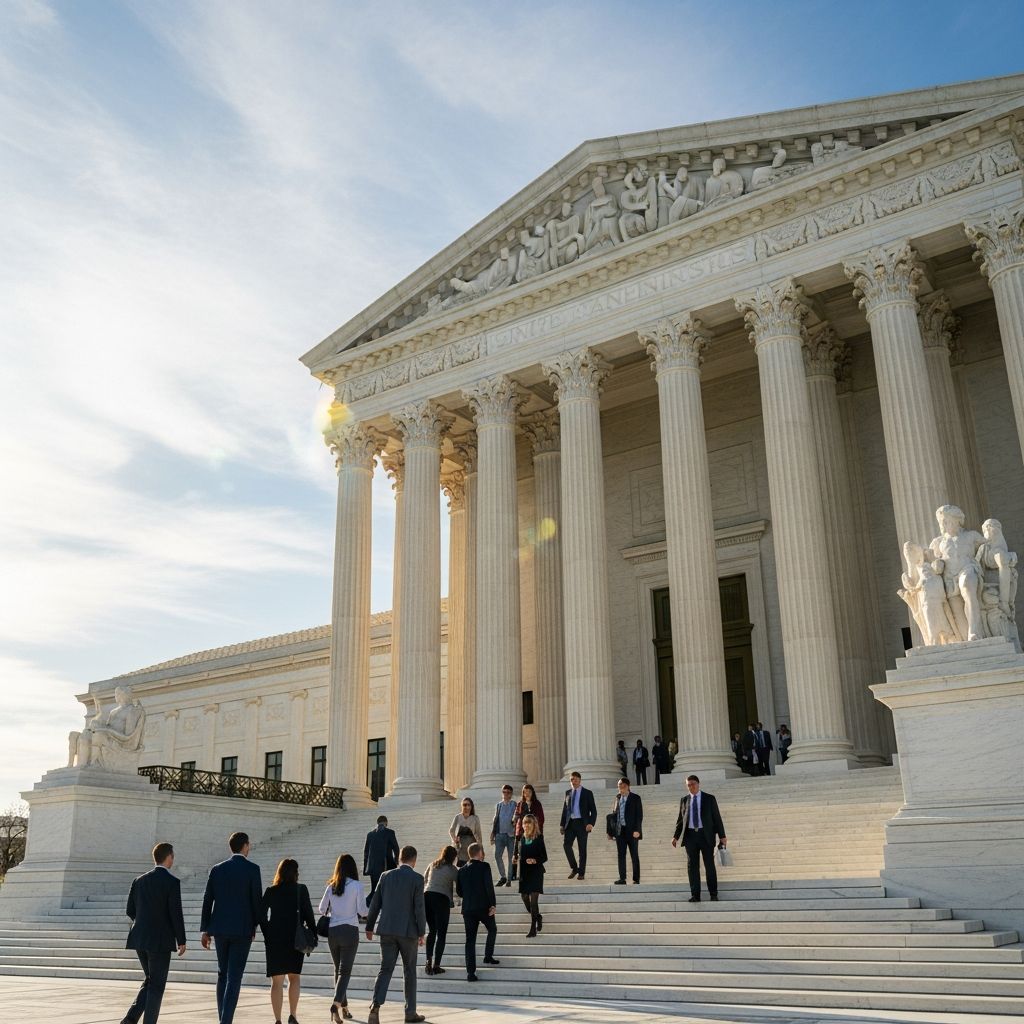
The U.S. Supreme Court oral arguments represent the pinnacle of legal discourse, where attorneys present their cases directly to the Justices. Held in the majestic Courtroom in Washington, D.C., these sessions occur roughly 70-80 times per year, typically on Monday, Tuesday, and Wednesday mornings from early October through late April. Each argument lasts about an hour, split between sides, allowing Justices to probe arguments through pointed questions. Understanding how to witness this process firsthand requires strategic planning, as seating is highly competitive.
Understanding the Oral Argument Process
Oral arguments follow a structured format designed to facilitate deep judicial inquiry. Attorneys submit detailed briefs in advance, which Justices review thoroughly before the session. Arguments begin at 10:00 a.m., with each side allotted 30 minutes, though rebuttals and questions often adjust timing. The Chief Justice presides, calling cases and managing interruptions. Public access, while guaranteed, is limited by the Courtroom’s 400-seat capacity, split among bar members, media, litigants, and visitors.
Key elements include:
- Justice Entry: Justices enter in seniority order through three doors behind the bench, taking seats from center outward.
- Attorney Presentation: Advocates stand at the podium, starting with ‘May it please the Court.’ They outline key issues via a roadmap before diving into substance.
- Questioning: Justices interrupt freely; effective advocates pivot smoothly, answering directly while tying back to core themes.
- Technology: Live audio streams on the Court’s site, with transcripts and recordings posted same-day.
Strategy 1: Enter the Public Lottery System
The Supreme Court operates a pilot online lottery for public seating, revolutionizing access amid high demand. Applications open days before each argument session via the Court’s website. Users select desired dates, and winners receive timed-entry passes. This system supplements traditional lines, ensuring fairer distribution for full-session seats (entire argument) versus three-minute observer slots.
| Lottery Feature | Details |
|---|---|
| Application Window | Typically 2-3 days prior to argument |
| Seat Types | Full argument (90+ min early arrival) or 3-min rotation |
| Availability | 50+ full seats per session; lottery + first-come |
| Success Rate | Varies by case popularity; high-profile draws more entries |
Pro Tip: Apply early for less contentious cases to boost odds. Check the argument calendar on supremecourt.gov for schedules.
Strategy 2: Leverage Supreme Court Bar Membership
For attorneys admitted to the Supreme Court Bar, dedicated seating offers prime vantage points just beyond the bronze railing. Bar members check in at the Lower Great Hall from 8:30 a.m., presenting photo ID verified against the roster. First-come, first-seated fills the section quickly; overflow uses the Lawyers’ Lounge with audio feed.
Admission requires:
- Active practice for 5+ years in a state or federal court.
- Sponsorship by two current bar members.
- Motion filing and $300 fee (as of recent rules).
Bar privileges extend to any argument, space permitting—no line standers allowed. This method guarantees superior access for professionals, often steps from arguing counsel.
Strategy 3: Master the Early Line Technique
For non-bar public, arriving ultra-early secures coveted full-argument seats. Two lines form on the plaza: one for complete sessions (tickets at 7:30 a.m.), another for rotating three-minute views starting at 10:00 a.m. High-stakes cases draw crowds by 5:00 a.m., with law students camping overnight.
Line Essentials:
- Report Time: 7:00-8:00 a.m. for best odds; building opens 9:30 a.m. for first line.
- No Holding Places: Court police enforce single-file; groups arrive together.
- Weather Prep: Dress in layers for D.C. autumn/winter chills; bring snacks, chairs.
- Security: Expect bag checks, metal detectors; no large items.
Police officers update wait times; patience yields rewards as overflow rotates in.
Strategy 4: Access via Media, Clerks, or Special Invites
Journalists from approved outlets receive reserved sections, applying through the Court’s Public Information Office. Law clerks, parties, and counsel enjoy front-row proximity. Amicus counsel arguing limited time also gain entry. Guests of Justices or bar members sometimes fill gaps, though informally.
Networking boosts chances:
- Connect with arguing attorneys or recent clerks.
- Join professional groups hosting SCOTUS trips.
- Media credentials via outlets like law reviews.
These paths demand credentials but offer unmatched immersion.
Virtual and Alternative Viewing Options
Not all need physical presence. Live audio streams at supremecourt.gov from 10:00 a.m., with MP3s and transcripts posted afternoons. Since 2020, select arguments featured video via C-SPAN amid pandemic adaptations. SCOTUSblog and Oyez provide annotated audio with timelines.
Remote Advantages:
- Accessibility: No travel; watch from anywhere.
- Replay: Pause, rewind key exchanges.
- Analysis: Pair with blogs for context.
Preparation Tips for Attendees
Maximize your experience with due diligence. Review briefs on supremecourt.gov/docket. Memorize case posture, key precedents. Dress business formal—no jeans, hats. Silence devices; no photos/recording inside.
Arrival Checklist:
| Item | Purpose |
|---|---|
| ID & Tickets | Entry verification |
| Notepad/Pen | Note questions, shifts |
| Water/Snacks | Line sustenance |
| Reading Material | Briefs for pre-argument study |
Post-argument, transcripts illuminate nuances.
Frequently Asked Questions (FAQs)
What time do Supreme Court oral arguments start?
Arguments commence at 10:00 a.m. on scheduled days, with occasional afternoon sessions.
Can I bring a bag or phone into the Courtroom?
Bags are checked; phones allowed but must be silent—no photos or video permitted.
How many seats are available for the public?
Approximately 50 full-argument seats via line/lottery, plus rotating options.
Are oral arguments televised?
Audio is live-streamed; video rare, available via C-SPAN for some.
Do I need to know the case details to attend?
Not required, but reviewing briefs enhances understanding of proceedings.
Why Attend Oral Arguments?
Beyond spectacle, arguments reveal judicial reasoning live. Witness persuasion, scrutiny, and occasional humor shaping precedents. For students, it’s mentorship gold; for lawyers, inspiration. Virtual or in-person, these sessions embody American justice.
References
- Oral Arguments — Supreme Court of the United States. 2023-10-01. https://www.supremecourt.gov/oral_arguments/oral_arguments.aspx
- Tips on Oral Advocacy — Duke University School of Law. 2022-09-15. https://law.duke.edu/life/mootcourt/tips
- Visitor’s Guide to Oral Argument — Supreme Court of the United States. 2023-10-01. https://www.supremecourt.gov/visiting/visitorsguidetooralargument.aspx
- Five Tips to Prepare For Oral Argument — The Harlan Institute (YouTube). 2020-04-01. https://www.youtube.com/watch?v=dtxQ8b1bwfM
- Courtroom access: An online quest — SCOTUSblog. 2020-04-01. https://www.scotusblog.com/2020/04/courtroom-access-an-online-quest-how-to-watch-a-supreme-court-argument/
- Supreme Court Oral Arguments Research Guide — UCLA Law Library. 2023-01-15. https://libguides.law.ucla.edu/scotus/oralargs
Similar Articles








Read full bio of medha deb




