
Grateful for America’s Constitutional Freedoms
Discover the core U.S. Constitutional rights that safeguard our daily lives and liberties every day.
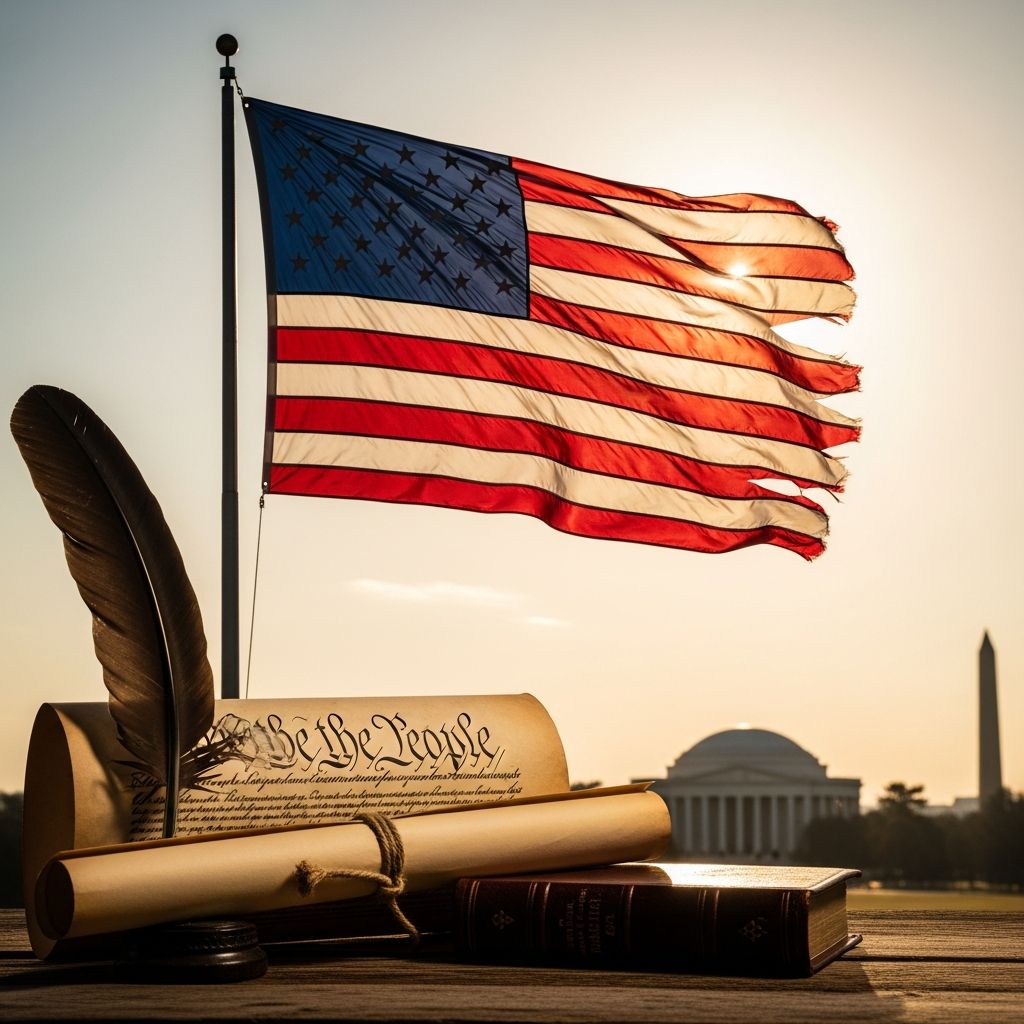
The U.S. Constitution stands as a cornerstone of liberty, embedding protections that shape our everyday experiences. These rights, primarily outlined in the Bill of Rights and later amendments, ensure individual dignity against government overreach. From voicing opinions freely to worshiping without interference, they foster a just society.
Foundations of Liberty: The Bill of Rights Origins
Ratified in 1791, the first ten amendments to the Constitution arose from fears that the original document granted too much federal power. Influenced by state declarations like Virginia’s, crafted by George Mason, it explicitly lists unalienable rights pre-existing government authority. These include freedoms not created by the state but recognized as inherent to human nature.
James Madison championed this ‘Bill of Rights’ to limit government and protect citizens. It declares rights like speech and religion as inviolable, setting America apart by embedding them directly into its founding charter. This structure promotes prosperity when honored and warns of decline when ignored.
Freedom of Expression: Speaking Truth to Power
The First Amendment prohibits Congress from abridging speech, press, assembly, or petition rights. This allows criticism of leaders, journalistic independence, and public protests without fear. In practice, it shields activists distributing jury nullification info outside courthouses, as upheld by courts against tampering charges.
Daily, it enables social media debates, editorial critiques, and street demonstrations. Without it, dissent could be criminalized, stifling innovation and accountability. Historical cases affirm its breadth, protecting even unpopular views to preserve democracy.
- Enables voter education and political discourse.
- Protects journalists investigating corruption.
- Supports peaceful rallies for change.
Religious Liberty: Faith Without Coercion
Complementing speech, the First Amendment’s establishment and free exercise clauses prevent government favoritism or interference in religion. Citizens choose beliefs freely, from attending services to observing holidays. This right underpins diverse spiritual practices across America.
Courts have defended conscientious objection and faith-based assemblies. It ensures no state religion dominates, promoting tolerance. In crises, it safeguards worship amid restrictions, balancing public health with personal conviction.
Right to Bear Arms: Personal Security
The Second Amendment secures the right to keep and bear arms, rooted in self-defense and resistance to tyranny. Framers viewed it as essential for free citizens, echoing colonial militias. Modern interpretations uphold individual rights for protection.
Debates continue on regulations, but core protection remains. It empowers law-abiding individuals, deterring crime and preserving sovereignty.
Secure Homes: Fourth Amendment Safeguards
Protection against unreasonable searches and seizures requires warrants based on probable cause. This prevents arbitrary intrusions, demanding specificity for intrusions. It applies universally, regardless of status.
From traffic stops to home raids, it enforces privacy. Violations trigger evidence exclusion, deterring abuse. Digital extensions now cover phones and data, adapting to technology.
| Amendment | Key Protection | Modern Impact |
|---|---|---|
| Fourth | No unreasonable searches | Protects digital privacy, cell phone data |
| Fifth | Due process, self-incrimination | Requires Miranda rights in arrests |
| Sixth | Speedy trial, counsel | Ensures fair criminal proceedings |
Due Process and Fair Trials
Fifth and Fourteenth Amendments guarantee due process—fair procedures before rights deprivation. Fifth protects against self-incrimination and double jeopardy; Sixth ensures speedy public trials, impartial juries, counsel, and confrontation rights.
These prevent miscarriages, mandating legal aid for indigents. Immigrants and citizens alike benefit, upholding justice. Historical expansions via incorporation apply to states.
Equal Protection: Fourteenth Amendment Legacy
Ratified post-Civil War, it grants citizenship to all born or naturalized here, equal protection, and due process. Overturning Dred Scott, it combats discrimination.
Courts use it for civil rights advances, from desegregation to marriage equality. It mandates equal treatment under law, fostering inclusion.
Rule of Law: Thanksgiving for Justice
America’s rule of law subordinates power to impartial standards. George Washington’s Thanksgiving proclamation urged gratitude for constitutional governance. Judiciary preserves this, ensuring equal application.
Voting freely, media access, and petition rights thrive under it. It contrasts arbitrary rule, crediting equality before law for stability.
Civil Liberties in Action: ACLU Victories
Organizations defend these rights amid threats. Recent wins span privacy, reproductive rights, immigrant due process, racial justice, LGBTQ protections, and protests.
These affirm Constitution’s vitality, crediting judges upholding liberty over expediency.
Everyday Gratitude: Freedoms We Enjoy
Simple acts—choosing careers, relocating, voting—stem from these protections. Strong military defends them globally. National debt and regulations challenge, but core liberties endure.
Representative government empowers opportunity pursuit. In crises, rights prove resilient, demanding vigilance.
Frequently Asked Questions (FAQs)
What does the Bill of Rights protect?
It safeguards freedoms of religion, speech, press, assembly, petition; arms bearing; soldier quartering limits; searches; due process, trials.
Do constitutional rights apply to non-citizens?
Yes, due process, speech, search protections extend to all in U.S., regardless of status.
Why is the First Amendment crucial?
It enables dissent, information flow, assembly—foundation of democracy.
How has the Fourteenth Amendment shaped equality?
By granting citizenship, equal protection, overturning discriminatory precedents.
What role does rule of law play?
It ensures government accountability, equal justice, preventing tyranny.
These rights demand active defense. As foundational as they are, erosion occurs subtly. Civic education, voting, and legal support sustain them. Gratitude inspires stewardship for future generations.
References
- We’re Grateful for the Constitution — American Civil Liberties Union. 2023. https://www.aclu.org/news/civil-liberties/were-grateful-for-the-constitution
- This Bill of Rights Day, Let’s Honor The Part of the Constitution That Enshrines Our God-Given Rights — Ashbrook Center. 2023-12-15. https://ashbrook.org/viewpoint/this-bill-of-rights-day-lets-honor-the-part-of-the-constitution-that-enshrines-our-god-given-rights/
- Giving Thanks for the Rule of Law — U.S. Court of Appeals for the Sixth Circuit. 2020-11. https://connections.ca6.uscourts.gov/sites/default/files/ThanksgivingRuleLawNovember2020.pdf
- President’s Message: The Constitution Guarantees Us — Federal Bar Association. 2023. https://www.fedbar.org/blog/presidents-message-the-constitution-guarantees-us/
- What to Be Thankful For — Cato Institute. 2023. https://www.cato.org/blog/what-be-thankful-0
- Which freedoms are you thankful for today? — City of Minot, ND. 2023. https://www.minotnd.gov/Blog.asp?IID=122
- With Liberty and Justice for All: The Importance of “Know Your Rights” Education — American Immigration Council. 2023. https://www.americanimmigrationcouncil.org/blog/the-importance-of-know-your-rights-education/
- 14th Amendment to the U.S. Constitution: Civil Rights (1868) — National Archives. 1868. https://www.archives.gov/milestone-documents/14th-amendment
- Much to be Thankful for as Americans — Congressman Adrian Smith. 2023. http://adriansmith.house.gov/media/column/much-be-thankful-americans
Similar Articles








Read full bio of medha deb




