
God’s Oath in Citizenship: Court Upholds Tradition
Federal appeals court rules 'so help me God' stays in naturalization oath, balancing religious freedom and historic practice.
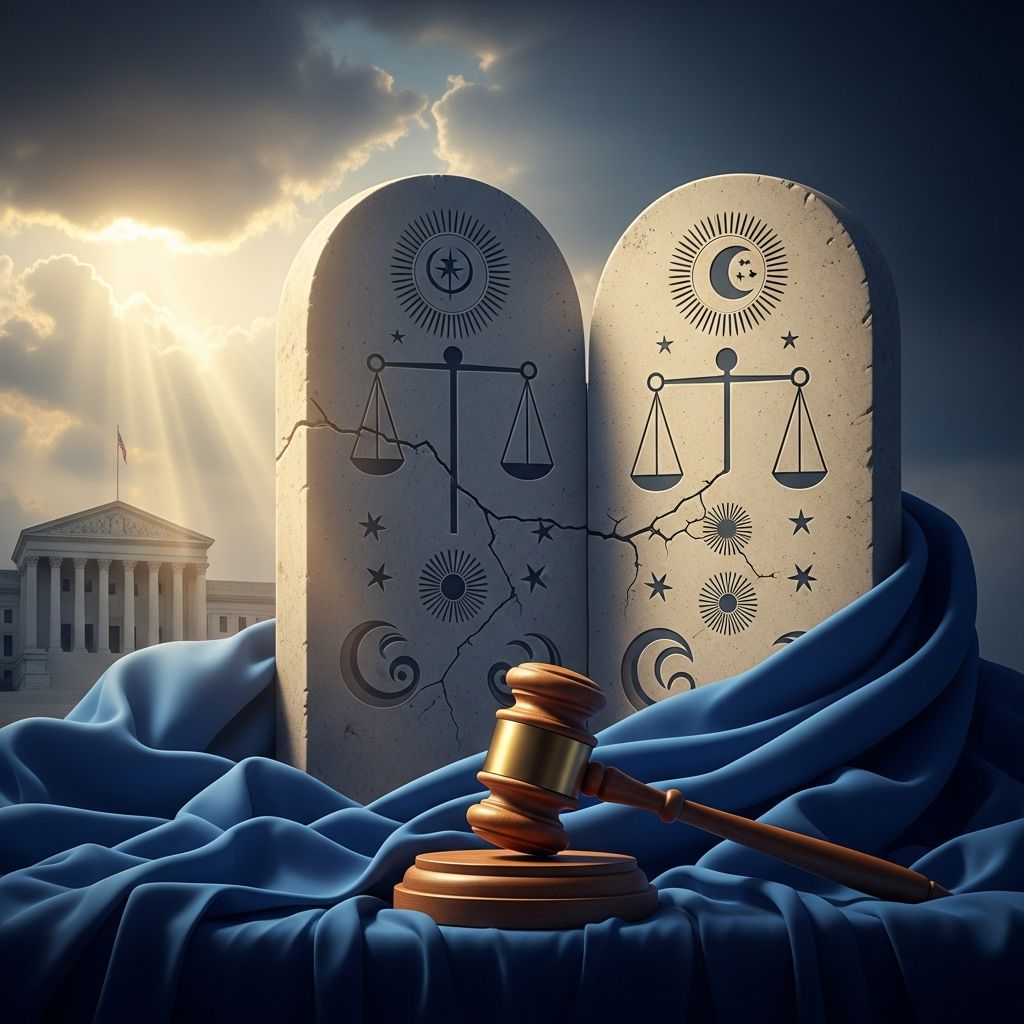
The phrase “so help me God” has endured as part of the U.S. naturalization oath for nearly a century, symbolizing a solemn commitment to the nation. Recently, a federal appeals court reaffirmed its place, navigating tensions between religious expression and individual beliefs in a landmark decision.
Historical Roots of the Naturalization Oath
The Oath of Allegiance serves as the capstone of the citizenship process, binding new Americans to their adopted country. Codified in regulations like 8 C.F.R. § 337.1(a), it requires pledges of loyalty, defense of the Constitution, and service when needed. The optional closing “so help me God” traces back at least 90 years, mirroring oaths for public officials and reflecting cultural norms of the era.
This language emerged not from recent policy but from longstanding tradition. Early 20th-century naturalization ceremonies incorporated divine invocation to underscore gravity, much like the presidential oath under Article II of the Constitution. Courts recognize such phrases as ceremonial deism—traditional references to divinity without coercive proselytizing.
- Key historical elements: Inclusion since at least the 1930s, aligned with other federal oaths.
- Regulatory flexibility: Applicants can affirm instead of swear and omit the God reference.
- Purpose: Reinforces voluntary commitment without mandating belief.
The Legal Challenge: An Atheist’s Stand
At the center was Véronique Perrier-Bilbo, a French national and self-described atheist residing in Massachusetts. Applying for citizenship in 2009, she objected to reciting or hearing “so help me God,” viewing it as governmental endorsement of theism. USCIS offered alternatives: skip the phrase during the public ceremony or opt for a private administration without it. Deeming these insufficient, she sued, alleging violations of the First Amendment, Religious Freedom Restoration Act (RFRA), equal protection, and due process.
Her core argument framed the phrase as unconstitutional coercion, forcing nonbelievers into a religious context. She sought its complete removal from the oath text and reimbursement for her application fee. The district court dismissed the suit, and the 1st Circuit upheld that ruling on April 3, 2020.
Establishment Clause Analysis: Tradition Prevails
The First Circuit applied the Supreme Court’s framework from American Legion v. American Humanist Association (2019), presuming constitutionality for longstanding religious references in public life. The court deemed “so help me God” a ceremonial practice, not an endorsement of religion.
Unlike the disfavored Lemon test, which scrutinized purpose, effect, and entanglement, the newer approach favors history and tradition. No evidence showed discriminatory intent; the phrase accommodates objectors, undermining claims of deliberate disrespect.
| Test | Application to Oath | Outcome |
|---|---|---|
| American Legion Presumption | 90+ years of use as optional oath closer | Constitutional |
| Purpose/Effect | Ceremonial, no coercion proven | No violation |
| Endorsement | Neutral accommodations available | Uphheld |
Free Exercise and RFRA Claims Rejected
Perrier-Bilbo argued the phrase burdened her sincere atheistic beliefs, violating Free Exercise by exposing her to offensive language. The court countered that offense alone does not constitute coercion, citing Town of Greece v. Galloway (2014). The clause protects against government-imposed burdens, not mere discomfort.
Under RFRA, she needed to show a substantial burden on religious exercise. USCIS’s options—skipping words or private ceremony—did not rise to that level, as minor inconveniences fall short. The government justified any burden via compelling interests in uniform ceremonies and historical consistency.
Equal Protection and Due Process Dismissed
Claims of discrimination against atheists as a class failed, lacking evidence of animus. The oath treats all equally, with modifications for conscientious objectors, including those unable or unwilling to bear arms due to faith. Due process arguments similarly lacked merit, as no fundamental right was infringed.
Broader Implications for Ceremonial Religion
This ruling reinforces a trend tolerating historical religious symbols: pledges with “under God,” currency’s “In God We Trust,” and legislative prayers. It signals courts’ reluctance to excise tradition absent clear coercion or endorsement.
For immigrants, the decision clarifies that citizenship demands allegiance, not theological alignment. USCIS maintains flexibility, ensuring no one must affirm belief in God. Critics worry it marginalizes nonbelievers; supporters see preservation of unifying rituals.
Comparing Oaths: U.S. vs. Global Practices
| Country | Oath Features | Religious Elements |
|---|---|---|
| United States | Optional “so help me God”; affirm/swear choice | Ceremonial, removable |
| Canada | Pledge to monarch/Constitution | Secular standard |
| United Kingdom | Oath to King; affirmation option | Neutral religious reference possible |
| France | Secular republic pledge | No divine mention (laïcité) |
The U.S. model balances heritage with accommodation, distinct from strictly secular peers.
Public Ceremonies: Unity and Individual Rights
Naturalization events foster communal pride, with hundreds reciting in unison. Requiring alterations for one could disrupt this, yet options preserve inclusivity. Judge Barron’s concurrence emphasized nuanced burdens but joined the majority.
Future Challenges and Legislative Paths
While judicially settled here, Congress could amend via the Immigration and Nationality Act, which outlines oath principles without mandating the phrase. Advocacy groups may push reforms, but inertia favors status quo.
Atheist and humanist organizations monitor such cases, arguing for fully neutral language. Conversely, faith groups defend traditions as nonsectarian patriotism.
Frequently Asked Questions (FAQs)
What is the exact text of the U.S. naturalization oath?
The oath pledges allegiance to the Constitution, renunciation of foreign loyalties, defense against enemies, and service obligations, ending optionally with “so help me God.”
Can non-religious applicants skip “so help me God”?
Yes, USCIS permits omitting the phrase publicly or via private ceremony without it.
Does the oath require belief in God?
No, it’s ceremonial and optional; atheists have successfully naturalized.
Has the Supreme Court ruled on this phrase?
Not directly recently, but precedents like American Legion guide lower courts favorably.
What if I object to military service clauses?
Modifications exist for religious or conscientious objectors.
Navigating Citizenship in a Diverse Nation
America’s motto e pluribus unum thrives on accommodating differences while honoring shared symbols. The 1st Circuit’s decision exemplifies this, upholding tradition without compelling belief. As immigration evolves, so may rituals, but for now, “so help me God” endures as optional invocation.
Prospective citizens should consult USCIS for personalized guidance. Legal challenges highlight evolving interpretations of church-state separation, enriching democratic discourse.
References
- 1st Circuit OKs “So Help Me God” In Naturalization Oath — Religion Clause Blog. 2020-04-03. https://religionclause.blogspot.com/2020/04/1st-circuit-oks-so-help-me-god-in.html
- Perrier-Bilbo v. United States — U.S. Court of Appeals for the First Circuit. 2020-04-03. https://media.ca1.uscourts.gov/pdf.opinions/18-2085P-01A.pdf
- Oath of Allegiance (United States) — Wikipedia (sourced from U.S. regulations). 2026 (ongoing). https://en.wikipedia.org/wiki/Oath_of_Allegiance_(United_States)
- Reference to God in US Citizenship Oath Upheld — Courthouse News Service. 2020-04-03. https://www.courthousenews.com/reference-to-god-in-us-citizenship-oath-upheld/
Similar Articles








Read full bio of medha deb




