
Navigating Gift Returns: Legal and Practical Considerations
Master the essentials of returning unwanted gifts while understanding your legal rights and retailer obligations.
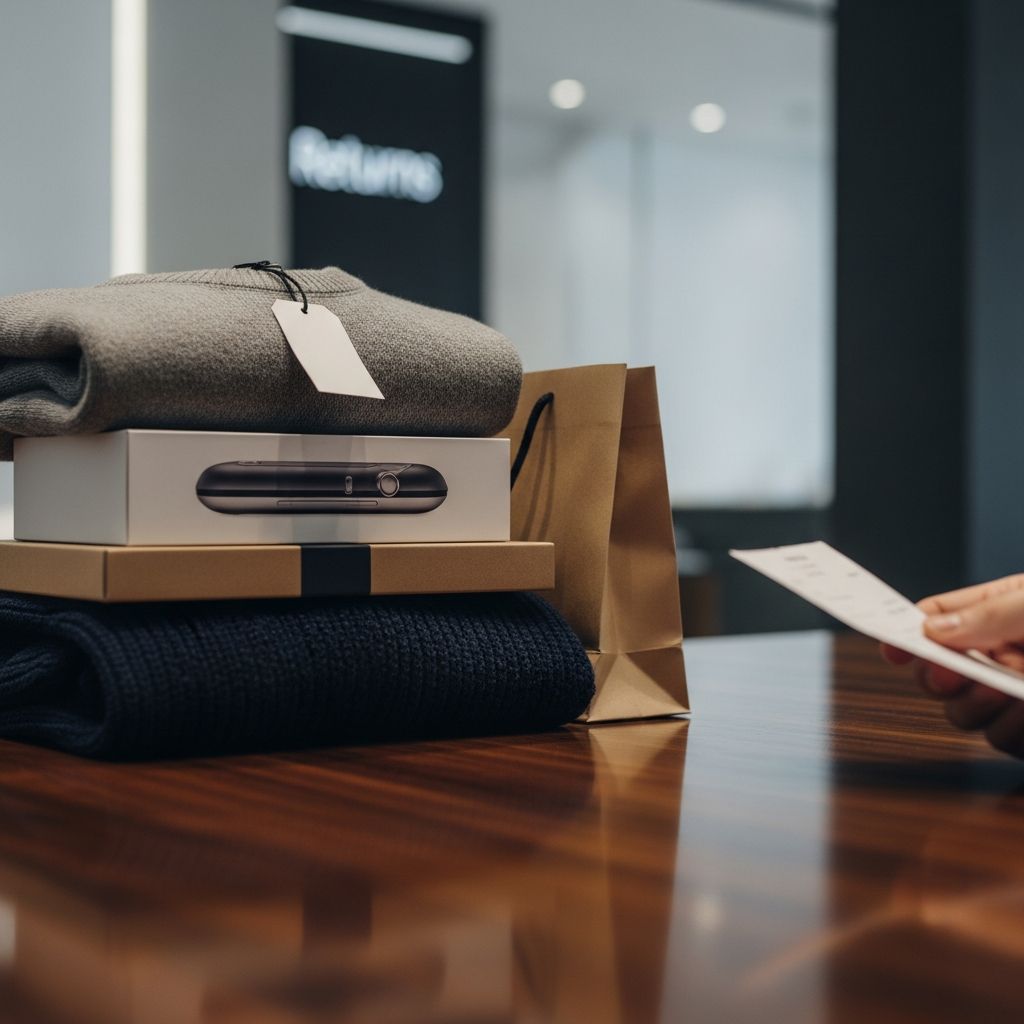
Understanding Your Consumer Rights in Gift Returns
Returning an unwanted gift involves more than simply walking into a store with merchandise in hand. The process is governed by a combination of retailer policies, state consumer protection laws, and federal regulations that establish the rights and responsibilities of both buyers and sellers. When you receive a gift you cannot use or do not want, understanding the legal landscape surrounding returns can significantly impact whether you successfully obtain a refund, store credit, or an exchange.
Consumer protection laws vary considerably by state, and federal regulations impose certain baseline requirements on retailers. Many consumers are unaware that they have specific legal protections when attempting to return merchandise, including gifts. These protections exist to ensure fair treatment and transparent business practices. Retailers must clearly communicate their return policies, and in many states, they are obligated to honor reasonable return windows that allow customers adequate time to decide whether purchased items meet their needs.
State Laws and Return Policy Requirements
Each state maintains its own set of consumer protection statutes that govern how retailers must handle returns and exchanges. Before initiating any return process, you should research your specific state’s requirements, as these laws establish a legal framework that retailers cannot circumvent. Some states require retailers to post their return policies prominently at the point of sale, while others mandate that this information be provided at the time of purchase.
Many state laws establish that a retailer’s return policy cannot be more restrictive than what is explicitly stated at the time of purchase. This means if a store advertises a 30-day return window, they cannot later claim they only accept returns within 14 days. Additionally, some states prohibit retailers from imposing unreasonable restocking fees or from charging fees that are not clearly disclosed before the transaction occurs.
Federal law also plays a role in return policies. The Federal Trade Commission (FTC) enforces the Mail or Telephone Order Merchandise Rule, which requires merchants to provide refunds or allow cancellations under specific circumstances. This rule applies to items purchased online, by phone, or through the mail, and it establishes that merchants must ship items within the promised timeframe or offer customers the option to cancel and receive a full refund.
Key State Protections You Should Know
- Right to written notice of return policies before purchase
- Protection against undisclosed restocking or handling fees
- Extended return periods during holiday shopping seasons (many states and retailers)
- Requirements that items be returnable in unused, original condition
- Protection against discriminatory return policies based on protected characteristics
Documentation and Receipt Requirements
One of the most critical legal aspects of returning a gift involves maintaining proper documentation. From a consumer protection standpoint, documentation serves as proof of the transaction and establishes your rights to return the merchandise. Without adequate documentation, you lose substantial leverage in disputes with retailers, and many stores will refuse returns entirely if you cannot provide evidence of purchase.
When you receive a gift, the giver should provide either an original receipt or a gift receipt. A gift receipt is a specialized document that shows the item and its description but omits the price paid. This type of receipt was specifically designed to facilitate gift returns while protecting the buyer’s privacy regarding the amount spent. Gift receipts are legally significant because they serve as valid proof of purchase in most jurisdictions, allowing the gift recipient to process a return even without knowing the original purchase price.
If you attempt to return merchandise without any form of receipt, many retailers are legally permitted to offer you only the lowest sale price at which the item has ever sold. This significantly reduces your potential refund amount. Some retailers may refuse returns entirely without receipt documentation, which is generally legal unless state law specifically requires otherwise. Therefore, if you receive a gift without accompanying documentation, request that the original purchaser provide either the receipt or create a gift receipt before attempting to return the item.
Types of Documentation That Support Your Return Rights
- Original sales receipt showing the purchase date and amount
- Gift receipt (showing item but not price)
- Packing slip from online purchases
- Order confirmation email from online retailers
- Credit card or bank statement showing the transaction
- Merchandise return receipt for items sent by mail
Understanding Restocking Fees and Return Charges
Many retailers, particularly those selling electronics and appliances, impose restocking fees on returned items. These fees represent a charge deducted from your refund for the retailer’s cost of inspecting, repackaging, and reshelving merchandise. From a legal perspective, restocking fees are generally permissible if they are clearly disclosed to the customer before the purchase is finalized.
However, restocking fees must meet certain criteria to be legally enforceable. First, the fee must be reasonable and not represent an excessive penalty. Second, the fee structure must be clearly communicated at the point of sale, and ideally in writing. If a retailer imposes a restocking fee that was not disclosed or that appears punitive rather than compensatory, you may have grounds to dispute the charge through your state’s consumer protection agency or through chargebacks with your credit card company.
Some states have placed limitations on restocking fees. Certain jurisdictions prohibit restocking fees entirely for defective merchandise or for items returned within a specific window after purchase. Additionally, many states prohibit restocking fees on final sale items that were clearly marked as non-returnable at the time of purchase.
A recent trend in retail involves charging return shipping fees for items purchased online and then returned. These fees are increasingly common and are generally legal if prominently disclosed. However, some retailers have faced legal challenges regarding whether return shipping fees constitute unfair or deceptive practices if not clearly stated during the online checkout process.
Condition Requirements and Item Inspections
Retailers are legally entitled to inspect returned items and refuse returns if merchandise does not meet specified condition requirements. From a legal standpoint, retailers can require that items be returned in substantially the same condition as when purchased, with no signs of use, damage, or wear. This requirement protects retailers from financial loss while ensuring that merchandise can be resold or restocked without significant depreciation in value.
For clothing and textiles, retailers commonly perform “odor tests” and inspect items for signs of wearing or laundering. If an item smells of perfume, body odor, food, or smoke, retailers have legal grounds to refuse the return. This practice is legally permissible because the item is now diminished in value and may be difficult to resell. Similarly, if an item has been worn or shows visible signs of use, retailers can reject the return.
For electronics, the condition requirement is particularly strict. Many retailers require that electronic items remain in original, unopened packaging with all seals intact. Once packaging is opened or an item is removed from the box, restocking fees may apply, or the return may be refused entirely. This policy exists because opened electronics are significantly harder to resell as new merchandise.
However, you do have rights regarding condition inspections. Retailers cannot impose unreasonable or arbitrary standards. If you believe a retailer has unfairly rejected a return based on condition, you can file a complaint with your state’s attorney general or consumer protection agency. Additionally, if an item has a manufacturing defect or quality issue, retailers generally cannot refuse returns based on condition requirements.
Return Windows and Time Limitations
One of the most significant legal aspects of gift returns involves the time window during which returns are accepted. Retailers are generally permitted to establish reasonable return periods, though the length of these periods varies considerably by retailer and item type. Understanding the applicable return window is critical because once this period expires, retailers have no legal obligation to accept returns, regardless of the condition of the merchandise.
During the holiday season, many retailers extend their standard return windows to accommodate gift purchases. These extended windows typically allow returns through mid-January or even into early February. However, some retailers maintain strict return policies even during holidays, so you cannot assume an extension without verification. The key legal principle is that retailers must clearly communicate their return deadlines, and they cannot arbitrarily change these deadlines after a purchase has been completed.
For items purchased online, federal law provides specific protections. If a retailer failed to ship an item within the promised delivery window, you have the legal right to cancel your order and receive a full refund. Additionally, the FTC’s Mail or Telephone Order Merchandise Rule gives you a grace period to return unacceptable merchandise, with specific timeframes depending on the circumstances of the transaction.
Typical Return Windows by Item Category
| Item Category | Typical Return Window | Special Considerations |
|---|---|---|
| Clothing and Accessories | 30-60 days | Extended during holidays; condition requirements strictly enforced |
| Electronics | 14-30 days | Restocking fees common; original packaging required |
| Furniture | 30-90 days | Often non-returnable if custom or floor models |
| Jewelry | 30-60 days | Authentication required; resizing may void returns |
| Final Sale Items | Non-returnable | Must be clearly marked at point of sale |
Identity Verification and Return Limitations
Retailers are legally permitted to require valid government-issued identification when processing returns. This requirement exists to prevent fraud and to ensure that items are not being returned by someone other than the purchaser. From a consumer perspective, this is not a legal violation; it is a standard fraud-prevention practice that is widely accepted and legally defensible.
Retailers can refuse to process returns if you cannot provide valid identification, even if you have a receipt and the merchandise is in perfect condition. This policy protects retailers from serial returners and from organized retail fraud schemes. You should therefore always bring a valid photo ID when processing any return, regardless of whether you are the original purchaser or the gift recipient.
Some retailers maintain databases of individuals who have processed excessive numbers of returns or who have attempted fraudulent returns. While these databases are maintained by retailers rather than government agencies, they have legal significance because they allow retailers to deny service to individuals they deem to be high-risk. If you are flagged in such a system, the retailer has no legal obligation to process your return, even if you meet all standard requirements.
Special Circumstances and Non-Returnable Items
Certain categories of items are inherently non-returnable, either due to state law, federal regulation, or legitimate business interests. Items such as food, beverages, opened cosmetics, used undergarments, and clearance or final-sale merchandise typically cannot be returned. Additionally, items that have been damaged by misuse or neglect fall outside the scope of returnable merchandise.
Personalized or custom-made items are often explicitly non-returnable because they have no value to other consumers. If you purchase a monogrammed item or a piece of jewelry with an engraved message, you likely have no legal right to return it, even if you change your mind. This is because the retailer has fulfilled your specific request and the item has limited resale value in its current form.
Digital products, such as software, e-books, and digital downloads, are frequently non-returnable after purchase. This policy exists because digital goods cannot be “unsold” once delivered, and allowing returns would create significant opportunities for fraud. Most states recognize the legitimacy of these restrictions, though some jurisdictions have attempted to impose specific digital product return requirements.
Escalation and Dispute Resolution
If you encounter difficulties returning a gift or if you believe a retailer has violated your consumer rights, you have multiple legal remedies available. First, attempt to resolve the issue directly with the retailer by speaking with a manager or submitting a formal complaint through their customer service channels. Many issues can be resolved through calm, professional communication.
If direct negotiation fails, you can file a complaint with your state’s attorney general office or consumer protection agency. These government agencies have legal authority to investigate retailers and can impose penalties for violations of consumer protection laws. Additionally, you can file a chargeback dispute with your credit card company if the retailer refuses to honor a valid return request or if you believe you were charged unfairly.
For significant disputes, you may have the option to pursue legal action through small claims court. Many consumer disputes fall within the jurisdictional limits of small claims courts, and these forums provide an accessible way to seek remedies without hiring an expensive attorney. Small claims courts are designed specifically to handle disputes involving ordinary consumers and businesses.
Frequently Asked Questions
Q: What should I do if a retailer refuses to accept a return despite having a receipt and merchandise in original condition?
A: Request to speak with a manager and calmly explain your situation. If the retailer continues to refuse, document the interaction with the employee’s name and time of refusal. Then contact your state’s consumer protection agency or file a complaint with the Better Business Bureau. You can also attempt a chargeback with your credit card company if the retailer’s policy appears to violate your state’s consumer protection laws.
Q: Can a retailer charge a restocking fee that exceeds 20 percent of the purchase price?
A: This depends on your state’s laws. Most states require restocking fees to be “reasonable” and related to actual costs incurred by the retailer. Excessive fees that appear punitive rather than compensatory may violate your state’s consumer protection laws. If you believe a fee is unreasonable, file a complaint with your state’s consumer protection agency.
Q: What is a gift receipt, and does it provide the same legal protection as a regular receipt?
A: A gift receipt shows the item purchased but omits the price paid. Legally, it serves as valid proof of purchase in most jurisdictions and allows returns without revealing the amount the giver spent. It provides essentially the same legal protection as a regular receipt for return purposes.
Q: If I lose the receipt, can I return a gift using my credit card statement or order confirmation email?
A: Many retailers accept alternative forms of proof of purchase, such as credit card statements or order confirmation emails. However, this varies by retailer and is not legally mandated. Contact the retailer directly to determine what forms of documentation they accept as alternatives to a physical receipt.
Q: Are online returns subject to different legal requirements than in-store returns?
A: Online returns are governed by both state consumer protection laws and federal regulations, particularly the FTC’s Mail or Telephone Order Merchandise Rule. Online retailers must provide clear return instructions and cannot impose return fees without clearly disclosing them during checkout. Many online retailers offer free return shipping, though this is not legally required in all states.
Q: Can a retailer refuse to accept a return if the item has been removed from its original packaging?
A: Yes, many retailers can refuse returns on opened items, particularly electronics. However, the item must be in the packaging before this restriction applies. If the packaging was damaged during shipping or handling before you received it, the retailer cannot use this as grounds for refusal.
References
- 11 tips for ‘happy returns’ of unwanted gifts — ABC7 News. 2023. https://abc7news.com/post/11-tips-for-happy-returns-of-unwanted-gifts/4969117/
- Tips for returning gifts after the holidays — Asheville’s 828 News NOW. 2025. https://828newsnow.com/news/228822-tips-for-returning-gifts-after-the-holidays/
- How to Get Your Money Back on Holiday Gift Returns — AARP. 2025. https://www.aarp.org/home-living/holiday-gift-return-tips/
- Mail or Telephone Order Merchandise Rule — Federal Trade Commission. 2024. https://www.ftc.gov/business-guidance/resources/mail-or-telephone-order-merchandise-rule
Similar Articles








Read full bio of medha deb




