
Understanding the General Practice Attorney Model
Discover how general practice attorneys serve as your first legal contact for everyday legal matters.
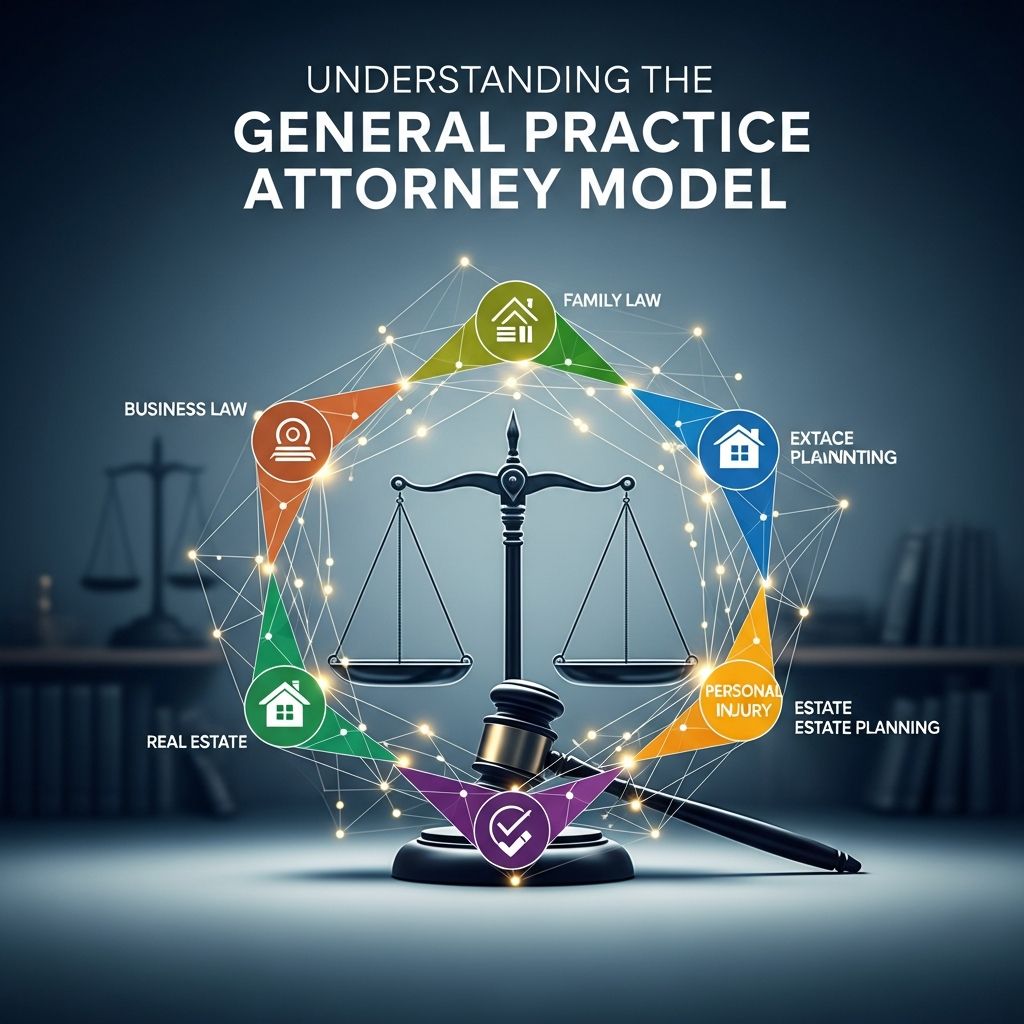
The Gateway to Legal Assistance: Understanding General Practice Attorneys
The legal profession has traditionally operated with a clear division of labor. Attorneys specialize in narrowly defined practice areas, requiring clients to identify their specific legal need before seeking representation. However, a growing movement within the legal field challenges this model by introducing the concept of generalist practitioners who serve as the initial point of contact for legal matters. These professionals function similarly to primary care physicians in medicine, handling straightforward legal questions and subsequently directing clients to specialists when circumstances demand deeper expertise.
This generalist approach recognizes a significant gap in legal accessibility. Many individuals and small business owners face legal uncertainties but lack the knowledge to determine whether they need specialized counsel. They may not understand which type of attorney to consult or whether their issue warrants professional legal assistance at all. General practice attorneys bridge this gap by providing initial consultation, assessment, and guidance.
The Healthcare Parallel: Drawing Inspiration from Medical Practice
The concept of primary care legal services borrows extensively from the healthcare model. In medical practice, a primary care physician serves as the patient’s first point of contact for health concerns. This doctor diagnoses common conditions, provides treatment for routine issues, and refers patients to specialists such as cardiologists, dermatologists, or surgeons when specialized knowledge becomes necessary. The primary care physician maintains an understanding of the entire patient’s health profile and coordinates care across multiple specialists.
Legal practitioners are increasingly adopting this framework. A general practice attorney functions as the ”primary care” interface for legal matters. When clients encounter legal questions—whether regarding contract review, business formation, property matters, or employment issues—they can consult with this generalist who can provide immediate guidance, handle routine matters, and coordinate referrals to specialized attorneys when appropriate.
This model offers several advantages. It reduces the friction clients experience when seeking legal help, provides more affordable initial consultations, and ensures that specialists receive well-organized client referrals rather than fielding calls from confused individuals unsure about their legal needs.
Core Responsibilities of the Generalist Attorney
General practice attorneys operating under this model maintain several key responsibilities that define their role:
- Initial Consultation and Triage: Attorneys conduct thorough client consultations to understand legal issues, ask clarifying questions, and assess the complexity of the matter at hand.
- Problem Identification: They diagnose whether an issue represents a routine matter that can be handled directly or a complex issue requiring specialist intervention.
- Direct Legal Services: For issues within their competency, general practice attorneys provide legal advice, draft documents, negotiate on behalf of clients, and represent clients in straightforward matters.
- Specialist Coordination: When specialized expertise is needed, these attorneys facilitate referrals, coordinate communication between client and specialist, and ensure continuity of service.
- Cost-Effective Guidance: By handling routine matters efficiently, generalist attorneys reduce overall legal expenses for clients who might otherwise pay specialist rates for issues that do not require specialized knowledge.
- Ongoing Client Relationship: General practice attorneys often maintain ongoing relationships with clients across multiple legal issues, serving as trusted advisors rather than transactional service providers.
The Spectrum of Legal Issues Handled by Generalist Attorneys
General practice attorneys address a wide range of legal matters that comprise the bulk of legal needs for individuals and small businesses. These matters typically include everyday legal concerns that, while important, do not necessarily require deep expertise in narrow specialties.
Common issues within the generalist’s purview include contract review and formation, small business establishment and structuring, employment-related matters such as offer letter review or independent contractor agreements, property transactions and lease reviews, powers of attorney and basic estate planning, intellectual property basics such as trademark registration assistance, and debt collection or creditor dispute matters. Additionally, general practice attorneys handle document preparation for various purposes, provide legal research on common questions, and advise clients on compliance with standard regulations.
The breadth of these matters reflects the diversity of legal needs among the general population. Most individuals and business owners encounter these types of issues regularly and benefit from accessible legal guidance.
When Specialist Referral Becomes Necessary
A fundamental skill for general practice attorneys involves recognizing when matters exceed their competency level or the client’s needs warrant specialized expertise. This professional judgment protects both client interests and maintains appropriate standards of legal practice.
Situations requiring specialist referral typically include complex commercial litigation involving substantial damages, specialized areas such as patent law or environmental regulation, medical malpractice claims requiring extensive medical knowledge, immigration matters with intricate procedural requirements, complex family law issues such as high-net-worth divorces with significant assets, tax matters involving sophisticated planning strategies, and real estate transactions of unusual complexity or involving commercial development.
Experienced general practice attorneys maintain networks of trusted specialists across various practice areas. They understand the strengths and reputations of other attorneys and can confidently recommend appropriate specialists. This network becomes a valuable asset, allowing attorneys to serve clients comprehensively without pretending expertise they do not possess.
The Business Model and Client Access Benefits
The generalist attorney model creates several advantages for client access to legal services. First, the reduced specialization allows for lower consultation fees and reduced hourly rates compared to specialists. Clients can afford to seek initial legal guidance without the financial barrier that specialist rates might create. Second, the generalist removes the burden of self-diagnosis from the client. Instead of attempting to determine whether they need a litigation attorney, tax specialist, or employment lawyer, clients can simply contact a general practice attorney and receive appropriate guidance.
Third, this model can improve overall outcomes by ensuring that specialists receive clients who have been properly vetted and whose issues have been appropriately assessed. The referring attorney provides context, relevant documents, and preliminary analysis, allowing specialists to begin work more efficiently.
Fourth, continuity of service improves for clients with multiple legal needs. Rather than assembling separate specialists for each issue, clients maintain a relationship with a general practice attorney who coordinates across various legal matters and specialists. This coordination becomes particularly valuable for small business owners who encounter diverse legal challenges over time.
Building and Maintaining Client Trust
Success in general practice law depends heavily on client trust and satisfaction. Clients must feel confident that their generalist attorney understands their situation and provides sound judgment about whether specialist referral is needed. This requires several key practices.
Transparency about the limits of the attorney’s expertise proves essential. Clients should understand that the general practice attorney is not attempting to handle matters beyond their competency but rather ensuring appropriate specialist involvement. Clear communication about fees, timelines, and expected outcomes helps manage client expectations. Regular updates and proactive communication maintain client confidence. Finally, maintaining ethical standards and professional integrity remains paramount, as clients rely on the attorney’s judgment to serve their best interests rather than maximize billable hours through unnecessary specialist referrals.
Comparison: Generalist vs. Specialist Legal Services
| Characteristic | General Practice Attorney | Specialist Attorney |
|---|---|---|
| Initial Consultation Cost | Lower hourly rates; affordable initial access | Higher hourly rates; significant initial investment |
| Scope of Issues Handled | Broad range of routine to moderately complex matters | Deep expertise in narrow practice area |
| Triage and Assessment | Evaluates issue and directs to specialist if needed | Typically receives pre-vetted, highly specialized matters |
| Client Relationship | Ongoing relationship across multiple issues | Project-based engagement for specific matters |
| Coordination Across Issues | Coordinates with multiple specialists as needed | Focuses on single practice area |
| Best For | Individuals, small businesses with varied legal needs | Complex, specialized matters requiring deep expertise |
Developing Excellence in General Practice
General practice attorneys must develop particular skills and knowledge to operate effectively in this model. Continuous legal education becomes essential, as these practitioners must maintain competency across multiple practice areas. They need strong interpersonal and communication skills to conduct effective consultations, ask probing questions, and explain legal concepts clearly to diverse clients. Research abilities prove critical, as generalist attorneys frequently encounter issues that require learning or refreshing knowledge. Project management skills help coordinate matters across multiple specialists and track numerous client issues simultaneously.
Additionally, general practice attorneys benefit from developing strong networks within the legal community. Knowing trustworthy, capable specialists in various practice areas becomes invaluable. Many successful general practice attorneys actively participate in bar associations, attend continuing legal education programs focused on practice development, and build deliberate relationships with specialists they can confidently recommend.
Challenges and Limitations of the Generalist Model
While the generalist attorney model offers substantial benefits, it also presents challenges. Some clients prefer dealing with established specialists rather than general practitioners. Certain matters may not fit neatly into either the generalist’s purview or an obvious specialist’s domain, creating ambiguity about who should handle the work. Managing the transition between generalist and specialist requires careful communication to ensure clients understand the change and feel confident in the new arrangement.
Additionally, some areas of law do not lend themselves well to generalist practice. Highly technical fields such as patent law or complex tax practice require sustained, deep expertise that generalists cannot reasonably maintain. General practitioners must recognize these boundaries and develop strategies for serving clients who need expertise in these areas.
Frequently Asked Questions
Q: How do I know if I need a general practice attorney versus a specialist?
A: If you face a straightforward legal matter or are unsure what type of legal help you need, a general practice attorney is an excellent starting point. They can assess your situation and recommend a specialist if necessary. You might go directly to a specialist if you face a highly technical legal issue in a narrow field such as patent law or complex tax planning.
Q: Can a general practice attorney handle matters that later require specialist involvement?
A: Yes, experienced general practice attorneys regularly identify when matters require specialist expertise. They coordinate the transition and maintain oversight of the matter to ensure continuity and that the client’s overall interests are protected.
Q: Is working with a general practice attorney less expensive than working with specialists?
A: Often, yes. General practice attorneys typically charge lower hourly rates than specialists. Additionally, by handling routine matters directly, they can reduce overall legal expenses for clients with varied legal needs over time.
Q: How does a general practice attorney maintain competency across multiple practice areas?
A: Successful general practice attorneys invest in continuous legal education, stay current with changes in various practice areas, maintain strong networks of specialists they can consult with, and are disciplined about recognizing the limits of their expertise.
Q: Should I maintain an ongoing relationship with a general practice attorney?
A: Many people find value in maintaining an ongoing relationship with a trusted general practice attorney. This attorney becomes familiar with your personal or business situation and can provide consistent guidance as new legal issues arise over time.
References
- How to Become a Healthcare Lawyer — School of Public Health, Tulane University. 2024. https://publichealth.tulane.edu/blog/how-to-become-a-healthcare-lawyer/
- What do Health Lawyers Do? — American Public University System. 2024. https://www.apu.apus.edu/area-of-study/security-and-global-studies/resources/what-do-health-lawyers-do/
- Making a Case for a Primary Care Lawyer — Legal Talk Network. 2017. https://legaltalknetwork.com/podcasts/lawyerist-podcast/2017/10/140-making-a-case-for-a-primary-care-lawyer-with-melissa-hall/
- Guide for Physicians on Choosing a Healthcare Attorney — Louisiana Academy of Family Physicians. 2024. https://lafp.org/practice-tools-resources/independent-practice-toolkit/residency—explore-your-options/choosing-an-attorney
Similar Articles








Read full bio of medha deb




