
The Fractured Promise: Bureaucracy and Immigrant Soldiers
How shifting Department of Defense policies stalled the naturalization process for immigrant soldiers serving the United States.
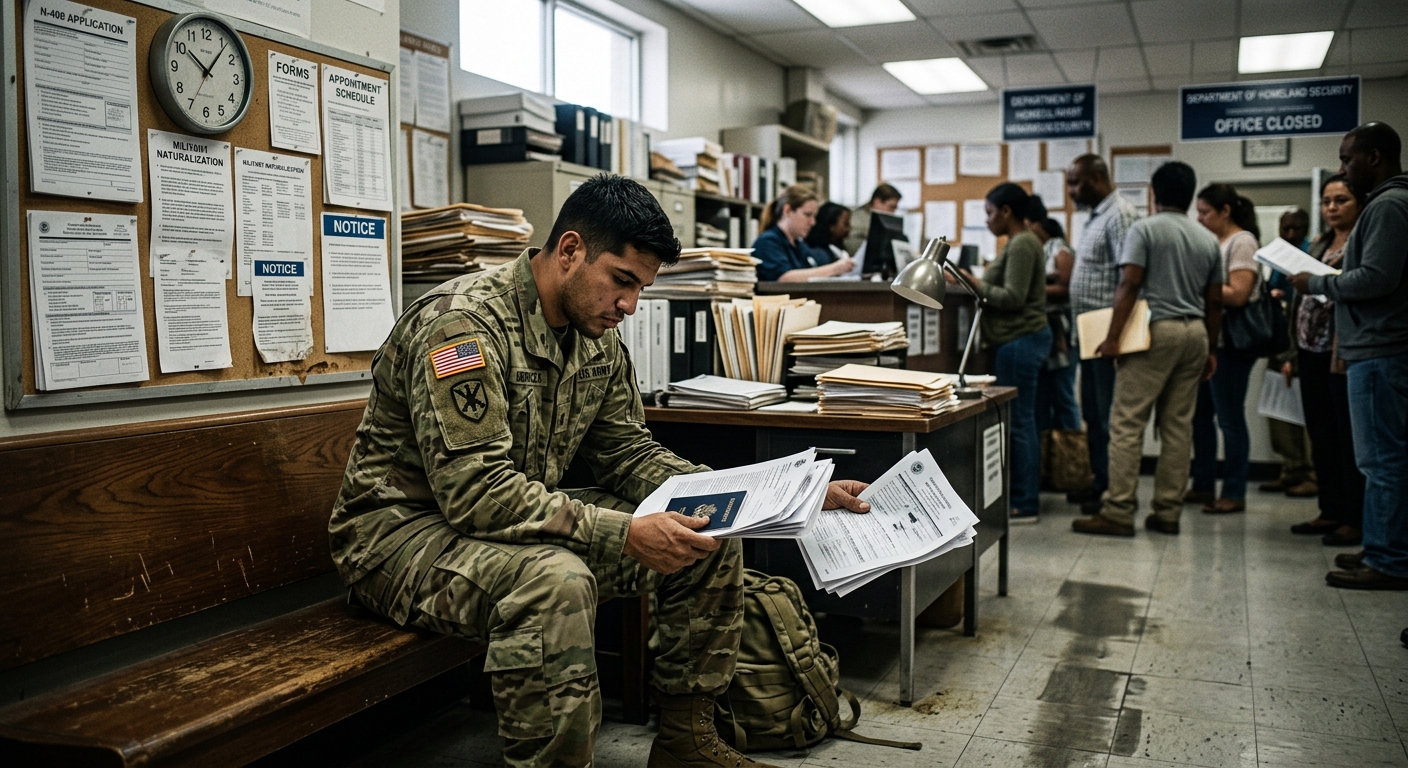
Introduction: The Ultimate Sacrifice Deferred
Enlisting in the armed forces of a nation that is not yet legally your own is arguably the ultimate expression of faith, loyalty, and sacrifice. For generations, the United States government has extended a profound and reciprocal promise to immigrant service members: serve honorably in our military, and we will expedite your path to becoming an American citizen. This mutually beneficial arrangement allowed the military to meet its recruitment quotas and fill critical skill gaps, while offering noncitizens a fast-tracked opportunity to achieve the American dream.
However, in recent years, this historic compact has been severely fractured by bureaucratic red tape and shifting political landscapes. Following sudden policy changes implemented by the Department of Defense in the fall of 2017, thousands of noncitizen recruits found themselves trapped in an agonizing administrative limbo. Instead of being shipped to basic training and earning their citizenship, these individuals faced prolonged background checks, canceled contracts, and the very real threat of deportation. This sudden reversal not only devastated the lives of willing recruits but also raised critical questions about national security, military readiness, and the integrity of the promises made by the United States government.
A Century-Old Tradition: Noncitizens in the U.S. Armed Forces
To fully understand the gravity of these policy shifts, one must first recognize the deep historical roots of immigrant military service in the United States. Since the Revolutionary War, noncitizens have fought alongside native-born Americans. Over the past century alone, more than 750,000 noncitizens have enlisted in the U.S. Armed Forces and subsequently obtained their citizenship through their honorable service.
The legal framework supporting this tradition is codified in the Immigration and Nationality Act (INA). Specifically, INA Section 328 governs military naturalization during peacetime, requiring lawful permanent residents to serve honorably for at least one year before applying for citizenship. Conversely, INA Section 329 applies during designated periods of hostility—such as the Global War on Terrorism, which has been legally ongoing since September 11, 2001. Under Section 329, noncitizens who serve honorably can have standard naturalization requirements, such as continuous residency and physical presence in the U.S., entirely waived. Historically, this meant that a noncitizen could apply for naturalization almost immediately after enlisting and serving for a very brief period.
Understanding the MAVNI Program
In 2008, recognizing severe shortages in critical areas, the Department of Defense launched a specialized recruitment initiative known as the Military Accessions Vital to the National Interest (MAVNI) program. Spearheaded to address the military’s pressing need for specialized medical professionals and experts in strategic languages—such as Pashto, Persian, and Russian—MAVNI targeted a unique demographic. It allowed legal non-immigrants, such as international students on F-1 visas, asylees, refugees, and later Deferred Action for Childhood Arrivals (DACA) recipients, to join the military.
The MAVNI program was lauded as a strategic triumph. The military gained highly motivated, skilled individuals whose cultural and linguistic competencies were invaluable to global operations. In exchange, MAVNI recruits were offered an expedited path to citizenship under INA Section 329. For years, the process was straightforward: upon reporting to basic training, recruits would serve for as little as one day before a commanding officer would sign their Form N-426, the Request for Certification of Military or Naval Service. With this certification of honorable service in hand, recruits could file their naturalization applications and often graduate from basic training as fully naturalized American citizens.
The 2017 Policy Shift: Erecting Bureaucratic Walls
The streamlined process that defined the MAVNI program’s success came to an abrupt halt in 2017. On October 13, 2017, the Department of Defense issued a pivotal memorandum that fundamentally altered the requirements for military naturalization. Citing national security concerns and the need for more rigorous vetting of foreign-born recruits, the new policy dismantled the historical “one day of service” rule.
Under the new directives, noncitizen recruits were required to serve a minimum of 180 days on active duty, or complete one full year of service in the Selected Reserve, before they were even eligible to request the Form N-426 certification. Furthermore, the policy mandated that recruits undergo and completely pass exhaustive counterintelligence and security background checks before they could even attend basic training. Previously, these background checks were conducted concurrently with a recruit’s initial training phase.
Pre-2017 vs. Post-2017 Military Naturalization Policies
| Policy Feature | Pre-October 2017 (Historical Practice) | Post-October 2017 (New DoD Policy) |
|---|---|---|
| Service Requirement for Form N-426 | One day of honorable service. | 180 days of active duty or 1 year in the reserves. |
| Security Screening Clearance | Conducted concurrently during basic training. | Must be fully completed prior to attending basic training. |
| Naturalization Timeline | Expedited; frequently completed before graduation from basic training. | Severely delayed; recruits placed in an indefinite holding pattern. |
The Human Cost: Stranded in a Legal Limbo
The immediate fallout from the October 2017 memorandum was catastrophic for thousands of MAVNI recruits who had already signed enlistment contracts. The new background checks were highly complex, vastly under-resourced, and took months—often years—to complete. During this unprecedented waiting period, the recruits were forbidden from shipping out to basic training, leaving their lives entirely on hold.
This bureaucratic bottleneck created a devastating catch-22 for the enlisted immigrants. Many recruits had joined the military while holding temporary legal statuses, such as student visas or temporary work permits. Because they were delayed from entering active duty, they could not access the expedited citizenship process. Simultaneously, as the months turned into years, their underlying civilian visas began to expire. Recruits who had sworn an oath to defend the United States suddenly found themselves undocumented, unable to work legally, and vulnerable to deportation by Immigration and Customs Enforcement (ICE).
- Loss of Livelihood: Without valid visas, recruits could not maintain lawful employment, leading to extreme financial hardship.
- Deportation Fears: Some individuals faced removal proceedings to countries where they could be persecuted specifically because they had attempted to join the U.S. military.
- Psychological Toll: Recruits reported severe anxiety and depression, feeling betrayed by the country they were willing to die for.
Legal Pushback and Federal Court Interventions
The sweeping changes and the subsequent paralyzation of the MAVNI program did not go unchallenged. Recognizing the fundamental injustice of changing the rules on individuals who had already signed legally binding contracts, several civil rights organizations and law firms launched aggressive litigation against the Department of Defense and the Department of Homeland Security.
Multiple class-action lawsuits were filed in federal courts. The plaintiffs argued that the DoD’s arbitrary refusal to sign Form N-426 for recruits who were faithfully waiting to serve was unlawful and violated the Administrative Procedure Act. The courts largely agreed with the recruits. In notable rulings, federal judges found that the DoD could not retroactively apply the new, burdensome requirements to recruits who had enlisted under the old rules. Injunctions were issued, forcing the military to resume issuing honorable service certifications for affected class members, allowing them to finally submit their naturalization applications to U.S. Citizenship and Immigration Services (USCIS).
Despite these legal victories, the damage to the broader pipeline of immigrant recruitment had already been done. The MAVNI program was effectively frozen, and the Pentagon discharged hundreds of recruits citing minor discrepancies or “foreign ties”—which, ironically, were the exact attributes (such as having family in a foreign country) that made them eligible for the language-focused MAVNI program in the first place.
National Security and Military Readiness
Beyond the undeniable human rights and immigration implications, the dismantling of expedited naturalization pathways presents a distinct threat to U.S. national security. The modern battlefield is heavily reliant on cultural intelligence, cyber expertise, and advanced medical care. By erecting insurmountable administrative barriers, the military is intentionally turning away individuals who possess high-demand, low-density skills that are scarce among the native-born population.
Military leaders and defense experts have long argued that diversifying the armed forces enhances operational effectiveness. Discharging willing and capable recruits simply because a background check took too long to process wastes millions of dollars in recruiting resources. Furthermore, it sends a chilling message to prospective future recruits worldwide: the United States may not honor its commitments. Rebuilding the trust that was lost during the post-2017 policy implementation will require substantial and sustained effort from current and future defense administrations.
The Current Landscape of Military Naturalization
Today, the landscape of military naturalization remains complex. While court orders have forced the government to honor the contracts of legacy MAVNI recruits, the broader policies governing how and when lawful permanent residents and other noncitizens can naturalize through service continue to be heavily scrutinized. USCIS continues to process military naturalization applications, but applicants must navigate a maze of stringent requirements and lingering bureaucratic delays.
The story of these immigrant soldiers is a poignant reminder of the vital contributions noncitizens make to the nation’s defense. It also underscores the necessity for immigration and defense policies that operate in harmony, ensuring that those who are willing to make the ultimate sacrifice for the United States are granted the rights, respect, and citizenship they have so rightfully earned.
Frequently Asked Questions (FAQ)
What was the MAVNI program?
The Military Accessions Vital to the National Interest (MAVNI) program was a Department of Defense initiative launched in 2008. It allowed legal noncitizens with critical medical and language skills to join the U.S. military in exchange for an expedited pathway to American citizenship.
What is Form N-426?
Form N-426 is the Request for Certification of Military or Naval Service. It is a crucial document that must be signed by a military official to verify that a noncitizen service member has served honorably, which is a strict prerequisite for applying for military naturalization under the Immigration and Nationality Act.
How did the 2017 DoD policy changes affect immigrant recruits?
The October 2017 policy required recruits to serve 180 days on active duty (or a year in the reserves) and pass exhaustive background checks before they could receive their Form N-426. This caused massive delays, causing many recruits’ civilian visas to expire and leaving them vulnerable to deportation before they could even attend basic training.
Can noncitizens still join the U.S. military?
Yes, Lawful Permanent Residents (Green Card holders) and citizens of certain compact nations can still enlist in the U.S. military. However, programs like MAVNI, which allowed individuals on temporary visas to enlist, have been suspended or heavily restricted.
References
- Naturalization Through Military Service — U.S. Citizenship and Immigration Services (USCIS). 2024-10-11. https://www.uscis.gov/military/naturalization-through-military-service
- DoD Announces Policy Changes to Lawful Permanent Residents and the Military Accessions Vital to the National Interest (MAVNI) Pilot Program — U.S. Department of Defense. 2017-10-13. https://www.defense.gov/News/Releases/Release/Article/1342317/dod-announces-policy-changes-to-lawful-permanent-residents-and-the-military-acc/
- Noncitizens in the U.S. Military — Migration Policy Institute. 2019-05-15. https://www.migrationpolicy.org/research/noncitizens-us-military
- Changes to the Expedited Naturalization Process for Military Service Members — National Immigration Forum. 2018-03-02. https://immigrationforum.org/article/changes-expedited-naturalization-process-military-service-members/
Similar Articles








Read full bio of Sneha Tete


