
Forced Urine Collection in Criminal Cases: Legal Rights
Understanding your Fourth Amendment protections against involuntary drug testing by law enforcement.
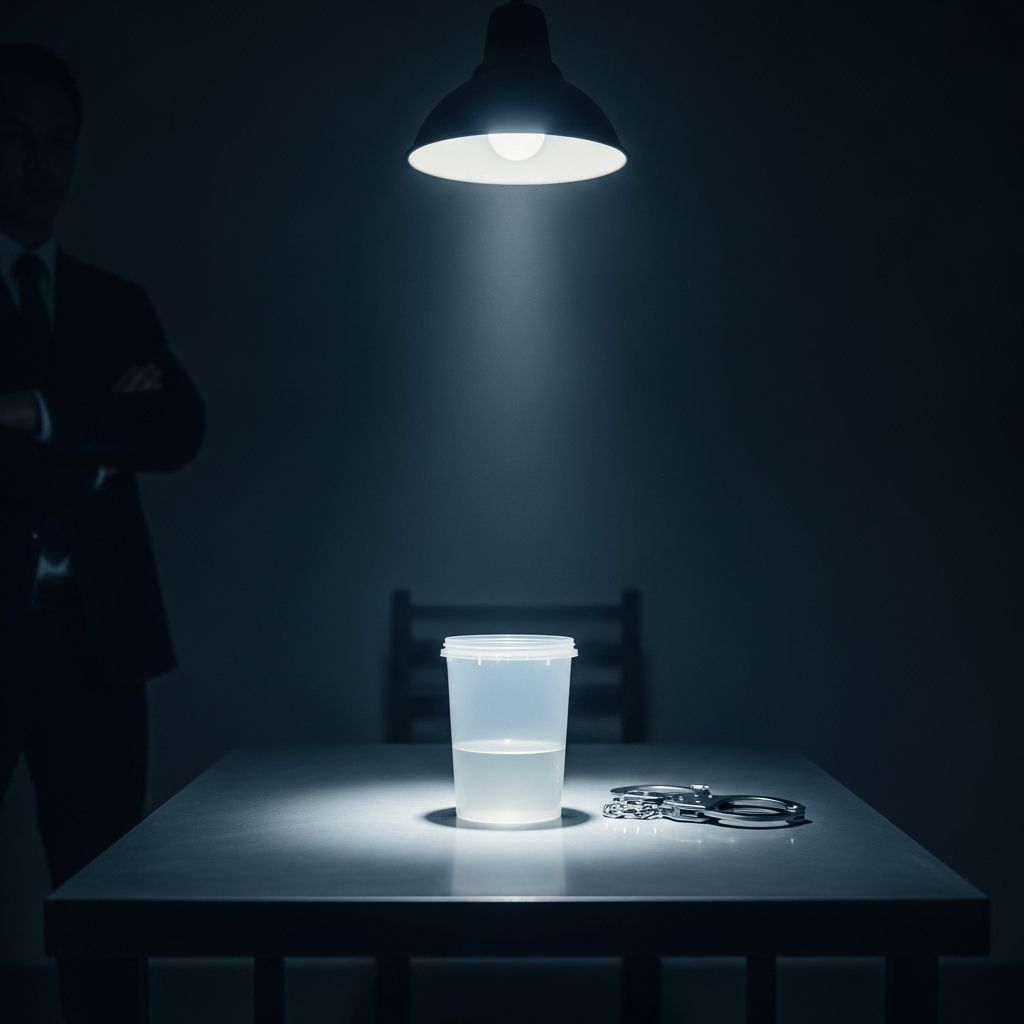
Understanding Involuntary Urine Collection and Constitutional Protections
One of the most significant questions individuals face during drug-related investigations concerns the authority of law enforcement to collect biological samples without consent. The practice of forced urine collection touches on fundamental constitutional rights, particularly those safeguarded by the Fourth Amendment. Understanding when police possess the legal authority to compel such samples, and conversely, when individuals retain the right to refuse, requires navigating complex constitutional precedent and statutory frameworks that vary across jurisdictions.
The collection of bodily fluids for chemical analysis represents a government intrusion into personal privacy that courts have long scrutinized under constitutional law. Unlike searches of physical spaces or examination of possessions, urine collection involves extraction of material from a person’s body itself, raising heightened privacy concerns that demand clear legal justification.
The Fourth Amendment Framework for Body Searches
The Fourth Amendment provides foundational protection against unreasonable searches and seizures by governmental agents. This constitutional safeguard traditionally requires law enforcement to obtain a warrant supported by probable cause before conducting searches. However, the Supreme Court has recognized exceptions to this general requirement, particularly in contexts where special governmental needs transcend typical law enforcement objectives.
When courts evaluate whether urine collection constitutes a search under the Fourth Amendment, they acknowledge that extracting biological material from the body involves a significant privacy intrusion. The collection process itself, the examination of the specimen, and the information derived from chemical analysis all implicate protected interests in bodily integrity and privacy. Consequently, any governmental collection of urine samples must satisfy constitutional scrutiny, either through warrant authorization or through recognition of an applicable exception.
The administrative search doctrine provides one mechanism through which courts have permitted certain warrantless searches. Under this framework, reviewing courts balance the governmental interest served by a testing program against the degree of intrusiveness involved. This balancing test has enabled courts to uphold some drug-testing programs in specific contexts where special governmental needs exist beyond ordinary law enforcement purposes.
Employment and Transportation Context: Special Governmental Needs
The Supreme Court has recognized that certain employment contexts present unique circumstances justifying drug testing without traditional warrant and probable cause requirements. In cases involving railroad employees and customs officers, the Court identified compelling governmental interests in safety and security that justified suspicionless drug testing of employees in specific safety-sensitive positions.
For railroad workers, the Court emphasized that train operation by individuals impaired by drugs could cause catastrophic accidents before any visible signs of impairment became apparent. Similarly, for customs personnel handling weapons and conducting drug interdiction, the Court found substantial governmental interest in ensuring these officers possessed unimpaired judgment and physical capability. These employment-based drug-testing programs demonstrate how courts apply different constitutional analysis when special needs beyond ordinary law enforcement are demonstrated.
Within the transportation industry specifically, regulatory frameworks have emerged permitting more intensive observation procedures than courts initially found necessary. Current regulations governing transportation employee testing allow direct observation of urine collection and partial removal of clothing to prevent specimen tampering, representing a higher level of intrusion than earlier programs that operated without visual monitoring.
Constraints on Police Authority in Criminal Investigations
The constitutional analysis differs significantly when police seek to collect urine samples as part of criminal drug investigations rather than in employment or transportation safety contexts. Law enforcement does not enjoy the same latitude to conduct suspicionless testing that applies in specialized regulatory domains. When police pursue urine samples in criminal cases, they must generally satisfy traditional Fourth Amendment requirements or demonstrate that an applicable exception permits warrantless collection.
The critical distinction centers on purpose. Testing programs justified by special governmental needs divorced from general law enforcement objectives have received more favorable constitutional treatment. Conversely, when the primary purpose involves collecting evidence for criminal prosecution, courts apply stricter scrutiny. A hospital screening program targeting pregnant patients suspected of cocaine use, for instance, was invalidated precisely because its purpose was to generate evidence for law enforcement rather than to serve independent medical or safety objectives.
This principle establishes that police cannot circumvent Fourth Amendment protections by framing criminal investigations as falling within special needs categories. The constitutional framework requires genuine separation between the special need justifying testing and law enforcement’s prosecutorial objectives.
Circumstances Permitting Forced Collection
Despite the general prohibition on warrantless searches, certain narrow circumstances do permit police to compel biological sample collection without advance consent. These exceptions typically apply when serious public safety concerns create exigent circumstances or when statutory frameworks explicitly authorize collection procedures.
- Serious bodily injury accidents: When accidents involve serious bodily injury, law enforcement may obtain warrants or rely on exigent circumstances to compel blood or urine testing. The immediate need to preserve evidence of impairment, combined with the inherent degradation of biological markers over time, may justify forced collection without typical warrant procedures.
- Implied consent statutes: Many jurisdictions operate under implied consent frameworks, particularly in traffic-related contexts. These statutes establish that by operating a motor vehicle, individuals implicitly consent to chemical testing. Refusal to submit to testing can result in driver’s license suspension and other administrative penalties, though such refusal cannot be compelled through physical force in most jurisdictions.
- Warrant-supported collection: Police can obtain court-authorized warrants for urine collection if they establish probable cause and demonstrate to a judge that reasonable grounds exist for suspecting drug use. The challenge for law enforcement involves obtaining warrants quickly, as biological markers dissipate over time, and delayed collection may render testing results unreliable or inadmissible.
Refusal Rights and Administrative Consequences
Individuals retain the right to refuse urine collection when police lack legal authority to compel it. However, exercising this refusal right may trigger significant consequences depending on the context. In implied consent jurisdictions, refusing a requested drug test during traffic stops can result in administrative license suspension independent of criminal guilt or conviction. This administrative penalty operates separately from any criminal charges.
The legal distinction between administrative penalties for refusing tests and criminal prosecution for refusing unlawful collection proves important. Police cannot use physical restraint to force urine production in most circumstances, but they can pursue administrative sanctions through licensing authorities. An individual may lawfully refuse an unlawful demand for urine while simultaneously facing administrative consequences for that refusal.
This framework creates challenging practical situations where individuals must sometimes choose between submitting to potentially unlawful collection or accepting administrative penalties. Understanding this distinction helps individuals make informed decisions about asserting rights while recognizing realistic consequences.
Medical Records and Hospital-Obtained Samples
When hospitals or medical facilities obtain blood or urine samples for legitimate medical purposes, those samples ordinarily enjoy privacy protection independent of criminal investigations. Medical personnel collecting samples for diagnosis, treatment, or monitoring purposes do not act as law enforcement agents, and the medical records generated receive heightened privacy protection.
Police cannot simply access medical records generated during hospital treatment without proper legal process. To obtain such records, law enforcement must petition a court and establish specific connection between the medical records and criminal charges being pursued. This nexus requirement ensures that police cannot indiscriminately access private medical information but must demonstrate genuine investigative need.
Once police satisfy these procedural requirements and judges find sufficient connection between medical evidence and criminal allegations, courts may permit access to hospital-generated samples or records. The protection provided to medical records thus functions as a qualified barrier rather than absolute prohibition on police access.
Visual Observation and Privacy Concerns
Even in contexts where suspicionless drug testing receives constitutional approval, courts have emphasized that procedures must remain minimally intrusive. One aspect receiving particular judicial attention involves visual monitoring during urine sample collection. The practice of having observers present while individuals produce urine samples represents an additional privacy invasion beyond sample collection itself.
When courts approved transportation industry drug testing programs, they specifically noted the absence of visual observation as a supporting factor for constitutionality. The judicial reasoning suggested that if direct observation became necessary, more substantial governmental justification might be required to overcome additional privacy intrusions. While some regulatory frameworks now permit visual observation in specific transportation contexts, the practice remains subject to heightened scrutiny in other settings.
This judicial emphasis on minimizing unnecessary intrusion demonstrates that even where drug testing receives approval, courts expect government to employ the least restrictive methods capable of achieving legitimate objectives. More intrusive collection procedures demand stronger justification and more rigorous constitutional analysis.
Warrant Requirements and Timeline Challenges
Police who seek court-authorized warrants for drug testing confront practical difficulties related to biological evidence degradation. Urine and blood samples deteriorate over time, and the presence of drugs or metabolites may become undetectable if collection is delayed. This temporal constraint creates pressure on law enforcement to act quickly, sometimes resulting in collection without warrant authorization in situations where exigent circumstances arguments might be questionable.
The warrant requirement lacks a universally applicable timeline, meaning judges theoretically possess authority to authorize collection at any point during investigation. However, the practical reality that evidence degrades over hours or days creates practical complications for law enforcement seeking to preserve evidence. This tension between constitutional protections requiring warrants and practical constraints of biological evidence preservation shapes how police actually operate in drug cases.
Individuals should understand that this timeline pressure does not diminish law enforcement’s constitutional obligations. Police cannot justify warrantless collection simply because evidence might degrade; rather, they must either obtain timely warrants or demonstrate that genuine exigent circumstances existed. The existence of a temporal constraint, standing alone, does not satisfy constitutional requirements for suspicionless collection.
The Role of Probable Cause
When police seek to compel urine collection through warrant authorization, they must establish probable cause to a judge that reasonable grounds exist for believing drug use or possession occurred. Probable cause requires more than mere suspicion or hunch; instead, it demands sufficient articulable facts to justify a reasonable person in believing criminal activity occurred.
The probable cause standard applies similarly in drug cases as in other criminal investigations. Observable signs of impairment, traffic violations coupled with behavioral indicators of drug influence, reliable informant information, or other factual bases may support probable cause determinations. Police bear the burden of persuading judges that facts presented justify intrusion into the personal bodily integrity involved in forced urine collection.
This requirement protects individuals from arbitrary testing based on prejudice or profile-based suspicion. Police cannot obtain warrant authorization for urine collection based solely on demographic characteristics, general neighborhood conditions, or other generalized factors. Specific, articulable facts related to the individual must support the warrant application.
State Variations and Jurisdictional Differences
Constitutional protections establish baseline standards that apply nationwide, but individual states have authority to provide greater protection to their citizens than the Constitution minimally requires. Consequently, variations exist across jurisdictions regarding when police can compel drug testing and what consequences follow from refusal.
Some jurisdictions impose stricter requirements on police than constitutional minimums demand, restricting circumstances under which warrantless testing is permitted or requiring higher evidentiary standards for warrant authorization. Other states adopt statutory frameworks that establish detailed procedures for drug testing in specific contexts. Understanding applicable state law is essential because it may provide protections beyond federal constitutional minimums.
Individuals facing potential drug testing should consult with attorneys familiar with applicable state law, administrative regulations, and local prosecutorial practices. This localized knowledge proves crucial for understanding actual enforcement practices and realistic consequences in particular jurisdictions.
Practical Considerations for Individuals
When police request urine samples during investigations, individuals should understand their general right to decline absent lawful authorization. However, this right to refuse does not eliminate practical consequences. In implied consent jurisdictions, refusal in traffic contexts triggers administrative license suspension. In other contexts, refusal might be used as circumstantial evidence or prompt more aggressive investigation.
Individuals should clearly communicate their refusal to consent to sampling and request explanation of the legal basis for collection demands. This articulation creates a record of the refusal and may prove valuable if legal challenges subsequently arise. Written documentation of exchanges with police, including the time and nature of requests and any explanations provided, supports later legal arguments about whether collection was lawful.
Consulting with defense counsel before providing samples proves highly advisable when possible. Attorneys can assess whether police possess legal authorization for collection and advise regarding whether cooperation serves or harms the individual’s interests. In many jurisdictions, defense attorneys can assist in understanding both constitutional protections and practical consequences of particular choices.
Frequently Asked Questions
Q: Can police collect urine samples without my permission?
A: Generally, police cannot force urine collection without meeting constitutional requirements, such as warrant authorization supported by probable cause or demonstration that exigent circumstances justify suspicionless collection. However, in certain employment and transportation contexts, regulatory frameworks may permit warrantless testing.
Q: What happens if I refuse to provide a urine sample?
A: In implied consent jurisdictions, refusal during traffic stops may result in driver’s license suspension. In other contexts, refusal cannot typically be compelled through physical force, though it may affect ongoing investigations or be used as circumstantial evidence.
Q: Do police need a warrant for urine collection?
A: In most criminal investigations, yes. Police should obtain court-authorized warrants based on probable cause. Some exceptions exist in specific regulatory contexts, but these exceptions are narrowly construed and do not typically apply to ordinary criminal investigations.
Q: Can hospital medical records be used in criminal cases?
A: Police can obtain hospital records through proper legal process by demonstrating to a court that genuine connection exists between the medical records and criminal charges. Medical privacy protections require this procedural safeguard before access is granted.
Q: What if serious bodily injury occurred in an accident?
A: In accidents involving serious bodily injury, law enforcement may have greater authority to compel testing through exigent circumstances or warrant authorization due to public safety concerns and the time-sensitive nature of biological evidence preservation.
Q: How long do drug metabolites remain detectable in urine?
A: Detection windows vary depending on the substance and individual factors. Some drugs remain detectable for several days, while others may persist longer. This temporal consideration affects police decisions regarding collection timing and influences whether evidence may be admissible depending on investigation delays.
Q: Can visual observation occur during urine collection?
A: While some regulatory frameworks permit visual observation in specific contexts, courts have emphasized that such observation represents additional intrusion requiring justification. The practice remains subject to heightened scrutiny and constitutional analysis outside specialized transportation contexts.
References
- Drug Testing and the Fourth Amendment — Justia Law. 2024. https://law.justia.com/constitution/us/amendment-04/25-drug-testing.html
- The Legal Environment of Drug Testing — National Center for Biotechnology Information (NCBI), U.S. National Library of Medicine. 2024. https://www.ncbi.nlm.nih.gov/books/NBK236253/
- Can A Person Refuse A Drug Test From Law Enforcement? — FAETT Firm, Criminal Defense Attorneys. 2024. https://www.faettfirm.com/can-a-person-refuse-a-drug-test-from-law-enforcement/
- Okla. Admin. Code § 310:638-1-8 – Urine specimen collection procedures — Cornell Law School, Legal Information Institute. 2024. https://www.law.cornell.edu/regulations/oklahoma/OAC-310-638-1-8
- Drug Test Rule Allows Direct Observation of Urine Collection — SHRM (Society for Human Resource Management). 2024. https://www.shrm.org/topics-tools/news/risk-management/drug-test-rule-allows-direct-observation-urine-collection
Similar Articles








Read full bio of Sneha Tete




