
For-Profit Probation: 5 Reforms To Stop Fee Abuse
Uncovering the controversial practice of private companies profiting from probation supervision and its impact on low-income offenders.
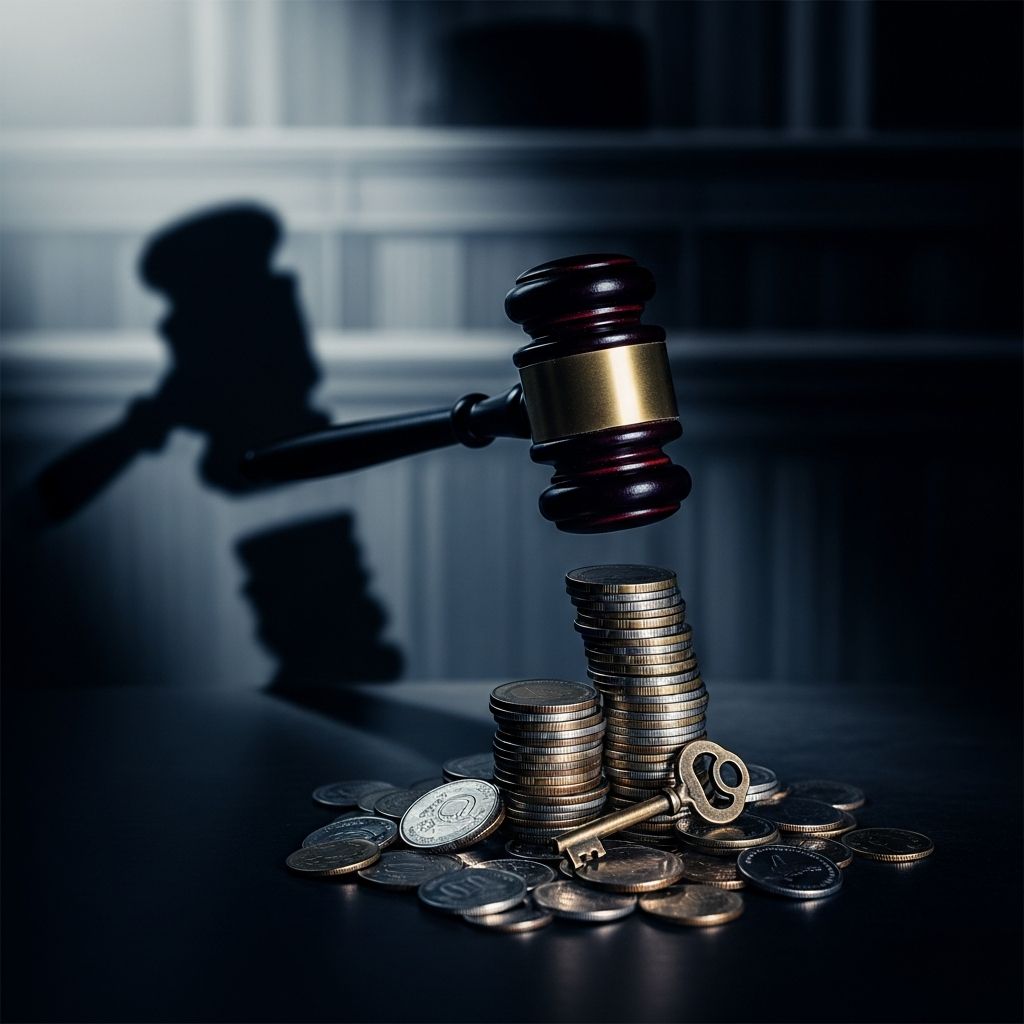
In the United States criminal justice landscape, probation serves as an alternative to incarceration, allowing offenders to remain in their communities under supervision. However, the emergence of for-profit probation companies has transformed this rehabilitative tool into a revenue-generating enterprise, particularly burdening those least able to pay. These private entities contract with courts to oversee misdemeanor cases, charging supervision fees that can escalate debts exponentially. This model, often termed “offender-funded probation,” shifts the financial responsibility directly onto probationers, creating perverse incentives for prolonged supervision and aggressive fee collection.
The Mechanics of Private Probation Operations
Private probation firms typically handle low-level offenses such as traffic violations, petty theft, or minor drug possession. Courts outsource supervision to these companies to alleviate overburdened public systems. Probationers must pay monthly fees—ranging from $35 to $44 or more—on top of court fines, alongside costs for additional requirements like drug tests, classes, or electronic monitoring. Failure to pay triggers violations, potential arrests, and jail time, effectively modernizing debtors’ prisons.
In practice, companies like those operating in Georgia maintain secretive records, shielded by state laws such as Georgia Code Ann. § 42-8-106, which exempts their files from public disclosure.Georgia hosts 39 such firms across 635 courts, supervising countless misdemeanor cases where inability to pay upfront leads to probation assignment.
- Probationers pay double or triple what wealthier individuals settle immediately.
- Firms profit from “tolls” or surcharges extending beyond original terms.
- Exclusive contracts with courts limit choices, forcing reliance on specific providers.
Historical Development and State Variations
The concept traces back to 1975 when Florida approved the Salvation Army for misdemeanor probation, marking the first private involvement. Legislation in 1976 formalized this, followed by states like Missouri and Tennessee in 1989. Georgia’s 1991 law enabled widespread privatization, suspending county-run services by 1992 and birthing firms like Professional Probation Services and Sentinel Offender Services.
Today, about ten states utilize private probation, with models varying:
| State | Key Features | Regulation Level |
|---|---|---|
| Georgia | 39 companies, 635 courts; offender-funded | Low; secretive records |
| Alabama | Judicial Correction Services dominant; extortion allegations | Moderate; 2013 expansion attempts |
| Florida | Pioneered in 1975; local court discretion | Local oversight |
| Kentucky | Comprehensive rules since 2000; pro bono requirements | High; conflict avoidance |
| Tennessee | State council approval; partial payment issues | Moderate |
Kentucky stands out with Supreme Court Rules mandating private use only when public options fail, including sliding-scale fees and judicial oversight.
Conflicts of Interest and Abusive Practices
The core issue lies in the profit motive. Companies earn solely from probationer fees, incentivizing more clients, longer terms, and add-on services. Private officers wield discretion over violations, allocations of partial payments (often prioritizing company fees over court debts), and sanctions, fostering abuse. In Tennessee and Florida, arrears lead to extended supervision despite payments toward fines.
High-profile cases underscore problems. In Alabama’s Harpersville Municipal Court, Judge Hub Harrington labeled Judicial Correction Services an “extortion racket” in 2012, condemning debtor imprisonments. Georgia’s Supreme Court in 2014 ruled Sentinel Offender Services violated rights by imposing unlawful “tolls,” opening refunds.
Private probation creates incentives for companies to extract maximum revenue, often at the expense of rehabilitation and fairness.
Corruption risks persist; a Georgia pardons board member was convicted for bribery from a probation firm. States ban official interests in these companies and require bonds, yet oversight lags.
Disproportionate Harm to the Economically Vulnerable
For-profit probation exacerbates inequality. Low-income offenders, unable to pay fines outright, enter probation cycles where fees compound debts. Human Rights Watch documented how this traps individuals in poverty, with probation feeding mass incarceration—Georgia’s system is a prime feeder despite its community alternative promise.
Women, minorities, and the unemployed suffer most, facing job loss from monitoring, family disruptions, and mental health declines. The Southern Center for Human Rights reports poor defendants paying far more for identical offenses, undermining equal justice.
Legal and Constitutional Challenges
Courts have scrutinized these practices. The 14th Amendment’s due process and equal protection clauses are invoked against wealth-based punishments. While some rulings uphold privatization if courts retain authority, others strike down excessive fees or extensions. Georgia’s 2014 decision against Sentinel highlighted unconstitutional tolls.
Federal oversight is limited, but advocacy groups push for ending exclusive contracts and mandating transparency. Critics argue offender-funded models inherently conflict with rehabilitation, prioritizing profit over public safety.
Paths Toward Meaningful Reform
Reform proposals include:
- Banning exclusive private contracts to foster competition.
- Eliminating probation officer discretion on fees, violations, and terms.
- Mandating conflict disclosures and pro bono services.
- Shifting to public or nonprofit supervision where feasible.
- Legislative caps on fees and automatic waivers for indigency.
Kentucky’s model offers a blueprint: fee schedules under court review, no fine collection by privates, and bar restrictions for employees. Broader abolition calls, like in Georgia, gain traction amid exposés.
Frequently Asked Questions (FAQs)
What exactly is for-profit probation?
For-profit probation involves private companies contracted by courts to supervise offenders, charging fees directly to probationers to fund operations.
Which states use private probation companies?
Approximately ten states, including Georgia, Alabama, Florida, Tennessee, Kentucky, and Missouri, with varying degrees of privatization.
Is for-profit probation legal across the US?
It operates legally in participating states but faces challenges for violating rights through excessive fees and incarceration for debt.
How does it affect poor defendants?
Poor individuals pay more overall, risk jail for nonpayment, and enter debt cycles that hinder reintegration.
What reforms are proposed?
Key ideas include oversight enhancements, fee limits, ending profit incentives, and prioritizing public alternatives.
Broader Implications for Criminal Justice
This system reflects deeper issues: cash-strapped courts monetizing justice, privatization eroding oversight, and punishment commodified. While touted as cost-saving—Sentinel claims billions saved for taxpayers—it externalizes costs onto the vulnerable, perpetuating cycles of poverty and crime. True reform demands prioritizing equity, ensuring probation rehabilitates rather than punishes financially.
Stakeholders, from judges to legislators, must weigh efficiency against humanity. As exposés mount, public pressure could dismantle this flawed model, restoring probation’s original intent.
References
- Profiting from the Poor — Southern Center for Human Rights. 2015. https://www.schr.org/files/profit_from_poor.pdf
- Private probation — Wikipedia. Accessed 2026. https://en.wikipedia.org/wiki/Private_probation
- Set up to Fail: The Impact of Offender-Funded Private Probation on the Poor — Human Rights Watch. 2018-02-20. https://www.hrw.org/report/2018/02/20/set-fail/impact-offender-funded-private-probation-poor
- Private Probation and Incarceration of the Poor — Georgetown Law American Criminal Law Review. 2023. https://www.law.georgetown.edu/american-criminal-law-review/wp-content/uploads/sites/15/2023/02/53-0-McCullough-Private-probation-and-incareration-of-the-poor.pdf
- How Georgia’s Probation System Squeezes the Poor and Feeds Mass Incarceration — American Civil Liberties Union (ACLU). Accessed 2026. https://www.aclu.org/news/criminal-law-reform/how-georgias-probation-system-squeezes-poor-and-feeds-mass-incarceration
Similar Articles








Read full bio of Sneha Tete




