
Legal Rights and Support for Survivors of Sexual Assault
An in-depth guide to legal protections, evidence rules, and support services available to survivors of sexual assault in the United States.
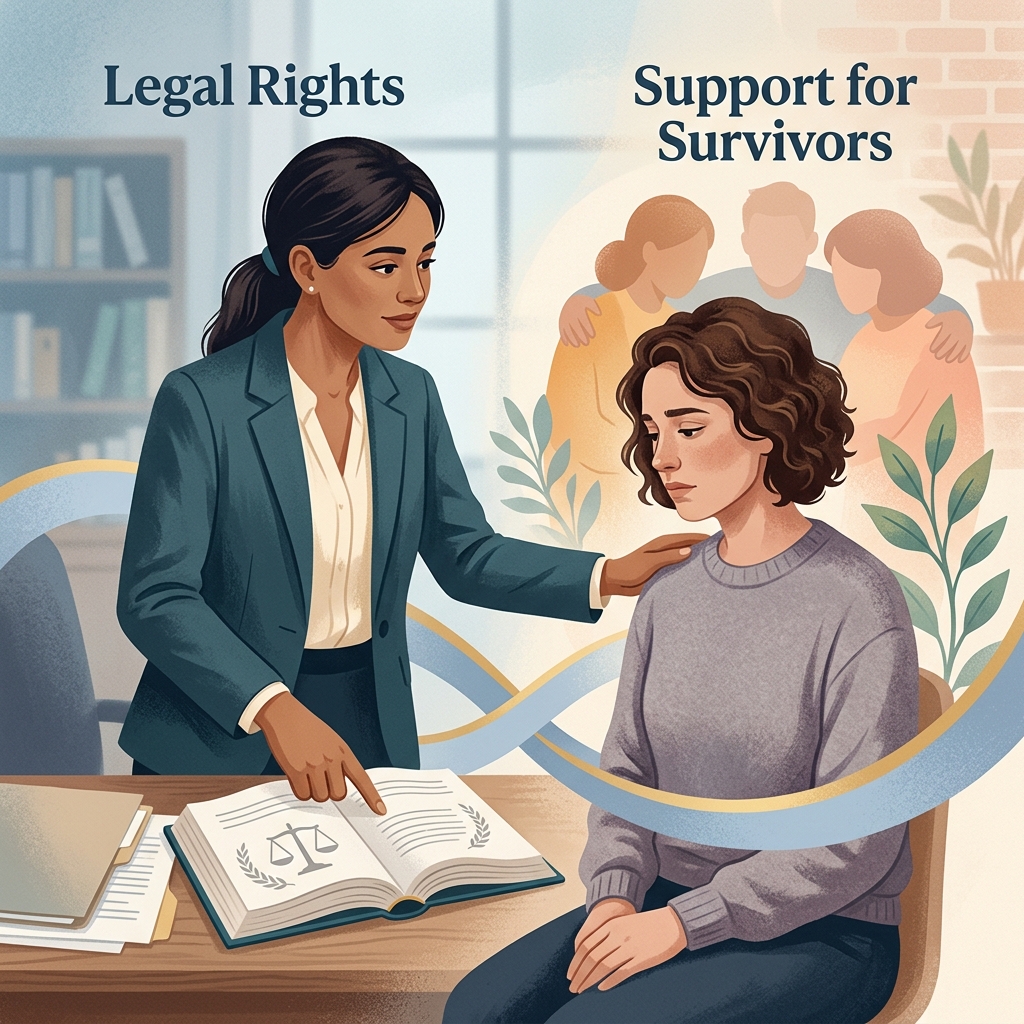
Sexual assault is a profound violation that can leave survivors facing medical, emotional, and legal challenges all at once. While no legal rule can undo the harm, understanding your rights and available protections can help you make informed choices, preserve evidence, and seek justice on your own terms.
This article provides a detailed, practical overview of how sexual assault is defined in law, what rights survivors have in the criminal and civil systems, how evidence like rape kits must be handled, and which federal laws offer additional protection—especially in schools and federally funded programs.
1. Understanding Sexual Assault in the Legal System
Although definitions vary across states, sexual assault generally refers to any nonconsensual sexual act or contact that is prohibited by criminal law. In many jurisdictions, this includes situations where the survivor is unable to consent because of age, intoxication, coercion, or disability.
- Nonconsensual sexual acts may involve penetration, oral sex, or other sexual activity without consent.
- Sexual contact or touching that is unwanted and sexual in nature can also constitute sexual assault or sexual battery, depending on the jurisdiction.
- Under federal law, the term sexual assault often overlaps with the term sexual abuse, such as in the United States Code governing sexual offenses.
Consent is the central legal issue. If the survivor did not freely and voluntarily agree to the sexual conduct—or was legally unable to consent because of age or incapacitation—the act can be charged as sexual assault.
| Element | Typical Legal Consideration |
|---|---|
| Consent | Whether the survivor freely agreed; presence of force, threats, coercion, or incapacitation. |
| Age | Whether the survivor was below the age of consent under state or federal law. |
| Capacity | Impact of intoxication, disability, or unconsciousness on ability to consent. |
| Type of contact | Whether conduct involved penetration or sexual touching, and whether force or threats were used. |
2. Core Legal Rights of Sexual Assault Survivors
Survivors of sexual assault have a variety of rights that stem from federal and state laws protecting crime victims. These rights often include participation in the criminal process, access to information, and safeguards for safety and privacy.
2.1 Participation in Criminal Proceedings
If a survivor chooses to report to law enforcement, they typically have rights such as:
- Right to be informed about the status of the case, including charges filed and major court dates.
- Right to attend public court proceedings, subject to the judge’s rules and any restrictions needed for safety.
- Right to provide a victim impact statement explaining how the crime affected them, which can be considered at sentencing or parole.
In some jurisdictions, survivors may also submit information before plea decisions or parole hearings, ensuring their perspective is heard throughout the process.
2.2 Safety and Protection Measures
Crime victims, including survivors of sexual assault, often have rights geared toward safety:
- Protection from harm and threats arising from cooperation with law enforcement or prosecutors.
- Consideration of victim safety in bail decisions, so that the court weighs potential risk when deciding whether the accused can be released.
- Access to a separate waiting area in the courthouse, when available, to minimize contact with the accused.
These measures aim to reduce intimidation and retaliation risks while the case moves forward.
2.3 Medical, Counseling, and Compensation Rights
Survivors may have rights to medical examinations, counseling, and financial assistance for crime-related costs.
- In many jurisdictions, survivors can receive a forensic sexual assault exam (rape kit) at no cost, often funded through crime victim compensation programs or federal grants.
- Survivors may have a right to counseling and to testing for conditions such as HIV or other infections, particularly following sexual assault.
- State crime victim compensation funds can help cover certain expenses, such as medical care or lost wages, subject to eligibility rules.
These rights are designed to address immediate health needs and longer-term impacts of the assault.
3. Evidence, Rape Kits, and Preservation Rules
For survivors who choose to have a forensic exam, protections around the handling and preservation of evidence are crucial. A major federal law—the Sexual Assault Survivors’ Rights Act (also known as the Survivors’ Bill of Rights Act of 2016)—establishes several core rights related to rape kits in federal cases.
3.1 Free Forensic Medical Examination
Under federal law, sexual assault survivors have the right to obtain a forensic medical examination at no cost in connection with a federal offense. Many states similarly prohibit charging survivors for rape kits or related examinations.
- The exam focuses on collecting and documenting evidence, such as DNA, injuries, and other physical findings.
- Survivors can generally request a support person or advocate to be present during the exam, depending on local policies.
3.2 Preservation and Notification Rights
The Sexual Assault Survivors’ Rights Act requires that evidence kits be preserved for a defined period and that survivors receive information about their status.
- Evidence preservation: Rape kits must be preserved for up to 20 years or the duration of the applicable statute of limitations, whichever is shorter, in federal cases.
- Notice before destruction: Survivors are entitled to written notification before an evidence kit is destroyed or disposed of.
- Information about forensic exam results: Survivors have the right to be informed about the results of forensic testing related to their assault.
Some jurisdictions also allow survivors to request a copy of the initial crime report related to the assault at no cost, enabling them to track what has been documented.
3.3 Access to Case Information
In addition to physical evidence rights, survivors can often ask for information about the progress of the investigation and prosecution.
- Survivors may request the status and results of forensic analysis of evidence.
- They can ask for updates on whether charges have been filed, court dates, and major decisions like plea agreements.
These transparency rights are intended to help survivors remain informed and engaged without having to navigate complex systems alone.
4. Statutes of Limitation in Sexual Assault Cases
A statute of limitation sets the maximum time after an event when legal proceedings may be initiated. In sexual assault cases, these time limits vary widely across states and can depend on factors like the survivor’s age at the time of the assault and whether DNA evidence is available.
- Some states have no time limit for prosecuting certain serious sexual offenses, especially those involving children.
- Other states have extended or eliminated civil statutes of limitation for childhood sexual abuse, allowing survivors to file lawsuits many years later.
- Changes in statutes of limitation may apply retroactively in some jurisdictions, especially where legislatures explicitly allow older cases to be brought.
Because these rules are complex and state-specific, survivors are encouraged to consult with a legal professional or a victim advocacy organization to understand how time limits apply to their situation.
5. Federal Laws Protecting Survivors
Several major federal laws reinforce the rights of sexual assault survivors and help provide services, especially in education and victim support settings.
5.1 Sexual Assault Survivors’ Rights Act
The Sexual Assault Survivors’ Rights Act, enacted in 2016, is a landmark statute that codifies key rights for survivors in federal criminal cases.
- Establishes rights to a free forensic exam, evidence preservation, and notification before destruction of rape kits.
- Integrates sexual assault survivors into the broader federal crime victims’ rights framework.
- Provides a model for states considering similar protections at the state level.
5.2 Title IX and Campus Protections
Title IX is a federal civil rights law that prohibits sex discrimination—including sexual assault and harassment—in any education program or activity that receives federal funding.
- Schools must take prompt and effective steps to stop sexual harassment and assault, prevent recurrence, and address its effects.
- Students who experience sexual violence can seek measures such as changes to housing, class schedules, or campus work arrangements to restore equal access to education.
- Institutions typically have designated Title IX coordinators and grievance procedures for reporting and resolving complaints.
Title IX obligations exist alongside any criminal investigation and are focused on ensuring an educational environment free from sex-based discrimination.
5.3 Violence Against Women Act (VAWA)
The Violence Against Women Act provides significant federal funding and protections for survivors of sexual assault and other forms of gender-based violence.
- Supports rape crisis centers, hotlines, and community violence prevention programs.
- Includes protections such as the federal rape shield law, which limits the use of a survivor’s prior sexual history in court.
- Improves access to services for survivors from diverse backgrounds, including immigrants, people with disabilities, and communities of color.
VAWA has been reauthorized multiple times, reflecting ongoing efforts to strengthen support for survivors nationwide.
6. Reporting Options and Support Pathways
Survivors can choose among several reporting and support options, and each pathway serves different purposes. It is important to know that seeking medical care or advocacy support does not always require filing a criminal report.
6.1 Reporting to Law Enforcement
Reporting to police can initiate a criminal investigation and potentially lead to prosecution. Survivors who choose this route should know they have rights and support options:
- They can request a victim advocate or liaison through the police department or local victim services.
- They may be able to access a crime victim compensation fund for certain expenses related to the assault.
- They can ask for updates on the investigation and explanations of major decisions, including if charges are not filed.
6.2 Confidential Help and Hotlines
Many survivors seek confidential support before, during, or instead of engaging with the legal system. National and local hotlines provide crisis counseling, information, and referral services.
- National sexual assault hotlines connect survivors with trained staff who can offer emotional support and discuss options for medical care and reporting.
- Online chat and group support options are available for younger survivors who prefer digital contact.
- Specialized hotlines serve populations such as members of the military, survivors of trafficking, or people experiencing domestic violence.
These services are usually available 24/7 and can be accessed anonymously, giving survivors a way to talk through choices without pressure.
6.3 Advocacy, Legal Aid, and Campus Resources
Victim advocates and legal aid organizations can help survivors navigate complex systems and assert their rights.
- Local rape crisis centers provide advocacy, accompaniment to hospital exams or court hearings, and help understanding legal options.
- Legal aid organizations can assist with protection orders, immigration relief, housing issues, and other civil legal matters related to the assault.
- On campuses, offices responsible for harassment and discrimination prevention can receive reports, arrange accommodations, and initiate Title IX processes.
Survivors are not required to face the process alone; these supports are designed to respect autonomy and safety.
7. Practical Steps for Survivors Considering Legal Action
Each survivor’s situation is different, and there is no single correct way to respond to sexual assault. Nonetheless, some general steps can help preserve options and protect rights.
- Seek medical care as soon as possible, whether or not you plan to report to police. Medical providers can address injuries, discuss pregnancy and infection prevention, and, if desired, conduct forensic evidence collection.
- Consider evidence preservation. If you are thinking about a forensic exam, try not to shower, change clothes, or clean up before the exam if you feel safe not doing so, as this can help preserve evidence. However, your health and emotional needs come first.
- Contact a victim advocate or hotline for confidential support and information on local laws and resources.
- Document what happened in a safe place, including dates, locations, and any communications. This can be helpful later if you choose to report or pursue a civil case.
- Learn about time limits. Ask an attorney or advocate about statutes of limitation in your jurisdiction, so you know how long you have to initiate criminal or civil proceedings.
Survivors are free to change their minds over time. For example, someone might seek medical care immediately but decide to report months or years later, subject to statutes of limitation and evidence-preservation rules.
8. Frequently Asked Questions (FAQs)
Do I have to report to the police to get medical care?
In many places, survivors can receive emergency medical care and a forensic exam without immediately filing a criminal report. Policies vary by state and hospital, so asking a medical provider or advocate can clarify your options.
Can I be charged for a rape kit exam?
Federal law and many state laws protect survivors from being billed for forensic sexual assault examinations conducted in connection with a crime. Costs are usually covered by government funds or victim compensation programs.
How long will my rape kit be kept?
Under the Sexual Assault Survivors’ Rights Act, evidence kits in federal cases must be preserved for up to 20 years or the length of the applicable statute of limitations, whichever is shorter, and survivors must be notified before destruction. State rules can differ, so it is important to ask local authorities or advocates.
What if I was assaulted as a child and many years have passed?
Some states have extended or removed statutes of limitation for childhood sexual abuse, allowing survivors to come forward later in life. Because these rules are complex, consulting with an attorney or legal aid organization can help clarify available options.
Is sexual assault on campus treated differently?
Campus sexual assault may involve both criminal law and Title IX processes. While police handle criminal investigations, schools must address sexual violence as a form of sex discrimination, provide supportive measures, and ensure impartial grievance procedures.
9. Key Takeaways for Survivors and Advocates
Survivors of sexual assault have significant legal rights and protections under federal and state law. These include rights to free forensic exams, evidence preservation, safety protections during criminal proceedings, and access to support services in the community and on campuses.
Because laws and procedures vary widely, survivors benefit from connecting with knowledgeable advocates, legal aid organizations, or victim assistance programs that can provide tailored information about local rules and timelines.
References
- Sexual Assault Survivors’ Rights Act — U.S. Congress / Public Law 114-236. 2016-10-07. https://www.congress.gov/bill/114th-congress/senate-bill/2566
- Rights of Sexual Assault Victims — Public Legal Education Association (PLEA). 2020-05-01 (approx.). https://plea.org/victims/victims-of-sexual-assault/rights-of-sexual-assault-victims
- Your Rights as a Survivor of Sexual Assault — University of California, Berkeley (PATH to Care Center). 2022-09-15 (approx.). https://svsh.berkeley.edu/your-rights-survivor-sexual-assault
- Crime Victims’ Rights — Office of the Attorney General of Texas. 2023-03-10 (approx.). https://www.texasattorneygeneral.gov/crime-victims/victims-violent-crime/crime-victims-rights
- Laws and Resources: Help for Victims and Survivors — University of Oregon SAFE. 2022-02-01 (approx.). https://safe.uoregon.edu/laws-resources
- RAINN’s National Sexual Assault Hotline — Rape, Abuse & Incest National Network (RAINN). 2023-06-01 (approx.). https://rainn.org/help-and-healing/hotline
- Statutes of Limitation in Sexual Assault Cases — FBI Law Enforcement Bulletin. 2020-01-07. https://leb.fbi.gov/articles/featured-articles/statutes-of-limitation-in-sexual-assault-cases
Similar Articles








Read full bio of Sneha Tete




