
Criminal Activity and Evictions in Subsidized Housing
Understanding how criminal, drug, and alcohol-related conduct can affect tenancy in Section 8 and public housing, and what rights and defenses tenants may have.
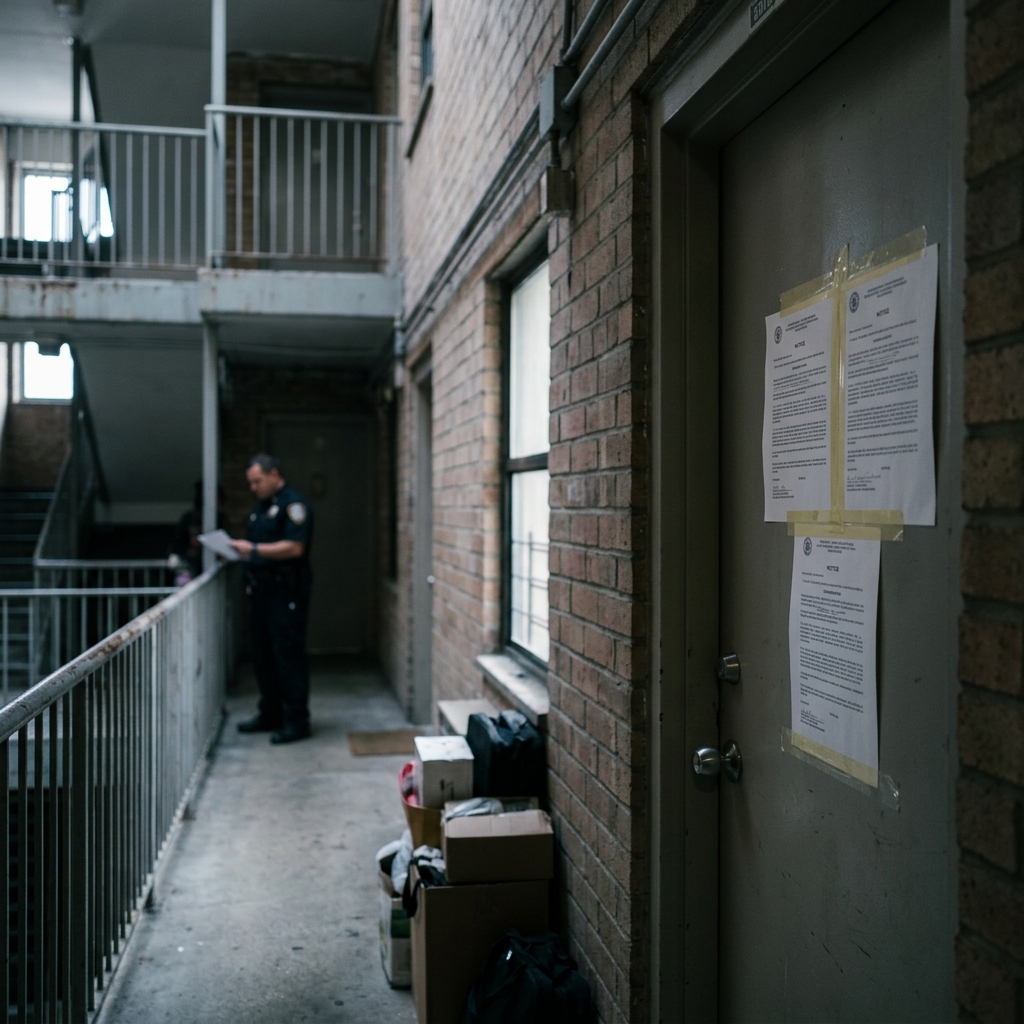
Federally subsidized housing programs such as public housing and Section 8 Housing Choice Vouchers provide essential housing stability for millions of low-income families. These programs also include strict rules about criminal, drug, and alcohol-related activity that can lead to lease termination and eviction. Understanding those rules, and the rights that tenants retain, is critical for anyone living in or applying for subsidized housing.
This guide explains when criminal conduct can be used as a basis for eviction, how federal regulations shape those decisions, and what procedural protections and practical strategies are available to tenants facing allegations of criminal activity.
Overview of Federally Assisted Housing Programs
Two major forms of federally assisted housing are relevant when discussing criminal activity and eviction:
- Public housing – Housing units owned or operated by a public housing authority (PHA), where tenants pay rent based on income and sign a lease directly with the PHA.
- Section 8 Housing Choice Vouchers – A subsidy that helps tenants rent from private landlords, with the PHA paying part of the rent under a Housing Assistance Payment contract.
In both programs, federal regulations allow termination of tenancy and assistance when a household member, guest, or other person under the tenant's control engages in certain categories of criminal conduct.
Key Types of Criminal Conduct That Can Trigger Eviction
Federal law and U.S. Department of Housing and Urban Development (HUD) regulations identify several broad categories of conduct that may justify eviction from public housing or termination of Section 8 assistance.
Threats to Health, Safety, or Peaceful Enjoyment
PHAs and, in the case of vouchers, landlords may evict when there is:
- Any criminal activity that threatens the health, safety, or right to peaceful enjoyment of the premises by other residents.
- Criminal activity that threatens people living in the immediate vicinity of the premises, even if they are not residents of the same development.
The focus here is on conduct that interferes with the ability of other residents to live safely and peacefully, such as violent offenses, serious harassment, or repeated disruptive behavior.
Drug-Related Criminal Activity
Drug-related criminal activity has its own, often more expansive, treatment. Federal statutes and regulations provide that:
- Any drug-related criminal activity on or near the premises can be grounds for eviction.
- In many cases, off-premises drug-related activity is also sufficient, even if it does not directly affect other tenants' wellbeing.
"Drug-related criminal activity" generally refers to the illegal manufacture, sale, distribution, use, or possession of a controlled substance under federal, state, or local law.
Fleeing Felony Prosecution or Violating Probation/Parole
Federal rules allow PHAs to terminate tenancy if a household member:
- Is fleeing to avoid prosecution or custody for a felony, or to avoid confinement after conviction for a felony.
- Is violating a condition of probation or parole, when documented and determined by the PHA.
These provisions recognize that open felony warrants or ongoing supervision violations can be considered serious risk factors by housing authorities.
Alcohol Abuse Affecting Other Residents
Although alcohol use is not inherently criminal, HUD rules allow eviction when a household member's abuse of alcohol threatens the health, safety, or peaceful enjoyment of other residents.
For example, repeated violent incidents or severe disturbances linked to intoxication may fall under this standard.
Who Can Be Held Responsible for Criminal Activity?
A crucial feature of subsidized housing rules is that the tenant may face eviction for conduct committed not only by themselves, but also by others connected to the household.
| Person Involved | Can Their Conduct Trigger Eviction? |
|---|---|
| Tenant | Yes, including criminal, drug-related, or alcohol-related activity covered by the lease and regulations. |
| Household member | Yes, if listed in the lease or housing forms as part of the assisted household. |
| Guest | Yes, when the guest is under the tenant's control and engages in covered criminal or drug-related activity. |
| Other person under tenant's control | Yes, such as someone given access to the unit or common areas with the tenant's consent. |
This broad responsibility means tenants must be cautious about who they allow into their homes and how household members use the premises.
The "One-Strike" Approach and Its Implications
In the mid-1990s, HUD promoted what is commonly known as the "one-strike" policy, encouraging PHAs to adopt leases that permit termination after a single serious incident of criminal activity.
Under this approach:
- A single proven incident of violent or drug-related criminal activity, or serious threats to health and safety, may be enough to terminate tenancy.
- PHAs are not required to wait for a criminal conviction and may act based on a preponderance of the evidence standard in civil eviction proceedings.
The preponderance standard means that the housing authority must show it is more likely than not that the alleged conduct occurred, a lower threshold than "beyond a reasonable doubt" used in criminal cases.
Proof Requirements: Arrests, Convictions, and Evidence
Tenants are often surprised to learn that they can face eviction for alleged criminal activity even if they have not been convicted, or sometimes even charged, with a crime.
Convictions Not Required
HUD guidance and federal regulations state that:
- PHAs may terminate tenancy without a criminal conviction, relying instead on other credible evidence that the conduct occurred.
- Eviction proceedings are civil, so the housing authority does not need to meet the criminal "proof beyond a reasonable doubt" standard.
This gives PHAs significant flexibility, but it also raises fairness concerns, particularly when tenants dispute the underlying allegations.
Arrest Records and Their Limitations
HUD and fair housing guidance emphasize that an arrest alone is not proof that a person engaged in criminal conduct.
- Arrest records should not be used as the sole basis for determining that someone committed disqualifying criminal activity.
- PHAs must rely on the evidence underlying the arrest—such as witness statements or physical evidence—rather than the mere fact of arrest.
Some proposed HUD rules and fair housing enforcement policies have aimed to restrict the use of arrest records in housing decisions, recognizing the risk of discrimination and error.
Access to Criminal Records in Eviction Proceedings
When PHAs rely on conviction records or other official documents to prove criminal activity, due process principles require that tenants receive copies of the evidence in advance of hearings or trials.
- Tenants should receive notice of the grounds for eviction and access to the criminal record the PHA intends to use.
- This allows tenants to challenge inaccuracies, raise defenses, or present mitigating information.
Differences Between Public Housing and Section 8 Evictions
While many underlying criminal-activity rules are similar, the procedures and relationships differ between public housing and Section 8 vouchers.
Public Housing Tenants
- The tenant's lease is with the PHA, which also manages the property.
- Eviction for criminal activity typically proceeds through a breach of lease action in local court, following notice and any required grievance procedures.
- Some jurisdictions allow PHAs to file court actions without first providing a formal administrative hearing in cases of serious criminal conduct.
Section 8 Voucher Holders
- The tenant leases from a private landlord, while the PHA administers the voucher.
- The landlord may seek eviction under state landlord-tenant law, while the PHA separately decides whether to terminate voucher assistance.
- Criminal activity can lead to both loss of the voucher and eviction from the unit, but these decisions involve different parties and procedures.
Tenant Rights and Procedural Protections
Even when criminal activity is alleged, tenants retain important procedural rights, though the exact protections vary by program and jurisdiction.
Notice of Termination
Tenants are generally entitled to written notice that:
- States the reason for termination, including the specific criminal or drug-related allegations.
- Explains the effective date of lease termination or assistance termination.
- Advises of any available grievance or appeals process and the right to contest the allegations in court.
Opportunity to Contest Allegations
Depending on the program and local policies, tenants may have:
- An internal grievance hearing with the PHA to present evidence and arguments.
- The right to defend against eviction in a civil court proceeding, including presenting witnesses, documents, and legal defenses.
- In some cities, opportunities to meet with PHA attorneys to discuss the case before litigation is filed, which can sometimes lead to negotiated resolutions.
Fair Housing and Non-Discrimination
PHAs and landlords must enforce criminal-activity rules in a manner consistent with federal and state fair housing laws. HUD discrimination guidance explains that:
- Policies that rely heavily on criminal history can disproportionately impact certain protected groups.
- Landlords and PHAs must be able to show, with reliable evidence, that their use of criminal records is necessary to protect safety and property.
- Selectively evicting or denying housing based on criminal histories of people in specific protected classes (for example, race or national origin) can be unlawful.
Practical Steps for Tenants Facing Criminal-Activity Allegations
Tenants confronted with notices alleging criminal, drug, or alcohol-related activity should act quickly and strategically. While each case is unique, the following steps are commonly recommended by legal advocates and fair housing experts.
- Review the notice carefully. Confirm the alleged date, type of conduct, and who is accused (tenant, household member, guest).
- Request documentation. Ask the PHA or landlord, in writing, for any police reports, criminal records, and other evidence they rely on.
- Check for procedural errors. Determine whether the notice meets applicable legal requirements, including proper timing and explanation of rights.
- Gather your own evidence. Collect witness statements, medical records, court documents, or other materials that support your version of events.
- Seek legal advice promptly. Contact a legal aid organization, tenant resource center, or other advocate with experience in subsidized housing law.
- Explore mitigating factors. In some situations, PHAs may consider rehabilitation, time elapsed since the incident, or the tenant's strong history of compliance when deciding whether to proceed with eviction.
Frequently Asked Questions (FAQs)
Do I have to be convicted of a crime before I can be evicted from public housing?
No. Eviction is a civil process, and PHAs may rely on non-criminal evidence to prove that criminal activity occurred. HUD has explicitly stated that a criminal conviction or arrest is not required to terminate a lease based on criminal conduct.
Can I be evicted because of something a guest did?
Yes, in many cases. Federal law allows eviction when criminal or drug-related activity is committed by a guest or other person under the tenant's control, not just household members. However, tenants may raise defenses, such as lack of control over the guest or domestic violence victim protections in some jurisdictions.
Is drug use treated differently than other types of criminal activity?
Often yes. Drug-related criminal activity is frequently grounds for eviction even if it does not directly threaten the wellbeing of other tenants or nearby residents. In contrast, other criminal activity generally must pose a threat to health, safety, or peaceful enjoyment to justify termination.
Can an arrest alone cause me to lose my housing?
Housing authorities and landlords should not rely on an arrest alone as proof that criminal activity occurred. HUD and fair housing guidance caution that arrest records are not evidence of guilt, and policies based solely on arrests may be discriminatory or legally flawed.
What if the alleged criminal activity relates to domestic violence?
Many programs and laws provide protections so that tenants who are victims of domestic violence are not evicted solely because of abuse-related incidents. Depending on local law and federal protections, tenants may be able to argue that they should not be penalized for criminal activity perpetrated against them.
Balancing Safety, Housing Stability, and Due Process
Rules allowing eviction for criminal and drug-related activity are intended to protect residents and communities from serious harm. At the same time, these rules carry significant consequences, including potential homelessness and family disruption, particularly when applied aggressively or without careful consideration of individual circumstances.
Legal advocates and scholars continue to scrutinize how one-strike policies and broad criminal-activity clauses intersect with constitutional rights, fairness, and racial and economic justice. Tenants and their allies should remain informed about evolving standards, enforcement practices, and available defenses to ensure that safety goals do not overshadow basic due process and housing stability.
References
- Criminal Activity and Evictions in Section 8 and Public Housing — Maryland Peoples Law Library. 2023-05-01. https://www.peoples-law.org/criminal-activity-and-evictions-section-8-and-public-housing
- Eviction from Public Housing — Loyola University New Orleans, Pro Bono Desk Manual. 2016-01-01. https://probonodeskmanual.loyno.edu/book/export/html/260
- Preventing Crime in Federally Assisted Housing (24 CFR Part 5 Subpart I) — U.S. Department of Housing and Urban Development / eCFR. 2024-01-01. https://www.ecfr.gov/current/title-24/subtitle-A/part-5/subpart-I
- Saving One's Home: Collateral Consequences for Innocent Family Members — New York State Unified Court System. 2010-01-01. https://www.nycourts.gov/ip/partnersinjustice/Saving-Home.pdf
- Advocacy with Public Housing Authorities (PHAs) to Expand Housing Access for Formerly Incarcerated Older Adults — Justice in Aging. 2017-06-01. https://justiceinaging.org/expanding-housing-access-for-formerly-incarcerated-older-adults/
- HUD Rules About Criminal History — Tenant Resource Center. 2016-04-01. https://www.tenantresourcecenter.org/for_tenants_criminal_history
- Examining the Constitutionality of Public Housing Evictions Based on Criminal Activity — Duke Journal of Gender Law & Policy. 2002-01-01. https://scholarship.law.duke.edu/cgi/viewcontent.cgi?article=1059&context=dflsc
Similar Articles








Read full bio of medha deb




