
Lease Termination and Evictions in Section 8 and Public Housing
Understand how leases end, when eviction is allowed, and what rights tenants and landlords have in Section 8 and public housing programs.
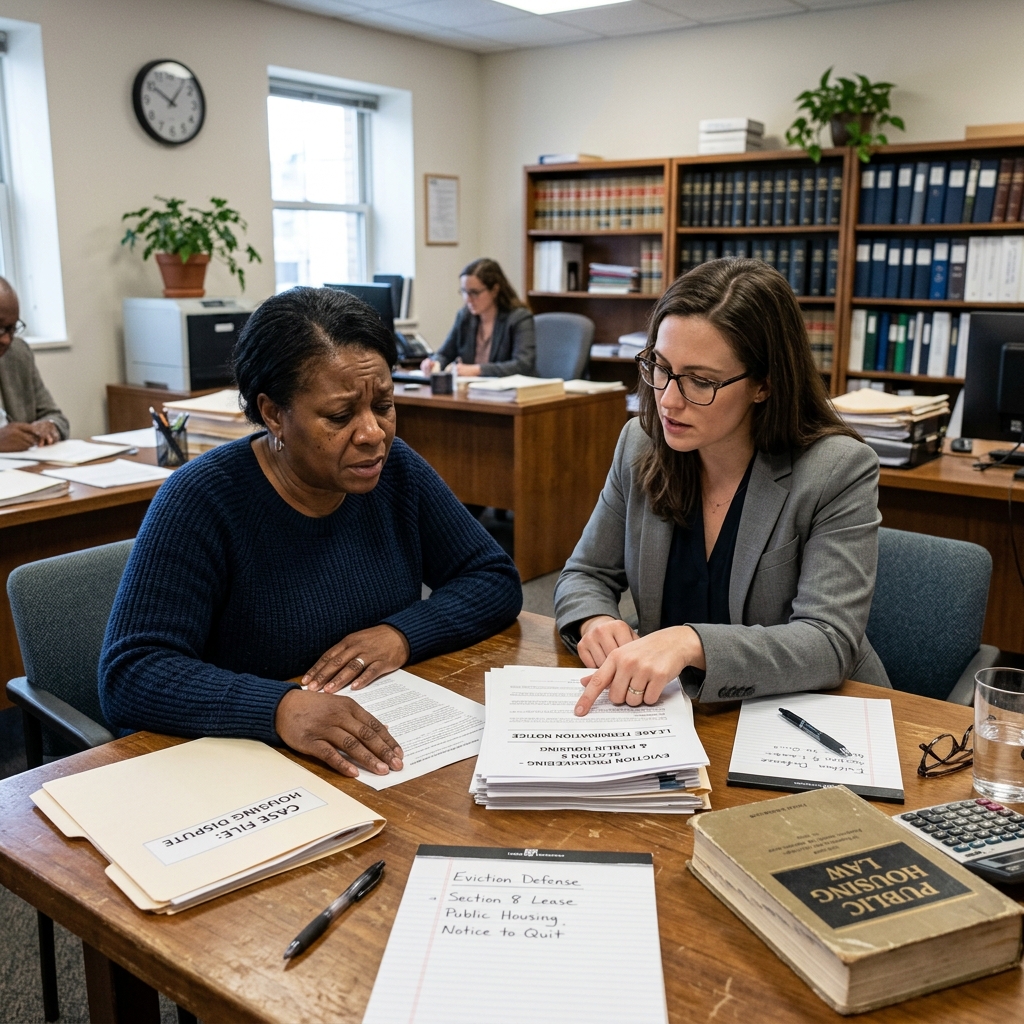
Tenants in Section 8 housing and public housing have important protections when a lease ends or an eviction is threatened. These protections limit when a landlord or housing authority can remove a tenant and require clear procedures, written notice, and in many cases an opportunity to contest the decision in court or through an internal grievance process.
This article explains how lease termination and eviction work in federally subsidized housing, what “good cause” means, and how both tenants and landlords can navigate the process lawfully and effectively.
1. Understanding Subsidized Housing Programs
Before looking at eviction rules, it helps to distinguish the major types of federally assisted housing because the procedures are not identical.
1.1 Key Program Types
- Housing Choice Voucher Program (HCV, often called Section 8)
Tenants receive a voucher administered by a Public Housing Agency (PHA) to help pay rent in privately owned housing. The tenant signs a lease with a private landlord, and the PHA pays part of the rent directly to the landlord. - Project-based Section 8 and other project-based rental assistance (PBRA)
Rental assistance is attached to a particular building or development. Tenants usually sign a lease with the owner of that subsidized property and lose the assistance if they move out. - Public housing
Housing units are owned and operated by local housing authorities. Tenants pay income-based rent and have rights laid out in HUD regulations and the local housing authority’s policies.
All of these programs involve federal rules that go beyond ordinary state landlord–tenant law, especially when it comes to ending a lease or evicting a tenant.
1.2 Why Eviction Rules Are Different
Because public funds support these programs, the federal government requires greater due process and clearer justification for evicting tenants. In most subsidized housing programs, a landlord or housing authority must show good cause and follow specific notification and procedural steps.
| Housing Type | Ownership | Eviction Standard |
|---|---|---|
| Private, unsubsidized rental | Private landlord | State law; often allows non-renewal or no-cause ending after lease term (subject to local rules) |
| Section 8 Voucher (HCV) | Private landlord + PHA contract | Must have good cause during lease term; additional program rules apply. |
| Public housing / PBRA | Housing authority or subsidized owner | Only for serious or repeated lease violations or other good cause; strong notice and grievance rights. |
2. When a Lease Can Be Ended
In subsidized housing, ending a lease and evicting a tenant are closely related but legally distinct. Ending the lease is about terminating the contractual right to stay; eviction is the court process to physically remove a tenant who remains after termination.
2.1 Good Cause During the Lease Term
For most subsidized housing programs, a landlord or housing authority may terminate a tenancy only in limited circumstances. HUD guidance and many state resources summarize these as follows:
- Nonpayment of rent (including the tenant’s portion when a voucher covers the rest).
- Serious or repeated lease violations, such as unauthorized occupants, property damage, or disturbing other tenants.
- Criminal or drug-related activity, especially activity that threatens the health, safety, or peaceful enjoyment of other residents.
- Health and safety violations, including dangerous conditions created by the tenant.
- Fraud or misrepresentation in applications or recertification forms.
- Other good cause, such as program ineligibility discovered after move-in or failure to perform required community service in public housing.
These grounds must be more than minor or technical issues; in public housing, for example, the violation generally must be serious or repeated and involve an important (“material”) lease term.
2.2 End of Lease Term and Non-Renewal
In many private rentals, landlords may choose not to renew a lease without stating a reason, subject to state and local law. In subsidized housing, the ability to end a lease at expiration without cause is more restricted, especially in public housing and some project-based assistance. Owners are expected to rely on good-cause reasons rather than arbitrary non-renewal when removing tenants from federally subsidized properties.
In the Section 8 voucher program, the lease between tenant and landlord is still governed by state law, but HUD regulations and the PHA’s contract add requirements, making no-cause non-renewals more complicated and, in some jurisdictions, effectively limited.
3. Eviction Process in Section 8 Voucher Housing
Section 8 vouchers combine private leases with public oversight. The eviction process looks similar to other evictions but must comply with both state law and HUD program rules.
3.1 Identifying a Valid Basis
Landlords working with voucher tenants must start by identifying a legally valid, documented reason for termination. Typical causes include:
- Material noncompliance with the lease (serious violations or repeated minor violations).
- Nonpayment of the tenant’s share of rent.
- Drug abuse or other criminal activity on or near the property.
- Fraud or misrepresentation affecting eligibility or assistance.
The landlord should confirm that the chosen ground aligns with federal, state, and local law as well as PHA policies.
3.2 Written Notice Requirements
Before filing an eviction case, landlords must provide a written notice to the tenant that meets both state and program requirements.
- Content of the notice
A proper notice should clearly state:- The tenant’s name and the rental address.
- The specific reason for termination, and the lease or program provisions violated.
- The date the tenancy will end or the deadline to cure the problem.
- Any rent amount allegedly owed (in nonpayment cases).
- A warning that the landlord may file an eviction case if the tenant does not comply.
- Notice to the PHA
Voucher landlords generally must send a copy of the notice to the Public Housing Agency, which reviews compliance with HUD rules and may decide whether to continue or end the tenant’s assistance.
HUD guidance emphasizes that landlords may not evict voucher tenants except by judicial action under state and local law; informal “lockouts” or self-help evictions are prohibited.
3.3 Opportunity to Discuss Termination
HUD regulations give Section 8 tenants a limited time to discuss termination with the owner before a final decision is made.
- Tenants have 10 calendar days to request a meeting after receiving the termination notice.
- The discussion should occur in the presence of a neutral representative who is not directly involved in the case.
- After the meeting, the owner must provide a written decision based on the facts reviewed.
This step is separate from any court proceeding and can resolve misunderstandings or allow tenants to correct issues without litigation.
3.4 Court Eviction Procedure
If the problem is not resolved, the landlord may file an eviction case in the appropriate court. At the hearing:
- The landlord presents evidence of the alleged lease or program violations.
- The tenant may raise defenses, such as improper notice, lack of good cause, or factual disputes.
- The judge issues a judgment deciding whether the landlord is entitled to possession of the unit.
- If the landlord prevails, a sheriff or other official carries out the physical eviction under state procedures.
The PHA may separately decide whether to terminate or continue the tenant’s voucher based on the outcome and program rules.
4. Evictions in Public Housing and Project-Based Assistance
Public housing and project-based developments are subject to detailed HUD requirements that strictly limit eviction and provide formal grievance rights.
4.1 Good Cause and Material Violations
Tenants in public housing can only be evicted for serious or repeated violations of material lease terms or other good cause.
- Serious or repeated violations may include nonpayment of rent, serious property damage, or repeated disruptive behavior.
- Criminal or drug-related activity that threatens other tenants’ safety or peaceful enjoyment can be grounds for termination even without a criminal conviction, if the evidence shows that the activity occurred.
- Other good cause can include fraud in applications, discovering ineligibility after move-in, or failing to complete required community service.
- Tenants cannot be evicted based on protected characteristics such as race, religion, gender, or sexual orientation.
HUD handbooks emphasize that termination must follow program rules and that owners may evict only through judicial action.
4.2 Special Protection Against Nonpayment Evictions
In public housing and certain project-based properties, HUD has adopted a rule requiring extra notice for nonpayment cases.
- Tenants must receive a written notice at least 30 days before a formal eviction case is filed in court due to nonpayment of rent.
- The notice cannot be given before the day after rent is due.
- The owner or PHA cannot proceed with filing an eviction if the tenant pays the alleged amount of rent owed within the 30-day period.
This rule creates a meaningful opportunity for tenants to catch up on rent and avoid eviction, and it is a minimum standard—PHAs may choose to give more time.
4.3 Grievance and Hearing Rights
Public housing tenants generally have a right to challenge termination decisions through a grievance process before or alongside a court case.
- Tenants receive written notice stating the reasons for eviction and informing them of their right to a grievance hearing.
- Tenants must typically request a hearing within a short period, such as 10 days after receiving the notice.
- At the hearing, the housing authority must present evidence, and the tenant can respond, offer documents, and argue legal defenses.
- A written decision is issued, which can be important if the case later goes to court.
This process is designed to ensure fairness and to catch mistakes or misunderstandings before an eviction becomes final.
5. Practical Guidance for Tenants and Landlords
Understanding the rules is only part of the story. Tenants and landlords in subsidized housing can take practical steps to protect their rights and avoid unnecessary conflict.
5.1 Tips for Tenants
- Keep copies of your lease and all notices from your landlord or housing authority.
- Respond quickly to any written notice—deadlines to request a hearing or meeting can be short, often around 10 days.
- Communicate in writing when you disagree with allegations or need more time to pay rent.
- Seek legal help early; legal aid organizations often have specific expertise in subsidized housing evictions.
- Attend all meetings and hearings so your side of the story is heard.
5.2 Tips for Landlords and Housing Authorities
- Document problems carefully with written records, photos, inspection reports, and witness statements.
- Follow state and federal notice rules exactly; improper notice can delay or defeat an eviction case.
- Engage the PHA early in Section 8 cases to ensure compliance with HUD guidelines.
- Use grievance procedures as an opportunity to resolve disputes without going to court.
- Avoid self-help measures like changing locks or shutting off utilities; these are prohibited and can lead to legal liability.
6. Frequently Asked Questions (FAQ)
6.1 Can a Section 8 landlord evict a tenant without a reason?
No. Under Section 8, landlords generally must have good cause—such as nonpayment, serious lease violations, or criminal activity—and follow due process before eviction.
6.2 Do public housing tenants have more rights than private renters?
Public housing tenants often have stronger protections, including a requirement of serious or repeated violations or other good cause, formal grievance procedures, and extended notice in nonpayment cases.
6.3 Is a criminal conviction required to evict for criminal activity?
No. Housing authorities may terminate a tenancy based on a preponderance of evidence that criminal activity occurred, even without a criminal conviction, although they must still follow notice and hearing rules.
6.4 Can a tenant avoid eviction by paying rent during the notice period?
In public housing and certain project-based properties, HUD’s 30-day notice rule stops an eviction filing if the tenant pays the alleged rent owed within the notification period. In other settings, state law and program rules govern whether payment cures the default.
6.5 What should I do if I receive an eviction notice in subsidized housing?
Read the notice carefully, note deadlines for meetings or hearings, contact your PHA or housing authority for clarification, and seek legal help as soon as possible. Document your communications and attend all scheduled proceedings.
References
- Housing Choice Voucher (HCV) Program: Section 8 Evictions — Louisiana Law Help. 2023-08-01. https://louisianalawhelp.org/resource/housing-choice-voucher-hcv-program-section-8
- CHAPTER 8. TERMINATION (HUD Handbook 4350.3) — U.S. Department of Housing and Urban Development (HUD). 2013-06-27. https://archives.hud.gov/offices/adm/hudclips/handbooks/hsgh/43503c8HSGH.PDF
- HUD Publishes Final 30-Day Eviction Notice Rule — National Low Income Housing Coalition (NLIHC). 2023-12-18. https://nlihc.org/resource/hud-publishes-final-30-day-eviction-notice-rule
- Evictions From Public Housing — Michigan Legal Help. 2022-05-10. https://michiganlegalhelp.org/resources/housing/evictions-from-public-housing
- Eviction from Public Housing — Legal Aid of West Virginia. 2021-09-01. https://legalaidwv.org/legal-information/eviction-from-public-housing/
- Subsidized Housing – Landlord/Tenant Law Guide — Texas State Law Library. 2023-02-01. https://guides.sll.texas.gov/landlord-tenant-law/federally-subsidized-housing
- Ohio Landlord/Tenant Law: Subsidized Housing — Hamilton County Law Library. 2020-07-15. https://libguides.hamilton-co.org/c.php?g=392898&p=2668995
Similar Articles








Read full bio of medha deb


