
Understanding Homeowners Insurance in Maryland
A practical guide to Maryland homeowners insurance, lender requirements, coverage options, and consumer protections for property owners.
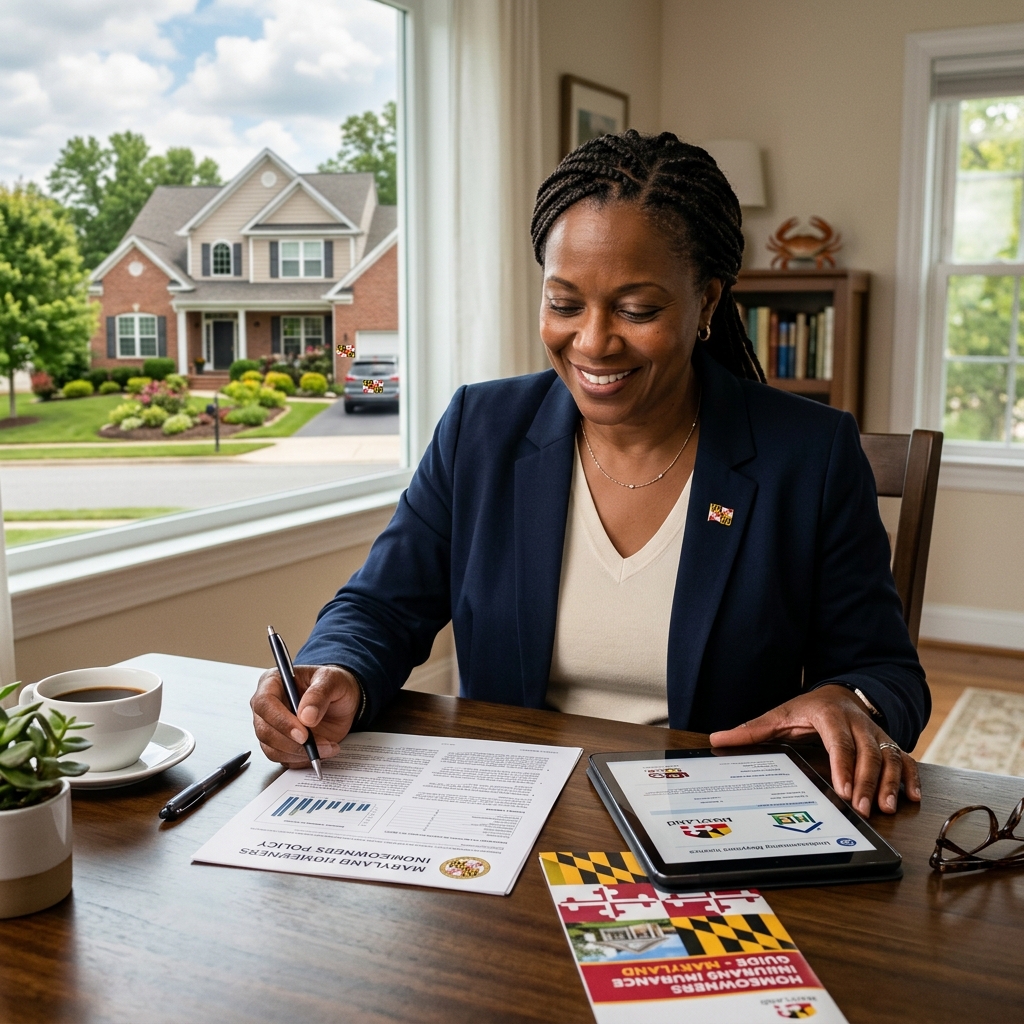
Owning a home in Maryland is a major financial and personal milestone, and protecting that home with the right insurance policy is critical. While Maryland law does not require you to carry homeowners insurance, most mortgage lenders do, and even owners without a mortgage face serious financial risks if their property is damaged or destroyed without coverage. This guide explains how homeowners insurance works in Maryland, what it typically covers, how state rules and programs affect you, and practical steps to choose and manage a policy.
Is Homeowners Insurance Required in Maryland?
Maryland does not have a statute that mandates homeowners insurance for all property owners. There is no statewide minimum coverage level similar to what exists for auto insurance. However, that does not mean insurance is optional in practice for many homeowners.
Lender Requirements and Practical Realities
Most people purchase homes with borrowed money, and mortgage lenders almost always require proof of homeowners insurance as a condition of closing and for the life of the loan. Lenders want to protect the value of the property used as collateral, so they typically specify:
- Minimum dwelling coverage high enough to rebuild or substantially repair the home.
- Coverage that names the lender as a loss payee or mortgagee.
- Continuous insurance with no lapses during the mortgage term.
If coverage lapses, many lenders will purchase a policy on the borrower’s behalf, often at a higher cost and with limited protections. Maintaining your own policy usually provides broader coverage at a lower price.
Legal Contrast: Auto vs. Home Insurance
To understand the policy landscape, it helps to compare homeowners insurance to auto insurance. In Maryland, auto insurance is legally required for any registered vehicle, with specific minimum liability coverage amounts set by statute. By contrast, home insurance is left to market forces and contract requirements. This difference reflects how lawmakers treat risks associated with driving—where third-party injuries are common—versus property ownership, where losses primarily affect the owner and lender.
| Type of Insurance | Legal Requirement in Maryland | Typical Minimums |
|---|---|---|
| Auto Insurance | Mandatory for registered vehicles. | $30,000 bodily injury per person, $60,000 per accident, $15,000 property damage. |
| Homeowners Insurance | Not required by state law; usually required by mortgage lenders. | No statutory minimum; lender and insurer determine needed coverage. |
What a Typical Maryland Homeowners Policy Covers
Standard Maryland homeowners policies are broadly similar to policies nationwide. They combine property coverage with liability protection, often in a package policy based on the form type (such as HO-3 or HO-5). While exact details vary by insurer, most policies include the following core components.
Dwelling and Other Structures
The dwelling coverage is the foundation of a homeowners policy. It pays to repair or rebuild the home itself when damage results from covered causes such as fire, wind, or certain types of water damage. In addition, policies typically provide coverage for:
- Attached structures such as an attached garage or deck.
- Other structures on the property, including detached garages, sheds, fences, and driveways.
Dwelling limits are usually based on estimated replacement cost rather than market value. Replacement cost reflects the expense of labor and materials needed to rebuild the home, which may be higher or lower than current real estate prices.
Personal Property Protection
Homeowners insurance also covers personal belongings—furniture, clothing, electronics, appliances, and many other items—if they are damaged or stolen due to a covered peril. Typical policies include:
- A percentage of the dwelling limit for personal property (often 50–70%).
- Coverage for items both inside the home and, to a limited extent, temporarily off-premises.
- Optional higher limits or separate policies for valuables such as jewelry, art, or collectibles.
Liability and Medical Payments
Liability coverage protects you if someone alleges you caused bodily injury or property damage through negligence—for example, a guest injured by a hazard in your home. Policies generally pay for legal defense costs and judgments or settlements up to the policy limits.
Most policies also provide medical payments coverage for minor injuries to guests, regardless of fault. This coverage can help pay medical expenses quickly and may reduce the likelihood of disputes escalating into lawsuits.
Loss of Use and Additional Living Expense
When a covered loss makes your home uninhabitable, homeowners insurance can pay for temporary housing and related costs under loss of use or additional living expense (ALE) coverage. This helps you maintain a comparable standard of living while repairs are underway.
Risks Often Not Fully Covered by Standard Policies
Maryland homeowners should be aware that a standard policy does not cover every possible risk. Some hazards are excluded outright or covered only in limited ways, and separate policies or endorsements may be necessary.
Flood Damage
Flooding—defined in insurance terms as water rising from outside the home—is generally excluded from standard homeowners policies. Federal law requires flood insurance for certain properties in high-risk flood areas that are financed with federally backed mortgages, but the state itself does not impose a separate mandate.
Maryland residents in flood-prone areas often obtain coverage through the National Flood Insurance Program (NFIP) or private flood insurers. Evaluating your flood risk, including historic flooding and proximity to rivers or tidal areas, is essential when deciding whether to purchase this coverage.
Earthquakes and Ground Movement
Damage caused by earthquakes or other ground movement is typically excluded from standard homeowners policies. While major earthquakes are less common in Maryland than in some other regions, even moderate ground movement can crack foundations or damage structures. Insurers sometimes offer separate earthquake endorsements or policies for those who want additional protection.
Wind and Storm-Related Risks
Maryland’s location along the Mid-Atlantic coast exposes some communities to strong storms, including remnants of hurricanes and nor’easters. Standard policies usually cover wind damage, but the cost and available coverage can vary in coastal or high-risk areas.
In some cases, insurers may impose special wind or hurricane deductibles, expressed as a percentage of the dwelling limit. Reviewing these terms carefully is important, particularly if you live near the Chesapeake Bay or Atlantic coast.
Average Costs and What Affects Your Premium
Homeowners insurance prices in Maryland are influenced by local weather patterns, property characteristics, and claims trends. Available data suggest that Maryland premiums are somewhat lower than the national average, but costs still vary substantially by location and home type.
Typical Premium Levels
Regulatory and industry reports indicate that average annual premiums for homeowners insurance in Maryland have generally ranged between roughly $1,400 and $1,700 in recent years, which is slightly below nationwide averages. These figures are only benchmarks; individual policies may be significantly higher or lower.
Key Factors that Influence Price
Insurers consider many variables when setting premiums. Common factors include:
- Location: Proximity to the coast, floodplains, or areas with higher crime rates.
- Home construction: Building materials, age, roof type, and overall condition.
- Coverage limits: Higher dwelling and liability limits lead to higher premiums.
- Deductibles: Choosing a larger deductible usually lowers the premium.
- Claims history: Multiple prior claims can increase future costs.
- Credit-based factors: In some cases, insurers use credit information subject to state regulation.
Bundling homeowners insurance with auto or other policies may qualify you for discounts, and many insurers also reward security upgrades such as monitored alarm systems.
Special Considerations for Maryland Property Owners
Beyond the standard features of homeowners insurance, Maryland residents should understand certain state-specific aspects of coverage, consumer protections, and alternative options.
State Oversight and Consumer Protections
The Maryland Insurance Administration (MIA) oversees insurance companies and agents operating in the state, approves certain rate filings, and provides consumer education and complaint resolution services. The MIA publishes guides that explain policy terms, coverage options, and rights related to cancellations, nonrenewals, and claim handling.
If you experience difficulties obtaining coverage, disagree with a claim decision, or believe a company has violated state law, you can contact the MIA for assistance. This oversight helps ensure that insurers operate fairly and transparently within Maryland’s regulatory framework.
Maryland Property Insurance Availability Program (JIA)
Some homeowners—particularly those in higher-risk areas or with certain property conditions—may struggle to obtain coverage in the standard voluntary market. For these situations, Maryland offers a fallback option through the Maryland Property Insurance Availability Program, commonly called the Joint Insurance Association (JIA).
The JIA provides limited but critical property protection for eligible homes when private insurers decline coverage. While these policies may cost more or offer narrower coverage than mainstream products, they ensure that homeowners can secure basic insurance when no other options are available.
Condominiums and Homeowners Associations
Maryland properties subject to condominium or homeowners association (HOA) rules often have additional insurance considerations:
- Master policies: Associations frequently carry insurance on common elements and sometimes on building exteriors.
- Unit owner requirements: Condominium boards can require owners to purchase individual policies (often HO-6) to cover interior improvements and personal property.
- HOA policies: Associations may obtain coverage for common facilities, liability in shared areas, and directors and officers (D&O) protections for board members.
Understanding what the association’s policy covers—and what it leaves to each owner—is crucial. Overlaps or gaps can be expensive, especially when a loss involves both private and common areas.
How to Choose and Manage a Maryland Homeowners Policy
Selecting the right policy involves more than simply comparing prices. Maryland homeowners benefit from a careful review of coverage details, insurer reputation, and long-term needs.
Steps for Selecting Coverage
- Evaluate your risks: Consider natural hazards, crime trends, and property characteristics specific to your neighborhood.
- Determine replacement cost: Work with insurers or professionals to estimate how much it would cost to rebuild your home rather than relying solely on market value.
- Review policy forms and endorsements: Ask about covered perils, exclusions, and available add-ons for floods, earthquakes, or higher liability limits.
- Compare multiple quotes: Request proposals from several insurers and compare not only price but also coverage limits, deductibles, and claim service reputation.
- Check financial strength and complaints: Use ratings and state complaint data to gauge insurer stability and customer experience.
Maintaining and Updating Your Policy
Once you have a policy, review it periodically, especially after major life or property changes. Maryland homeowners should:
- Update coverage after renovations, additions, or significant upgrades to ensure the dwelling limit reflects current rebuilding costs.
- Reassess personal property limits when purchasing valuable items or downsizing possessions.
- Check deductibles and loss-of-use limits to confirm they remain appropriate for your budget and lifestyle.
- Compare renewal premiums with alternatives to see if switching insurers could improve cost or coverage.
Changes in local risks—such as new flood maps or updated building codes—may also warrant adjustments to coverage.
Common Mistakes Maryland Homeowners Should Avoid
Even diligent homeowners can encounter problems with insurance. Being aware of common missteps helps you avoid unpleasant surprises during a claim.
- Underinsuring the dwelling: Choosing limits based on the mortgage balance or purchase price instead of rebuilding cost can leave you short after a major loss.
- Ignoring exclusions: Failing to review flood, earthquake, or wear-and-tear exclusions may cause misunderstandings about what the policy actually covers.
- Not coordinating with HOA or condo coverage: Assuming the association’s policy covers everything can lead to unexpected gaps.
- Letting coverage lapse: Gaps in insurance can violate mortgage terms and expose you to uncovered losses.
- Delaying claims notification: Waiting too long to report damage may complicate the claims process or violate policy conditions.
FAQs: Maryland Homeowners Insurance
Is homeowners insurance legally required in Maryland?
No. Maryland law does not mandate homeowners insurance for all property owners. However, most mortgage lenders require it as a condition of financing.
Who regulates homeowners insurance in Maryland?
The Maryland Insurance Administration oversees insurers, agents, and certain policy practices in the state. It also offers educational materials and handles consumer complaints.
Does a standard policy cover flooding?
Standard homeowners policies exclude flood damage. Separate flood insurance, often through the National Flood Insurance Program or private carriers, is needed for protection against rising water.
What if I cannot find an insurer willing to cover my home?
Homeowners who are unable to obtain coverage from private insurers may be eligible for limited protection through the Maryland Property Insurance Availability Program (Joint Insurance Association).
How often should I review my homeowners policy?
It is prudent to review your policy at least annually and after major changes such as renovations, new valuables, or changes in local risk (for example, updated flood maps).
References
- Best Homeowners Insurance in Maryland for 2026 — U.S. News & World Report. 2024-02-15. https://www.usnews.com/insurance/homeowners-insurance/local/maryland
- Homeowners Insurance Coverage Guide — Maryland Insurance Administration. 2023-06-01. https://insurance.maryland.gov/consumer/documents/publications/homeownersinsguide.pdf
- Maryland Homeowners Insurance Coverage — Farmers Insurance. 2023-10-10. https://www.farmers.com/maryland/home-insurance/
- Maryland Homeowners Insurance — Progressive Insurance. 2025-01-05. https://www.progressive.com/answers/maryland-home-insurance/
- Auto Insurance Requirements in Maryland — Maryland Department of Transportation Motor Vehicle Administration. 2024-03-20. https://mva.maryland.gov/title-registration/auto-insurance-requirements
- Maryland Homeowners Association Insurance — D.H. Lloyd & Associates. 2023-07-12. https://www.dhlloyd.com/business-insurance/specialized-business-insurance/maryland-homeowners-association-insurance
- Insurance Policies: A Comprehensive Guide for Maryland Residents — American National Title Services of Maryland. 2023-08-30. https://antmd.com/resources/blog/insurance-policies-guide-for-maryland-residents/
Similar Articles








Read full bio of Sneha Tete




