
Housing Assistance In The U.S.: 3 Key Programs To Know
A practical guide to the main public programs that help people rent, buy, and keep housing.
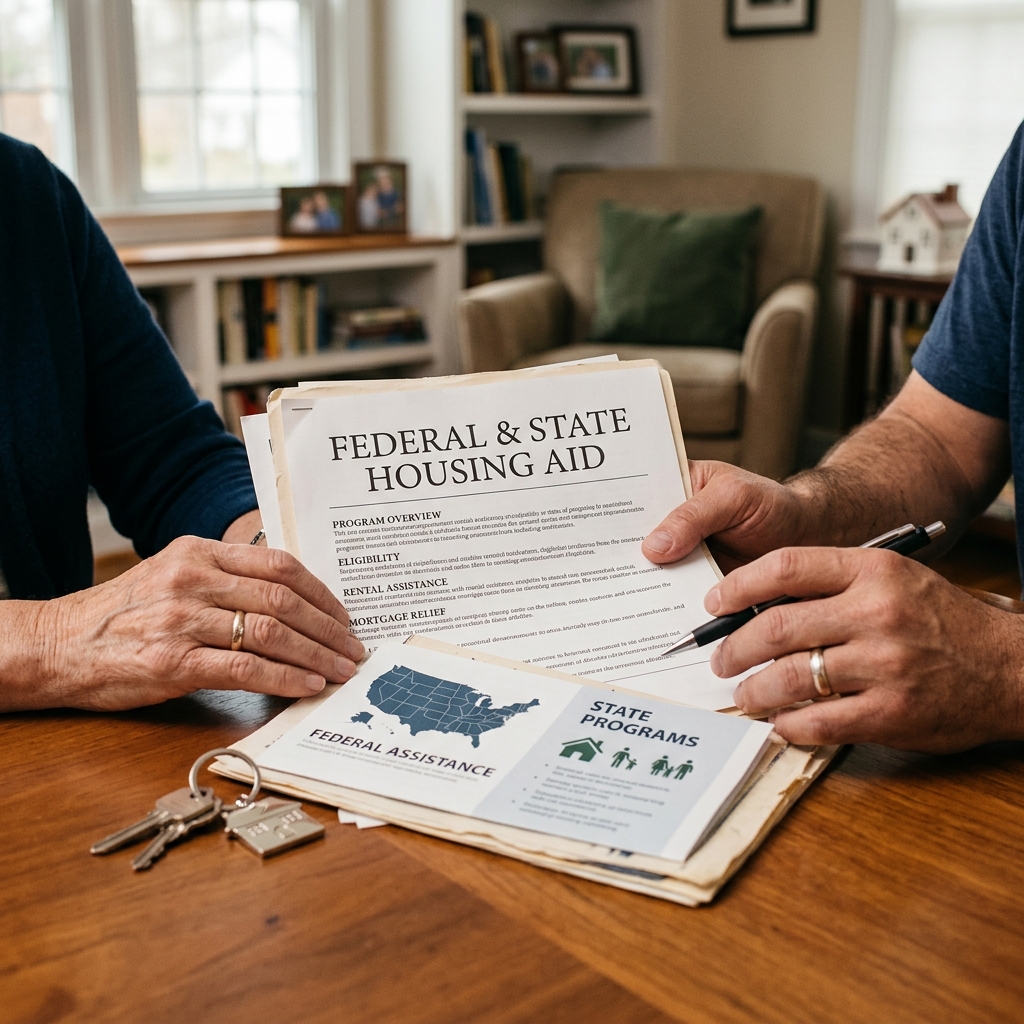
Housing assistance in the United States is built from several layers of public support. Some programs help people pay rent each month, some help local governments create and preserve affordable homes, and others improve access to mortgages or ownership opportunities. Together, these programs are designed to reduce housing instability for households with limited income, older adults, people with disabilities, families facing displacement, and residents who need help finding a safe place to live.
Although many people think first of rental vouchers, housing aid includes much more than direct rent payments. Public funding can support new construction, rehabilitation of older buildings, temporary subsidies, supportive housing, and state-level programs that fill gaps left by federal systems. The result is a broad network of assistance that reaches renters, future homebuyers, nonprofit housing providers, and local agencies.
Main types of housing assistance
Most public housing help falls into three broad groups. The first covers rental assistance for households that cannot afford market rent. The second supports state and local governments so they can expand affordable housing supply. The third helps households move toward ownership or access mortgage-related support.
- Rental assistance lowers monthly housing costs for eligible tenants.
- Development funding helps build, preserve, or modernize affordable homes.
- Homeownership support helps with buying, financing, or improving a home.
This structure matters because different households need different forms of help. A family facing immediate rent stress may need a voucher, while a nonprofit developer may need a construction subsidy. A first-time buyer may need assistance with down payment costs rather than monthly rent. Public housing policy tries to address all three situations at once.
How rental help works
Rental assistance is the best-known form of housing support. It reduces the amount tenants pay out of pocket so that rent consumes a smaller share of household income. In many programs, the tenant pays a portion of the rent and the government pays the rest directly to the landlord or housing provider.
The largest federal rental assistance tools are commonly associated with the Section 8 system, including Housing Choice Vouchers and project-based subsidies. Public housing is also a major pillar of the rental safety net. These programs usually focus on households with low incomes, especially families, older adults, and people with disabilities.
| Program type | What it does | Who it usually serves |
|---|---|---|
| Housing Choice Vouchers | Helps eligible tenants rent privately owned homes | Low-income households, including families and vulnerable individuals |
| Project-based assistance | Ties help to a specific unit or property | Tenants in participating affordable housing developments |
| Public housing | Provides government-owned or managed rental units | Eligible low-income families, seniors, and disabled residents |
Each model has different strengths. Tenant-based aid gives households more flexibility to choose where they live. Project-based aid helps preserve affordable homes in specific neighborhoods. Public housing offers a direct option when private-market rents are out of reach.
What makes a household eligible
Eligibility rules are usually tied to income, household size, citizenship or immigration status, and sometimes a category such as age or disability. Program administrators use local income limits that are often based on area median income. Because income limits vary by location, a household may qualify in one county but not another.
Many programs prioritize households with very low incomes, but some also target special populations. These can include people who are elderly, people with disabilities, households displaced by government action, or families dealing with homelessness or emergency housing needs. Certain programs are designed for households with children, while others focus on single-person households with specific vulnerabilities.
- Income limits are usually the first test for eligibility.
- Household size affects both qualification and subsidy amount.
- Special status such as disability or age may open access to targeted programs.
- Local rules may change depending on the housing agency or state administrator.
Programs that serve specific needs
Beyond the biggest rental programs, public housing policy includes targeted assistance for groups that often face higher housing barriers. These programs may combine a unit, a rent subsidy, and supportive services. That combination can be especially important for people who need more than a financial subsidy to remain stably housed.
Examples include housing for older adults, housing for people with disabilities, housing for persons living with HIV or AIDS, and rural rental assistance. In rural areas, federal support can also be linked to development loans or project-based subsidies that make small communities more affordable for lower-income residents.
- Senior housing can include apartments designed with supportive services for aging residents.
- Disability-focused housing may include accessible units and services that help tenants live independently.
- Health-related housing may support individuals whose housing needs are connected to ongoing medical care.
- Rural programs help communities where private affordable housing is limited.
How states and local governments expand housing aid
Federal dollars often flow through state and local systems before they reach households. This matters because local agencies are usually best positioned to identify housing shortages, administer waiting lists, and distribute funds to the communities that need them most. State housing finance agencies and housing departments frequently manage block grants or voucher-style programs under federal rules.
Some state programs exist specifically to supplement federal assistance. A state voucher program may serve people who are on a federal waiting list but still in urgent need. Other state programs can provide limited-term rental help to households that are homeless, at risk of eviction, or facing an emergency housing crisis.
This layered approach helps fill gaps, but it also means the exact rules may differ significantly from state to state. Two households with the same income may have access to different aid depending on where they live and which local agencies administer the funds.
Funding affordable homes, not just tenants
Housing assistance is not limited to helping individual renters. A large share of public spending is directed toward the supply side of housing, meaning the creation or preservation of units that remain affordable over time. This can include new apartment construction, rehabilitation of older buildings, and the conversion of existing properties into income-restricted homes.
Local governments, states, and housing finance agencies often use tools such as tax credits, grants, and low-cost loans to attract private investment. These tools lower the financial risk of building affordable housing and make projects possible in places where market rents alone would not cover costs.
| Supply-side tool | Primary purpose | Typical effect |
|---|---|---|
| Tax incentives | Encourage private investment | Increases financing for affordable developments |
| Block grants | Support local housing activities | Funds rehabilitation, acquisition, and rental support |
| Low-interest loans | Lower development costs | Makes projects feasible in underserved areas |
| Preservation grants | Keep existing affordable homes in service | Prevents loss of subsidized units |
Why preservation matters
Building new affordable housing is important, but keeping existing affordable units available is just as critical. Older subsidized buildings can become financially strained as mortgages mature, operating costs rise, or repairs become more expensive. Without preservation efforts, units that once served low-income tenants can shift to higher rents or leave the affordable inventory altogether.
Preservation programs try to extend the life of these properties through rehabilitation, refinancing, or renewed subsidy agreements. From a policy perspective, preserving an existing unit is often faster and less expensive than building a new one. It also helps protect neighborhoods where affordable homes are already embedded in the community.
Homeownership assistance and mortgage support
Not all housing aid is rental-based. Federal and state programs also help households buy homes or reduce the costs of ownership. These supports can include down payment help, closing cost assistance, favorable loan terms, and rehabilitation aid for repairs after purchase.
Homeownership programs are especially important for first-time buyers who can afford monthly payments but struggle to save enough cash upfront. They also matter for moderate-income households in high-cost areas where the entry cost of buying a home is the main obstacle.
- Down payment assistance lowers the upfront cash barrier.
- Rehabilitation loans help new owners fix unsafe or outdated housing.
- Below-market financing can make mortgage payments more manageable.
- Local programs may target buyers in specific neighborhoods or occupations.
How people usually apply
Applications are commonly handled by public housing agencies, state housing departments, local government offices, or property owners participating in a program. The process often requires proof of income, identification for household members, rental history, and information about assets. In voucher programs and public housing, applicants may also be placed on a waiting list.
Waiting lists can be long because demand is usually much higher than available funding. That is why households often need to apply to several programs at once and monitor local announcements for openings. Some agencies open and close waiting lists periodically rather than accepting applications year-round.
- Gather household and income documents.
- Check whether the local agency is accepting applications.
- Submit the required forms and supporting records.
- Respond quickly to requests for additional information.
- Keep contact details updated to avoid missing notices.
Common challenges for applicants
Even when a household appears eligible, access is not always immediate. Limited funding, agency backlogs, and landlord participation can slow the process. Some voucher holders struggle to find units within the allowed price range, while others face barriers related to credit, prior eviction records, or transportation.
Understanding the structure of the system can help applicants plan more effectively. For example, a household may be eligible for a voucher but still need time to locate a landlord willing to accept it. Another household may qualify for state emergency rental support while waiting for a longer-term federal subsidy.
What a housing strategy can look like
Public housing assistance works best when households and advocates view it as a system rather than a single program. A renter might use a short-term state subsidy during a crisis, then transition to a federal voucher. A nonprofit may pair tax credits with block grant funding and project-based subsidies to create mixed-income housing. A first-time buyer may combine state down payment help with mortgage counseling and local rehabilitation support.
That flexibility is one of the strongest features of the housing safety net. It gives policymakers multiple ways to address the same underlying problem: too many households have more need for housing than the market can affordably supply.
Frequently asked questions
What is the difference between tenant-based and project-based assistance? Tenant-based help follows the household, while project-based help is attached to a particular apartment or building.
Who usually qualifies for housing assistance? Low-income households are the main target, but many programs also prioritize older adults, people with disabilities, families with children, and households facing homelessness or displacement.
Do states offer housing aid too? Yes. States often run voucher programs, emergency rental help, and housing development funding that supplements federal assistance.
Why are waiting lists so long? Demand is often far greater than available funding, especially in high-cost areas where rents rise faster than incomes.
Can housing aid help with buying a home? Yes. Some programs provide down payment aid, financing support, or rehabilitation help for new owners.
References
- Overview of Federal and State Housing Assistance Programs — People’s Law Library of Maryland. 2026-07-10. https://www.peoples-law.org/overview-federal-and-state-housing-assistance-programs
- Federal Programs for Affordable Housing — Local Housing Solutions. 2025-01-01. https://www.localhousingsolutions.org/fund/federal-programs-for-affordable-housing/
- Public Housing Program — U.S. Department of Housing and Urban Development. 2026-01-01. http://www.hud.gov/helping-americans/public-housing
- Housing help — USA.gov. 2026-01-01. https://www.usa.gov/housing-help
- HOME and Other Federal Programs — HUD Exchange. 2026-01-01. https://www.hudexchange.info/programs/home/topics/home-and-other-federal-programs/
- How Does the Federal Government Support Housing? — Urban Institute. 2025-01-01. https://www.urban.org/research/publication/how-does-federal-government-support-housing
Similar Articles








Read full bio of Sneha Tete


